
Mega Archive: Part XLIV: From TMNT: Tournament Fighters to Tinhead
by mento
So here we are, the final Mega Archive of both 2024 and 1993, covering the final fifteen games that were released in 1993 in one jumbo-sized denouement. This block covers all the games that debuted on the Japanese Mega Drive in December 1993 (and one case where a North American debut had a specific release day rather than a month-wide window) followed by a group of games for which I could only narrow down to the year of release rather than a month or even a quarter. In so many words, it'll be a mix of obscurities from across the world, though there's two or three games in this group that I'm sure will be familiar to most at least.
Of course, I say this is the final one but we still do have Mega Archive CD '93 to polish off as well. The final part of that archival process will arrive in November and will probably be the last one of these I'll be doing for quite a while: 1993 was a behemoth that took forever to explicate in full and 1994 has even more games to expound upon. I'll ponder my options for potentially downscaling this operation a little bit should it ever return but those musings can wait until the true "season finale" next month.
In the meanwhile you can consult the mega stock of 1993 remainders below or through the Mega Archive Mega Spreadsheet, which mega conveniently and mega compactly collates all this data together in much the same way most spreadsheets tend to do. Truly fascinating stuff, this whole spreadsheet business.
Part XLIV: 541-555 (December '93)
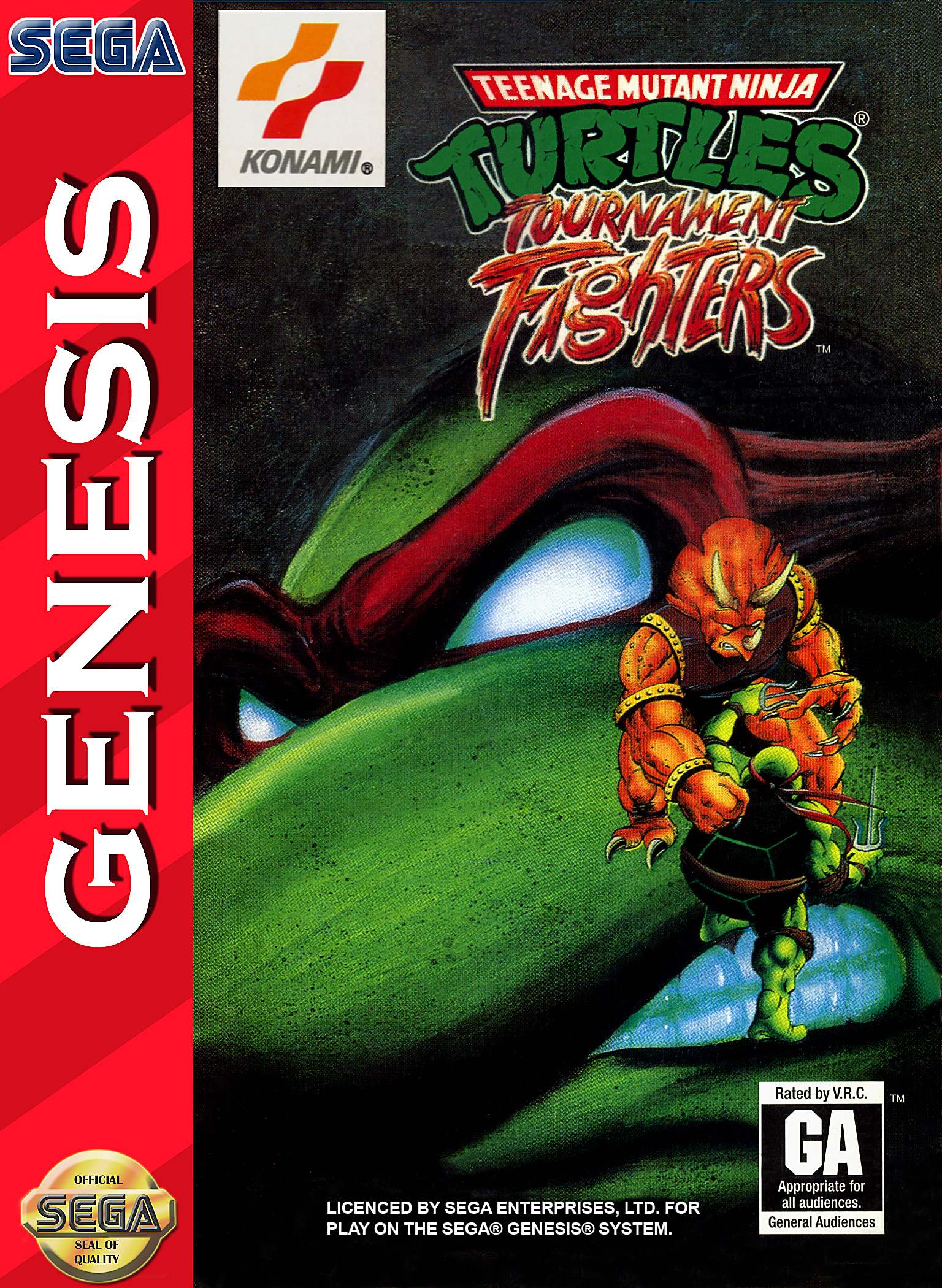
541: Teenage Mutant Ninja Turtles: Tournament Fighters
- Developer: Konami
- Publisher: Konami
- JP Release: 1993-12-03
- NA Release: 1993-12-02
- EU Release: January 1994
- Franchise: TMNT
- Genre: Fighter
- Theme: Heroes in a Half-Circle Motion
- Premise: The Turtles are forced to fight their old adversaries as well as evil clones of themselves and their friends, providing a canonical excuse for mirror matches.
- Availability: This version of Tournament Fighters, along with the NES and SNES versions, can be played in Digital Eclipse's excellent The Cowabunga Collection.
- Preservation: Yeah, the TMNT fighting game, or at least the first one. I recall there being a lot of hype around this, in part because of the strong foundation created by Konami's earlier brawler game forays with this property. I also remember renting this game for SNES at some point and playing it with another TMNT fanboy friend of mine who then went and rented it for Mega Drive right after, and we were surprised to discover that—unlike the two more or less identical versions of Super Street Fighter II for 16-bit consoles—they had a completely different feel and roster. The SNES went for more obscure comic-only characters like Armaggon and War while the Mega Drive version remembered to include Casey Jones (I thought it was kinda weird he wasn't in the SNES game, as he was a favorite of mine) and a blonde April O'Neil who fought like Chun Li. It was the first time I'd seen comic-only characters since I, like most kids back then, were only really acquainted with the TV show and the movies so that was a neat surprise (though I probably assumed they were from episodes I hadn't seen yet). Anyway, age-betraying '90s-kid nostalgia anecdotes aside the game was definitely fun enough to consume a whole weekend and one of the few fighters I got halfway invested in gettin' gud at, if not quite enough to draw me into the FGC fold. (Ranking of Fighters was kind to it also, with a final placement just outside the top ten once that feature ran its course.)
- Wiki Notes: SNES double-dip. Just some minor clean-up.
542: Dyna Brothers 2

- Developer: CRI
- Publisher: CRI
- JP Release: 1993-12-03
- NA Release: N/A
- EU Release: N/A
- Franchise: Dyna Brothers
- Genre: Real-Time Strategy
- Theme: Dinosaurs Versus Aliens (Finally)
- Premise: Those pesky aliens are back so what's an allosaurus to do but multiply and devour all that moves? I guess they'd be doing that aliens or no.
- Availability: Japan only. There was a Virtual Console release for Wii but that was Japan only too.
- Preservation: We covered the first Dyna Brothers back in Part XIX but to give the pitch again, it's a rudimentary RTS/God-Sim type of game where the goal is to out-breed and out-consume your alien antagonists, using a mix of herbivores to generate energy (or currency) from the local greenery while your more carnivorous types keeps the alien's units on the defensive. There's also a weak but useful unit whose only job is to eat eggs before they hatch into new alien soldiers to deal with. As well as choosing what units to send out, you can pull a Populous and spend resources on changing the weather to be more advantageous to the dinos. The second Dyna Brothers adds more features and a few extra unit types but is otherwise a very similar game, which makes sense given the two releases weren't even eighteen months apart. This sequel would later be enhanced further and added as a Sega Channel exclusive in 1995 with the name Dyna Brothers 2 Special: that's also the version that was added to the Japanese Wii Shop in 2007. Despite the fairly simple mechanics and the fact that CRI is as close to first-party Sega without technically being first-party (I've explained it before, but they had the same "parent") no version of this game ever got localized. How Sega came to the conclusion that dinosaurs fighting aliens wouldn't appeal to a western crowd is anyone's guess.
- Wiki Notes: Skeleton page so it needed quite a bit of work.
543: J.League Pro Striker Kanzenban

- Developer: Sega
- Publisher: Sega
- JP Release: 1993-12-17
- NA Release: N/A
- EU Release: N/A
- Franchise: J.League Pro Striker
- Genre: Soccer
- Theme: Soccer
- Premise: Soccer
- Availability: Official licensed annual sports game. Hell, not even annual but a subannual remaster. You tell me what kind of shelf life to expect.
- Preservation: J.League Pro Striker Kanzenban is a half-sequel, half-remake of the first J.League Pro Striker released earlier that same year in April. Kanzenban, by the by, means "Perfect Edition": it even reiterates this in English on the box art, as you can see, so my input here was unnecessary. It's whatever I can do to pad out this paragraph about another boring sports game. I believe this Perfect Edition is just your usual mix of gameplay tweaks and roster updates, following the then-new J.League professional soccer competition and the mere ten teams its inchoate form hosted. As Sega's premiere first-party soccer sports brand you would probably expect to see a few more of these Pro Striker games on the Mega Drive—there's actually only two more after this though, as the series tapped out in 1995 to join the Saturn like so many other Sega enterprises. I really wish I had more to say: it's not a particularly exciting vertically-aligned soccer game, like almost every non-FIFA one on the platform. Did you know the J in J.League stands for Japan? OK, fine, I'll stop.
- Wiki Notes: Like the original Pro Striker, I had to add this to the wiki myself. Somebody's gotta jump on that grenade. Oops, I'm posthumously lionizing myself again. Bad habit of mine.
544: Metal Fangs

- Developer: Sega / Genki
- Publisher: Victor Musical Industries
- JP Release: 1993-12-17
- NA Release: N/A
- EU Release: N/A
- Franchise: N/A
- Genre: Simulation
- Theme: Like Football Manager but for WipEout
- Premise: Wanna participate in a high-risk, high-octane cyberpunk hovercar team racing circuit? OK, cool, you can be the manager then.
- Availability: Never left Japan.
- Preservation: Metal Fangs is just weird. It feels like some obscure European home computer game given both its aesthetic (complete with doctored images of western celebrities as cyborgs for its character select screen, most of which are musicians like Madonna and Robert Smith) and its more passive management gameplay. However, it's a Japan-only game and its background heavily suggests the involvement of an internal Sega development studio before they essentially Alan Smithee'd themselves off the credits and handed the game over to the indiscriminate Victor Musical Industries to release. From what GDRI claims, the game might've been mostly complete by the time Sega cut it loose and VMI grabbed the prototype and hired contractors Genki to apply the finishing touches. As intimated above, you pick a team of racers and sort out their hardware and then just... watch them race. It becomes clear from switching perspectives during the race which ones are lagging behind and might need some cash-injections and which are perfectly fine as they are. You're looking to have more members cross the finish line before the other team rather than just one "all the eggs in one basket" champion to easily take first place every time, so there's some degree of spreading the lucre around in an efficient manner. Since it's all in Japanese though, it's not an easy game to figure out.
- Wiki Notes: Mostly complete, just needed a little bit extra. The only other person to work on this page was Jeff Gerstmann himself, so it was cool to see that guy in the wild. The wiki wild. The wiki wiki wild wild (west).
545: New 3D Golf Simulation: Harukanaru Augusta

- Developer: T&E Soft
- Publisher: T&E Soft
- JP Release: 1993-12-17
- NA Release: N/A
- EU Release: N/A
- Franchise: New 3D Golf Simulation
- Genre: Golf
- Theme: Golf
- Premise: Golf
- Availability: Nope. Japan-only.
- Preservation: So the thing with Harukanaru Augusta is that this game was first shipped as a super-realistic golfing sim... in 1989. Four years is a heck of a long time for the evolution of realism in gaming, especially in the 1990s, so it almost certainly came off as dated by the end of 1993. Harukanaru Augusta—"Harukanaru" meaning "far away", which tracks since Augusta is in the US state of Georgia and that's about as far from Japan as you can get (in terms of longitude at least)—is the first in a series of these realistic golf sims that T&E originally released for home computers, though it saw a 1991 SNES port and then this a couple more years later. It follows the Mega Drive port of Pebble Beach Golf Links—the second game in this series, released just two months prior—and was eventually followed by two others: New 3D Golf Simulation: Devil's Course and New 3D Golf Simulation: Waialae no Kiseki. Unlike Pebble Beach Golf Links, none of the other games (including Augusta) on Mega Drive saw western localizations. After those four, T&E would switch from Mega Drive to Saturn game development where'd they go on to release another six golf games (and Virtual Hydlide, which might be the bigger crime).
- Wiki Notes: SNES double-dip. Needed screenshots and releases.
546: Phantasy Star IV: The End of the Millennium

- Developer: Sega
- Publisher: Sega
- JP Release: 1993-12-17
- NA Release: February 1995
- EU Release: November 1995
- Franchise: Phantasy Star
- Genre: RPG (Turn-based)
- Theme: Legally Distinct Star Wars. Does Star Wars Have Catgirls? No, It Does Not.
- Premise: Uh oh, Dark Falz is back and screwing up more planets. I guess it's up to the invincible hunter Alys Brangwin to solve this problem as she contemplates her retirement, just a few days away.
- Availability: Presently you can buy it from Steam directly or play it as part of a Switch Online subscription (albeit the more expensive tier that also includes N64 games).
- Preservation: Easily the most important of the remaining games of the year, Phantasy Star IV sees Sega's flagship RPG series go out in style with this expansive adventure that takes to heart all the lessons learned from previous entries as well as pushing the Genesis tech to its limits. Taking a leaf from the more narratively-focused Lunar for Sega CD, Phantasy Star IV adds more cutscenes and dialogue—depicted as comic book panels, since FMV would be asking too much—to its tale of a group of adventurers saving their planet (and eventually their star system) from a mysterious force mutating the local flora and fauna into monsters while degrading the planet's environment into a desert wasteland. I've not had the chance to play it myself—PS having always been a conspicuous blind spot of mine as a self-avowed JRPG guy—but fans tend to swear by this one the most, especially after the perceived misstep that was the third game. After this, PS fans wouldn't get anything new from the series until it changed the blueprint of RPGs once again with the innovative if maddeningly repetitive Phantasy Star Online six years later in 2000 (ironically, at the end of the millennium). PSIV was also the first game of an internal Sega division built for RPGs, creatively called Sega RPG Production, that would later become Overworks after a few more personnel shuffles: known best as the creators of Skies of Arcadia. Quite the lineage.
- Wiki Notes: Usually the case with these bigger games is that the pages don't need any work at all but holy smokes did this one keep me busy. There was a very enthusiastic wall of text in dire need of editing due to all the subjectivity and second-person and there's almost 400 screenshots, none of which were tagged. I try not to be a dick about one-and-done wiki editors who happen to notice their favorite game's page is lacking in detail and do their best to fix that; it's not like we've ever had an easily accessible style guide or anything of the sort and you can only get so rigid about a video game wiki regardless. (Man, I phrased that weird.)
547: Battle Mania Daiginjou

- Developer: VIC Tokai
- Publisher: VIC Tokai
- JP Release: 1993-12-24
- NA Release: N/A
- EU Release: N/A
- Franchise: Battle Mania
- Genre: Shoot 'em Up (Horizontal and Vertical)
- Theme: Filthy Couple (man, that's actually even sleazier than "Dirty Pair")
- Premise: The Trouble Shooters Mania and Maria, or Madison and Crystal in another space and time, are once again called into action to defeat the assassin cult Kikokukyou after they resurrect the leader the pair previously vanquished.
- Availability: Japan-only Mega Drive cart.
- Preservation: This would be the Japan-exclusive sequel to Battle Mania, released in the west as Trouble Shooter, the shoot 'em up that homages the anime Dirty Pair with its heroine duo whom are controlled simultaneously. Mania, the main one, is controlled directly and has a weak initial weapon that can be improved with power-up collectibles. Maria, the more laid-back support, acts more like an option that can be configured to face backwards for more coverage or forwards for her additional firepower (which is strong, but not upgradeable). It features both horizontally and vertically scrolling levels as well as multiple weapon types to choose from, making it one of the more versatile shoot 'em ups for Mega Drive. Since Dirty Pair, the inspiration for the Battle Mania franchise, isn't the most serious sci-fi anime out there the game embodies its anarchic sense of humor and high explosions-per-minute ratio. A real shame it never got localized but there's a fan translation floating around at least.
- Wiki Notes: Oh hey, it's another chickengeorgewashington page. This dude worked on the pages of a whole bunch of cool obscurities back when the site was new and if I ever see his name in the wild it's usually the case that the game itself is a hidden gem. The pages tend to be a bit on the rough side owing to their age (Daiginjou was no exception) but I can't fault the dude's enthusiasm and I try to preserve it as best I can.
548: Maten no Soumetsu

- Developer: Kodansha Research Institute / Geo Factory
- Publisher: Kodansha Research Institute
- JP Release: 1993-12-24
- NA Release: N/A
- EU Release: N/A
- Franchise: N/A
- Genre: RPG (Turn-based)
- Theme: Those Demons Are Fixin' to do a Mischief Again
- Premise: A young man embarks on a quest to figure out why he was being carried around by a flying demon when his foster family rescued him. Did they just confuse a stork with a monster, or what?
- Availability: Japan-only and long out of print.
- Preservation: Maten no Soumetsu, which I think translates to "Annihilation of the Demon Sky" but you know how it is with these all-kanji titles, is a pretty rudimentary-looking turn-based RPG for this late period of the Mega Drive and it didn't do it any favors to be released so closely to the ambitious Phantasy Star IV. Hard to find much on the internet about this one but what I gathered from the opening cinematics is that the world has a demon problem and, after defeating a flappy type outside his village, a man discovers it was carrying a human infant which he then decides to raise as his own. Sixteen years later and that kid's curious about his origins and ready to go on a journey for answers. Pretty standard stuff but I can't say I could ascertain much beyond that, as I was taken out by a random encounter with bats between the hero's house and the nearby town. Very old school, to be stomped into the dirt by the very first monsters you meet. Print media producers Kodansha (or specifically its video game wing) appear to be the main contributors to the development of the game as well as its publisher, but GDRI suggests contractors Geo Factory were brought in to complete some of the work.
- Wiki Notes: About as skeletal as you can get. Needed everything.
549: Barbie Super Model

- Developer: Tahoe Software
- Publisher: Hi-Tech Expressions
- JP Release: N/A
- NA Release: 1993
- EU Release: N/A
- Franchise: Barbie
- Genre: Slice-of-Life?
- Theme: Taking a Break From Smashing the Patriarchy to Do Some Modelling Work
- Premise: The Insectron invasion force inches ever closer to Earth as they prepare their vaporizers and electric slavery nets to force humanity into an eternity of hard labor in the Rigellan sugar mines, but Barbie wouldn't know anything about all that. She's got a fashion show to put on.
- Availability: Licensed game so probably no reissues.
- Preservation: One of those odious "games for girls" before anyone knew what it was girls actually wanted to play (cute farming sims and dating games where the boys make out with each other) (I'm being facetious, don't cancel me again) Barbie Super Model sees the eponymous doll scrounge up various pieces of apparel from around town and assemble an ensemble with which to hit the runway in style. In-between sedate driving sections you're tasked with recreating catwalk choreography and fashion magazine covers from memory: therein lies the game's challenge. Well, the actual challenge is to not fall asleep while playing it. There was going to be another Barbie game, Barbie: Vacation Adventure, but I guess they canned it after the poor sales of this one. That's a shame. I'm sure booking a hotel and lying on a beach somewhere for hours would've made for a game almost as riveting as this one.
- Wiki Notes: SNES double-dip. Mega Drive-specific screenshots, releases, and box art.
550: Disney's Beauty and the Beast: Belle's Quest

- Developer: Software Creations
- Publisher: Sunsoft
- JP Release: N/A
- NA Release: 1993
- EU Release: N/A
- Franchise: Disney / Beauty and the Beast
- Genre: Platformer
- Theme: Stockholm Syndrome
- Premise: Belle can't let Beast do all the work in breaking the curse and bringing everyone in the castle, including all the servants who almost certainly didn't deserve being cursed with their boss, back to normal.
- Availability: Licensed game.
- Preservation: Well, we're back on the "games for girls" circuit, though there's a little more credit given to the female half of the audience in this particular game. Based on the 1991 animated movie, Belle's Quest focuses on the eponymous heroine as she completes puzzles and mini-games to further the goal of uncursing her bestial beau. She's not an aggressive type, however, so when enemies are around you're expected to avoid them by any means: jumping over them, ducking underneath them, or in the case of the annoying Le Fou hiding in the doorways of shops. Sunsoft commissioned Mancunian outfit Software Creations (one like Rare where their original games far exceeded the licensed ones in terms of quality) to create both this and its sibling game but there's no firm release date on the internet for either of them. I could buy that they were released half a year apart but I'm not sure Software Creations had the resources to work on both simultaneously. The very "cheap and cheerful" vibe to both of these games would suggest a quick turnaround though.
- Wiki Notes: Body text and its single release. We have old GB blogging legend VGK to thank for plenty of screenshots though.
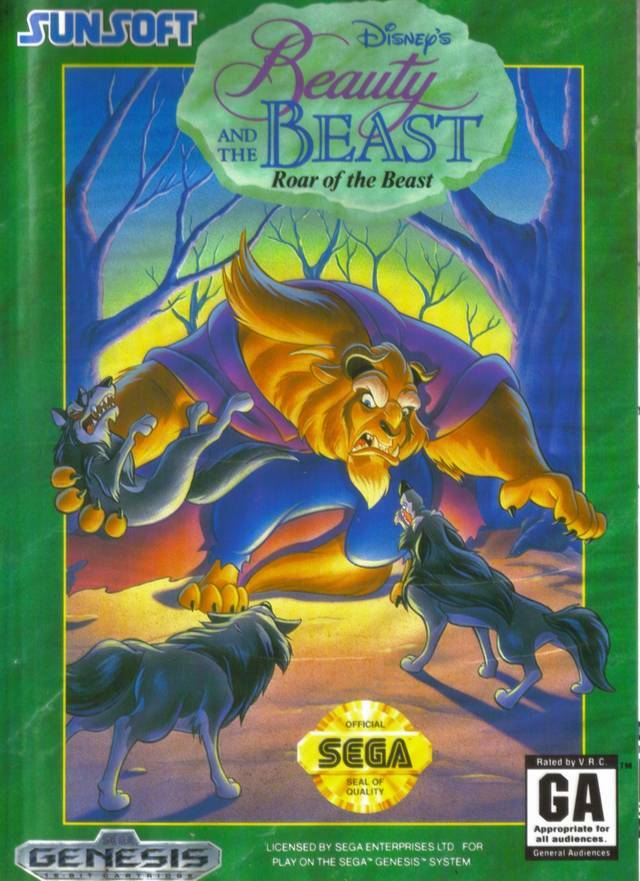
551: Disney's Beauty and the Beast: Roar of the Beast
- Developer: Software Creations
- Publisher: Sunsoft
- JP Release: N/A
- NA Release: 1993
- EU Release: N/A
- Franchise: Disney / Beauty and the Beast
- Genre: Platformer
- Theme: Verbally Abusive Kidnapper
- Premise: Beast is aware that Belle's on her own quest to fix his curse but decides she won't get far if she's not constantly murdering everything. Different strokes for different folks.
- Availability: Licensed game.
- Preservation: So here's the other one. It does raise an interesting idea about perceptions about the movie—whether Belle or the Beast was the protagonist, which might change depending on the gender of the viewer (I think at the time I knew it was Belle though I of course related more to the ugly weirdo loner who never left his house)—but I suspect Sunsoft was just hedging their bets, figuring a game starring a female protagonist that avoided trouble was only going to do so well in a male-dominated space and thus supplementing it with a combat-heavy brawler the boys would enjoy more. Points for trying to appeal to a female market though: it wasn't a common thing back then and usually lead to no-budget half-assed attempts like Barbie Super Model. It only really started to become a serious consideration around 1994 with Konami's Angelique (the first major otome dating sim).
- Wiki Notes: Body text. This one had a release at least.
552: EA Sports Double Header

- Developer: Park Place Productions
- Publisher: Electronic Arts
- JP Release: N/A
- NA Release: N/A
- EU Release: 1993
- Franchise: NHL Hockey / Madden Football
- Genre: Hockey / Football
- Theme: The Two Most Armor-Heavy Sports, Together At Last
- Premise: EA drops two of their original EA Sports games together in one package for you lazy Euros who only play soccer and tennis games.
- Availability: Released only in Europe, though you could of course still buy them separately in the States.
- Preservation: This is the first of a small batch of compilation titles released in Europe at some point in 1993 that we might as well cover here too and, well, there's not a whole lot I can say about them. Presumably this double header—which includes the first Madden NFL, Madden Football, and the first NHL game, EA Hockey, both of which were still missing their respective league endorsements back then—was meant to draw in the Europeans who might've been a little slower to adapt to American football and hockey, neither of which are particularly celebrated here (though hockey might be a bigger thing in Russia and Scandinavia). Curious they went with the first games of those franchises rather than the most recent (and polished) EA football and hockey games but I suspect the fact that they don't have licenses to worry about was probably a factor.
- Wiki Notes: Screenshots. There's a limited amount you can do with compilation game pages without just copy/pasting sections from the pages of the games that are included. I'm less inclined to figure out a way to pad these pages out as a result.
553: Mega Games 2

- Developer: Sega
- Publisher: Sega
- JP Release: N/A
- NA Release: N/A
- EU Release: 1993
- Franchise: Mega Games
- Genre: Brawler / Compilation
- Theme: Three is a Higher Number Than One
- Premise: The Mega Games compilation series is back with another three bangers from the system's halcyon days. Games include The Revenge of Shinobi, Streets of Rage, and Golden Axe.
- Availability: All three games can be bought separately on Steam and all but Streets of Rage can be played on a premium Switch Online subscription (they have the second but not the first for some reason).
- Preservation: Well, there's a limited amount I can talk about here too. I mentioned back with Mega Games 1 (otherwise known as Triple Score) that these things were mostly aimed at the European market possibly as a way to entice that audience towards some of Sega's originals rather than the computer game conversions they were probably drawn to given that was where the industry was concentrated for us Euros. Either that or they were designed to be pack-in games, giving new system owners a boost to their nascent Mega Drive libraries as a compelling value add. You could do a lot worse than those three games, honestly.
- Wiki Notes: Screenshots and release. Though, again, less important for compilations like this.
554: Mega Games 3

- Developer: Sega
- Publisher: Sega
- JP Release: N/A
- NA Release: N/A
- EU Release: 1993
- Franchise: Mega Games
- Genre: Shooter / Racing
- Theme: Three is Still a Higher Number Than One
- Premise: We're back with another three games from the early Mega Drive library, if not quite as good as the previous three. They include Super Thunder Blade, Super Monaco GP, and Alien Storm.
- Availability: The Genesis Alien Storm and Super Thunder Blade are available on Steam. Alien Storm is the only one of the three on Switch Online.
- Preservation: It kinda felt like they were starting to scrape the bottom of the barrel already with this one, and to be fair the Sega Mega Drive was in a much different place in 1993 than it was when these games came out towards the end of the 1980s. As I said with Harukanaru Augusta above, that's a real long period of time considering the rapid development of game design in the 1990s. Then again, you could feasibly stick all three of those in one cart for a decent value proposition. After this, there would not be a Mega Games 4 or a Mega Games 5 but there are two Mega Game 6s, though in their case it only refers to the number of games on the cart. They won't be a concern until we hit the dregs of 1995 regardless and I'll probably be dead by then (or bored of talking about Mega Drive games, which might as well be the same thing as far as I'm concerned).
- Wiki Notes: Same as above, screenshots and a single release.
555: Tinhead

- Developer: MicroProse
- Publisher: Ballistic
- JP Release: N/A
- NA Release: 1993
- EU Release: N/A
- Franchise: N/A
- Genre: Shooter / Platformer
- Theme: Head of Tin, Balls of Steel
- Premise: Tinhead is just a little guy running around collecting twinkly crap in maze-like levels with a whole lot of gradient fill backgrounds. Sounds like an Amiga platformer to me.
- Availability: Yes! Shockingly! You can buy it on most digital storefronts due to Piko Interactive's efforts to revive it.
- Preservation: So here we are, the last 1993 Mega Drive release that I could find. Tinhead's a fairly standard mascot platformer but for the fact that its release date is oddly elusive, hence why it's down here instead of somewhere more specific like Bubsy or Aero or B.O.B. or all the other also-ran mascot platformers from this era. Run around, shoot balls from your helmet, sometimes you get a unicycle, usual business. It doesn't look too bad at least and there's all sorts of in-game incentives to play well, including avoiding damage and shooting with perfect accuracy, which pre-empts achievement systems to some extent. That Piko Interactive pulled this out from the mists of obscurity and put it on a whole bunch of modern systems is nothing new for them but really any amount of conservation is good.
- Wiki Notes: Minor edits all around.
Unless I (or any of my usual sources) dig up any more 1993 games I believe that's all of them. We'll be back for another Mega Archive CD but this'll be it for the standard Mega Archive. Thanks for reading over the past year or so as I worked through the massive 1993 library of the system and maybe I'll be back with 1994's offerings in the future. Until then, keep... circulating those Sega tapes. Wait, don't, I think that's illegal.