
2026's Demo of The Year: Final Fantasy Resonance
by zombiepie
With Final Fantasy Resonance's full release right around the corner, ZombiePie decided to write an article about its demo and why they think it's possibly the most notable, or even the best, demo of 2026.
Author's Note: This article reviews and discusses the demo for Final Fantasy Resonance. As a result, it gets into specific details about the demo and game's story and the events therein. If you are sensitive about spoilers, be warned, this article discusses moderate to major plot elements.
I Want Final Fantasy Resonance To Succeed Because I Support The Concept Of It
I've made it a habit to review game demos when I'm between features and series on the site. Now and again, a demo has made me want to write more than my usual brief four- to five-paragraph essays about what it entails and whether it gave me confidence in the final game. Final Fantasy Resonance is one such game, and instead of pairing it with another demo and using my usual "DEMO-lition Derby" article nomenclature, I'm dropping all pretense and penning a whole-ass article sharing my impressions about Resonance's demo, which dropped back in September of this year. I feel justified in doing this for a few reasons. First, while the demo promises to relay the game's first act, which might not sound like much on paper, it delivers about a five- to eight-hour vertical slice, depending on how invested you get in its side quests. It is one of the longest and most in-depth game demos I have played in a while, and I never felt like it overstayed its welcome, which is genuinely impressive. Second, as the first proper HD-2D game in the Final Fantasy series, this demo delivers enough set pieces and dramatic moments to make you confident the Resonance experiment has "juice." Which brings me to my final point: I'm crossing my fingers that Square Enix sees this game as a success, because I want them to apply what they did here to other discontinued mobile games in Square Enix's graveyard. For those still unaware, Final Fantasy Resonance is a standalone adaptation of Final Fantasy Brave Exvius's first story arc, "Lapis", the game's first season, and before Brave Exvius really just became this amalgam world where you re-experienced classic Final Fantasy scenes and moments throughout the franchise.
The abilitease prologue is also a blast and let's you wrap your mind around the combat.
But let's not bury the lede on my last point. This article is coming out on the heels of Square Enix shutting down Final Fantasy VII Ever Crisis, and regardless of how you may have felt about the monetization and storytelling structure of Ever Crisis, the fact that it represents the SECOND mobile game that was meant to assist in framing the narrative underpinning of whole characters that pop up in the Remake trilogy but now is IMPOSSIBLE TO PLAY is downright absurd. Like, fuck guys, I'm not conceptually against you having Glenn Lodbrok be a character in these new Final Fantasy VII games; what I despise is the fact I can't fucking learn why I should give a shit about him when he materializes in Rebirth because the mobile game where his origin story lives and dies is lost goddamn media! Fuck that shit! So, while I was never the biggest fan of Brave Exvius, sign me up for Resonance, because if this "works," there are PLENTY of games in Square Enix's back catalog that deserve this exact treatment. More importantly, you can tell that the whole team that worked on this specific game didn't phone it in. They really squeezed all they could from the HD-2D tech the Octopath team pioneered, while rebalancing the game's progression system and world map to fit an actual single-player experience, neither of which is a cakewalk.
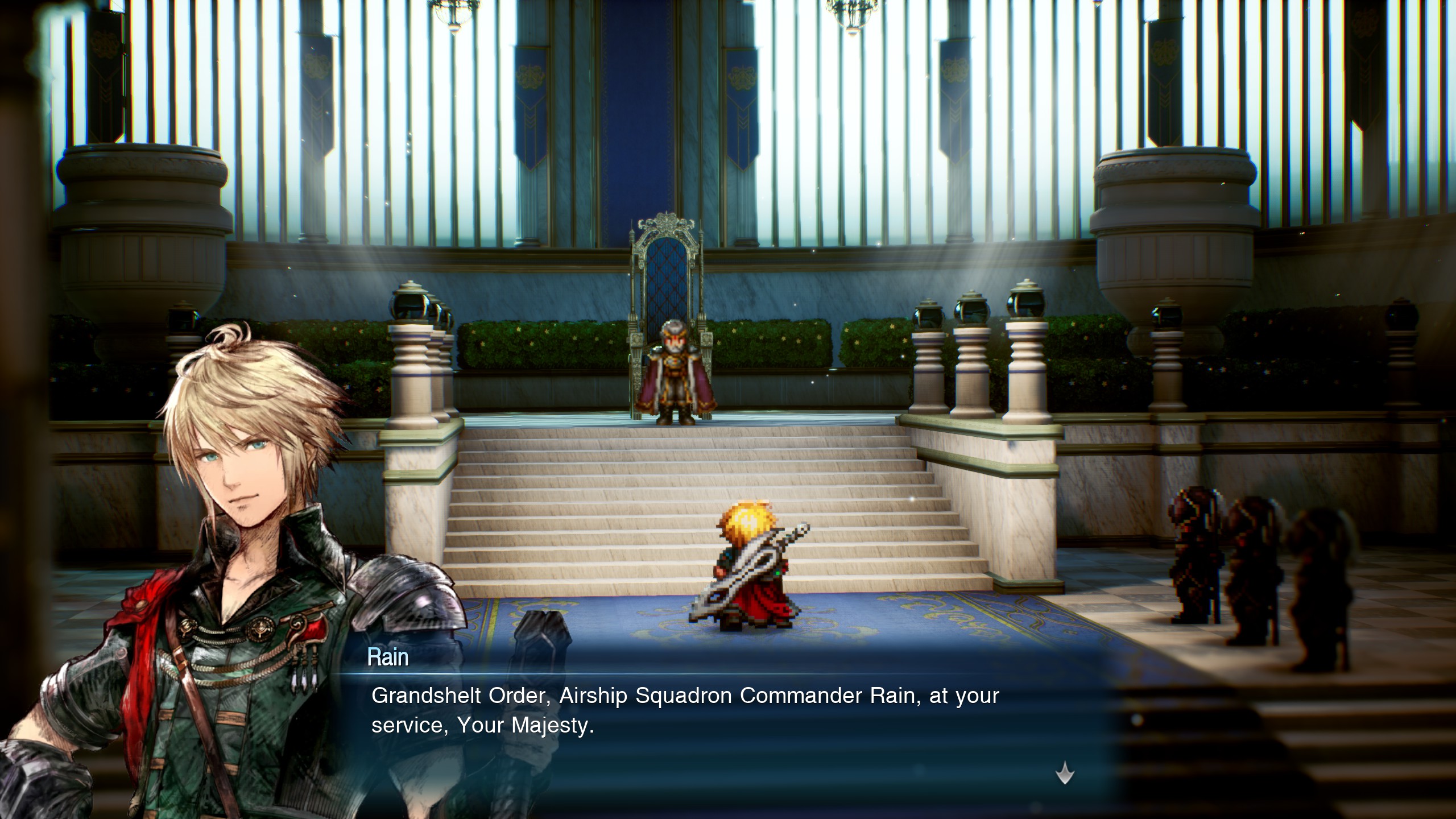
I get they're a mobile game protagonist, but Rain might be the least interesting Final Fantasy protagonist I have seen in a while.
That's why I consider Resonance's demo the clear winner for "Demo of the Year" for 2026. Maybe you can name a game demo that hooked you more immediately than Resonance or possibly one that is downright more fun to play. For me, this demo takes the crown in part because it gives you a huge chunk of what I assume is the start of the game, leaving you with a complete sense of whether you'll buy it, which is the whole point of a game demo. I don't think anyone will check out the Resonance demo and still be entirely on the fence about buying the full game in late October. People who will say that are either indecisive about everything in their lives or are tight on cash and struggling to justify buying a new 2026 game release in this economy, which is fair enough. Nonetheless, Resonance's demo gives you all the base game's moving parts, lets you watch them progress over time, and allows you to play around with them to see what fun you can make on your own. It has set character classes and only three playable characters, but that's enough to tell you whether the gameplay hooks are your cup of tea. Then you lop in the tactically placed fan service, and I think you'll see how Resonance's demo does pretty much everything you'd want a demo to do, and then some, considering how extensive and in-depth it is.
I Really Dig The Combat... Up To A Certain Point
Maybe it's nostalgia, but it was refreshing to play a fully traditional turn-based combat system in a Final Fantasy game. I don't hate the real-time combat in the Remake Final Fantasy VII games, and I still love the ATB system with all my heart, but this game's combat system gets a ton of mileage out of something that seems so simple at first blush. Resonance mixes things up by giving your party members fixed character classes that use the job titles from Final Fantasy XIII, and it also borrows the stagger meter that started in XIII and has been revisited and refined across several other games. While your character gains new abilities by leveling up, most of their combat toolbox unlocks through Visions, which blend Final Fantasy VII's Materia system with Final Fantasy V's job-based passive ability system. Each Vision needs to be leveled up per character, and when you de-equip a Vision, you choose which passive or active abilities it grants to keep by selecting them in a menu. You can also increase the Vision level cap by spending resources you collect throughout your adventure, and all of these Visions are callbacks to iconic Final Fantasy characters. You'll want to swap Visions in and out of your rotation as the game assigns them to elemental affinities, and you'll obviously want to take advantage of classic weaknesses in new environments. Likewise, while the characters have vague synergies with complementary class/Vision combinations, you don't want to waste free experience if you've hit the level cap with a Vision on a character, and making well-rounded characters also feels necessary in this game.
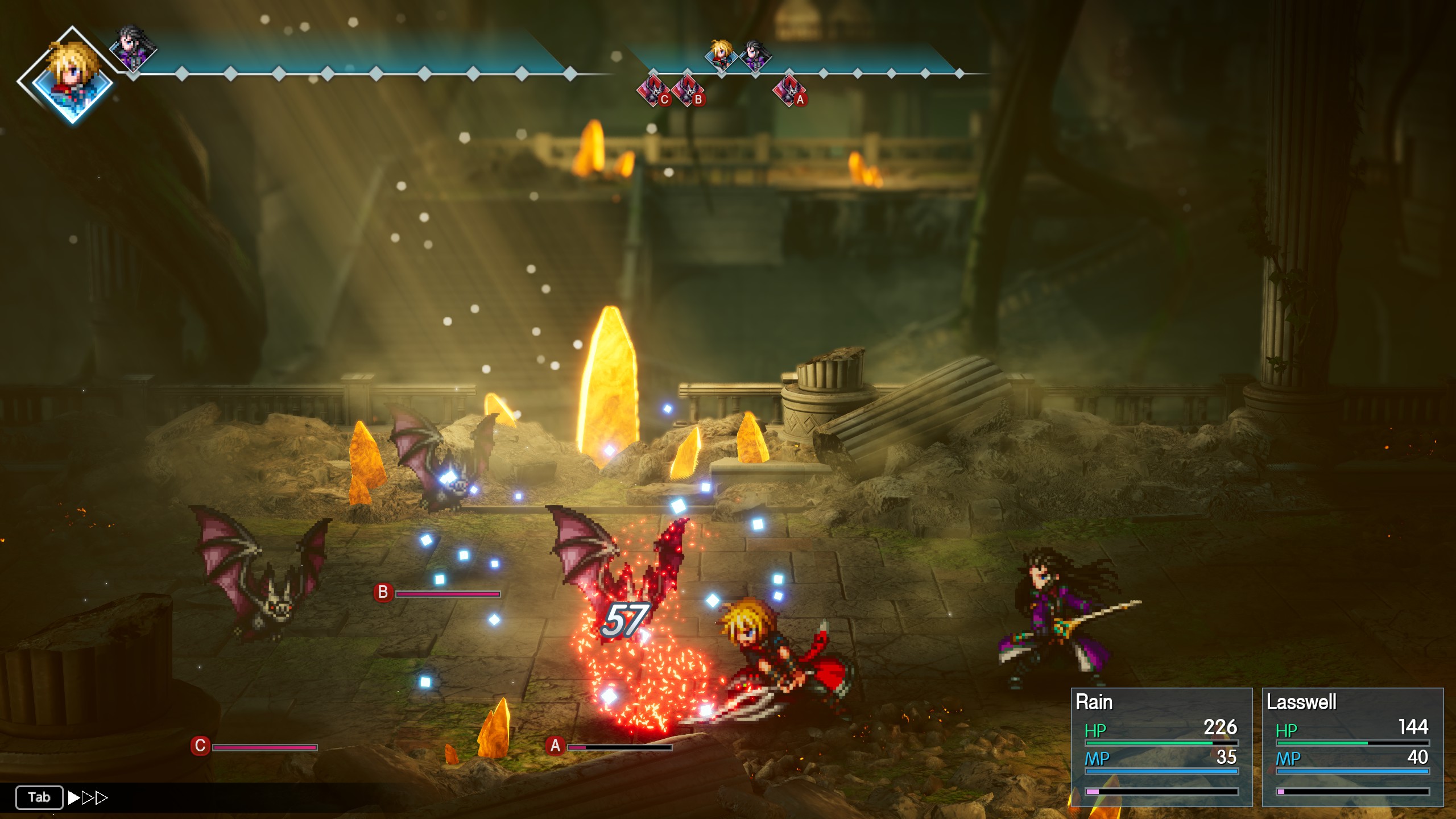
The combat is deceptively simple, especially when you're just wailing away at standard attacks, but develops some fun hooks as you go.
Now, Resonance actually addresses one of my biggest problems with the stagger systems in Final Fantasy XIII, XV, and XVI. In those games, especially XIII and XVI, over half of the damage that actually kills enemies happens exclusively during the burn phases after you deplete an enemy's stagger meter or defense. Before you break a foe's stagger meter, all your attacks are, at best, chip damage and feel superficial, which can be a real drag against higher-tier bosses or with sub-optimal party compositions. The biggest reason I felt bored out of my goddamn mind with Final Fantasy XVI is that its stagger system feeds into a gameplay loop that takes too long and only leads to bog-standard MMORPG combat once you are granted the privilege of dealing damage. With Resonance, breaking a monster's stagger triggers a special attack at the end of your turn, and everything you did before that still counts as legitimate damage to the enemy's health meter. A few bosses and special enemy encounters really prioritize the stagger mechanic, but generally you can get away with never staggering an enemy because your damage isn't completely ineffective while the stagger meter is still active. But man, if you aren't spamming some of those flashier moves or summons, it really feels like a waste of time because, at least in the demo, the game lets you wail away on your character's best attacks without limits, since restoring your MP isn't exactly a huge chore.
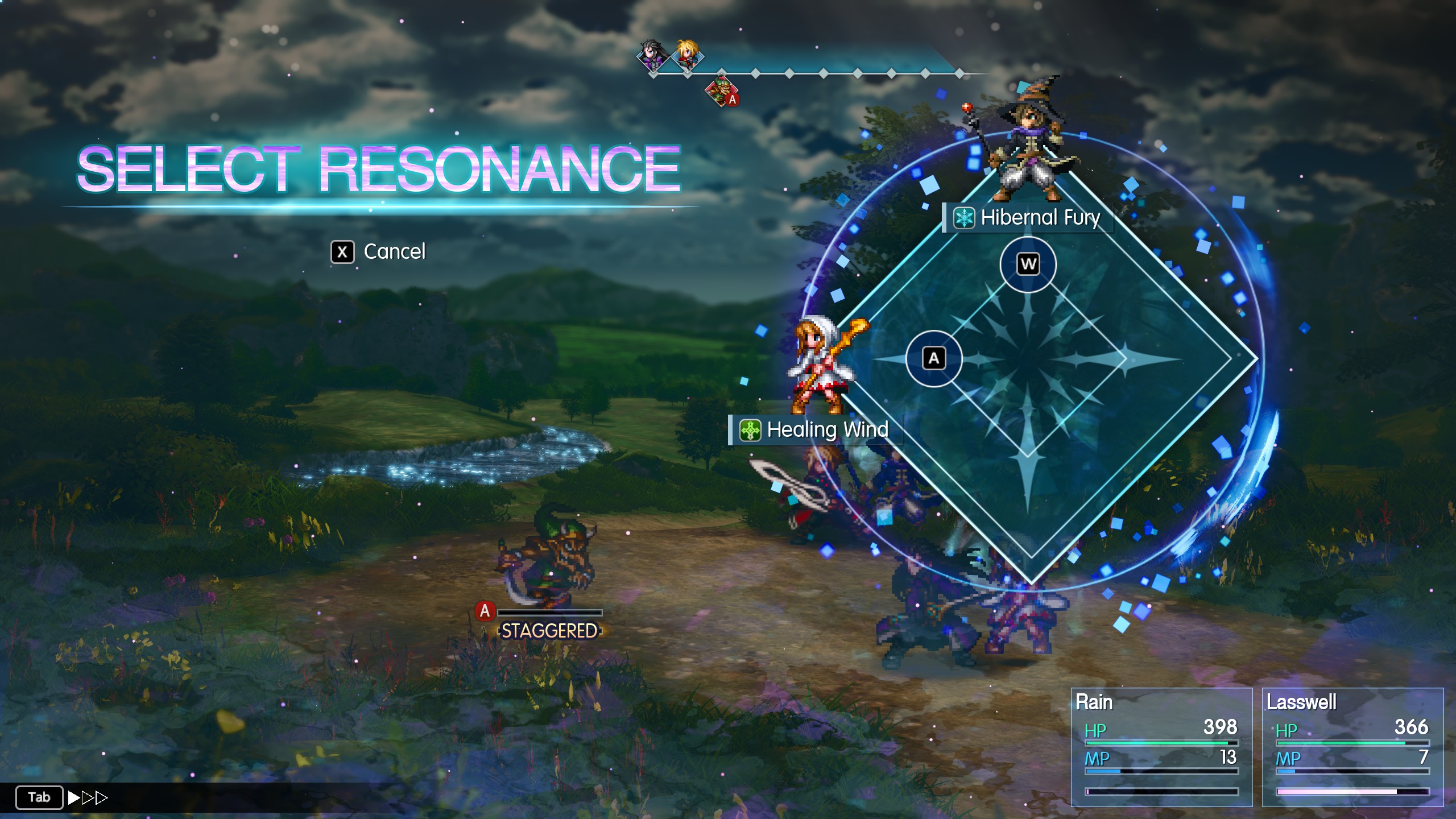
Outside of the bosses, I could never get these Resonances to trigger outside of when one last enemy in a trash mob was left.
The Visions, however, are where Resonance both hooks me and slightly loses me. Mercifully, it doesn't take long to level up or even max out a Vision with a character. Still, it's enough of a process that I can't help but think about how long it will take to get the prime utility out of the whole slate of them once they're all available. The demo also uses side quests to unofficially provide additional grinding to keep you on par with the gear check-like bosses, which was nice. Still, there aren't many in the first chapter, and I wonder whether later chapters strike a balance between having enough side quests to keep you on pace with the main story's progression while avoiding side-quest bloat like in Rebirth. Another annoyance is that the menu for equipping passive and active abilities gained from Visions quickly becomes a cluttered mess, inviting analysis paralysis. Even in the demo, when you reach any of the game's bosses, you end up spending enough time fiddling with that menu, hoping to minimize party weaknesses while maximizing strengths. It's cumbersome enough that I sometimes spent upwards of ten minutes trying to assign optimal Visions and abilities to each character. I can't imagine how much more time that will take with a larger party and more equippable options. And I think this game has one too many economies. You have Gil, which you use to buy equipment; EXP, which drives character and Vision level-ups; AP, which limits how many Vision abilities you can equip to an individual character; and scarce consumable resources that raise your Visions' level cap. It's overwhelming enough that it's almost as if the basis of this game skewed towards a different gameplay and monetization system not suited for a linear single-player role-playing game, which leads me to my next point:
The Gacha DNA Is Still There Even If The Monetization Is Gone
I want to preface that Resonance's gameplay is a real highlight and had me mostly hooked throughout the demo. Regardless, parts of this game really scream, "I was a gacha game in my past." Every time I looked at the character stat screens or the screen that lists all your unlocked Visions, you can tell those screens once asked you to sink currency to boost their stats. And while it's not a game-ending impediment, it's somewhat comical that you can tell the developers airbrushed away the places where pop-ups would ask you to convert $5 or $10 into gems you could then burn to get new level-ups quickly. That said, because Visions level up individually per character, and you want certain passive and active Vision abilities as soon as they become available for specific combat scenarios or environments, I wish there were an in-game resource you could spend to get those levels without resorting to relatively mindless grinding. I want to be clear: I'm not condoning gacha-game monetization mechanics, nor do I want them introduced in Resonance. Instead, while Resonance sands off some of Brave Exvius' edges to resemble a single-player RPG, its leveling and progression pace still clearly points to its gacha origins, and that's sometimes a problem.
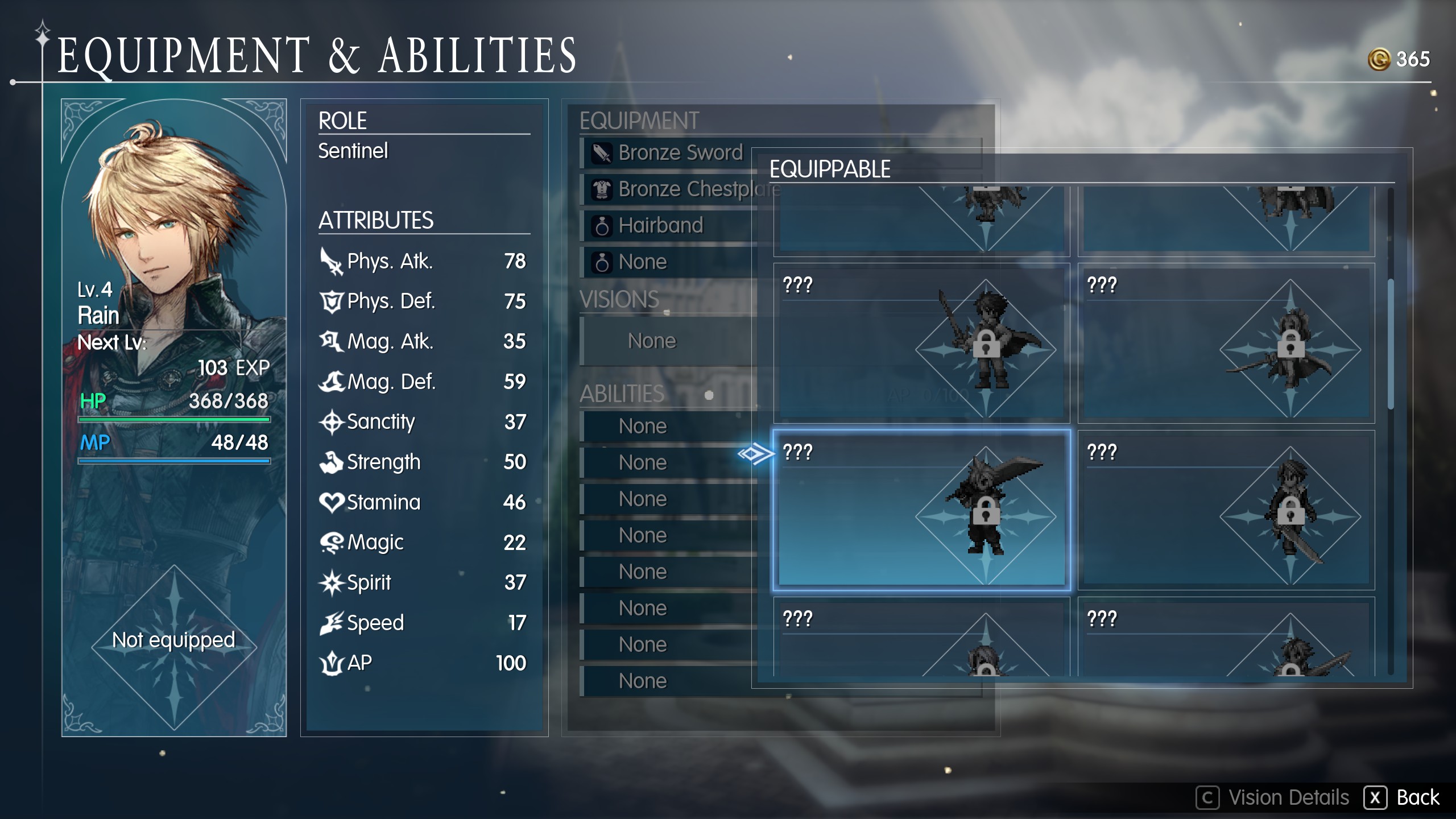
It sure is funny looking at this screen and not being prompted to re-roll for blind packs or dailies.
Overworld navigation also feels like a reminder of this game's progenitor. You move around it like a classic Final Fantasy overworld, able to wander into corners of the map to discover new locations and landmarks connected to the story or the game's side quests. I have to say, a Final Fantasy game finally allowing you to discover "accidentally" areas on an Overworld or continent out of order, only for you to get your ass kicked because the enemies in those zones are overleveled for you, got me a bit nostalgic. Will this game mark the glorious return of the Final Fantasy "Power Peninsula?" Only time will tell, but I have my fingers crossed. Nonetheless, once you have unlocked enough main path-connected locations and landmarks, the game asks you to move between towns for story or side quests, and there's little reason to avoid its generous fast travel system in those situations unless you are underleveled. Whether it's fetch quests or missions where you need to kill all the enemies in a given location to unlock a bounty or reward, the game lets you teleport to mission-critical locations at ease if you've been there once before. And you probably want to do that once you've leveled up to be strong enough to punch above the weight class of any zone or region you are in because the random encounters do become relatively mindless. Maybe it will be a thing later in the game, but having your minimap flash yellow and red as you get closer to a random encounter is an odd choice if you can't do anything to avoid them.
Again, I enjoy Resonance's combat because it strikes a nice equilibrium between modern and classic RPG sensibilities, with turn-based combat and the supporting trappings you use to enhance what you can do. That said, it can get mindless or autopilot-like, as many gacha RPGs do. Environmental or level changes do demand minor changes to your Vision or equipment assignments, but once you do a little rejiggering with your characters, you're set for hours of combat that usually end up being you inputting the same attack combinations ad infinitum. Yes, it's a rewarding, overall good combat loop, but it has a few awkward moments. Against random trash mobs, I often found my character-based specials popping off at the end of battles and feeling relatively pointless, and the same goes for the Vision's special abilities. Because none of the meters for those flashier moves carry over between battles, you oftentimes pop them off when they don't matter. The game got me back on board when it started dropping tougher encounters, whether it was the demo's final boss or the optional early-game ogre super boss in the cave. During those encounters, you need to use character specializations, whether it's taunting enemies or having a specialist whose sole purpose is to break an enemy's stagger meter. I get the demo is the start of the game. Still, too much of the start falls prey to the same problem I had with Final Fantasy XIII: almost all of the first act in Resonance lets you slop through, mash away at attacks, and get away with not understanding its intermediate-to-advanced gameplay mechanics. And before you ask, I played the demo on the default difficulty setting.
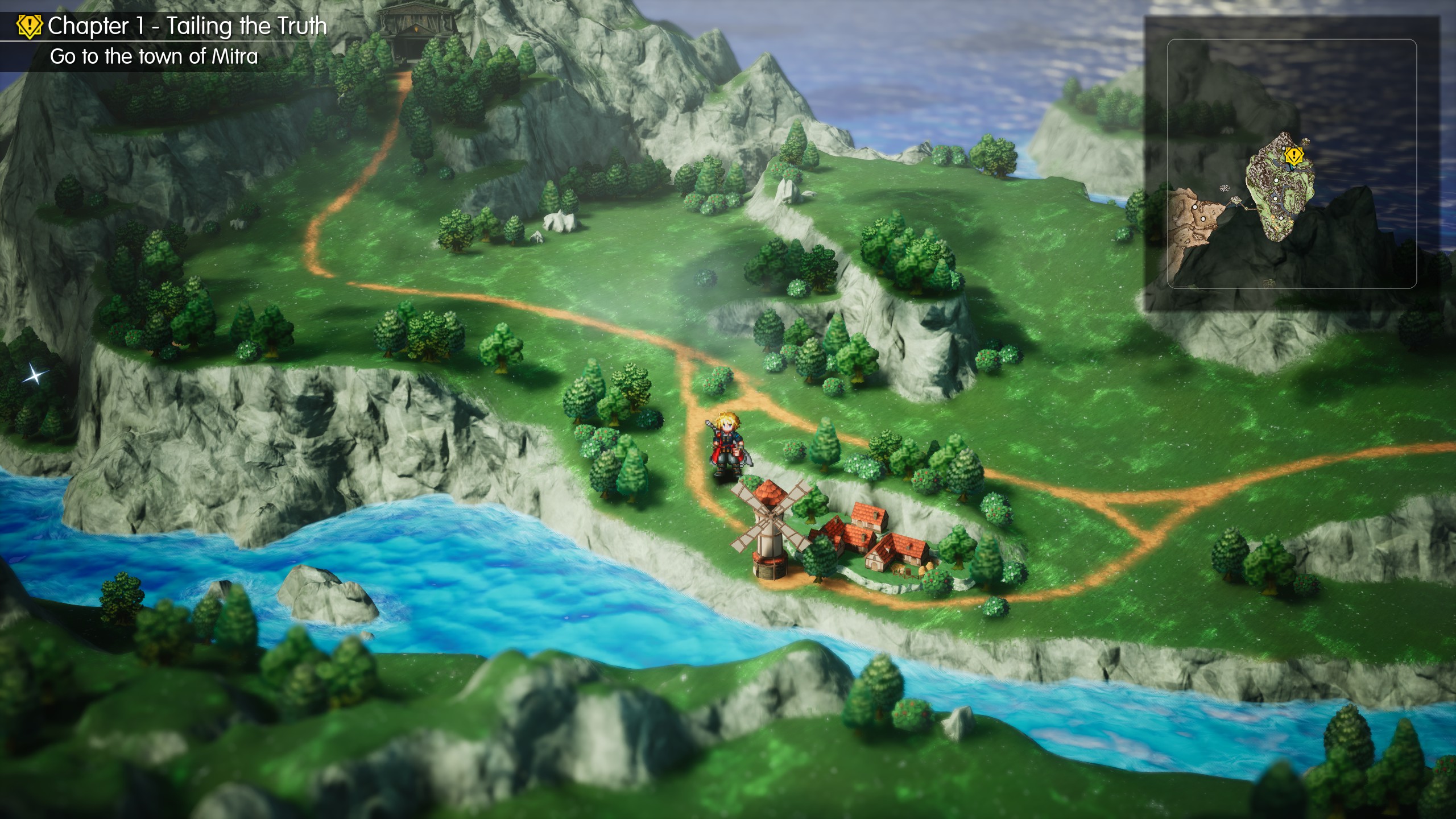
It's not terrible per say, but the overworld map is not the best looking part of the game.
Despite all that grousing, it's a gratifying combat system that has doles out incredible visual flourishes when you unleash special moves or summons, one after another. The Visions, despite my earlier noted contrivances, are also modeled after Final Fantasy XIII's character classes, letting you unlock character-class hybrids. It's also a massive improvement over Brave Exvius's combat, which was pure gacha slop. For those that don't remember, Brave Exvius didn't use a stagger system. Instead, it required you to align buffs, debuffs, and abilities, called CDs, in response to upcoming combat encounters. In that game, you really just had one character tank high-damage attacks, one do standard DPS, and another constantly debuffing enemies, so breaks and elemental weaknesses were always in play. While it didn't have the stagger system, it definitely had Final Fantasy XIII's plate-spinning gameplay, which made more sense in Brave Exvius because inputting moves to maintain meters was way easier on a mobile screen. Nonetheless, Resonance has made MASSIVE improvements over Brave Exvius. While some vestigial DNA persists awkwardly, I can't help but see that as an inevitable issue with no easy solution given the circumstances.
I Still Feel Like An Old Man Yelling At Clouds When I Look At Square Games That Use The Octopath HD-2D Engine
This next segment is entirely my personal preference, and I understand it might come across, as the subtitle suggests, as cloud yelling by a grey beard. But before we get to that, there's no denying that Final Fantasy Resonance looks great. The pixel art fidelity is immaculate, with far sharper detail than OG Octopath Traveler or any of the Final Fantasy Pixel Remaster games. Whenever you pull off a stylish embellishment in combat, you can't help but revel in the incredible detail the programmers and artists put into every frame of every attack. Callback moves have fun Easter Eggs and original details here and there that make seeing every move or attack at least once an absolute delight. When you start unlocking Visions by entering the shrines, I genuinely couldn't help but smile as the game's narrator hyped up classic Final Fantasy characters and their heroic adventures. When I got Terra, almost out of principle, I rewatched her vignette a second time because it made me feel warm and cozy inside. Look, I get what I'm about to say might come across as mean, but there's no denying that when your screen isn't too busy, which we will discuss shortly, Resonance is undeniably a looker in all the best ways. Towns, merchants, landmarks, and dungeons all pop and are fun to explore in part because the game looks so great.
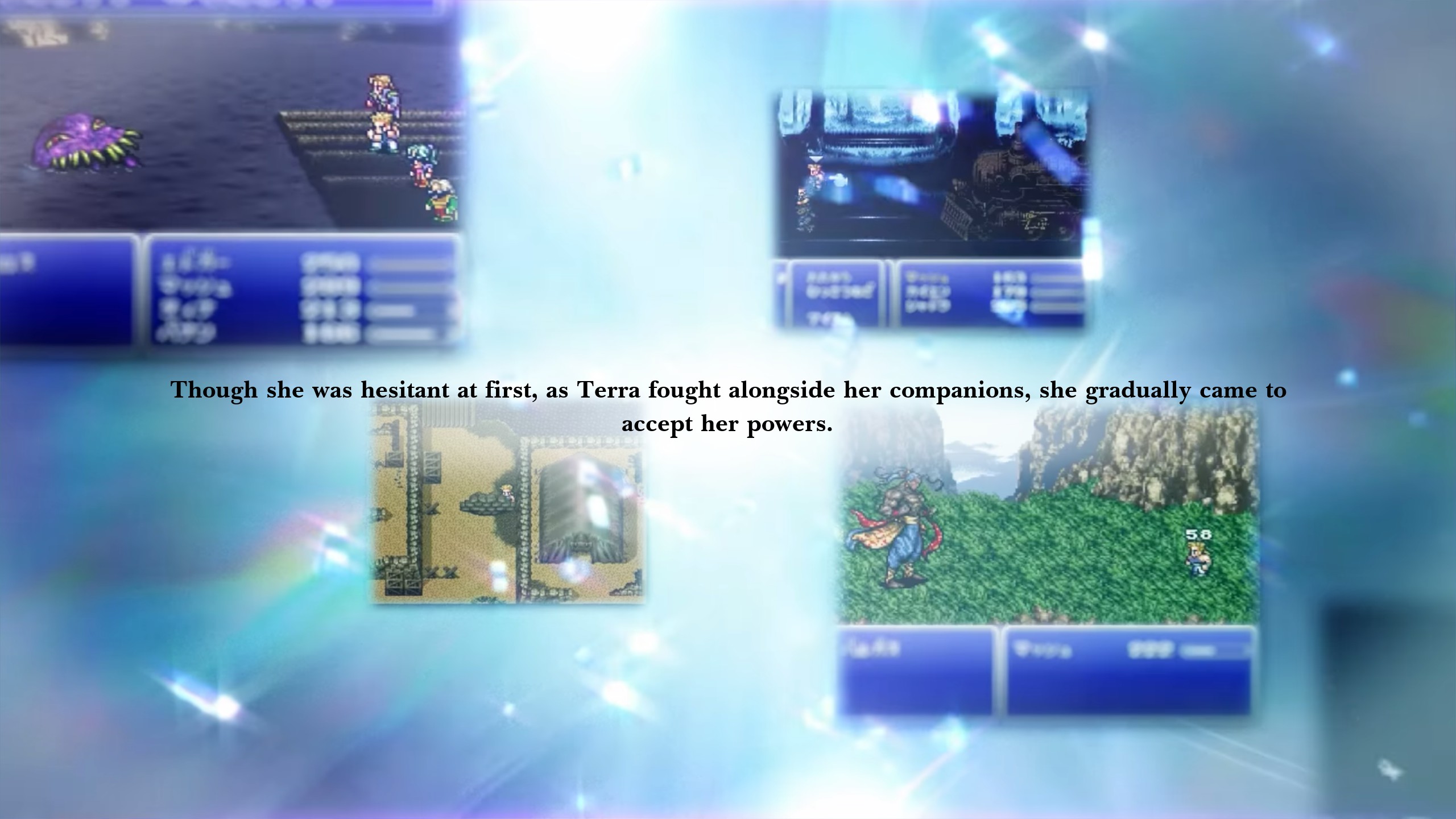
I'm not going to lie, I am a complete sucker for these shrine vignettes for the Final Fantasy characters. These were great!
Now, this next point is where I feel like I'm dating myself, but you chose to read an article written by an aging asshole, so buckle up, because I'm going to talk some yang about shit that may or may not make sense to you. First, let me be clear: I have never been a huge fan of how Octopath Traveler looks. The first game's light bloom is egregious, and the series has always had a shininess that feels way too twee and fuzzy-mittened for my constitution. Oddly enough, the games that have since used Octopath's aesthetic, whether it's the HD-2D Dragon Quest Remasters or the Pixel Remasters of Final Fantasy I through VI, have all looked better and addressed some of my complaints, but other issues still stand. Recurring annoyances include diorama camera angles that always feel annoyingly deceptive and a shallow depth of field that overemphasizes where you need to go, at the cost of letting the player discover things on their own. More fundamentally, and I'm not the only one who's mentioned this, I don't care if the character portraits have been redone to look better at higher resolutions; I think Resonance has a hard and constantly awkward juxtaposition between those highly detailed portraits and its pixel-based world. There's something discordant about having these hand-painterly, slightly animated character portraits alongside blown-out, pixelated backgrounds and sprites. Resonance feels artistically incoherent, and that points to a recurring flaw baked into the DNA of any HD-2D game Square makes. It stands out here because of how much extra detail they put into flashy animations and cinematics, and I may come across as a complete contrarian, but at times, this game looks ridiculous. Having these pixel-sprite, chibi, MapleStory-looking characters pull off epic summons and moves, then transition into Persona-like animated portraits, is an inelegant shift, especially when the game is trying to be dramatic or emotionally gripping.
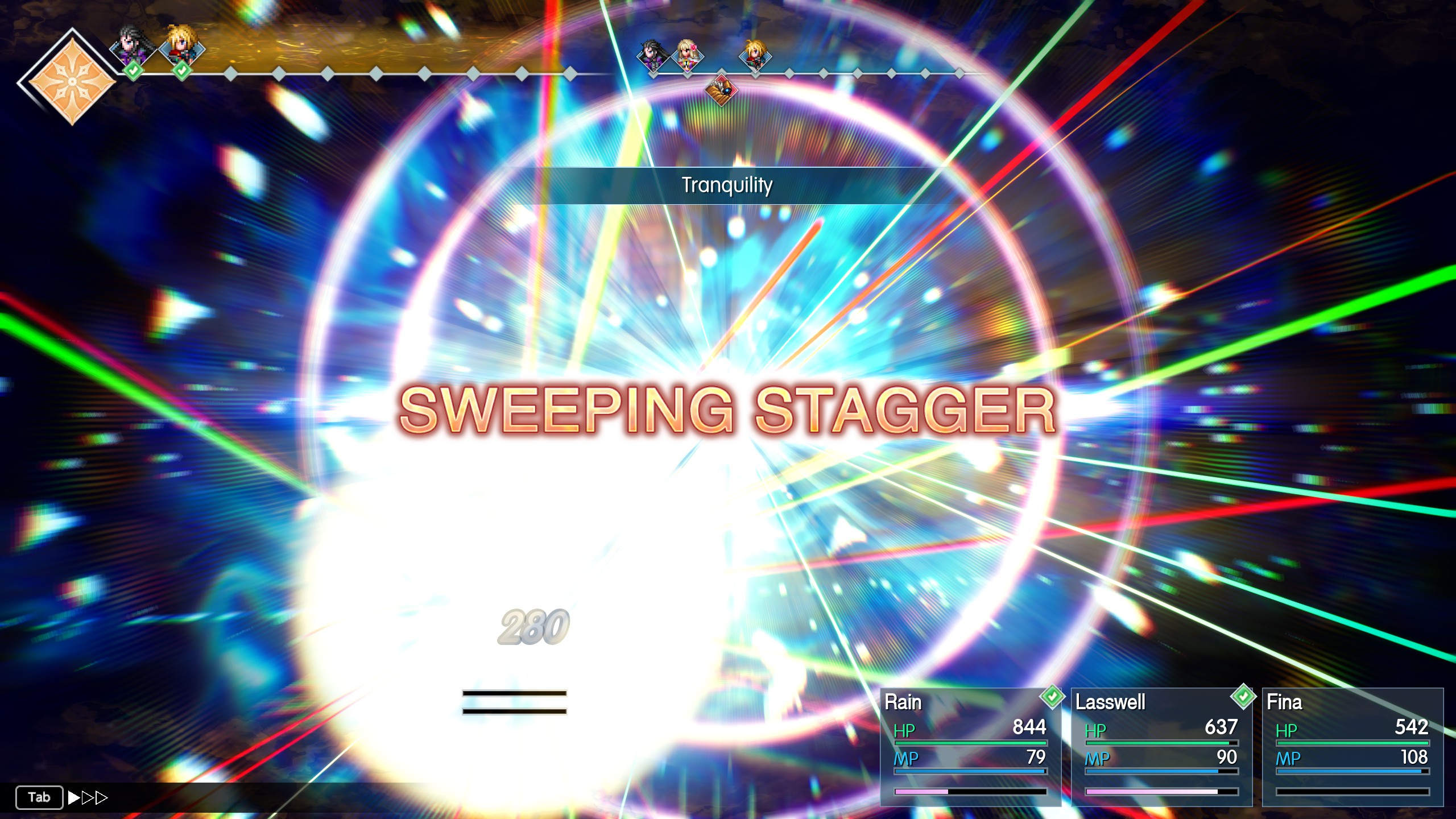
Seriously, what am I even looking at right now?
And there's so much bullshit on your screen sometimes. Some of the more "epic" summons and special abilities are so over the top that it's almost impossible to tell what you're even looking at. Whether it's Lasswell's special attack or one of Siren's big AOE spells, your screen too often becomes a particle-filled, overexposed, blurry mess that at times feels murderous to the eyes. The simpler spells and attacks are perfectly fine, delivering a series of visually impressive moves that evoke classic Final Fantasy maneuvers and spells. And I know there's no easy solution, but the CG cinematics for summoning the Visions don't look great on modern monitors or TV screens because you can tell the development team could only up-res them so far. Admittedly, that's not a huge problem because you'll only watch those once or twice and then speed through them every time after, but it was noticeable enough that I wrote it down in my notes while playing the Resonance demo. I also think your menus take up way too little real estate on the battle screen.
The Story Is Still A "Meh," And That Leads Me To Some Unanswered Questions
Before we get into the weeds on Final Fantasy Resonance's story, we need to establish some context. While the game and its Visions play around with the idea of Resonance's world as a being but one cog in a shared continuity or universe, which was a major plot element in Brave Exvius, it only adapts the first story arc from Brave Exvius. For those unaware, that's the part of the story where the game's original cast tend to their realm's affairs, and only their realm's, and don't go on the more fanciful timeline-blending or realm-merging fan service escapades that came to define Brave Exvius shortly after its release. By only tackling the Lapis story arc, it seems, at least for now, that Resonance is completely focused on Rain, a young knight from the Kingdom of Grandshelt, trying to fend off a mysterious dark lord who deliberately looks like Garland. That evil lord is trying to destroy all the elemental crystals on the continents to unleash some world-shattering ancient evil or power. Rain is joined by his childhood friend and fellow knight, Lasswell, and a youthful woman named Fina, whom they freed from a crystal and who has amnesia.
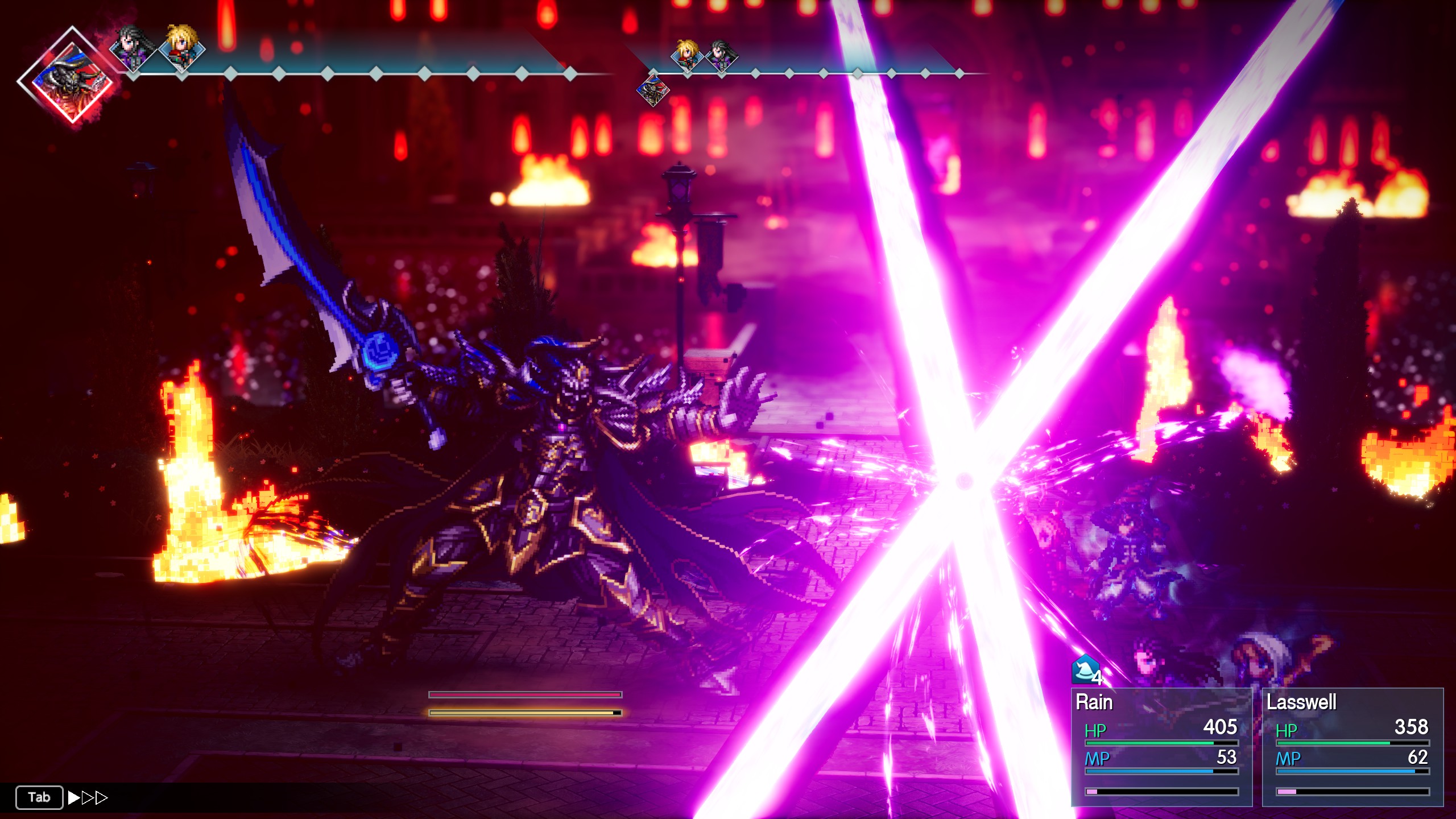
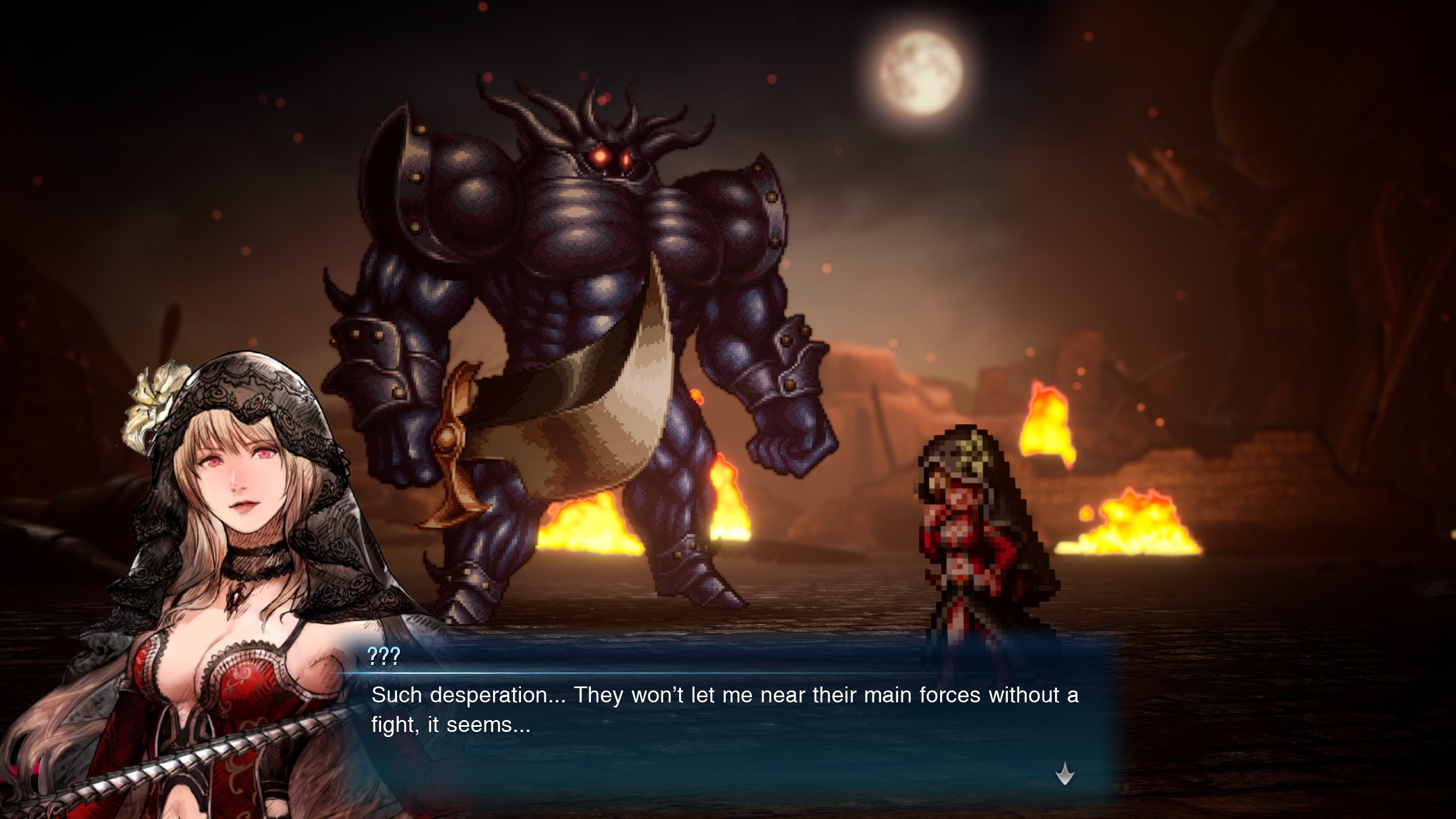
Surprise, the villain in a Final Fantasy game wears black armor and wants to destroy legendary crystals held in temples.
It's about as basic and generic as a Final Fantasy story can get. Even when the demo tries its best to show you it has an emotional core like the mainline Final Fantasy games tend to do, whether it be when Laswell shares his relationship with a former legendary thief or when you help a young girl come to terms with the death of her mother, all of these moments of sentimentality feel like cheap facsimiles of Final Fantasy character arcs or throughlines you have seen before, and better, countless times prior. Those story moments read like child's play, even when wrapped in pretty visuals and backed by an incredible soundtrack. And as someone who finished the Lapis storyline in Brave Exvius, without spoiling anything, nothing about it is especially shocking or memorable. So, unless they're rewriting the story to improve it or plan to add details that fill in blanks without relying on the amalgam universe stuff Brave Exvius used, I have a real hard time imagining this game keeping anyone narratively interested. Which leads me to my biggest unanswered question about the story: what are they doing to address all the necessary story stuff that existed alongside the Lapis story arc, if this isn't going to adapt all of Brave Exvius? Is anything that was still complementary to the Lapis storyline co-opted, or did the dev team draw a hard line in the sand and say, "Nope, we are only doing this stuff and JUST THIS STUFF?"
And I get you can't include the raids or seasonal, game-specific stuff from Brave Exvius, but if Resonance isn't going to lead to a shared universe where you relive iconic moments from the main games or revisit classic dungeons, what is the big "play" with this game? How will it bring together all these classic Final Fantasy characters as special summons in a way that makes sense? Is the game just going to share introductory vignettes and then call it a day, with zero follow-through? Will all the fan service be just that, "fan service," or will there be new storytelling or worldbuilding to address holes that were once filled with timed missions and challenge dungeons that teleported you into universes far removed from the Kingdom of Grandshelt? Also, Brave Exvius' first story arc ends on a minor cliffhanger, which is why it partially felt justified that it continued to get story content years after its release. So is the creative team behind Resonance rewriting stuff so this game has a proper, final ending, or is this game getting post-release DLC that reintroduces more Brave Exvius content later? It doesn't seem like there's a plan to do that because Resonance isn't launching with a season pass like many other Square Enix releases.
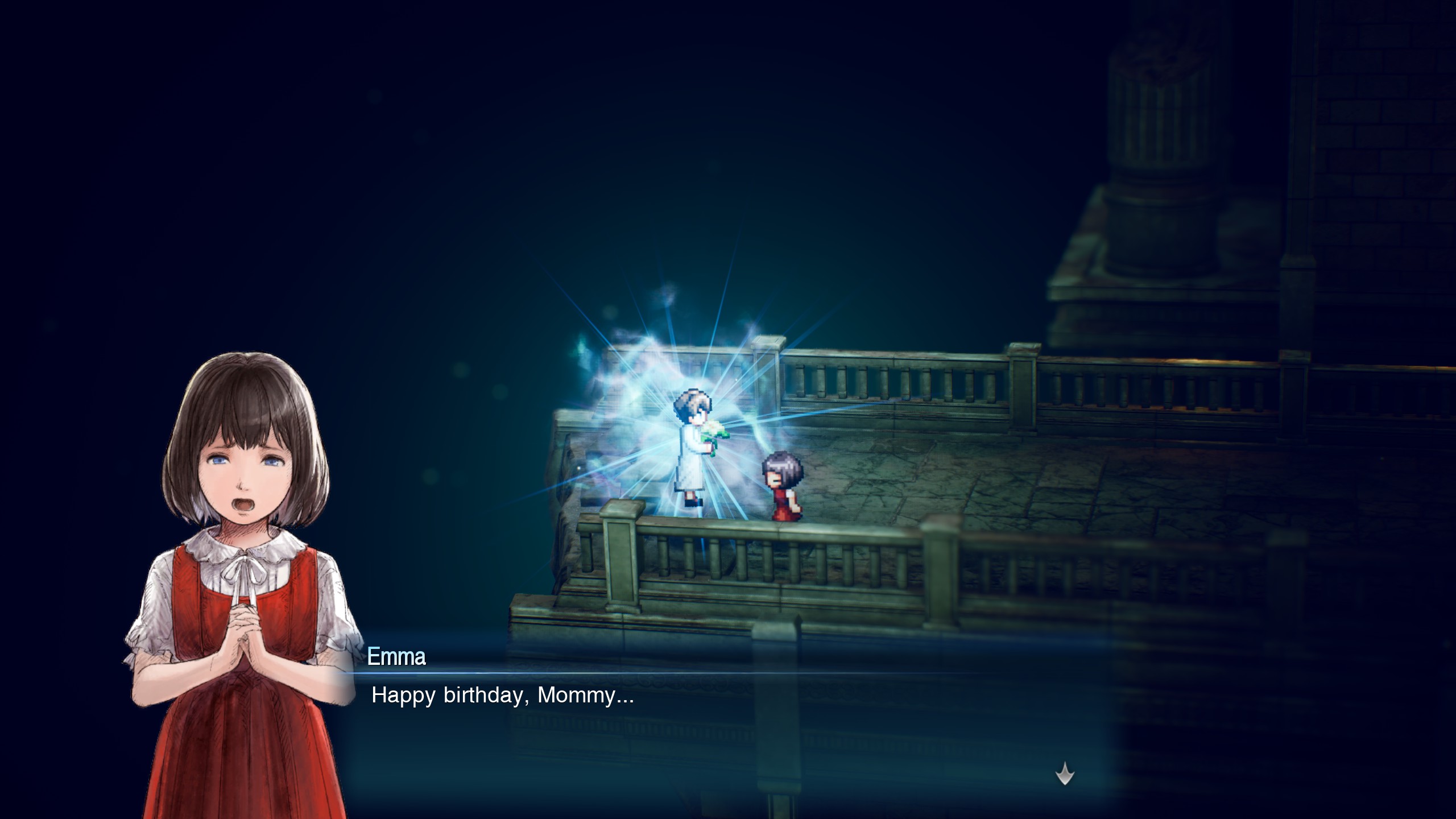
Again, I get what this scene is trying to do, but having these pixel-based characters pantomime alongside these detailed portraits looks stupid.
All that aside, I genuinely think everyone should check out the Final Fantasy Resonance demo. The combat has "juice," and for most people, this is one of the most beautiful games of 2026. I have personal grievances with the Octopath-fication of throwback RPGs, but this game looks flawless and has a sweeping, impressive soundtrack. Square's vertical slice, which lets you play the first act of the full release, is massive, and you really get a grasp of its mechanics and the finer tools at your disposal. I've shared some concerns about the final product, and I don't think it's destined to be perfect, but this is an admirable experiment in turning a gacha game into a self-contained single-player experience. I hope to see this treatment done again in the future with other discontinued Square Enix mobile games. As I said near the start, I don't think it's possible to play this demo and still be on the fence about playing the full game, and that's a monumental accomplishment. So, if you haven't given it a short, consider it, and if you have played the Resonance demo, feel free to chime in with your impressions in the comments!
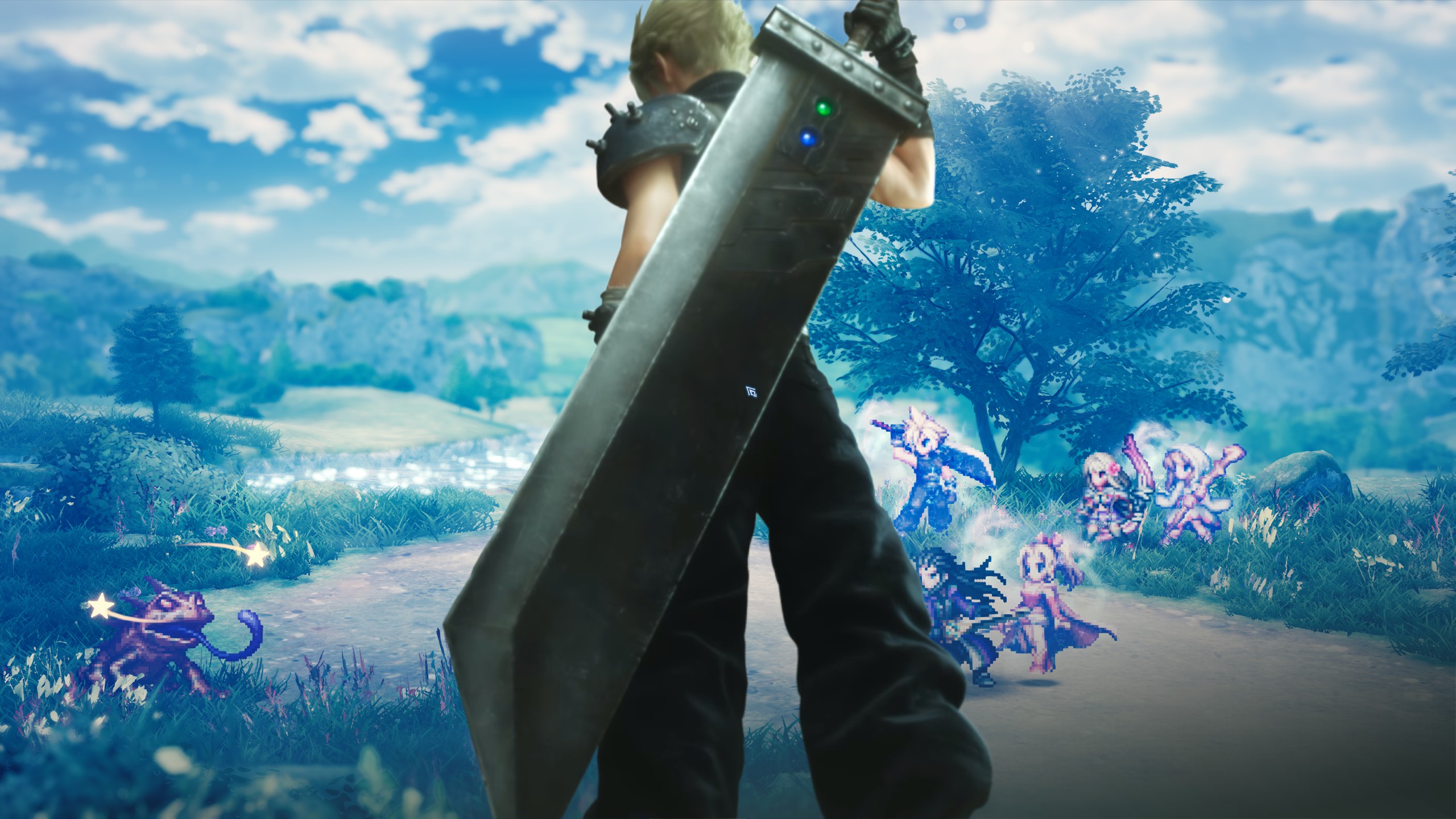
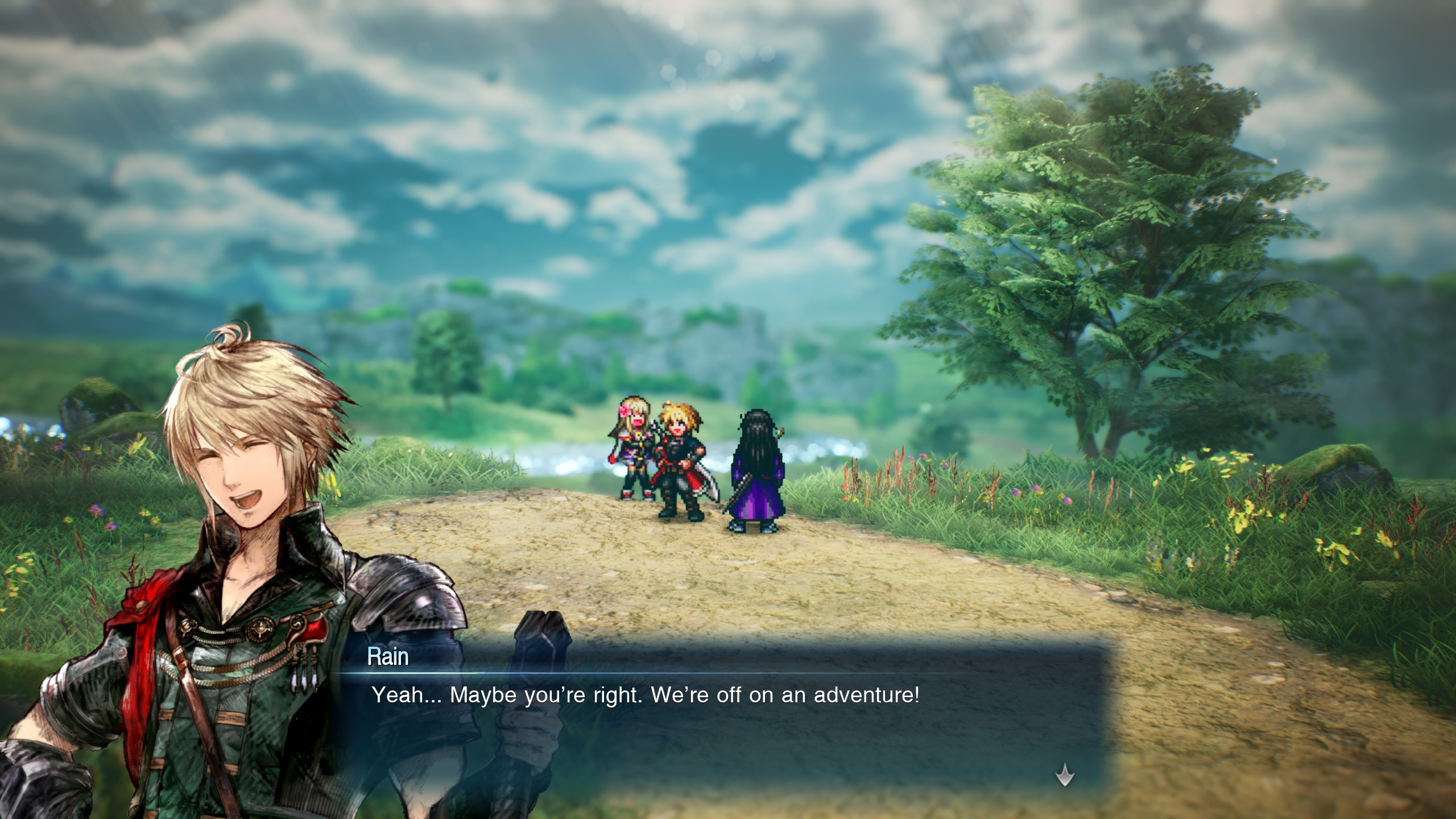
And hey, the gang is all here for another fan servicey adventure!