
My End Of 2020 Awards
Hey there folks, and welcome to My End of 2020 Awards, this year's contribution to my ongoing archive of video game acknowledgements. A few years back this was a multi-part extravaganza split across several days, with unique individual awards intended to recognise the best (and worst) attributes of everything I've played in the past twelve months. More recently, though, I've been favouring a more streamlined approach focusing only on my personal top ten titles, and this is the model I'll be adopting again for this year's awards.
Blogs of this kind usually preface the bulk of their content with a review of the year, but given how 2020 unfolded I think it's best not to indulge that expectation too much. For me personally, it's been a very tough year both inside and outside of the video game bubble - a year characterised by a global pandemic that has made my job in healthcare more demanding than it's ever been, and an increasing awareness of malpractice within the games industry that has forced me to ask some serious questions about ethical consumption of arguably my favourite entertainment medium. For this reason, video games haven't served their usual escapist purpose quite so effectively for me this year. A cursory glance at my record for 2020 puts me at twenty-three games beaten, coming in just below last year's total of twenty-four and slotting in above 2016's meagre twelve titles as my second least productive gaming year in recorded history. While that may sound like cause for disappointment, I'm actually pleasantly surprised that I was able to reach the credits of that many titles, what with 2020 being the year it was.
Before I get stuck into the top ten, I'd like to provide some insight on how this list was constructed. First, this list is not presented in any kind of ranked hierarchy. It's long felt disingenuous to me to try and organise these lists into any kind of order, since the games featured on them differ wildly and offer a variety of experiences that are rarely directly comparable to one another. Instead, I'll be presenting my top ten in alphabetical order. Second, this list is not restricted to games that released in this calendar year. I put these top tens together with the intention of providing a fair reflection of the experiences that I've had playing games over the past twelve months, and since my playing habits are vastly skewed in favour of older titles, it would be misrepresentative (not to mention downright impossible) to populate a full list with only 2020 releases.
With all of that said, it's time to reveal the ten games that defined my 2020:
Concrete Genie
Pixelopus / PlayStation 4 / 2019

I went into Concrete Genie at the start of 2020 not really knowing what to expect. The game's rather vague promotional materials painted it as an experience that I thought might be comparable to Team ICO's output, exploring the developing relationships between protagonist Ash and the titular Genies that he brings to life with his enchanted brush. I fantasised about how this might feed into the gameplay and story, and all I could imagine was a game mechanically unlike anything else I could think of. By the end of the experience I realised that a lot of those expectations were misplaced - the Genies amount to little more than personified Metroidvania-style abilities that gate progress and provide access to hidden areas, resulting in a game that at its core doesn't feel all that different or revolutionary. But even so, I came away from Concrete Genie having fallen a little bit in love with it.
Ostensibly, Concrete Genie is a short adventure game with platforming, puzzle and light combat mechanics. But to describe it as such is to overlook one of its primary aspects - its fantastic painting mechanics, and how they provide a platform for creative expression. Rather than offering a complex toolset that might put off some players, Concrete Genie uses a catalogue of preset objects, tactile motion controls and sophisticated internal logic to ensure that the results of painting will always be mechanically rewarding and aesthetically pleasing, regardless of artistic ability. While the painting mechanics are used as a means to progress the story, and some puzzles do demand solutions in the form of painting specific objects in specific places, by and large the game doesn't railroad the player into doing things in any particular way. Almost every vertical surface in the town of Denska is a potential canvas, and I spent around half my play time painting on walls that weren't story-critical just for the fun of it, combining objects in new and different ways to bring life and colour back to every possible inch of the game world.
Even Concrete Genie's expressive painting mechanics are secondary to the main reason it makes this list, though - its story, which, although simple and far from revolutionary, really resonated with me. Taking on the role of Ash, a creative introvert bullied by his peers for his artistic leanings, brought back some of my more difficult memories of my own childhood. At school I was known as the kid with a black ring binder under his left arm and a ballpoint pen in his right hand, writing at every possible opportunity in lieu of socialising with his classmates. Consequently, I was easy pickings for multiple bullies in my year group, and my folder of scribblings was all too often the target of their attacks. That opening scene, where Ash's notebook is stolen and its contents scattered to the winds, hit me hard. As Concrete Genie's story unfolds, it becomes apparent that the kids targeting Ash have issues of their own that explain their cruel behaviour, another gut-punch reminder that brought back memories of the time in my early twenties when I found out one of those aforementioned bullies had taken his own life following a lengthy struggle with depression. I never made peace with most of my childhood aggressors, which made the game's slightly saccharine ending feel almost cathartic to me. Concrete Genie may not have been the experience I was hoping for, but that didn't prevent it from resonating with me in its own unique and unexpected way.
Dead Space
EA Redwood Shores / PlayStation 3 / 2008

I've already written at length about why Dead Space deserves its spot on this list, so I'll try not to repeat myself too much here. To briefly summarise, Dead Space was an experience that I originally shared with an ex-girlfriend back in the spring of 2009, and which I've long considered to be "lost" to me as a result of the breakdown of that relationship. This year I managed to "reclaim" the game for myself, achieving my first full playthrough in over a decade over the course of two weeks in October. The new memories I was able to forge with it over that fortnight acted like a well-placed shot from a plasma cutter, severing it from association with that long-gone time in my life and allowing me to wrap the open wound in a fresh layer of context.
What I didn't go into great detail about in that blog was what made Dead Space worth attempting to reclaim in the first place. Even now, twelve years on from its original release, it stands as one of the finest examples of action horror to grace the medium. Using Resident Evil 4's seminal game design and over-the-shoulder perspective as a blueprint, Dead Space builds on those foundations with some truly novel and inspired concepts. The sci-fi setting permits the inclusion of a completely diegetic heads-up display, with health bars displayed on the characters' backs and ammo counts shown on the weapons themselves. The game also warrants praise for its enemy designs, all of which have weak points tied to their limbs to encourage a more varied approach to combat instead of relying solely on headshots - dubbed "strategic dismemberment" by the developers. Further depth and variety comes from the inclusion of stasis and kinesis abilities, which allow for enemies to be slowed down and attacked with environmental objects respectively, as well as playing into some simple environmental puzzle solving. All of this innovation is supported by an incredibly polished presentation, consisting of cohesive, believable visuals and some of the best audio direction in the medium.
One aspect of Dead Space that I feel doesn't get enough recognition is its story. While it seems like the franchise was intended to be a multimedia project from the outset, with comic books, animated films and novels expanding the universe long before any sign of a bona fide sequel, I feel confident saying that the original game stands strongly on its own. As with all the best examples of the genre, where the catalyst for the unspeakable bad thing has already happened prior to the protagonist's arrival, Dead Space starts in media res. Revealing the details of what happened on board the USG Ishimura through a drip-feed of audio diaries and text logs running parallel to their progress, Dead Space allows the player to slowly piece together past events as they navigate its dark corridors. Just as the gameplay slowly ramps up both in difficulty and tension, so too does the story ramp up to its climax - one which is, admittedly, slightly undermined by a disappointing final boss battle, but which has nevertheless secured Dead Space a spot on my list of all-time favourite games. I certainly won't be leaving it another eleven years before I revisit this again.
Final Fantasy VII Remake
Square-Enix / PlayStation 4 / 2020
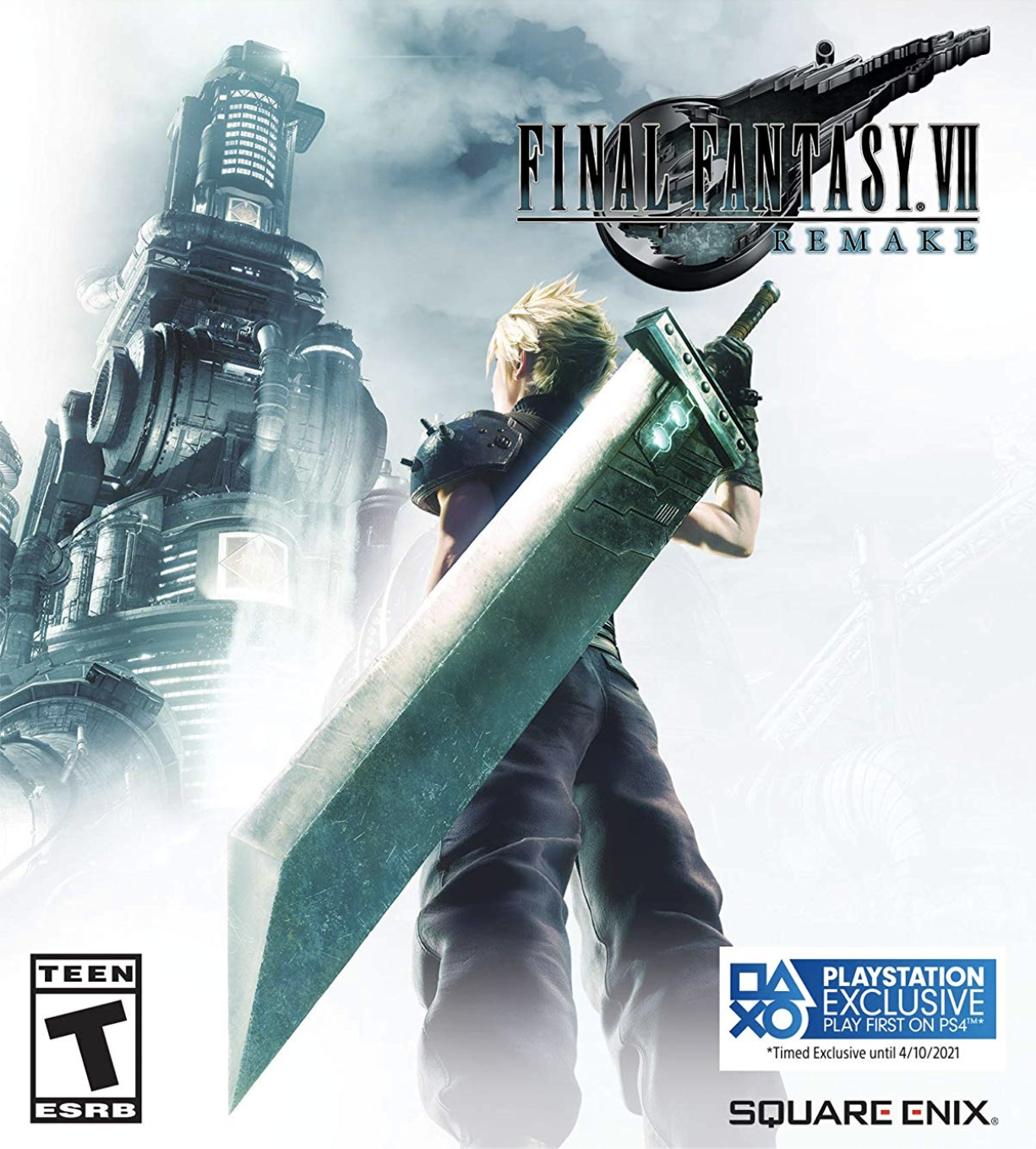
Final Fantasy VII Remake is a difficult game for me to write about. Coming from someone who previously penned over sixty thousand words about the original Final Fantasy VII across thirty-five blogs over four years, that may seem odd. But I think it's precisely because of the existence of Enduring Final Fantasy VII that the prospect of doing anything even remotely similar for this reimagining fills me with a palpable sense of dread. It's a game that deserves the very best that I can offer as a writer, not necessarily due to the quality of the game itself, but for the sake of what its existence represents. This trio of paragraphs will not attempt to be that tribute. Perhaps it will materialise somewhere down the line. Perhaps it will remain in gestation until the game's remaining instalments see the light of day. Perhaps it will never happen at all. But I can't put this game on this list without writing at least something about my experience with it.
At the end of its first chapter, I was completely on board with what I thought Final Fantasy VII Remake was trying to do. The game took me through a faithful recreation of the assault on Mako Reactor No.1, funnelled me through accurately-rendered three-dimensional versions of Midgar's iconic architecture, introduced me to the basics of a combat system that intelligently combined real-time action with turn-based strategy, and I loved every single second of it. Fifteen minutes into the second chapter, I was ready to get off the ride. I walked through the streets of Midgar at a painstakingly slow pace, triggered incidental dialogue as I passed generic-looking NPCs, endured an unscheduled early appearance by Sephiroth that seemed to serve no purpose beyond fetishising his rivalry with Cloud, and I hated every single second of it. This was my experience of playing Final Fantasy VII Remake in microcosm - moments of unbridled, nostalgia-fuelled bliss juxtaposed directly with moments of confused revulsion. Nowhere is this juxtaposition more evident than in the game's conclusion, which left me intensely conflicted and unsure whether to commend the developers for having the gall to hint at altering some of the original Final Fantasy VII's most significant story beats, or lambast them for completely missing the point of why those story beats exist in the first place.
Final Fantasy VII Remake is a game that I spent years convincing myself I wanted. It is also a game that I spent years convincing myself I didn't want. It is a game that was simultaneously destined to succeed and set up to fail, and it does both of those things spectacularly. I am at once excited and terrified to see where the project goes from here.
Final Fantasy Tactics: The War of the Lions
Square-Enix / PlayStation Portable / 2007
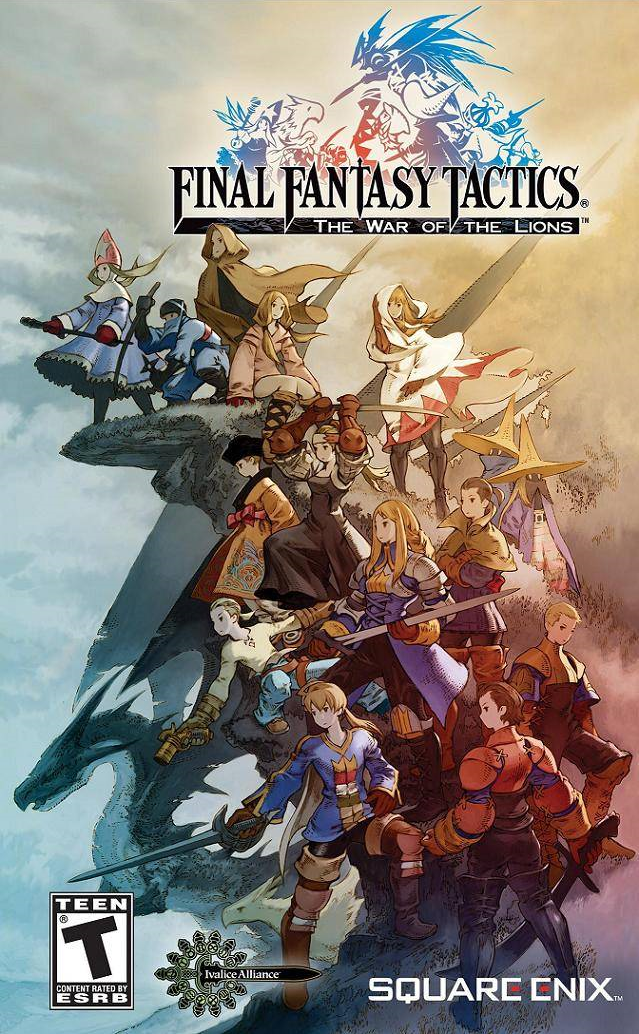
Final Fantasy Tactics: The War of the Lions is a game that I thought I would never see the end of. Since receiving the game alongside a brand new PlayStation Portable for Christmas in 2007, I have attempted to play through it more times than I can remember, and each attempt has been scuppered or waylaid by something or other. I've burned out on its combat mechanics, lost my place in its labyrinthine story, lost crucial party members to its implementation of permadeath, hit insurmountable brick walls in the form of unbeatable battles immediately preceded by save prompts, and even lost dozens of hours of save data by accidentally snapping my PSP's proprietary memory card. With every failed attempt I would distance myself from the game, sometimes for years at a time, before feeling its inexorable pull and coming back for one more try. Such were the circumstances when I found myself bound by the urge to reboot the game on my PlayStation Vita back in the spring, a feeling accompanied by curiosity as I wondered what circumstances would conspire to halt my progress this time.
Final Fantasy Tactics: The War of the Lions does not make itself easy to love. As a port of a game originally released for the PlayStation in 1997, it is full of design choices that seemed questionably archaic in 2007 and are almost unforgivable in 2020. The aforementioned ability to soft-lock one's game by saving immediately before an unwinnable story mission is perhaps the most egregious example, but there are a wealth of minor aggravations too. My biggest personal bugbear was having to pick my units for each battle blindly, with no advance knowledge of the enemy units or terrain. This resulted in my first attempt at almost every story mission amounting to little more than reconnaissance, discovering enemies' jobs, equipment and positions on the map so that I could formulate a strategy and come back with a properly coordinated squad for the second attempt. The PSP version of the game is also plagued by chronic slowdown during combat animations, reducing an already methodically-paced process to even more of a crawl.
While many of these annoyances serve to artificially prolong the experience of playing Final Fantasy Tactics, they do nothing to diminish the core of that experience - namely the excellent mechanics and addictive character development that drive the heart of its combat encounters. By combining the isometric, turn-based strategy RPG gameplay of the Ogre Battle series with Final Fantasy's trademark Job system, The War of the Lions provides players with a highly customisable set of abilities that can be combined in some truly remarkable ways, potentially even stomping all over the game's intended difficulty curve with the right amount of forearmed knowledge. These systems complement one of the greatest stories to grace the genre, if not the medium altogether, mostly eschewing the fantastical trappings of most Japanese RPGs in favour of a much more grounded story exploring the death of a king and the resulting power struggle as several factions seek to fill the vacuum. Told from the perspectives of childhood friends Ramza Beoulve and Delita Heiral, it is a tale of betrayal, duplicity, deception and corruption, twisting and turning numerous times as it unfolds from beginning to end, and its Shakespearean atmosphere is heightened even further by The War of the Lions' updated translation. More than anything else, it is this captivating story that has kept me coming back to Final Fantasy Tactics time and again for the last thirteen years, and to finally have witnessed its conclusion is a more than fitting reason to include it on this year's list.
Legacy of Kain: Soul Reaver
Crystal Dynamics / PlayStation / 1999
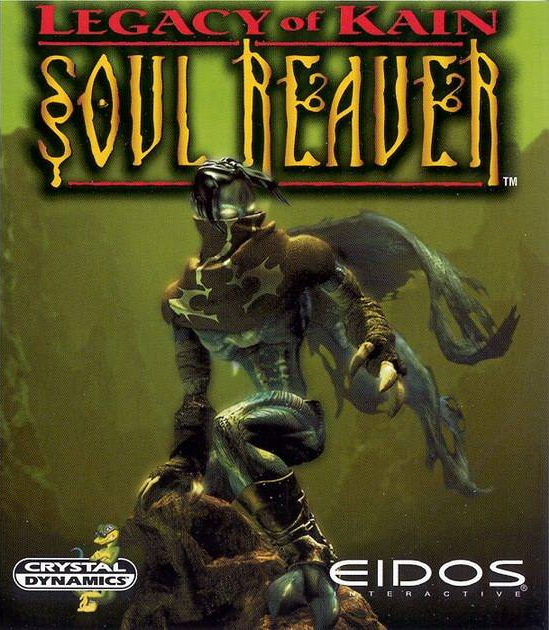
Legacy of Kain: Soul Reaver is a game that feels like it's been in my backlog forever. I was first exposed to Raziel and the vampiric realm of Nosgoth a little over twenty years ago in the form of a cover feature and inclusion on a demo disc from the Official PlayStation Magazine some time in 1999. That playable demo (which took place in an environment that, as far as I can tell, did not make it into the final version of the game) must have left some residual impression upon me, although it would be a full decade before I would acquire a copy of the full game, and a further eleven years before I would play it through to completion.
Aesthetically Soul Reaver stands on a level comparable to the original PlayStation's very best, with its full-3D environments and detailed character models easily rivalling the likes of Metal Gear Solid or Vagrant Story. Where it surpasses its contemporaries, though, is in its technical proficiency. Soul Reaver was the first CD-based game of its kind to present its world seamlessly, with no visible load times interrupting gameplay, a phenomenal achievement considering the hardware of the time. Not only this, but each of its environments has two variants which can be shifted between on the fly, allowing the game to implement various mechanics reliant on moving between the spectral and material versions of the world, without the transition hindering the player or interrupting the game itself. These pioneering features make Soul Reaver feel technically impressive even twenty-one years and four generations of hardware removed from its original release.
While Soul Reaver's slightly clunky action-adventure gameplay and Metroidvania-style gated progression haven't aged brilliantly, its story does manage to leave a lasting impression even in 2020. In an age where so many story-centric video games shoot for a realistic presentation, Soul Reaver stands out by being more evocative of theatre. The voice actors deliver their dialogue with a dramatic theatricality rather than pursuing understated realism, and in the context of this Gothic fantasy setting, it's an approach that works wonderfully and feels almost refreshing by comparison. While I couldn't say for certain that Soul Reaver would impress the average player in 2020, it certainly did a lot that impressed me, and that's why it makes it onto this list.
The Legend of Zelda: Majora's Mask 3D
Grezzo / 3DS / 2015

Rounding out the trio of games that have taken me over ten years to beat is The Legend of Zelda: Majora's Mask. Perhaps the most shameful gap in my history with the Zelda franchise, I have owned a copy of Majora's Mask in one form or another ever since 2004, when I acquired a preowned copy of the Zelda Collector's Edition alongside my brand new GameCube. While Ocarina of Time and subsequently The Wind Waker were games that I revisited numerous times over the next couple of years, I was unable to see past Majora's Mask's obvious differences to those two more conventional adventure titles. I struggled with the three-day time limit, grew frustrated with the lack of progress I was making, and felt uneasy due to its noticeably darker tone. Not dissimilar to my experiences with Final Fantasy Tactics, I attempted to play through it several times, each time making it a little further than the previous effort, before ultimately drifting away from it in favour of another more straightforward experience from a different title.
I don't think it is any coincidence that it was the 3DS version of Majora's Mask that got me over those humps and finally saw me through to the rolling credits at the game's end. On top of being nicer to look at and playable on the go, this remake brings with it a number of alterations and quality-of-life improvements designed to make the experience of playing Majora's Mask more intuitive and less impenetrable. The improved Bombers' Notebook in particular was a godsend, presenting all its information with a much greater degree of clarity than its original incarnation, and frequent tip-offs from the Bombers around Clock Town helped guide me towards side quests (and subsequently rewards) that I may never have found otherwise. Devout fans of the Nintendo 64 original don't seem to like the 3DS version very much on account of how many of these changes supposedly compromise the singular vision of the source material, but for me personally, I appreciate its efforts to make the experience more accessible.
As a Zelda game, Majora's Mask sits somewhere around the middle of my personal ranking of the franchise - a solid, if slightly short sequel to Ocarina of Time with some excellent dungeon designs and a cool mask-transformation gameplay gimmick. However, to judge Majora's Mask as a Zelda game is to miss the point somewhat. Majora's Mask's greatest strength undoubtedly lies in engaging with its very un-Zelda-like unique core mechanic - the three-day cycle. Meeting the inhabitants of Clock Town, observing their routines, getting to know them, becoming attached to them and fulfilling their requests and desires, only to ultimately undo all my hard work by playing the Song of Time and returning everything to square one - this was where Majora's Mask really spoke to me. By engaging with this core gameplay conceit, the game re-taught me an important lesson in mindfulness - to try and change the things I can, to accept the things I can't, and to recognise that my time is valuable and how I choose to spend it is important. In a year as totally bat-shit insane as 2020, that was a lesson I sorely needed reminding of at times, and Majora's Mask was the perfect game to do it. That's why it earns its spot on this list.
Marvel's Spider-Man
Insomniac / PlayStation 4 / 2018
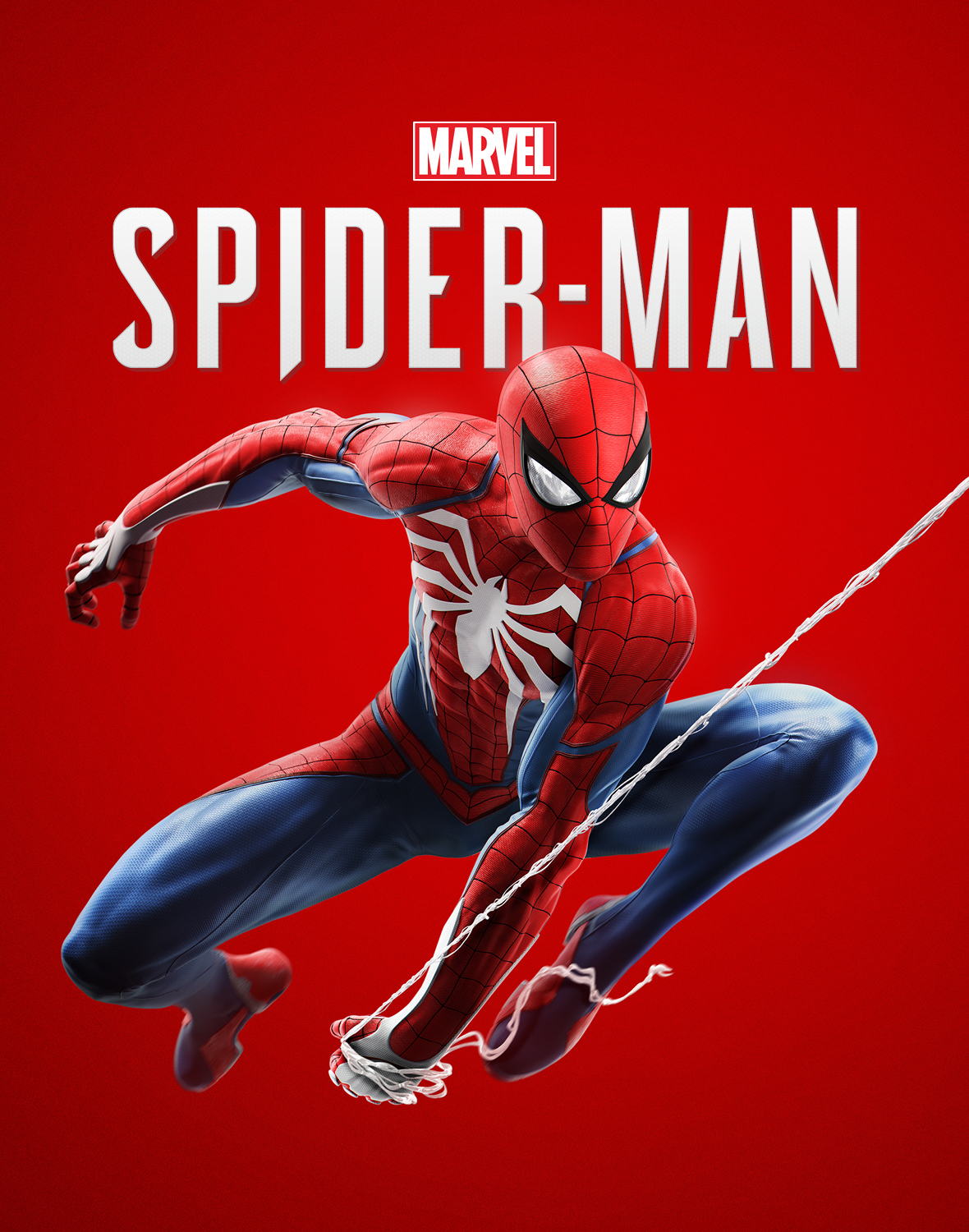
I've gone off the open-world genre a little bit recently. I think this is primarily down to the increasing homogeneity of the genre, a phenomenon I've seen dubbed 'Ubification' in honour of the publisher most associated with it. I'm sure everyone reading this knows the kinds of games I'm talking about - games with stupendously large open worlds covering hundreds of square kilometres, littered with towers to climb and enemy checkpoints to clear, mini-maps spattered with icons corresponding to hundreds of pointless collectibles and dozens of side-missions all adhering slavishly to the same half a dozen formulae. A cursory glance at my list of games beaten this year reveals that of the twenty-three titles I played, only two were open-world games - Just Cause 3, and Marvel's Spider-Man. While Rico Rodriguez's third outing didn't do much to mess with the now-established open world template, Insomniac's take on the web-slinging wonder broke from the mould in two crucial ways.
The first of those breaks with convention comes in the size of its game world. Spider-Man's rendition of Manhattan is definitely one of the smaller open world environments of the last generation, clocking in at around twelve square kilometres. This smaller map breeds familiarity in a way that larger open worlds simply can't, because players see more of the same streets and landmarks while they play, building a better mental picture of the game world's layout as they do. The smaller world is also populated with fewer collectibles, making the otherwise daunting task of collecting everything for a 100% run feel much more manageable.
The second, and perhaps more revolutionary, aspect of Spider-Man's open world is how the player moves through it. The web-swinging mechanics provide some of the fastest, most fluid, and most fun traversal I have ever experienced in an open-world game. And when it's fun to move through the world, the player has a reason not to fast-travel across it (often a necessity in larger open-world games). This, in turn, breeds more familiarity with the game world and provides more opportunities to stumble upon collectibles organically. This idea of organic discovery of points of interest is then further supplemented by the implementation of Spider-Sense, which marks points of interest within the game world instead of on the mini-map. All of these systems and design choices feed back into each other to create an experience where tracking down collectibles and taking on incidental side missions doesn't feel like simply ticking off items on a checklist, as it does in so many other games. It's this smart design philosophy which made Marvel's Spider-Man easily the best open-world game I've played this year, and more than worthy of inclusion in this blog.
Pokémon: Let's Go, Eevee!
Game Freak / Switch / 2018

I've said several times over the years that these lists wouldn't be complete without including a Pokémon game of some description. This year's representative is Pokémon: Let's Go, Eevee!, the most recent reimagining of the franchise's first generation of games. Essentially a retread of Pokémon Yellow, Let's Go, Eevee! and its partner game (Let's Go, Pikachu!) seek to combine the series' traditional RPG framework with the motion-based catching mechanics of 2016's mobile sensation Pokémon GO. The end result is a game that is often laughably easy, but nonetheless very enjoyable to play through, particularly from the perspective of someone with over twenty years' experience as a Pokémon Trainer.
I will concede that a lot of the fun I had with Let's Go, Eevee! was derived from nostalgia. Pokémon Blue was my first dance with the franchise, and as a result the region of Kanto holds a very special place in my heart. To see it rendered in full 3D for the very first time, with wild Pokémon roaming the tall grass in real time, warmed the soul of my inner nine-year-old in a way I wasn't expecting. While the game posed next to no challenge for the duration of my playtime, I found that fact oddly comforting. Exploiting type match-ups has become so much like second nature to me that I played most of the game in a zen-like state, aware of the decisions I was making and how they were influencing what was happening on the screen, but not necessarily conscious of it. To put it more bluntly, playing Let's Go, Eevee! was, as kids much cooler than I might say, "a chill time".
2020 has been a very weird year to be a Pokémon fan. We saw the release of an Expansion Pass for Sword and Shield, the first time that mainline Pokémon games have been expanded with post-release DLC. Both The Isle of Armor and The Crown Tundra offer substantial chunks of content to supplement what was a disappointingly bare-bones core experience, but I'm still not sure they elevate Sword and Shield to the level of a complete package. I plan to replay Sword in 2021 with the Expansion Pass content integrated into the experience, and I'm hoping that doing so might improve my overall opinion of the game. However, there's a niggling thought at the back of my mind that getting the "complete experience" probably still won't be as enjoyable as this remake of a game I originally played over twenty years ago. Is that a sad indictment of the current state of the Pokémon franchise, or is it a testament to the simple fun of Let's Go, Eevee!? I guess I'll find out next year.
Super Mario 3D All-Stars
Nintendo / Switch / 2020
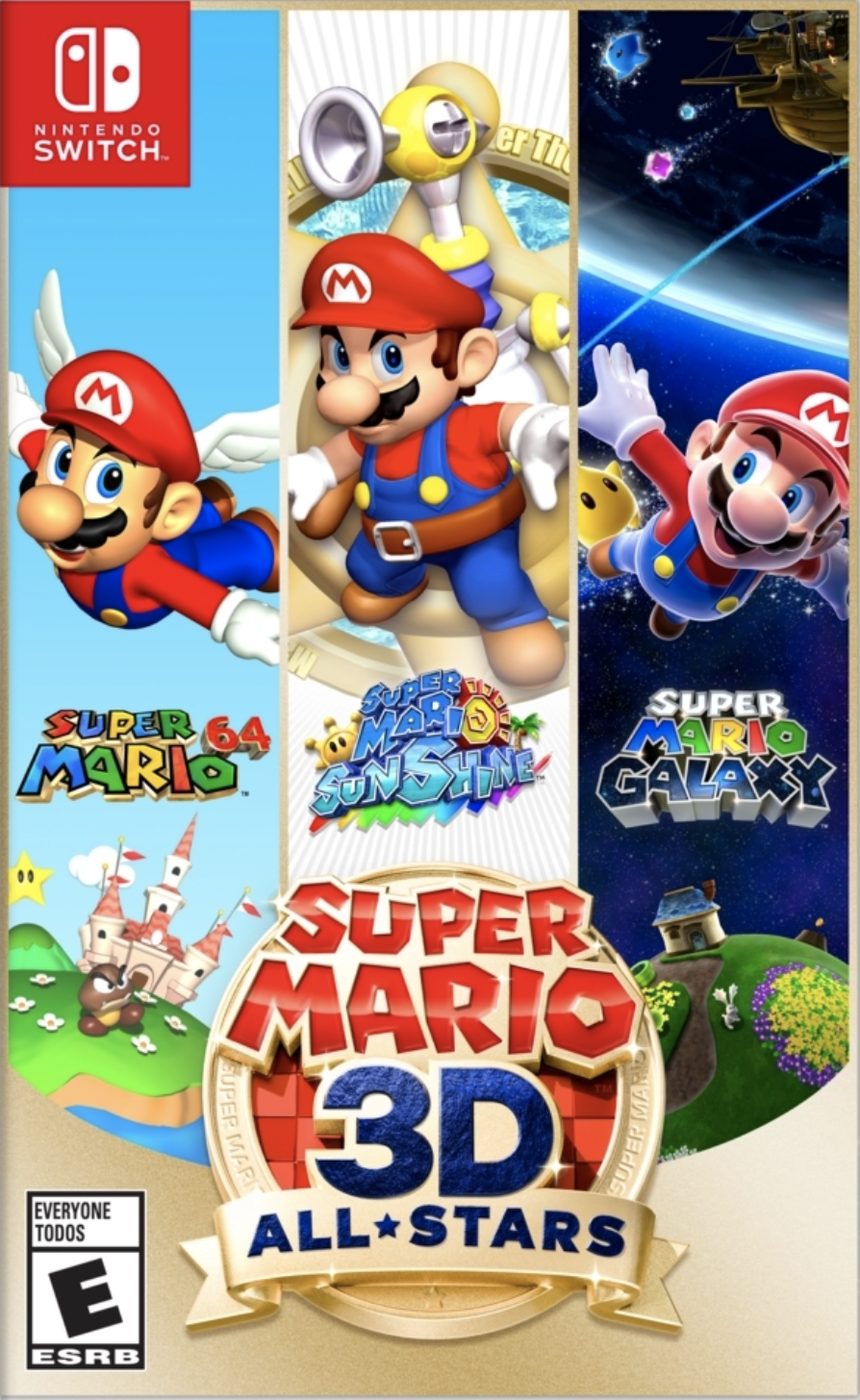
I was never a Mario guy growing up. My first two consoles were Sega machines (a Master System II and a Mega Drive), so my formative gaming years were spent with Alex Kidd and Sonic the Hedgehog. When my parents replaced the Mega Drive with a PlayStation, my attention turned to Crash and Spyro, and subsequently to Jak and Daxter and Ratchet and Clank when we upgraded to the PlayStation 2. My first Nintendo home console was the aforementioned GameCube I bought in 2004, and by that point I was convincing myself I'd outgrown platformers and was playing action-adventure games and Japanese RPGs instead. Prior to this year, my only experiences of Mario in a platforming context were playing Super Mario 64 on the Wii's Virtual Console in 2015, and Super Mario Odyssey on the Switch in 2018. I enjoyed the former more than I was expecting to, and fell head over heels in love with the latter.
This year's announcement and release of Super Mario 3D All-Stars therefore seemed to me like an opportunity to plug a sizeable hole in my gaming history. I spent the back end of 2020 playing through the three featured games one after the other in chronological order, and having done so I can honestly say the collection represents some of the most fun I have ever had with 3D platformers. Revisiting 64 after a five-year hiatus and pursuing all 120 of its Power Stars this time around was a joy. Sunshine, a game that has proved divisive over the years, was a fun time for the most part, although the over-reliance on blue coins and some of the more fiendishly difficult late game challenges forced me to step away from it with 94 Shines collected. Galaxy was by far my favourite of the bunch though, combining the goal-based gameplay of its forebears with more linear level structures.
Do I feel that the timed exclusivity of this release is a bad thing? Absolutely. Nintendo taking the 'Disney vault' approach with this collection and halting its sale at the end of March to try and create a false sense of scarcity is not consumer-friendly. Is it a bare-bones collection that feels like it was slapped together with a minimal amount of effort? Again, absolutely. 64 deserves an N. Sane/Reignited Trilogy-style remake with Odyssey-level graphics and modern camera control options. Sunshine deserves fixes for the numerous bugs it originally shipped with. It's hard to say Galaxy deserves better since it looks fantastic and plays brilliantly, but the omission of Galaxy 2 feels like a sorely missed opportunity. Having all the games' original soundtracks included is a nice touch, but it feels like a bare minimum in terms of bonus content when comparable collections include things like concept art, developer commentaries and interviews. As a compilation put together in tribute to the franchise for its thirty-fifth anniversary, Super Mario 3D All-Stars feels sorely lacking. As three of the best 3D platformers ever made, though, it's impossible to deny their quality, or their place on this list.
Tony Hawk's Pro Skater 1+2
Vicarious Visions / PlayStation 4 / 2020
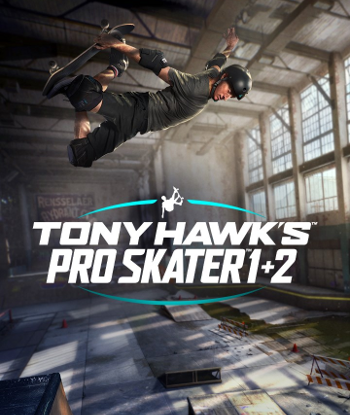
Activision have been knocking it out of the park with their remakes in recent years. 2017's N. Sane Trilogy was a fantastic recreation of the first three Crash Bandicoot games. 2018's Reignited Trilogy gave the same treatment to Spyro the Dragon, my favourite of the two PlayStation mascot platformers. Last year's Crash Team Racing: Nitro-Fueled not only delivered an incredible reimagining of my favourite kart racer of all time, but it did the unthinkable and actually improved on its core mechanics while offering a huge amount of bonus content in the form of unlockable skins, karts, and monthly Grand Prix events. This year, it's the turn of the Birdman to grace us with rebuilt versions of his first two PS1 outings.
I think it's fair to say I was apprehensive about THPS1+2 prior to release. While developers Vicarious Visions have a proven track record for delivering on these ground-up remakes with the aforementioned N. Sane Trilogy, the Tony Hawk series has a far more chequered past when it comes to this sort of thing (Tony Hawk's Pro Skater HD, anyone?). Thankfully, my worries were totally unfounded. THPS1+2 completely nails the feel of classic Tony Hawk gameplay, dropping the player into faithfully-recreated versions of the first two games' levels and giving them two minutes to complete as many goals as possible. While the levels and goals are ripped wholesale from the series' PS1 iterations, the physics model and movesets feel much closer to those of PlayStation 2 instalments like Tony Hawk's Pro Skaters 3 and 4, incorporating mechanics like reverts, spine and hip transfers, and double-tap trick variations that weren't present in those first two games. While this may upset purists, I am ecstatic about it. I've long considered THPS4 to be the best game in the franchise from a gameplay standpoint, so to have this game line up so closely with its mechanics and physics model is a dream come true. I've been able to tap into my latent muscle memory and have been busting out huge totals in pursuit of the game's tough 'Platinum Score' challenges.
And the fantastic additions don't stop there. While the game includes the Career modes (dubbed "Tours" here) from both THPS1 and 2, it also offers over eight hundred challenges for players to complete, ranging from landing special tricks with certain skaters and nailing every gap in each level to racking up million-point combos and experimenting with the fully-featured Create-a-Park suite. There's also a robust Online mode and a Skate Shop filled with decks, grips, wheels and clothes to kit out your Create-a-Skater, all bought with currency that's earned for completing challenges in-game and (as of the time of writing, at least) can't be purchased via microtransactions. For the fourth year in a row, I can confidently say that Activision have published one of the best remakes I have ever had the privilege of playing.
---
Those are my top ten, the games that defined this year for me and which, for better or worse, I will remember when I think back on this crazy time. But I feel it's important to acknowledge one more game before I close out this blog. A game which I only played a little of, but which has nonetheless remained a constant presence in my life for most of this year. And to tell you about it, I'm going to temporarily hand the blogging duties over to my girlfriend Alice:
Alice's Game of the Year - Animal Crossing: New Horizons
Nintendo / Switch / 2020

"Animal Crossing: New Horizons is a game I never knew I needed but am so glad has come into existence, especially in the bizarre year that is 2020. Having played Animal Crossing: Wild World as a teen on my Nintendo DS I am familiar with the franchise. The Wild World game was my favourite DS game and the few other games I owned got little look in. As I grew up, the game lost the sparkle it once had. Until I met Dan I hadn’t played any video games since those mid teen days.
Gaming together with him and our friends with Mario Party games, Super Smash Bros. and other short games refuelled my love of the medium. Dan was generous enough to buy me a 3DS to relive my Animal Crossing days, with the game Animal Crossing: New Leaf. However after a few months I tired of it once more. Therefore I was a little sceptical when I saw a new game was entering the franchise to be released in 2020 on Nintendo Switch. Would I play it or would it be a total waste of money? Dan was amazing and took the chance because I’ve got to admit the advertisements and sneak peeks in the run-up did paint a picture that added extra sparkle and wonder to the same old framework.
For those that have never played this popular franchise the principle is you are a newcomer to a village and it is your job to pay off your mortgage to get increasingly larger houses by selling items you find around the settlement, collect and donate fossils, fish and bugs, and buy clothing and items for your home to personalise your little character's life. You are privileged enough to have some great neighbours in the form of animals such as cats, dogs, horses, chickens, hamsters, kangaroos, cows, ostriches, rhinos and sheep. Each of the residents has their own personality which fits into the categories of Snooty, Peppy, Normal, Jock, Sisterly, Smug and Cranky.
The principle of this game fits the previous model but this time you are venturing as an intrepid explorer on Tom Nook’s first island getaway. He hopes to set up a camp on a desert island and you and two animal pals are going to be his guinea pigs - pun intended. From humble beginnings of collecting fire wood and living in tents a community grows. Over the span of a couple of weeks (real time playing daily) you attain a maximum of 10 animal neighbours, two shops, a museum and a town hall. Now what, you may be asking? Well the fun of this game is it’s up to you, there is endless personalisation. From your character's appearance, to further growing and customising their home and changing the landscape of the humble island. In terms of the latter the possibilities have never been so user intuitive. You can now knock down cliffs and change the course of the rivers and ponds around the landscape. There is also the capacity to decorate the outdoors with furniture items which feels fresh to the canon. You can create personalised and handmade items from the materials you find around the island using recipes you can buy, find or are gifted.
The extra functionality has kept this game vivid and interesting to me throughout this year. The developers have come up with various updates to create seasonal events, items and activities too. Through this and watching the plant life change and days become shorter I feel a connection between the real and fictional worlds. This year when real life has been uncertain and stressful delving into this simpler and nostalgic one is something I didn’t know I needed. There have been very few days since the game's release that I haven’t played it and it now feels part of my daily routine to not only do my household chores but my Animal Crossing ones too. I have created a little island I love and still have plenty more I could do to further personalise and beautify its appearance. I have loyally created rapports with my fellow islanders of my island home ‘Beauville’. I even got Dan playing this beloved game of mine for a month or two (before he got bored of its slower pace of life). I believe Animal Crossing is a game of mindfulness, simplicity, and good values. Something you don’t receive in just any game. I would highly recommend New Horizons to any Nintendo Switch owners as a game I feel can not be rivalled for its style and iconic characters. Thank you Dan for letting me witter on about this game to you often and now on your blog too."
---
So there you have it, a list of the ten games that defined my year, plus one extra from Alice for good measure. Here's hoping that 2021 will be full of equally memorable gaming experiences, and in more general terms, just a better year overall for everyone. Personally I have some pretty major plans for the new year, one of which is a commitment to putting out one blog on this site each month diving deep into one or more of the games that I've been playing. I had a lot of fun putting together last month's entry on Dead Space, and I'd like to try and do more of that going forward. I hope that everyone who reads this had the best holiday season possible, and wish you all a happy, prosperous and safe New Year. I'll be back in January with a blog of some description, but until then, take care and I'll see you around.
Daniel