
by josephknows
2016 was a pretty awful year, but at least it had a lot of great video games. It had so many great video games that I had a hard time just making a top 10 list because I wanted to acknowledge all the other ones that didn't make the cut.
Showing 1-10 of 21 items

Okay so the list title actually doesn't make total sense since there's no "beating Overwatch". I've put well over 300 hours into the game and I've yet to see the credits roll, get to the highest level, and feel a satisfaction in mastering any part of it. I keep playing as the big old power-armored German dude with the giant rocket hammer and energy barrier to push payloads. I lead assaults on enemy territory, shielding my teammates while pitching the occasional fire wave at the opponents. If I see a pretender holding up his shield with his back near a wall, I charge and pin him against it. I sidestep immediately, anticipating his counterattack to charge me right back, and finish him off with one or two swings. Then I put every one else hiding behind his now non-existent barrier down on the ground with one mighty slam of my hammer, shattering the very earth they wrongly believe to be a steady constant. Sometimes, I jump back and forth through space and time. With the cheeriest of spirits and the cartooniest of Cockney accents, I zip behind enemy lines, oversized ski goggles keeping my eyes sharp as I race against the wind. I zero in on angels, rollerblading DJs, or robot monks, and unload my dual machine pistols onto their squishy, unsuspecting bodies. Just as their death rattle alerts their hapless teammates, I'm already in the relative safety of my group, planning my next hit as my chronal accelerator cools down. Three Blinks and a Recall charged later, then it's off to the races again. When I'm feeling supportive yet saucy, I strap on a sniper rifle as a sweet, drug-dispensing senior citizen and shoot needles everywhere. Doesn't matter who they inject their juice into. It makes my sons and daughters feel better. It makes all those other nasty ragamuffins flee or fall asleep; easier for my children to sweep them aside either way. But only to my favorites do I give the gift of nanomachines. Jack usually makes me proud. I know he cheats with his aimbot when he gets all those frags, but what's a mother to do but encourage every one of her kids? And there are days when I want to be a jetpack-jumping gorilla scientist, an energy-absorbing Olympic weightlifter, a reality-manipulating architect, a cowboy, or a ninja. Each one is their unique and satisfying power fantasy. It feels like a different game every time I switch characters, which isn't even remotely apparent in most other multiplayer games with classes that I've played. Some might point out the static skill sets to be indicative of shallowness, but I see it as equalizing every player and letting mechanical capabilities and awareness be the measuring sticks for performance. You know Roadhog has a 6-second cooldown to his one-shot hook combo. You know Reaper can wipe out your team with his ult if you're all bunched up. You know Mei will stall your capture with Blizzard, Cryo-Freeze, and Ice Wall. There are no exploitative limited-use purchasables, no legit more powerful weapons and abilities to unlock through experience points, and no swapping in and out of skills to min-max builds. It's just you, your team, and your willingness to work together. How you play off each other and against the other team of misfits in any of the many modes now available is where you discover the depths of Overwatch. The support Blizzard has given for the game also resoundly answers the criticism of lack of content. Game-changing event brawls, 3v3s, 1v1s, no hero limits, while not everyone of them winners, make for cool, interesting breaks from the usual. And boy I can't get enough of that. Whether it's through perfect coordination with friends or strangers, or through your own sheer force of will and skill, it's never not addictive feeling that rush of a well-fought victory. With how the default setup is limited to 6v6, every player and every play matters. That's probably it, really. Overwatch makes me feel like I matter.

I'm not even going to bother trying to be fancy about what I think and feel about The Witness. It does the job on its own pretty well. Its solid watercolor visuals look artistic. It has audio logs of quotes by renowned scientists, artists, and philosophers. Its puzzles work every level of your audio-visual pattern recognition capabilities. It's a very smart game made by very smart people. I love it for two reasons. It's one of the rare games that is flawless in synthesizing every element to deliver a focused and potent message. From its aesthetics to its gameplay, it constantly reinforces the power of perception and how it defines our ideas of truth and reality. It also knows awe as a genuine emotion that can only truly come not just by discovering but by coming to an understanding of something on your own, and that this feeling in and of itself is so powerful that experiencing it is its own reward. oh and yes secret third reason the witness also knows how f***ing hard it is to be a frail human being filled with insecurities and irrational thoughts and feelings in the face of a cold, uncaring world, and that this strange, unpredictable humanity leads to monumental works and also madness
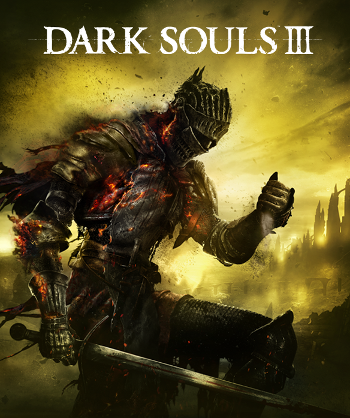
It's not at all controversial to say that Dark Souls III is the least inspired entry in the vaunted Soulsborne franchise. More referential than reverential, it is shameless in shoveling up icons from past games and shoving them into the player's face. Gone is the subtlety in storytelling that seduced souls to Souls. In exchange, bombast. Because how else would you tell the story of the end of the world? So Dark Souls III goes big and bold in every way. There has never been this many discrete areas that are as massive and interconnected in their sprawl. The Undead Settlement alone feels like three separate Demon's Souls levels packed into one with a bevy of NPCs filling it out. The Cathedral of the Deep ranks up there with the best alongside 1-1 and The Painted World of Ariamis with its decayed Gothic architecture that reeks evil and how it keeps wrapping back around itself with savvy shortcut progression. Coming out of the darkness of the Catacombs of Carthus and into the moonlit vista of Irithyll of the Boreal Valley is one of the most breathtaking moments in franchise history. Enemies are at their most freakish and intimidating. Lumbering Hollow Soldiers wielding greataxes leap with surprising agility. All manner of Lothric Knights can make quick work of you with their holy-buffed arsenal of spears, maces, and two-handed greatswords. Corvians look vulnerable on their own, until they scream a scream that rends the spirit, spring forth wings that envelop your vision, and claw at your flesh in a frenzy. And who can forget their first time seeing the Pus of Man burst from the body of a frayed Hollow, its black, voluminous serpent-shaped goo pulsating and lashing out with reckless abandon, its hatred for order apparent in its stark red eyes. Even the NPC questlines are at their most circuitous. It's never been something I've figured out on my own, pursuing the opaque sidequests in these games, so it's not really a big deal for me here either. At least most of them follow through with climactic ends. What they lack in the personal drama of the more thematically resonant NPCs of old, they make up for memorable pomp and circumstance. I mean you gotta admit it was pretty badass to see Siegward walk in from behind you, speechifying with Storm Ruler in tow, ready to cut down Yhorm, a Lord of Cinder and his friend to honor an oath. Speaking of Lords of Cinder, Dark Souls III has got to have the most consistently good-to-great boss battles in all of games. Iudex Gundyr is the best first test, his first phase checking your basic melee offense and defense capabilities in a duel with a humanoid opponent, and his second phase prepping you for the oversized monstrosities that remind you of the importance of camera positioning. The Curse-rotted Greatwood is one of the finest examples of pure spectacle with its wide open arena, mooks that add to the chaos without being hindrances, glaring weakpoints that still take some skill and timing to hit, and a midpoint level change that took way by surprise on my initial run. How it ties into the current game's lore and calls back to a dear friend from Dark Souls II are just gravy. As for major story bosses, the Twin Princes is now one of my favorite fights. From the chilling intro cutscene where Lorian crawls out to protect his younger brother to Lothric reminding his elder brother of their Undead Curse with whispers to rise, it's compellingly cinematic in the only way From Software knows. But nothing else sums up Dark Souls III the best than the Abyss Watchers. The most fearsome and loyal followers of Artorias are now corrupted by the Abyss, killing each other to contain this darkness. You fight with and against them. They die and resurrect as one, fire erupting from their blade. The score is grand yet solemn. It's an epic duel between ash and ember. It's a shambling corpse powered by the past that needs putting down. Let it burn. It deserves to go up in glorious flames.

There are only two ways for any Hitman plan to pan out. You're either the slickest mastermind assassin in the world, without a trace of your existence to be found anywhere close to your eliminated targets, or you're a murderous Mr. Magoo, leaving in your wake piles of half-naked dudes with knives and screwdrivers lodged in their skulls. Whether you're smirking slyly and saying to yourself "I did that" or you're howling uncontrollably and exclaiming "I can't believe I just did that", it's euphoric. The only proper Hitman game I've played prior to this 2016 revelation is the very first one, Hitman: Codename 47. It's rage-inducing. It hints at ingenious assassination methods through the promise of social stealth (read: disguises!), but its restrictive design forces you to take very specific steps in plenty of incredibly hostile environments, and making even just one wrong move often leads to a full-stop failure state. The latest iteration of this niche series isn't without such moments in a handful of situations, but the bigger picture shows a more free-wheeling approach to letting players tackle missions. Most importantly, Hitman 2016 understands how failure on the micro level can actually lead to interesting scenarios on their own. Instead of shutting you down the second you mistakenly walk into a restricted area with the wrong uniform or get seen dragging a body, the game diegetically gives you a stern warning to stop what you're doing. In reality, it's giving you precious time to let you think of an excuse or an escape route, as if it's saying "show me what you got". So you show the game what's what, which usually involves throwing a hammer at the face of some poor schmuck lucky enough to catch you doing something you shouldn't be doing. The force at which a blunt object smashes against an NPC's head and the way the physics violently thrust bludgeoned bodies to whatever breaks their fall would be frightening if not for the game's farcical tone. Your victims pleading for you to not ruin their good looks right before your chosen neutralizing implement collides with their craniums turns savagery into slapstick. This levity is present throughout all 8 clockwork levels; in the ambient dialogue, in the tongue-in-cheek challenges, and in the ironic interactions the stone-faced, multi-talented Agent 47 has with his marks. There is no ambiguity here, especially when every hit is a 1%-er criminal scumbag with an over-inflated ego that deserves popping. Hitman celebrates schadenfreude. You'll want to explore the many ways you can cause comic mischief because of how the game teases you constantly with opportunities. Around every corner there's a conversation to eavesdrop on that reveals an avenue for deadly hijinks. Pull off the elaborate setup, and you're usually rewarded with an over-the-top kill and a bunch of mastery points that unlock even more fun toys to tinker with. And of course you want to see how you can incorporate an exlosive rubber ducky into your master plan. Just keep walking around the gorgeous and gigantic maps, and you're bound to stumble upon a chance to literally throw a wrench into the interlocking gears of these mechanical dioramas. And oh how many gears there are to find and screw around with in just one level. You can spend hours and hours just replaying Paris, the first proper destination, and still not see everything it has to offer. I've already hit the max "mastery level" for each map, and I'm still learning crazy little details from more observant and experimental players posting their findings. Don't get me wrong, you will develop a strong familiarity with the beautiful coastal town and villa of Sapienza, the crowded markets and bustling embassy of Marrakesh, and the high-tech hospital of Hokkaido. But trust me, there are whole clockwork worlds of assassination waiting for you in Hitman, and it has never been this fun or funny to get lost.

"Precision beats power, and timing beats speed," said Conor McGregor after he knocked out Jose Aldo in 13 seconds, the fastest finish in a title match in UFC history, to then become the UFC Featherweight Champion. Mystic Mac, as he fancies himself, predicted that outcome, his counter left crashing onto the reserved Brazilian killer's skull from an inopportune right hook within a minute of the first round. No fights in Furi can end that quickly given the multi-staged design of every encounter, but what the world's most famous Irish fighter said to sum up that record knockout of the most dominant champion of that division encapsulates not just the combat of Furi but the overall design philosophy of the game. For the uninitiated, Furi is a hack-and-slash/shoot 'em up where you only battle bosses, linear walking and talking sequences filling the spaces between fights. That last bit is essential to the pacing. A 100% boss rush with no breathers would have been overwhelming for a first run through, especially with how relentless the action gets when the bouts break out. These walk-ups are also crucial to crescendo. When you, The Rider AKA The Stranger, stride through each of the nine jailers' domains, whether it's the neon prison-within-a-prison of The Strap or the topsy-turvy new age zen garden of The Line, the tone is set with every step you take. You can push the left stick in any direction, but it's a distraction, a concession to the indiscriminate desire of "player freedom". I prefer the one button press that lets your sun-kissed, white-haired avatar of death move on his own and with a single-minded purpose. For maximum impact, Furi's original synthwave soundtrack starts anew on every level and seamlessly streams from scene to scene. It's almost calming when a track begins an area. Then slowly but surely, it picks up momentum as you get closer to your destination, and you feel that rush rising, ready to carry you. By the time you're about to set foot in a boss arena, the music has swept you up and is ready to burst. You inhale before the inevitable. You dive in. Each track, with how it ebbs and flows to the rhythm of battle, getting tighter in melee combat and looser in bullet hell phases, isn't just another layer to thicken the intoxicating atmosphere. It might as well be the driving force to every swing, every shot, and every hit you take. You know how well you're performing and when s*** is about to get real by just the tempo changes. It's about as dynamic a score can get. The fighting itself is kinetic. You're always learning patterns as you shift in and out of parry-heavy swordplay and evasion-focused SHMUP sequences. It becomes increasingly complex how it tests your reflexes and recognition. You're expected to weather screen-filling, life-draining flurries with a nigh-perfect execution of blocks and dashes. A chunky health bar you can refill with parries and three "lives" that regenerate after every phase allow for mistakes, but bosses also get their health back for that phase for every life you lose. It's fair and can make for truly tense back-and-forths. You do not, however, trade blows with stronger and faster foes and expect to come out victorious. You will always die before they do. No, you have to strike with economy and efficiency. You perfect parry in tune with the telltale twinkle of a blade about to fall. You launch pinpoint counterattacks for critical damage. You let the Rider do what he was built to do - observe and assess in patience, and rain down swift and terrible judgement, unerring in conviction. And when the patterns map to your mind and your fingers prove dextrous, it all plays out like intricate choreography, as if every move had been planned, every action directed, and every conclusion decided well in advance. Because that's what it feels like when you fight with precision and timing - predictable.

I find it almost impossible to stay still in meatspace. I have this nervous energy in me that requires me to always be moving around. I'm always pacing or shuffling my feet. My fingers are either cracking all the joints in my hands or chipping away at my nails if they're not drumming on a surface or scratching at a self-made itch. I'm adjusting my posture constantly, whether I'm standing up or sitting down. Titanfall 2 taps into this manic part of me so fully that it has led to many a hilariously embarrassing death in the campaign and in the multiplayer. You just can't not be moving forward in this game. In every level and every encounter, you advance or you die. What makes Titanfall 2's focus on this design principle refreshing instead of tiresome is the various articulations on "moving forward" that each distinct chapter in the campaign explores. First, you're learning the basics of traversal by wall running, double jumping, and mantling in static environments. Then you're understanding the difference in movement as a pilot and as a Titan. Next, you're having to apply that combined knowledge through an ever-shifting land factory where advancing means going up, down, or sideways. And all of a sudden you're f***ing traveling back and forth through time, and so on and so forth. I've never enjoyed first-person platforming, not in the Half-Life series where it's just part of the experience nor in Mirror's Edge where it's the whole point. Titanfall 2's story mode has legitimately awesome first-person platforming. It sounds like a small thing, but the game instantly respawning you at a convenient checkpoint when you mess up a platforming section also avoids that major problem I have with other games that put such an importance on precision jumps. The game just pulls it off effortlessly with how smooth it is to string wall runs, leaps, and floor slides to superman punching an enemy soldier out. That way of seamlessly transitioning from traversal to up-close combat and vice versa is such a unique thrill. In the campaign alone, there are so many handcrafted moments of physical triumph achieved through this dynamic, it's kind of crazy how it keeps ramping up and climaxes in one of the best action sequences ever with the SEER kit, and I didn't even play the original Titanfall to make the nostalgic connection! And you'd think, removed from the authored acrobatics in the single player, the multiplayer wouldn't compare. But nope! Any instance or combination of bounding over, through, and in between the sides of buildings, headshotting one player, grenading another, zipping to an enemy Titan with your grappling hook, removing its battery and leaving it vulnerable, calling in your own to Titan to crush NPC grunts on impact, and executing the enemy Titan by ramming your truck-sized energy rifle into its cockpit and firing away can just happen and you know you're the rawest motherfucker alive.

Given the massive amounts of praise Limbo got when it came out, I was wary of the same hype that surrounded Inside upon its release. Playdead's 2010 debut was a moody yet ultimately monotonous pantomime. What I gleaned from the scant pre-release coverage of Inside was all discreet excitement, critics pushing people to just play the game knowing as little as possible. The only "concrete" positive that was proffered was "it's better than Limbo". It wasn't exactly the most convincing argument for me, as I've played so many games that are better than Limbo that I don't consider to be all that good. So I didn't touch Inside, and shut myself off of any talk about it. Not until a friend who got it, beat it, and joined the ranks of secretive believers had me play through the whole thing in one sitting with his copy. Inside is, in fact, better than Limbo, and it is, in fact, a good game. Limbo is an admirable, ethereal sketch from a startup indie studio, a prototype for pondering the afterlife. Inside is a robust, well-oiled machine that executes a pulverizing dystopic vision of industrial slavery with ruthless efficiency. You can almost see the millions of dollars and the years spent on every frame of animation, every shadow cast in stark light, and every increasingly loud boom that reverberates through your hands and into your skull on every discrete window into this post-apocalyptic world. It's sinister how it deliberately drills into your brain the mundane mechanics to solve puzzles, only to twist them ever so slightly right as their rules have embedded in your head. And then, for the last cruel laugh, when you think you've got the game all under control, Inside blows your mind with a climax that is forever seared into my soul. I've already said too much, so let me just end by saying that you need to play Inside.

Back in the mid 90's, my brothers and I used to stay over at our dad's condo/personal office when he was busy with work but still wanted to have us around. He had a desktop computer there apart from his work laptop, and we were allowed to play whatever games were on it. For most of those days, we would just play Solitaire and Minesweeper. When my ultra conservative Christian parents weren't around though, we'd load up Doom. It was scary for us 6, 7, and 8-year old boys, the way those green-haired, gun-toting zombie soldiers and spiked, red-eyed imps would appear as doors opened and get right up to our faces before murdering us, and that without warning, our dad would walk in on us playing this hellish thing Satan handcrafted to possess naive children. The only way my brothers and I managed to make any sort of progress without s***ting ourselves was by typing in that magic combination of letters: iddqd. That secret incantation that gave angry white dude at the bottom center of the screen glowing yellow eyes made us believe that we could be gods. It took another 20+ years for that intoxicating feeling of forbidden power to resurface with a first-person shooter, and of course it had to be DOOM. It's not fair, really, how you, as the Doomguy aka "the Doomslayer", can run through every enemy with an almost reckless fury. These demons from literal Hell take all the time to set up ambushes via portals and swarm you with their claws and teeth and fireballs and infernal energy beams, and you just get right up in their face to rip and tear them in half with your bare hands, stealing their life essence to refuel your engine of destruction. Sometimes, you use their own deadly appendages on them. Other times, you use a chainsaw to do the ripping and tearing. They burst into a fountain of bullets and rockets and plasma energy and all sorts of goodies when you do that. Whichever way, you keep barrelling through. You're unstoppable. The only thing that stopped me was the desire to find every secret. It's devilish how they're hidden in plain sight, the markers in stark relief on the map, pointing exactly where they are. These levels are labyrinthine, too. It's a gift to uncover them all, as you only grow even stronger with every upgrade point and early weapon discovery. I'm not supposed to have this laser cannon right now! I'm getting away with something again. It could have been mean-spirited, too, all this ultraviolence. But no, the absurdity of reverential demonic speech and imagery mixed with straight-faced corporate spirit, the jetpack djent metal soundtrack, and that shotgun c*** as exclamation point to the intro and starting pistol for the rest of the game only leave me with a s***-eating grin on my face. DOOM is maniacally laughing with childish glee as you lay waste to everything. DOOM is power fantasy at its purest.

Darkest Dungeon is taxing. Not a single action taken is without cost, whether it's in the game's virtual Victorian Gothic/Lovecraftian world or in real life where time is a luxury. Recruiting adventurers takes up limited roster space. Sending them to expeditions is spending gold for provisions or risking survival with just the gear on their persons. Igniting a torch now to illuminate claustrophobic hallways and spot traps means one less light later on your long dungeon crawl, increasing the likelihood of ambushes and the pace of building stress as the darkness encroaches. And you don't want to build stress. Make enough wrong moves, and your dungeon contractors reach their mental breaking points, lashing out or refusing to cooperate. This can even set off a chain reaction of increased stress throughout the group, potentially resulting in more heart attacks and death. I witnessed my fair share of catastrophes in my 40+ hour playthrough of Darkest Dungeon, most of which I can point to poor preparation or rash decision-making. You just realize soon enough that success doesn't come without sacrifice, and attachment to particular "heroes" is an anchor. That plague doctor with Quick Reflexes can shut down backline stress-inducers in the warrens by the very first turn, but her infatuation for a prostitute in the brothel and her sickly frame is draining you of gold quicker than you'd like. Midway through the game, her experience in questing marks her psyche with a list of aberrations in red; she's afraid of the dark, she's obsessed with unholy artifacts, she needs to eat more to stave off hunger when stressed. On the lead-up to going on a boss quest you've planned for in real-time hours, she decides to stay one more in-game week in her lover's arms so you can't bring her along. The next time she shows up for work, you're sending her off with three fresh faces and just enough food to last a straight-up loot run. You're trying to save up gold, so they go without torches. She comes back alone, the other three lost to untreated wounds and poison, and she brings with her riches aplenty and a shattered mind. You take the treasures and relieve her of her duties. She can take care of herself. I thought I grew numb to it when I rolled into the second year of my campaign. Access to the titular Darkest Dungeon, the ultimate destination, was in sight. I was just cleaning up the last couple of Champion-level boss dungeons. Dismas, a veteran highwayman, was one of the two hired mercs that was with me from the very start. He had fallen out of favor from my usual party line-up soon after the beginner areas, his skills not necessarily syncing well with more formidable members. But I had kept him anyway in the corner, bringing him out every now and then for clean-up in quick and easy missions, earning levels and getting upgrades when I had the spare money. His penchant for drink was easy enough to manage at the bar, too. The depth in class combinations for combat in Darkest Dungeon is too much for me to dive into now, but needless to say, we found a good niche for good ol' Dismas to show his agile ferocity in the harder dungeons. I like to think he wanted to prove himself as more than a hanger-on when his ambient word bubble requested one more assignment into the Ruins. So I brought him in to face the Gibbering Prophet. He went to work with his knife and pistol. With literally two turns away from putting down that bile-spewing madman, Dismas only needed to be healed one point of health to stave off Death's Door from the blight that poisoned his veins. Morphew, my occultist healer, failed his spell spectacularly, recovering zero HP. He and Dismas died the very next turn, just before the Gibbering Prophet succumbed to the bleeding Dismas inflicted. I faced the Heart of Darkness and overcame it, sacrificing six more of my soldiers in that climactic final battle. Darkest Dungeon is taxing.

For a relatively short game, Hyper Light Drifter had to grow on me. It didn't have the initial advantage of hooking me through its Link to the Past-Diablo inspirations since I've never played those games. I had no idea about the creator's heart condition which could have moved me faster to emotionally investing in the narrative. Its intentionally opaque storytelling pushed me into piecing it together on my own. The most immediately inviting game it was not. It wasn't really even until after I had already finished the game and went back to find some of the hidden weapons and optional bosses that I found myself in a meditative mindset while playing. Maybe it was triggered by that ending scene where the Drifter, fighting ever forward in the face of this consuming black disease, sees a calming blue peace over the land, hand clutching heart one final time. It's not a totally different experience from my replays of Salt and Sanctuary, but unlike S&S with its rather drab aesthetic and that one repeating Lateralus-era Tool riff as overworld OST, Hyper Light Drifter isn't solely reliant on "game feel". By the by, it excels there too, sword and gunplay synergizing in step with the brisk movement, the Drifter negotiating space on what always ends up a crowded, corpse-ridden dance floor, whether it's accomplished with force or elegance. It's Hotline Miami-esque in the afterglow, even, as you double back through conquered screens of pixelated, mutilated bodies. Hyper Light Drifter is evocative. From its picture balloon "dialogue" and its melancholic Disasterpeace music to its simple yet tantalizing secret signposting and titanic archaeological landmarks, the game stirs a longing for something that's always out of reach. Playing the ill-fated hero once more, knowing what ruin surrounds the Drifter befalls him too no matter his actions, just as the enigmatic, cataclysmic visions foretold, recasts the whole journey as rumination instead of resistance. And that's just rad.