
Go! Go! GOTY! 2021: Game 4: Loop Hero
by mento
Game : Four Quarters 's Loop Hero . Release Month : March. Quick Look : Here (Brad/Jan). Started : 10/01. Completed : ?/01. I've been on the outs with run-based games, otherwise known as roguelike s or roguelites, for some time now so I initially wasn't going to give Loop Hero a look in. However, since the Epic Game Store was generous enough to include the game as one of its recent giveaways, I...
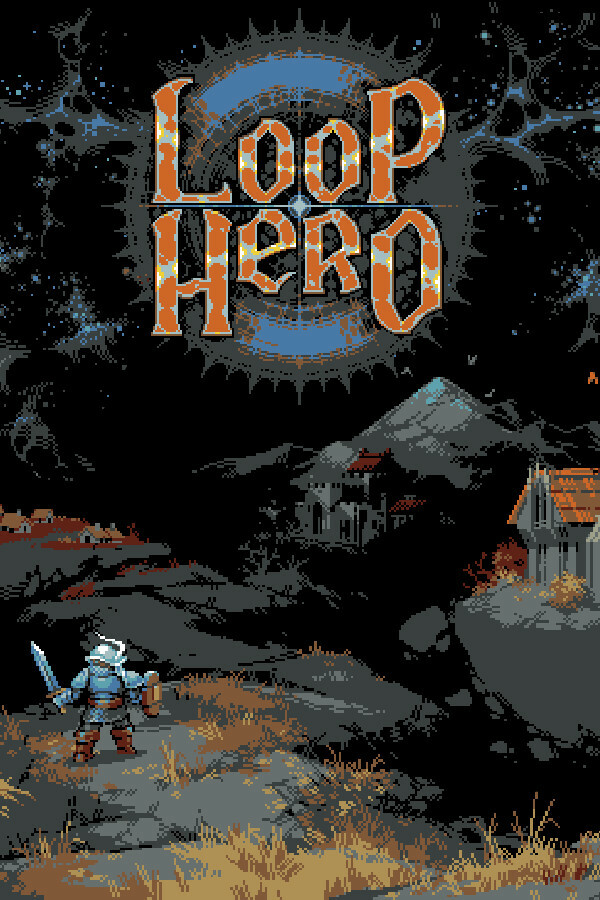
- Game: Four Quarters's Loop Hero.
- Release Month: March.
- Quick Look: Here (Brad/Jan).
- Started: 10/01.
- Completed: ?/01.
I've been on the outs with run-based games, otherwise known as roguelikes or roguelites, for some time now so I initially wasn't going to give Loop Hero a look in. However, since the Epic Game Store was generous enough to include the game as one of its recent giveaways, I figured I'd add it to the GOTY itinerary here, and I'm once again surprising myself by how much I'm enjoying a game of this sort despite some very glaring issues related to that very format. That can wait though. Loop Hero, which I've pejoratively called "the Indy 500 of Roguelikes" before now, is a game in which the player assembles the world as their protagonist strolls around it in an endless cycle. This is done by placing cards on the path, adjacent to it, or in the netherspace surrounding it. Determinant on the cards the player chose to bring with them, these cards might generate resources, enemies, passive effects, or all of the above. Some cards even react with one another, producing synergies that may help or hinder the player's journey.
A typical loop will have the player character walk around a circle filled with nothing but wasteland and randomly spawning slimes. Upon placing down a glade in the path, for instance, the player will gain the "wood" resource while passing through it and it will eventually start spawning "ratwolf" enemies at specific intervals. Most of the other path cards work the same way; gain resources, but probably also deal with enemy groups the next time you visit. Spawns work on a day cycle, meaning that every interval that the time gauge fills a new day dawns and monsters will spawn (and the hero usually gets a small health recovery): as this time gauge is filling constantly, whether the player is in battle or not, loops become longer and fill with more enemies as more days pass by. Players can also place cards out in the void, most of which simply generate resources like the forests, deserts, meadows, and mountains. Others include the treasuries, which need to be surrounded by the above before they'll open their coffers, and beacons which boost the player character's speed when inside its area of effect. Path-adjacent cards like the vampire mansion (spawns vampires in any nearby battle) or a bookery (swaps a random trio of cards in your active deck with three new cards) take effect in the areas of the path immediately adjacent, proc-ing more often the more path tiles they're connected to. In the first two loops the path will continue to look very empty, but after five or so there's probably going to be something on almost every space if you're diligently placing cards as soon as enemies drop them.
 Loop 4 looks decidedly different from Loop 1. When you get to Loop 10, it starts resembling the map screen of an Ubisoft open-world game.
For a RPG where exploration is no longer a factor, there's a surprising amount of discovery to be made in Loop Hero. Part of that is the above surprising synergies, but there's a number of mechanical nuances that the player picks up on as they play; not always immediately obvious but the sort that arrive as epiphanies as the player experiments and considers when best to play the cards in their deck. This might be as major as figuring out how a new class plays - the game has the default warrior and two others - or something as minor but still important as learning to place path cards immediately in front of the player so they can earn the resources on the current loop before enemies spawn, or placing ranged spawners two spaces apart so their monsters don't snipe you from a tile away, or leaving treasuries with one empty side so you can stack another treasury closer with an overlap for maximum efficiency. The game is full of these little details that the player owes it to themselves to play close attention to, such as how every enemy gains a new ability or passive skill with each new chapter but they're sometimes negatives, which makes those enemies easier to handle than they were before and in comparison to their now more dangerous compatriots and therefore makes their spawners more enticing as deck inclusions. If I have to say anything positive about Rogue and the many games that came after, is that for simple-looking RPGs they're often very mechanically dense: a necessity if the player is expected to play them over and over forever looking for ways to improve their performance and mitigate the RNG factor as best they can.
Loop Hero's also one of those run-based games like Rogue Legacy in that there's a substantial interstitial development-sim in which the player can craft new buildings and structures to offer permanent benefits, allowing for but not guaranteeing a more fruitful next expedition. These take the resources that the player earns while on their expeditions, each type of which is generated a different way: wood comes from putting down forest and glade tiles, stones from mountains and cemeteries, metal from letting old items disappear as new ones push them out of the limited inventory space, and then there's several rare enemy-type-specific drops that will require the player have the right enemy-spawners in their deck if they hope to farm them. Certain advancements might also change the way the player proceeds with expeditions: building watchtowers generates friendly crossbowmen in battles close to the campfire, where every loop starts and ends, so the player might be inclined to put the first few monster-spawners closer to their base to take advantage. New buildings unlock whole new mechanics: building a gymnasium at your base allows you to place village cards on the path, which introduces an RPG-like experience system with bounties that unlocks a random new trait (passive perks) upon levelling up. A supply depot introduces "supplies" to the possible resources you can find, which when placed in the depot will generate passive buffs like extra damage to undead or a small healing effect with every defeated monster. I found these significant gameplay changes to be instrumental in maintaining my short-term interest, pushing my desire to collect as many building resources in one expedition as possible to unlock the next new mechanic (or failing that, an easier go of it).
 It's not strictly necessary to yell 'SKELETON POWER' while playing the necromancer, but it helps? If you saw Entourage but wished everyone involved was deceased (and I'm guessing that's many of us), Loop Hero's necro has you covered.
The classes, too, make a huge distinction in your approach to the game. Combat happens automatically so the player's involvement basically boils down to choosing the type of enemies you can encounter and the player's currently equipped gear, but there's enough micromanagement involved that carefully considering your character's build and what qualities you hope to utilize in order to win is paramount. Each class has different buffs connected to their gear: the standard warrior, who must consider crowd control as part of their build since they'll often be fighting several enemies at once while on their own, might select gear with a high counter percentage change to deal with groups faster or vampirism in order to keep their health up. A necromancer ideally puts his skeletal minions ahead of himself, boosting their attack potential or the number that can be summoned simultaneously. A rogue must have high evasion to make up for their relative lack of defense and stock of hit points. As you might expect, the type of cards you bring with you changes depending on the class your hero has: the mannequin-like wooden soldiers create a tough problem for the warrior and rogue as they counter everything you throw at them instead of attacking, but for the necromancer they're no problem: their summoned units do all the aggro, leaving the necromancer free from retribution. Necromancers are, however, at a loss against faster units like the ratwolves and goblins which can tear him apart before he's summoned enough boney goons to protect himself. Every decision at every juncture has consequences to contemplate, which makes the game a little intimidating with its mechanical complexity, but also what keeps it rewarding to play as you embark on one expedition after the other.
The game's two major downsides are those native to all run-based games: the luck factor and the repetition. You could do everything right, have the perfect deck suited for your class and the abilities earned from your campsite structures, and still get yourself killed because the right equipment didn't drop nor did the right cards appear when they were needed most. You might end up taking three loops before any enemies besides slimes appear, and since every loop makes every enemy stronger you might find yourself severely underequipped when the tougher enemies finally do show up. Maybe your strategy depended on getting the right level-up traits that failed to transpire - there's two the necromancer might get, one that creates three high-level skeleton allies at the start of the loop whose health persists between fights, and another that allows allies to recover their health in full if they perform the killing blow to an enemy, that together make for a powerful combo. The repetition of course goes without saying: you're probably going to want to build several structures before you make your first serious attempt on a chapter's boss and that means attempting several expeditions for resources, each time running back home with your tail between your legs so you can keep it all (dying means only keeping 30% of whatever you found). There's enough of a carrot on the end of that stick to push expeditions as far as they can go, given the aforementioned new buildings and the mechanics they introduce, but even so you'll soon hit that stride where you might only boot the game up for a single expedition (each takes around 30 minutes to an hour) and be good for the day. I've got a few more games to get around to before the site's GOTY festivities begin in earnest, so even though the game is far from complete - I'm on chapter three of four currently - I need to move on. I'll be looping intermittently for some time yet though, no doubt.
Current 2021 GOTY Ranking: