
I spent two whole months assembling this list and then totally forgot to write it. So yes, this is my GOTY list for the year 2022 of the Common Era. There's a few big names I'm definitely going to swing back around to at some point—Xenoblade 3, Stranger of Paradise, and Trails from Zero top a pretty big wishlist you can find halfway down here—but on the whole if I'm writing a GOTY list with twenty bangers it was probably a good year. (Well, maybe ten bangers and ten decent efforts?)
Showing 1-10 of 20 items
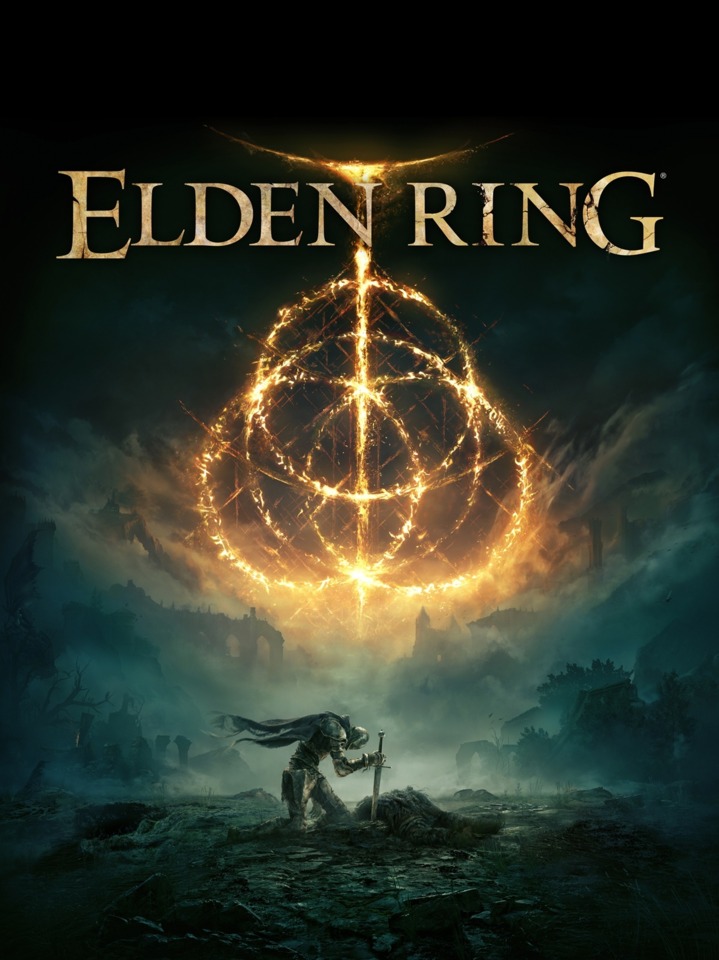
Plenty has been written about what an undertaking Elden Ring proved to be, answering the hype of a George R. R. Martin-infused Dark Souls successor and finding additional unexpected mainstream success besides, that even though the game might have more to see, climb, collect, and slay than even the average Elder Scrolls game there's very little left to cover. Elden Ring is unmistakably 2022's most important game, even if personal choice might place your favorites elsewhere, and reiterates on this very odd recent development that Japan has become the masters of the open world format. Consider the likes of Metal Gear Solid V's greatly expanded stealthy-boxy gameplay or Xenoblade's oodles of features and quality-of-life touches and impressive vistas and then measure that against whatever iterative business Ubisoft just farted out for the eighth time this year. But I digress. There's plenty to dislike about Elden Ring. Many of its little optional dungeons do run the same after a while, there's way too much recycling, and the less said about the quality of the story boss fights towards the endgame the better. But there's so, so much more going in its favor. Hell, the addition of a jump button alone changes so much of the typical exploration and boss fight strategies of the Souls franchise, but then coupled with how the open format allows you to temporarily put a pin in boss fights that have proven too tough or offers a huge variety of items and spells and weaponry to use as new tactical options or how you'll soon end up with a dozen-plus map notations for areas of interest to visit or revisit means it's a game that will ensnare you for months and still be engaging a hundred hours of gametime later. I ran into something similar when playing Ys VIII a few years ago where I could've sworn the relative linearity and compactness of those franchises were two of their strengths, yet it turns out when you expand the size and scope several times over it's somehow still every bit as compelling and possibly even more so.

Tinykin and its 3D platforming indulgences is just pure gaming comfort food for me, and to have something this ambitious, slick, and sharply designed coming from the Indie quarter instead of a Nintendo or a similarly monolithic company is very impressive. Though there's not a whole lot to its progression the way each room in this enormous person's house has been so thoroughly thought out from its conceptual role in the story to the zigzagging of its many shortcuts granting you quick access to any part of the area no matter how high above ground level it may be just makes them an absolute joy to explore for collectibles and side-quests and anything else that might draw your attention. I also loved its civilization of sapient insects and the individual personalities of its named NPCs and the slowly unpeeling mystery regarding the owner of the house and their current location. That they made all your cute little Pikmin ersatzes invincible so you don't feel the pain (and inconvenience) of their loss or that they gave you a bar of soap to ride around on at rapid speed to alleviate travel times are just two of many examples of how the developers prioritized above all else a chill game experience with no lulls and little frustration. Just a really smartly made game in a sub-genre I love that most companies, Indie or no, have struggled to do right by in the decades since it began with Mario 64.

Next are a couple of menial labor sims I couldn't separate since both proved so darn addictive. Shipbreaker has you taking apart ships piece by piece, but every job has a level of risk to mitigate so it never turns into a mindless autopilot sort of thing; it'd be like trying to play a serious flight sim without the focus required to complete every necessary step for takeoff. Even once you become well-versed in the game's rhythm there might be something to trip you up like a sudden reactor meltdown or the ship careening out of control because you didn't depressurize the interior sufficiently before cracking into it with your laser welder. The game looks super sharp on top of all this, so there's no feeling of abstraction that you'd expect from a game where you take apart spaceships—a job that, as far as I'm aware, has yet to exist—and every mishap feels entirely legitimate and earned rather than the result of a screwy physics engine bugging out. Extremely polished, thanks in part to a long tail in early access, and just a conceptually fascinating game that delivers on its premise.

I spent an unhealthy amount of time playing Viscera Cleanup Detail because at first I was fascinated by the idea of humble custodian work being the crux of a video game and then stuck around because there was something so rewarding about chasing that full 100% completion rate, enhanced further by a subversive if unintrusive sense of humor about cleaning up the remains of scientists and space marines undone by their own hubris and left to be removed by a clean-up crew who should probably be paid more than they are. PowerWash hits the exact same beats but in a different arrangement, having you wash random peoples' homes and vehicles with a high-pressure hose before escalating to bigger and stranger targets with stronger and shinier waterguns. The developers knew exactly what they were doing with all those little dings and shimmers every time one piece of your target was fully clean.

My god, this thing. Taking the RPG power fantasy trip and condensing it into a mere half hour by starting out getting swamped by mooks and ending with a light show powerful enough to kill a god. It's a slow ramp to competency but the view at the top is magnificent. The dev also lucked upon a model of game that benefits greatly from the usual stream of content additions more common to the "Games as a Service" ilk due to how it's already built for incremental playthroughs and has an addictive quality that keeps you coming back every so often to murder Castlevania monsters in their tens of thousands, whether you main the Alucard clone or a moonlighting Bayonetta or a skeleton man or a tree.

I'd only seen a few hours of this RPG before placing it here but after several more tens of hours it's justified this spot and then some. This is an RPG that's never afraid to throw a whole mess of options and features at you, and deep enough to make it all work and synergize properly. It's one of the most complex and feature-rich 16-bit RPGs since Final Fantasy VI came along and squeezed every byte it could out of the SNES cartridge. Super polished too and though the story is a little generic it's doing plenty to flesh out its world beyond the heroes and the villains that take center stage. Combat's also fantastic, using an "Overdrive" system to make you carefully consider your next few moves on top of the current turn. The one odd thing is that it's really attached to Final Fantasy XII references for some reason; a retro RPG like this would usually look further back for inspiration.

I assumed Norco's positive press came from a certain amount of social awareness, creating a game set deep in the Louisiana bayous to make a statement about the hard livin' folks that dwell there and how ongoing climate change, hungry alligators, and hungrier corporations are all out to make those livelihoods all the tougher. Turns out it's just a really frickin' weird narrative and presentation that constantly has you questioning what you're seeing and why it exists. That surreal narrative thrust makes it a real joy to play too, turns out, even if most of the time you're just solving traditional point and click adventure puzzles and the occasional simplified mini-game. I'm not even sure who I'd recommend a game like this to, but I suppose part of its appeal is that it kinda defies a cookie-cutter elevator pitch and goes about doing its own distinct thing.

Citizen Sleeper isn't so much a single story but a series of vignettes about a malfunctioning corporate android looking to survive after escaping captivity, the human owner of the personality they were imprinted with having long ago fallen for a bogus bill of goods and is sitting in a vat underneath a skyscraper somewhere. Each of these little tales involves helping someone out in exchange for information or supplies to ensure your continued survival, but the player has a significant role in how these stories play out both through decisions they make and decisions that are made for them by the game's random diceroll feature; spending dice to perform actions, with lower numbers meaning a lower chance of success. Do you use this turn's high dice rolls on your job at the shipyard to guarantee you make enough money to eat, or put them towards making certain that your new friend succeeds in their present mission? For a choice-heavy game with a lot of luck involved, the game is exceedingly generous so don't get spooked off by decision anxiety.

Tunic has its issues, especially with regards to its absurd boss difficulty, but is a frequently inventive Zelda-like buoyed by an ingenious repurposing of the old game manuals that had information necessary to beat your favorites, at least at a time where games wouldn't just surface all that information via tutorials buried in the UI somewhere. The manual explains much you won't be able to glean on your own, including integral features and mechanics, so finding a new page in the wild almost always unlocks a new world of possibilities or at the very least leaves you with even more questions than before. In many ways Tunic is the best parts of Fez and an Indie Zelda like Oceanhorn merged with the less best parts of a brutal Soulsian RPG. A game with a protagonist this cute probably shouldn't be this punishing, is all I'm suggesting.

Signalis takes the hook of presenting a low-poly survival horror built like PS1 genre mainstays such as Resident Evil (similar survival mechanics) and Silent Hill (similar amount of screwing with the player) and uses it as a launching pad on its journey off to cuckoo land. Much of Signalis trucks along on some real bad vibes and artsy cutscenes that say plenty but explain little. It's the sort of horror game that wants to burrow into your head and stay there like a squatting earwig, sticking around long after the visceral gore and corridor jumpscares have faded and leaving only the unease that permeates every inch of the Signalis experience. In other words, it's damn good at what it does. I just wish I cared even a little bit for having to cart key items and priceless supplies back and forth to a storage box every five minutes because my gynoid protagonist doesn't have any pockets on that skintight uniform of hers.

