
by beargirl1
Showing 1-10 of 30 items

| PlayStation Vita | January 10th | Gravity Rush is... um... it's... hmm... OK, let's put it like this: I love Gravity Rush, but I don't think there was a single moment where I had fun playing it. That's a weird thing to say about an action game, considering the dull combat, tepid mission design and interminably crummy boss fights make up 95% of playing it. What I adored about Gravity Rush was virtually everything but the playing part. It has a gorgeous look, beautiful soundtrack, infectiously likable characters, charming localization and a warm, wonderful heart. It has a heart that made me choke up whenever it would kick in its triumphant music cues, or whenever two people would reconnect, or just... whenever I'd explore its wondrous little world just to see how my actions made people feel better. I thought about that a lot-- about how this game would play with my heart at the slightest hint of emotion in between bouts of frustration, resenting that such a pretty game existed within this monotonous shell. A lot of that comes down to Kat, and how she's one of the most likable, joyous, sympathetic main characters I've seen in a little while. Her unconditional kindness, little quirks and occasional clumsiness, her simple desires to just have fun; all of it comes together to make for a sincerely relatable character among dark, brooding, disconnected male power fantasy protagonists. I like her a lot, simply because has the power to help people, and the heart to go above and beyond even when the people she tries to save are jerks. In the end, she's just trying to help and that... that means a lot to me. Kat's character isn't breaking new ground or anything, but she doesn't really have to. I think what it comes down to is that there's something beautiful in Gravity Rush, and it's rapidly apparent that there is so much potential for the game part to capitalize on that. This game isn't it, but that's not to say that there isn't any merit here. I don't know if it's a "good game" or not, but I kind of don't care. I love Gravity Rush, and I hope I never have to play it again.

| PlayStation Vita | January 24th | I... beat Crimsonland? I think? I finished all the quests on normal mode, but there was no credits, or fanfare, or, well... anything. Actually, that's not totally true. Beating all the quests unlocked a sweet sped-up survival mode which rules because my only issue with the regular survival mode was that it was a little slow... so I guess I'll keep occasionally playing Crimsonland on bus rides and car trips? It's not a great twin-stick shooter, especially because it has a bland everything and boring weapon variety, but its simplicity is enticing enough for it to be an okay way to kill time. That's kind of all I need from it, so... shout outs to Crimsonland for being unremarkably average-- so much so that it's weirdly appealing.

| PlayStation 3 (via PS2 Classics) | February 17th | In what is a surprise to absolutely no one, The Warriors is still a remarkably well-crafted brawler. Not just that, but my appreciation for, well, Rockstar's appreciation of the source material grows fonder each time I play this game. The mere fact that a retelling, expansion and love letter to the original film comes through so seamlessly as a complete piece is a testament to how Rockstar really was at the top of their game in this era. I love this game even more than I did when it came out. I think a bulk of that newfound admiration comes up to the fact that I can appreciate the effectiveness of the game's individual elements. It strengthens the movie's original sharp sense of style, fitting it with the meaty substance that it originally, desperately needed. There's a dedication to emphasizing personality through uniform, color, unified identity through the guise of a street gang. The film did this well solely through its visuals, but the efforts in this game to hone-in on the exaggerated, fetishist perception of the gang identity is unlike what I've seen in most video games-- or at least to this level of effectiveness. The Warriors themselves consist of thinly developed main characters, but their strength as one-- and as the underdogs at that, make them exceedingly fun to root for. It helps the massive, chaotic brawls create a sense of meaning. It helps fuel the excitement, the passion, the rigid bloodthirst every time you bop through another gang's turf, destroying everyone and everything along the way. It's one of the few violent games that pushed my sense of morality all the way to the back of my brain. It didn't have a place here. I feel that it's among Rockstar's most purely violent games, putting forward the crude, primal essences of street violence in a manner that's parts sickening, parts infectious. It embodies that spirit in its every nerve, from its muddy, grimy visuals, to the eeriness of its ominous synths, all the way down to the profane dialogue that gradually inches you one punch closer to caving the next guy's face right in. At its core, The Warriors embodies the fear of the night-- there is something out there, and it wants to kill you. Chances are, you want it dead, too.

| PC | March 8th | Steam Edition | There's a bit you could say about Red Faction: Guerrilla. Its story is one-dimensional, with (mostly) unlikable characters and bland mission design. On that same page though, I would say that most of this is to its benefit-- Guerrilla sets up very quickly and relegates most of its thin story to in-game mission chatter and brief cutscenes. I feel like this is because Volition knew exactly why people would play this game: to level every building in sight. The unbridled of GeoMod 2.0. shines in full force, and that gimmick is entirely what makes Red Faction: Guerrilla worth playing. Everything busts up real, real good with an arsenal of great explosives (and pretty explosions alongside them), fun vehicles, very thin buildings and one very tough sledgehammer. It's a draw compelling enough to make every single other downside in Guerrilla a little less bad. Even if I said the story is pretty crummy, it has just enough of a presence to strengthen the game's structure-- destroy all government buildings, vehicles, propaganda, everything. It's euphoric, which is probably a testament to how satisfying I still find busting stuff up to be three playthroughs later, and how government tyranny will probably be a thing until the end of time. At least they're pretty dumb in video games. Demons of the Badlands | PC | March 8th | Steam Edition | I didn't really expect much from Demons of the Badlands, but much to my surprise, playing through this was absolutely baffling. It seems like all of the remotely unique aesthetic design was thrown into this little piece of DLC. The Marauders, though cliche for their "savage native" behavior, have a backstory that is the closest thing that Red Faction: Guerrilla's writing has ever gotten to compelling. There's very little of that story, mind you but for how thin it is, it's probably the only thing in the game's story that has the potential to be really cool, especially given the relatively interesting relationship between all three parties in the main story. It's actually really frustrating, because there's something here (compared to the nothing in comparison to what's in the main story) and it was thrown off to the side as extra content when it should have been the full game. Samanya and Vasha are the only two interesting characters in the game-- they have stakes, meaning, an attachment to the planet that was taken over. Alec Mason is an absolute nothing; the totally unlikable, emotionless dude that swoops in to save the day. And, like... maybe I'm being too optimistic but I cannot, for the life of me imagine why somebody would want to play as generic, shaved head dude #405 over a cool, martian-born girl with the slightest hint of emotional depth, who also wipes out dudes with a spear. Like, are people just that boring? Is there merit to that? I should start making games again.

| PC | March 9th | I think it's important to consume media of questionable quality from time to time. There's value to experiencing something that might not have gone as planned-- there are things to learn, both about creating and consuming artistic work. I'm not sure how to really explain it, but I don't find most games to be "bad" as much as they are just, flawed. It's tough looking at games as black and white, because major flaws don't necessarily devalue something entirely. Likewise, I don't think that strong components automatically make something great. Creation and criticism are both surprisingly complicated things, and I normally think that we should, at least regularly, approach it with that same kind of care and thought. I feel this way because making things is hard-- extremely hard. We accept that, but I also think we should accept that things turn out poorly, and in spite of that, there is always something we can take away from it if there's even the slightest push for innovation, if there's even just a tiny bit of ambition in your work. With that said, I'm really not sure what I'm supposed to take away from Homefront. It is... almost entirely void of emotion, craft, weight, anything that I can make use of. It is a completely competent military first person shooter; the act of shooting men is functional, it looks fine and carries its fair share of massive explosions and chaotic set pieces. It is likely the absolute most shameless Call of Duty knockoff I have ever played, in that it rips from the roller-coaster, heavily scripted formula of those (generally exciting) campaigns with absolutely nothing to offer on top. Homefront's ham-fisted attempts at portraying the brutality and atrocities of war try so hard to shock you that it dangerously borders on self-parody. It presents civilian executions, crying children, destroyed American suburbs, mass graves of slaughtered people all to a resounding indifference. It's as if these scenes were written by somebody who has never experienced human emotion before. Somebody that looked at the most shocking parts of Call of Duty campaigns and vehemently misunderstood everything that made those moments hit hard. It's like if I drew a picture of a dead body and shoved it in your face, telling you how you're supposed to feel about this image-- something that you have zero meaningful context for. Homefront tries _so_ hard to be horrific, to the point where it might actually kind of be endearing if the rest of the game didn't feel so soulless. And, I... I sit here and I just think about Homefront and like, who this game is supposed to be for. I'm wondering what this game is trying to say, what message it's trying to get across to me, if anything at all. This doesn't have the excitement of Call of Duty, and it most certainly doesn't carry the weight that it thinks it does. I'm... baffled by Homefront, beyond words. What is the purpose of this game?
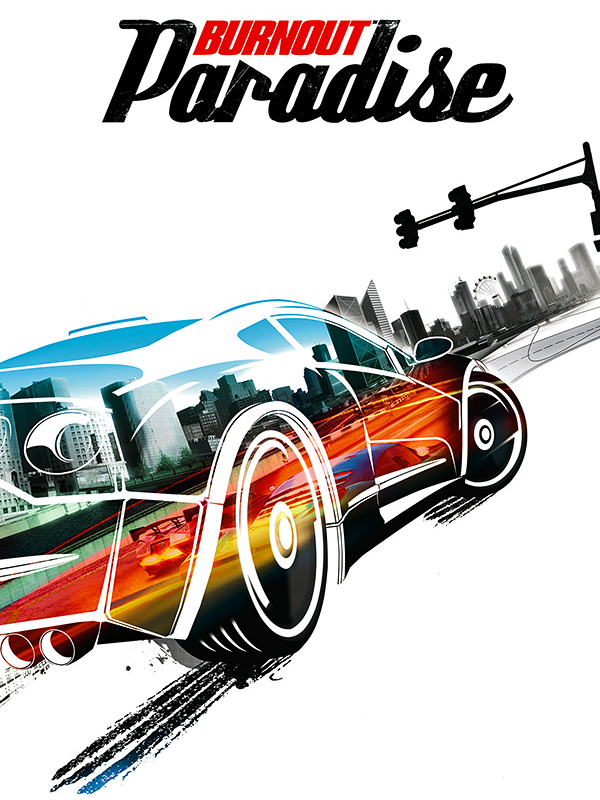
| PlayStation 4 | March 18th | Remastered | Burnout Paradise is not the best racing game ever made. It's not even the best Burnout game ever made, but I've had a hard time thinking of any arcade racing game that has been as well-designed as this one from the past ten years. A testament to just how easy this game is to play is... well, that it's the only racing game that I've ever finished-- and this is my second time finishing it. Its open world isn't especially exciting, but it's fine-tuned to just be endlessly fun to roam around in. It helps that the driving itself is spectacular; with (still) the best sense of speed in any video game but there are always new things to smash, new cars to takedown, road rules to break and challenges to beat, both on and offline. It's not perfect, of course. The open world, aesthetically speaking is pretty boring and the event list suffers from a serious lack of variety, both in game modes and distinct paths throughout the city. Plus, Paradise feels awfully self-indulgent. The crashes are nice and all, but the awful, unfitting use of slow motion is still here in full effect, still mistimed and making crashes way too long... among other things. Still though, they're minor points in what is still a stellar, thoroughly enjoyable racing game ten years later. I'm disappointed that we haven't had both a new Burnout or any game that has really come close to it in terms of its robust, seamless online features, thrilling sense of speed and unparalleled fetishism of pure automotive destruction. Like, maybe the closest thing is Forza Horizon in terms of quality but even that leans heavily on the realistic driving model. If anything, playing Burnout Paradise ten years later has properly sunk in just how much I actually miss these sorts of fast-paced, easy going racing games. One that focuses on just fast racing with unlicensed cars, as opposed to kart racers, or weird Wipeout / F-Zero knockoffs. I hope the remaster sells well enough to remind people that this sorta game can still kick it in 2018... but please don't let Ghost Games touch a new Burnout game.

| PC | March 27th | I feel weird about Grand Theft Auto IV. Its depiction of Liberty City is probably my favorite world in a video game after San Andreas. It's also been a deeply formative game for my music tastes, (at one point) social life and way that I approach open-world games like this. At the same time, though, the holes in its unfocused narrative, dedicated to outdated Rockstar tropes (even at the time) and its archaic, slow, self-indulgent approach to open-world gameplay feel more apparent-- and grave than ever. I'm not sure how I'm supposed to feel, as was the case the other two times I finished GTA IV-- and the countless other times I stopped in my tracks after being bored with its story. What I realized from playing GTA IV ten years later is that... well, Rockstar can't write complete, compelling, focused stories. They can write good-- heck, stellar moments and set pieces, dialogue that's fun to listen to and can set the tone with a very specific style. However, the Housers' have a striking tendency to get the main plot line and motivations lost in a myriad of small, usually inessential fetch-quests, side stories and lazy satire. This wouldn't be so bad if these paths were actually compelling. I get lost in hours and hours of Yakuza substories and its labyrinth of character relationships--but in the best way because I find them good enough to be worth my time invested in the main story, if not self-sustaining side stories. Nothing that GTA IV diverges off into is ever fun, or worth sinking time into. The dialogue that presents it may be fine, but following predictable plot-threads from generic mobsters where you tirelessly play errand boy is bad. Real bad. Grand Theft Auto IV gets so tangled up in its massive cast of generally indistinguishable characters that it forgets about Niko, and "that special someone" in favor of some half-baked, preachy attempt at making a statement about the player's actions. Whether it's about homophobia, or violence, or anything, GTA IV tries to convince you that it's doing something with weight without doing actually backing it up with the emotional depth and careful build to make those things meaningful. I still like Grand Theft Auto IV, and I appreciate the ambition that Rockstar took with trying to create an original story, but it merely tries to present its ambition in the most superficial manner. Nothing in GTA IV actually matters-- no matter how much it tries to convince you that it's doing something goundbreaking. GTA IV: The Lost and Damned | PC | March 30th | The Lost and Damned is fine. By virtue of it being a smaller story, it feels like there's a little less room for it to mess up a thousand intersecting plot threads. It still has the problem with characterization; it's all too inconsistent, with very little development for anybody in the story. I don't think this story treats its characters very well, especially in regards to Jim-- unarguably the most likable member of the gang. Though, I will say that Billy's performance is among my favorites in the entire series, and his fate fits it pretty well. What I will give TLOD is that it's good at re-contextualizing Liberty City. The perspective from The Lost gives the whole world a much dirtier, run-down, nihilistic feel. It feels... depressing, out-dated, hopeless. It fits well with the idea of a bunch of old dudes running with an idea stuck in the 60s, trying to keep the decaying idea of a gang together. I like it. It's also nice to see some of GTA IV's events from different points of view. It's not much, but it helps make a little more sense of a few characters. Plus, the new weapons and vehicles are killer-- especially since a lot of missions deal so much in violence and chaos. I like The Lost and Damned. There's not terribly much to complain about that I haven't already spoken about at length, but it kind of makes me wish that Rockstar would stick to smaller, more focused stories instead of trying to build the biggest worlds and narratives possible. It isn't always better, y'know. GTA IV: The Ballad of Gay Tony | PC + Xbox 360 | March 31st | Okay, GTA IV, okay. You win. For once, The Ballad of Gay Tony is much better than I remember it being. There are some of the game's most likable characters in this episode, with Tony and Yusef being major highlights. I found Luis himself to be little more than generic muscle at first-- and by the end he still is, but there's something oddly likable about him for how unremarkable he is as a protagonist. Thankfully, he doesn't fall into the same traps as the other protags do for the most part; everything he does makes some degree of sense, whether for business or out of love for his upbringing. I guess that's the trade-off if your character doesn't have much of a personality. That's not to say that there are unlikable characters, though and the story doesn't really go anywhere until the last half. Most of it is standard GTA fare, dealing with loan sharks (which seems to be a shockingly prevalent theme in GTA IV) and serving as some pretty good perspective on events from the other campaigns. For how bombastic and over-the-top a lot of the missions are, it only really contributes a little bit to the overall narrative-- but what it does contribute is pretty important all things considered. On its own though, Gay Tony is what I think of the most when I think back fondly about GTA IV as a whole. Rockstar's depiction of night life is, as usual, ridiculous and gives me some sort of second hand embarrassment. However, the guns, the glitz, the extravagant lifestyles, catchy dance music and blinding lights-- it's all here, and I love it all just as much as I did back then. I love it all just as much as I've always loved the allure of the night life. I think this game ends on a pretty good note, too. By the end of Gay Tony, GTA IV feels complete with an ending that's more feelgood than the downers of the other two campaigns. I felt good. I feel good.

| PC | April 19th | The Third Way | This is my third time finishing Grand Theft Auto V, but I don't think that I've ever actually written about it. I guess that's because, well... I never really had anything to say about it. I still kind of don't. GTA V is in a weird place, because it's so fundamentally playable that I can just... experience it without any strong feelings pulling me in any direction other than "I like this." I guess if I can say anything, it's that compared to the kinda superficial ambitiousness of GTA IV, GTA V nails its characterization in a way that Rockstar has never really done in one of its original games before. With the varying personalities spread across three different characters, there's never really any contradictory mission stuff like it has been for literally every Grand Theft Auto game before it. It's good, even if the mission design really needs an upgrade. But like... apart from that, I don't have anything to say about GTA V other than that I like it a lot, and I liked it even more this time around. Maybe next time, I'll have something to say about it.
| PlayStation 4 | May 6th | I'll say something about this game. Eventually.

| PC | June 2nd | Siren | I liked Borderlands 2 a lot, and I'm glad that I finally got to finish it nearly six years later. It helps that I played it alone this time, and had podcasts or videos on in the background to accompany me while I shot lots, and lots, and lots of dudes. I was surprised (and for good reason) by how well-designed Borderlands 2 is. It's full of smart choices that could only come from a studio that had put a lot of thought into how information is conveyed. The use of color, visual effects and its general style of conveying what's happening in what is often an extremely chaotic fight is seriously impressive. There can be a lot going on in battle during this game and I was happy with just how seamlessly playable it is through all of that, even in the casual way that I played it. I also love the variety of weapon effects (even though I wish there were more), odd, plentiful loot and how powerful the skills make you feel. Lilith's Phasewalk from the first game is something I missed a lot initially; until I started upgrading Maya's Phaselock and marveled at how you can control and annihilate the battlefield through its augmentations. It's stupid fun, and it's the main reason why I want to keep playing to fill out her skill tree. So, yeah... I loved playing Borderlands 2, but that was mostly because I had the game's dialogue on mute for 80% of its story. This might be the most unapologetically obnoxious piece of media that I have ever come into contact with. It tries _so_ hard to be funny at literally every single turn. Not only do most of its sub-Family Guy jokes fall flat, but they just... keep coming, and coming and it never shuts up. This game never shuts up, and it nearly drove me mad just through how funny this game thinks it is. That's not to say that Borderlands 2 doesn't have its moments-- it sometimes has some neat, funny quest design and occasionally, genuinely great laughs but there are very few of them in comparison to the sheer volume of consistently bad humor. It's so thoroughly drenched in irony that there is little sincerity, if any. Apart from the fact that it was figuratively written by Reddit, I had a lot of fun playing Borderlands 2. I hope that I can get around to playing the DLC-- or at the least, Tiny Tina's D&D add-on. Some stray thoughts: - If I'm lucky, I will never have to read, listen, play or subject myself to anything written by Anthony Burch ever again. - Though my cynicism keeps me skeptical, I adored the wall of thank you messages from the development team during the credits. It's nice when games drive home the fact that there are real people behind them-- through the good and the bad. - Tiny Tina is my favorite new character and I was bummed that she got so little screen time... but thankfully there's that cool-looking DLC campaign with her in the spotlight.