
Mortal Shell II Review
I played maybe an hour of the first Mortal Shell before putting it down and never going back. It felt sluggish and tedious, and the driving concept of its shells never clicked for me. Mortal Shell II is the rare sequel that reads like a studio taking notes from its own failures, with Cold Symmetry taking those hard-earned lessons and reaping the benefits.
What the studio has built is a fun-forward souls-like, one that values flexibility and variety over sheer difficulty. Mortal Shell II grabs you and plies you with a plethora of options for tackling its monsters, dungeons, and bosses, handing you shiny toys and trusts you to work out what to do with them. It doesn't do this perfectly - the way resources are doled out is sometimes confusing, and can feel like it's steering you away from trying everything - but I never needed to max out or hit the cap on a shell or weapon to cruise through endgame content. On that note - the game could stand to be more difficult. Cold Symmetry’s dev team seems to know it, which is why "Night Mode" unlocks very early, letting night fall on the world and raising the difficulty across the board for those seeking a greater challenge.
O Mether
The Harbinger, our protagonist, is the progeny of an alien entity called the Mether, which landed in this world eons ago. The game opens with a creepy riff on Midsommar, and from there you take up the sword to carry out her will. She is a massive creature, and humans have spent the years since her arrival carving up and carrying off her flesh for their own purposes. Eventually they went too far and took her eggs - the "ova" - and the Harbinger's task is to gather them and bring them home, slaying monstrous creatures and thieves along the way.
This flavor lands somewhere between Ridley Scott's Alien and Dark Souls, and the two play nicely together. The Mether's creepy cultists are at your beck and call (and ready to wash your feet) and their placating sycophancy left me questioning if I was the bad guy in this tale. Though alien and bizarre, I found the story somewhat heartwarming, pulling its human elements from the titular Shells.
Shell Yeah
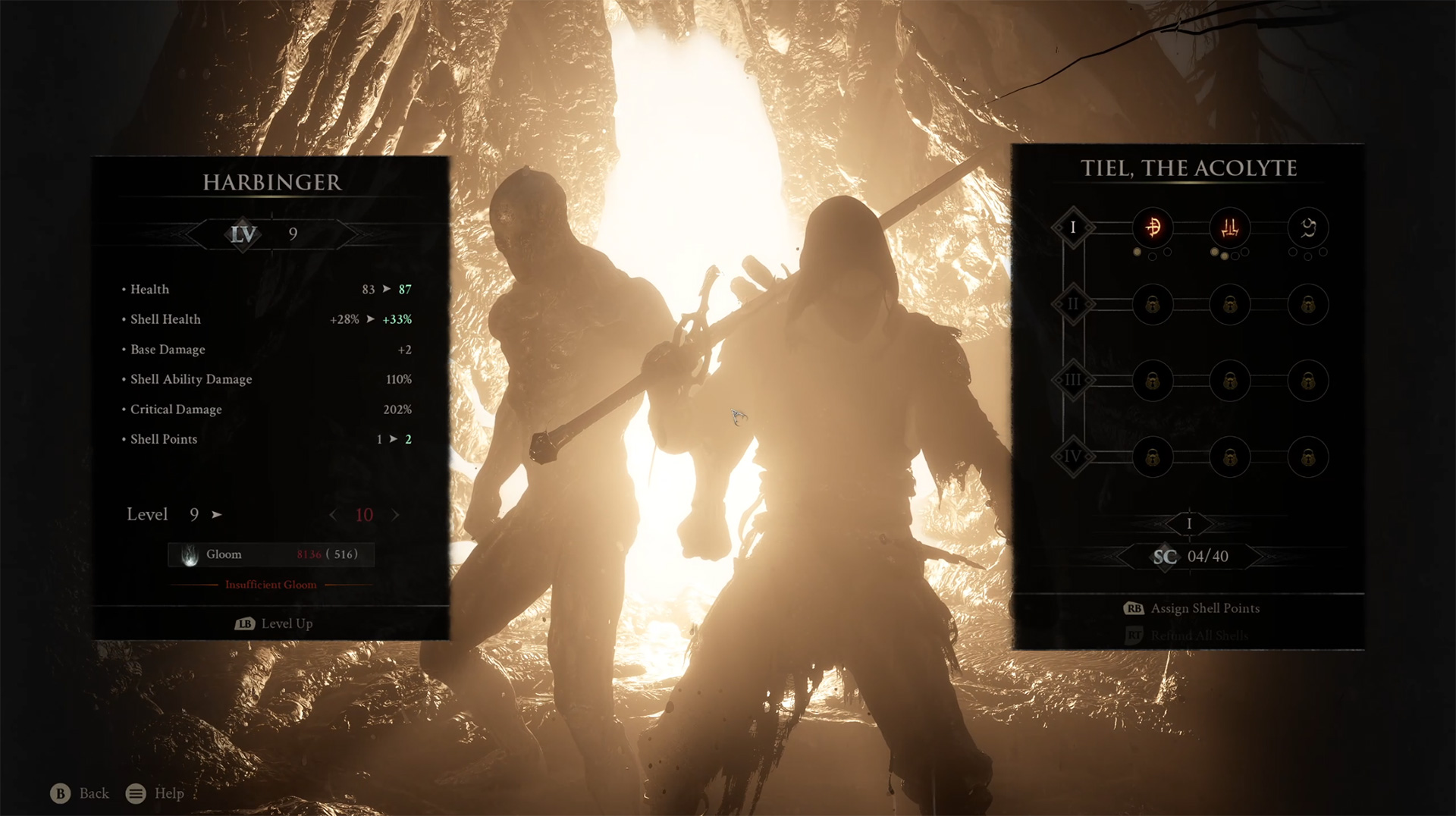
The shells of Mortal Shell are dead warriors, usually ones with unfinished business involving a particular boss in the world. When you collect one, an interactive cutscene ensues: a memory of the shell. Afterward you can immediately take on that shell or stay in your current one. Using "glimpses," you increase your bond with a given shell, unlocking more cutscenes, revealing more of their story and eventually how they died. A few of the shells you can collect in game:
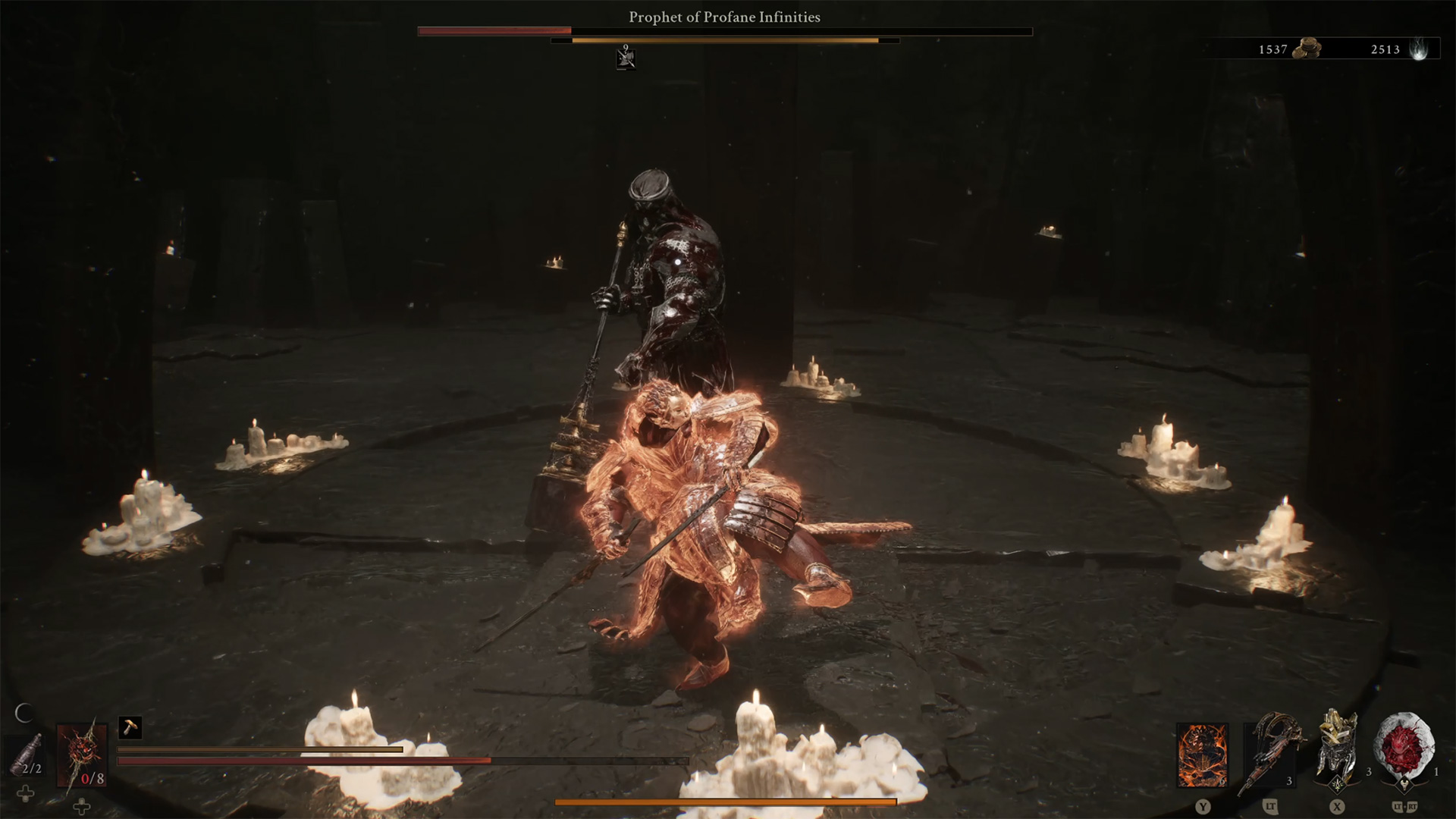
- Smert is a monk turned prophet after he began having visions of the Mether during brutal fistfights. He has an ability that stops time while you punch enemies to stack a delayed explosion on them. It's a game of chicken: you can stop time longer, but your health drains rapidly while you do so.
- Eredrim, the knight, has visions that recount travels with his squire as he seeks redemption for a life of mistakes. He returns from the first game and specializes in ripostes and stance breaking.
- Proxima is a shell straight out of Hellraiser, arriving from elsewhere to slay a cephalopodic beast with her machine gun. She reads like an otherworldly Robocop out for blood, and her cold attitude toward the denizens of this land is made obvious with her biosampling ability, with which she grabs a chunk of flesh from enemies for “analysis” and also shocks the hell out of them.
I cleared every beacon, collected every ova, and still didn't collect enough glimpses in my playthrough to see all the cutscenes, so I imagine that’s a large part of New Game Plus.
Axes, Katanas, and Machine Guns
For fans of FromSoft's catalogue, eight primary weapons might feel slight, but there are no low-tier weapons here. The sword handed out at the beginning of the game, the Iconoclast, could carry you through to the final boss if you wanted it to. I had a great time swapping in new weapons as I found them, and the treasure hunts to dig them out of dungeons were satisfying.
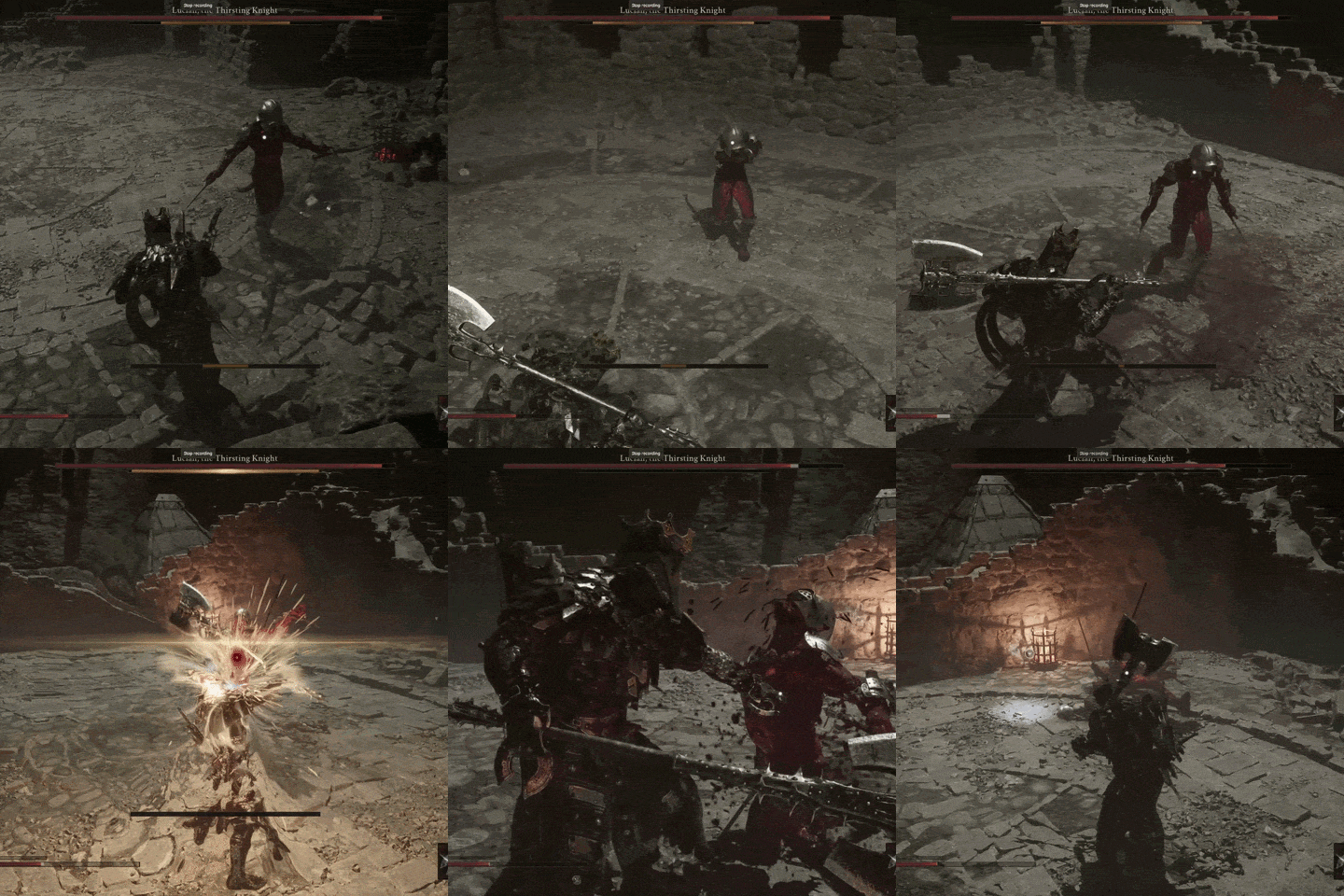
I finished the game with the "Axatana," dual-wielded katanas for light attacks that transform into an axe for heavy ones. I loved dropping out of a sprint into a spinning blade attack, which caught enemies off-guard and stacked bleed on them.
Sidearms are handy for staggering enemies, doing damage, and applying status effects, but they're also mandatory for solving puzzles. Gonging bells with my crossbow constructed cobblestone bridges and opened up the path forward. My favorite for a long stretch was the "salvaged trebuchaxe," a hand-held trebuchet with a long wind-up and satisfying stance break damage.
Cracking the Shells Wide Open
Each shell has its own abilities and upgrade tree, and the more closely bonded you are, the more skills and buffs you unlock. Most shells have statuses specific to them, like Eredrim's "Slaughterer" stacks, which enable executions on a given enemy whose health isn't quite in execution range. These trees are where you crack the game open, stacking percentages, generating statuses, and nullifying status effects through perks no other shell else has access to. Each shell can become resistant to an element: Lazlo to fire, Proxima to electricity, Eredrim to frost. In Lazlo's case this plays directly into his ability to "heat up" his armor, which raises his strength at the cost of burn damage. Spec into burn immunity and he takes none of it.
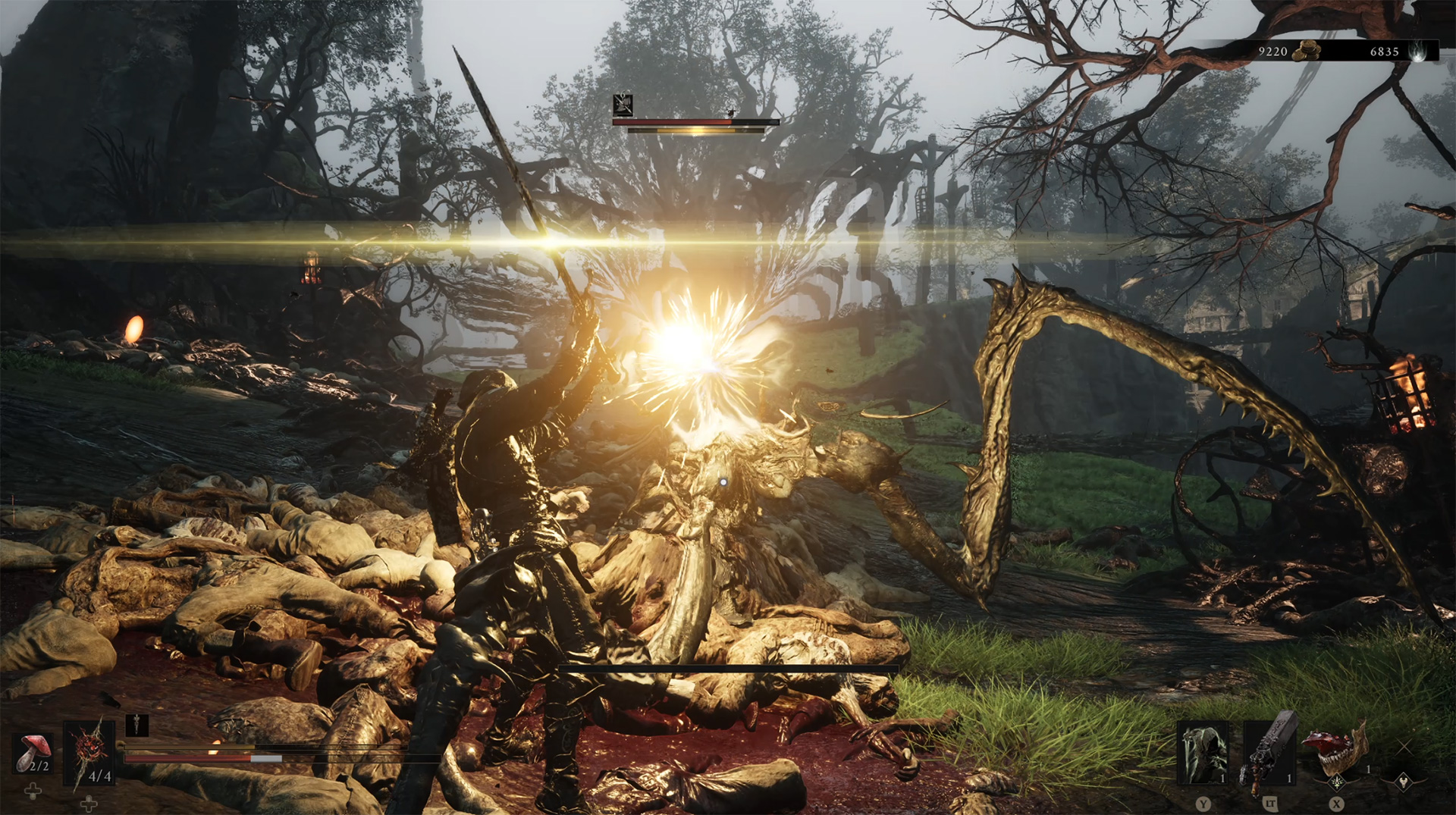
Certain shells, depending on the build, felt downright overpowered. Eredrim's shoulder bash can be improved to the point where I was stance breaking bosses in two hits, with enough resolve (think action points) to throw out two of them without pausing to rebuild the bar. Break an enemy, wail on them to generate more resolve, break them again. Editor’s Note: The day one patch notes reflect changes to stance breaking & Eredrim’s abilities specifically, but the words here reflect the game as played.
The loop felt cheesy enough that I abandoned it and spec'd into parries and riposte damage instead, and then discovered that further down that tree I could widen the parry window and raise riposte damage until strong enemies folded anyway. That's the tension at the heart of the build system, and it's worth laying out there: Mortal Shell II hands you the tools to trivialize it, and mostly leaves it to you to decide whether to use them.
Parry Good
I've bounced off games before that had a hard requirement on parrying. Sekiro exists almost wholesale on that mechanic, and I struggled to get past barriers that demanded narrow-windowed parries. Mortal Shell II clicked with me anyway - I barely used the guard mechanic, parrying and riposting instead. I found I could lock in during fights, with a memorable one being against an insect-themed boss with a shield that it discards in favor of wielding four blades. Parrying them over and over and punishing its vulnerable windows felt fucking awesome.
Mortal Shell II also does away with traditional souls-like stamina in favor of energy that each shell spends on special abilities, recharged by attacking, with perks on some shells that change how it accrues. Dodging (there's no rolling), sprinting, and blocking cost you nothing. This does remove an element of tension from boss battles that are present in other souls-likes, as you can spam dodge away from particularly pesky enemy attacks.
Between Beacons
The dungeons consistently surprised me with the variety of their level design and the one-off trick here and there that set them apart. One had me pick up a crown specific to that dungeon which moved obstacles out of my way when I approached carrying it. Another had me quaff a mystery potion which began warping my view, and I had to navigate a rickety footbridge to find the antidote. Nifty, never reused, and it made the world feel very handcrafted. There are some classic "fuck you" traps sprinkled throughout, but nothing rage inducing, and once one has caught you you're alert for it next time.
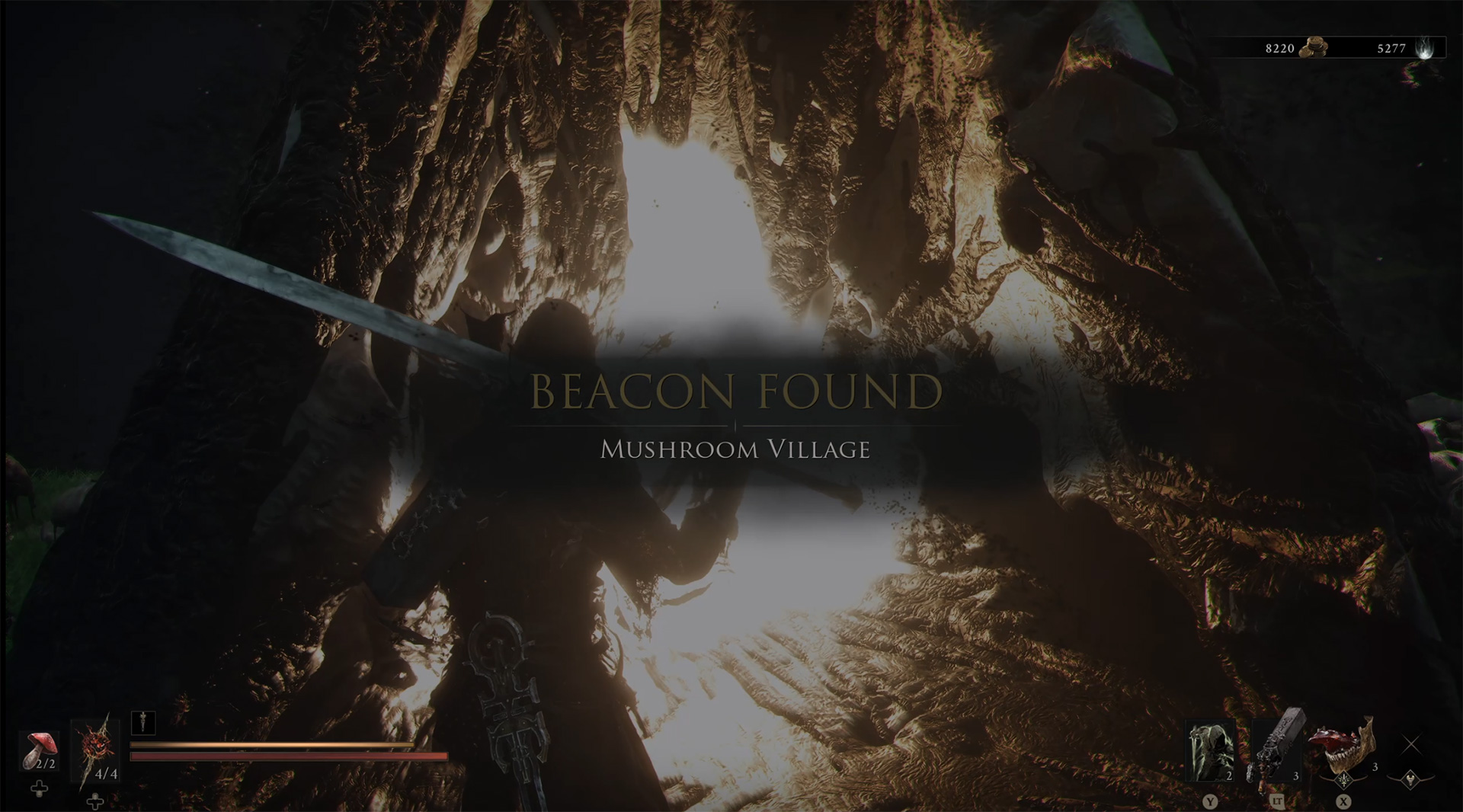
It's a sweet little souls-like sandbox, with routes to objectives winding and mazing satisfyingly, though I could have done with more beacons, which serve as the game's respawn points. The game's core difficulty is less in its combat than in the trials of endurance between beacons. There were stretches where I'd run out of healing items entirely and frantically search through hills and trees for a beacon with a third of a health bar, pleading with enemies not to squish me.
Enemy variety was a core critique of the first game, and while some reskins get leveraged across multiple biomes, the number of archetypes left me satisfied. I built familiarity with movesets, and came to dread certain slow-walking soldiers that I knew would punish me if I didn't nail their parry windows.
Shell Nah
The combat is satisfying and rewarding - but if I had a sole critique of it, it would be the overuse of "magnetic" enemy attacks, which allow creatures to close unreasonable distances in order to land a hit on the player. I felt punished for keeping deliberate space between myself and monsters, and that magnetic effect felt like a band-aid to create additional difficulty.
While the game rides a morose and self-serious vibe I took seriously and enjoyed, I found that tone to be inconsistent when it came to certain boss fights. After trudging my way through swamps filled with poisonous mages & snakes under a dreary sky, a morbidly obese woman in a rocket-propelled wheelchair as a boss just made me scratch my head. There are a couple of other bosses that lean further into that campy shtick, and it never quite landed with me, but the bosses leading up to and during the endgame were played more seriously, evoking the game's grim mood more satisfyingly.
Performance
Over my 26 hour playthrough, Mortal Shell II ran fantastically on my 3080ti & 9800X3D at 1440p on High settings. I found some of the lighting & reflections to bug out slightly at times, but that never hindered or dropped me out of the experience. Fidelity and frame rate were clearly prioritized here and it shows, with the game looking as good as any AAA title this year at a more than fair price point of $50 USD.
Shellfishly, I’ll take the options
I've been watching Giant Bomb co-owner Mike Minotti play through Elden Ring with no summons or magic, relying on rapid rolling and waiting for windows to open up, hoping to apply bleed with precise strikes. That game brought difficulty-accessibility discourse to the fore as it provided a bevy of options, magical or otherwise, to hit credits. I love Mike’s kind of playthrough, all perseverance and preparation and memorized boss patterns. But sometimes I want to blast an enemy off a cliff with a hand-trebuchet, or stance-break a giant baby-monster over and over and give it zero reprieve.
Mortal Shell II makes room for both - it is accessible at the expense of traditional souls-like difficulty, but the tools for a harder game are sitting right there for anyone who wants them. "Full Night" playthroughs and "no-glimpse" runs are inevitable from gamers, ratcheting up the hostility of the world and making for a brutal challenge. Cold Symmetry has built a game that is extraordinarily close to a perfect center of difficulty for me with a clear north star of “make it fun, first.”
Giant Bomb traditionally scores reviews on a 5-star scale, but with no half-star ratings. Starting in 2025, we've added half-star ratings to our reviews. We feel this is a more accurate representation of the review score and the reviewer's opinion.