
Tuesdays* of Terror: ...Iru!
by mento
(*sometimes Wednesdays) The Sony PlayStation was home to a great many firsts, owing to the capabilities of the 32-bit hardware and the near-limitless (at least comparatively) space of the CD-ROM format, and in no genre was that more the case than the fledgling survival horror . Populated at that time by furtive experiments in conveying that style of genre fiction through the video game medium l...
(*sometimes Wednesdays)
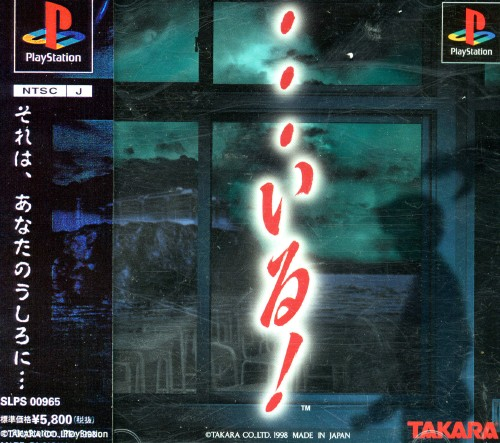
The Sony PlayStation was home to a great many firsts, owing to the capabilities of the 32-bit hardware and the near-limitless (at least comparatively) space of the CD-ROM format, and in no genre was that more the case than the fledgling survival horror. Populated at that time by furtive experiments in conveying that style of genre fiction through the video game medium like the original Clock Tower on Super Famicom, or previous Tuesdays of Terror subjects The 7th Guest and Sweet Home, PlayStation managed to properly establish and codify the genre between Resident Evil and Silent Hill, with most of the games to follow adhering to the rules and limitations set forth by Capcom and Konami's rivalry spilling over to a new battlefield. However, there was also another noteworthy horror game on that platform that almost no-one acknowledges today, owing in part to its small budget and to its lack of an official translation: Soft Machine's ...Iru! (localized as "...They're Here!"). ...Iru! follows Tatsuya Inaba, a senior at Kirigaoka High School, who has stayed behind after closing hours with several of his peers and teachers to apply the finishing touches to the props and decorations for the cultural festival the school is holding the following day. However, the lights suddenly go out and unusual creatures are soon seen prowling the corridors looking for prey. What are these things? Who is responsible for their appearance? And what happened to Yuma, the girl you're close to?
Iru (I'm going to elude the ellipses) has an uncommon source for its horror: the Lovecraft mythos, including various references to stories created by other authors which have since joined that collective narrative enterprise of humanity being beset by creatures beyond our solar system and understanding alike. In addition to the fish-like Deep Ones of Innsmouth or the amorphous Shoggoth, there's also appearances by Frank Belknap Long's Hounds of Tindalos, creatures that occupy the "angles" between time, which were eventually referenced by Lovecraft and incorporated into his universe. Iru plays fast and loose with the origins and motivations of these beings, folding them into a more typical Faustian horror narrative not dissimilar to a Persona or SMT game where students raise demons from unknown dimensions to serve them and grant them power, or at least give them enough juice to ace the upcoming university entry exams or score with the class idol. Tapping into that sphere of horror fiction does give the game plenty of ideas for monstrous creature designs though it's otherwise a superficial quality to the narrative (though we do get at least one "death by madness" when an antagonist reads from the Necronomicon and throws himself off a tower after turning irrevocably insane).
 Sure was cool of someone to write a weird glyph on the noticeboard. In case you were wondering if this works the same way it does in Silent Hill (as in, it's a save point) then you are correct.
 Rie is a 2nd year who is sweet on our protagonist, and chickens out of confessing despite moral support from her bestie Kyoko. Five minutes later she's broken Kyoko's neck and is lurching towards you menacingly. Teenagers really do have their mood swings, huh.
 I'm generally not on board with the way fan translations involve excessive swearing, though I suppose in this case it's somewhat warranted.
Iru has the early markings of what would become the survival horror trademarks of limited combat options and roundabout progression but besides a few superfluous hiding sequences it's really a traditional Japanese adventure game through and through. Most puzzles are solved by having the right items in your inventory and events tend to occur on a schedule, albeit not a schedule that involves a real-time clock ticking down but simply a series of events that you have to witness in order. This format is what typically sets the Japanese style of adventure game from its occidental brethren, as these games operate on flags that progress the story once the developers are satisfied that the player has all the context they need to understand the rest of the narrative that's unfurling. This can often mean that any two events might not have a logical throughline: a logical case would be witnessing a character run off in one scene and eventually finding them in a different classroom to start another scene, but here it might mean talking to some character about exposition-related matters before hearing a scream elsewhere and rushing off to investigate—the owner of that scream is probably going to stand there uttering the same line of dialogue until a flag is activated elsewhere in a completely unrelated capacity before their involvement in the plot can progress.
What this effectively means for the gameplay is that you'll spend a considerable amount of time running through dark school corridors (and Nyarlathotep help you if you never find the run button) checking in on all the classrooms, bathrooms, and club rooms you're allowed to visit to see if anything's changed and without any significant monster threats the tension tends to evaporate pretty quickly. You'll occasionally be forced to hide from some manner of servant of the Great Old Ones but these sequences happen at scripted intervals and involve single solutions, making them more like a regular adventure game puzzle than survival horror. Failure to find a hiding spot in time means a game over and having to load the last save, so saving regularly is soon instilled as a necessity (maybe every time you pass by a save point) since you've no real forewarning when these sequences will happen. Otherwise you're allowed to wander the gloomy hallways of your school unmolested, working towards goals like finding different colored powders to create a substance to ward off invisible monsters or looking for a spell to remove a Formless Being from blocking the way to the second-floor classrooms. The game is depicted entirely in first-person 3D also, albeit with some lo-poly visuals and rudimentary character models given the system it's on and the budget Soft Machine had to work with (a company which had primarily worked on pachinko and golf sims prior to this). It's actually in this regard that the game feels so prescient: it managed to pre-empt the great deal of lo-poly 3D horror games with simple gameplay structures that have now flooded the Indie space in the past decade and change.
 Principal Ned Flanders just loves to murder people, turns out. This is probably one of the few cases in this game where the reveal of an antagonist's true psychotic nature comes as no surprise whatsoever. Have you ever met a sane principal?
 Oh shit, they're reviving Squidward. The kids around here are too hopped up on memes to mentally accept it.
 A goddess statue crying bloody tears is an unusually Catholic affectation given everything else, but then I feel like I've seen the same device used in several horror games. (This is an actual thing in Japanese culture, turns out: Google 'Our Lady of Akita'.)
Iru has its issues, largely in how arbitrarily its flag system works and the amount of revisiting locales and trial and error that results, but the puzzles themselves at least aren't as maddeningly esoteric as the game's otherworldly foes and the sense of atmosphere is pretty strong throughout even if the tension isn't quite as ubiquitous. Witnessing your classmates getting merked by unknowable denizens of other worlds is given the gravity you'd expect, helped by being juxtaposed with a tranquil opening prologue (where the lights are still on) that introduces many of these characters in happier times before they meet with their eventual grim fates, and it even offers a branching narrative for some extra longevity after making an early game decision to visit one room or another, which ultimately affects who the final antagonist will be if only otherwise changing a handful of cutscenes for the most part. It's a pretty breezy game all told and certainly not overly demanding in terms of reflexes or ratiocination: had it been released overseas with a probably overwrought localization it may well have been a J-horror B-game cult classic enjoying the same popularity as an Illbleed or an ObsCure or a Corpse Party, perhaps. If you've looking for a charmingly low-rent horror game you could complete in a single late-October evening, with enough foresight or patience to figure out where to go next, tracking down this game and its fan translation wouldn't be a bad way to go. Better than getting eaten by a Shoggoth at least; that's not exactly something you can "shrog off" (I'm still workshopping that one, check back in after a strange aeon or two).
On The Next Tuesdays of Terror: War, huh?