
Mento's Month: July '24
by mento
Game of the Month: The Legend of Nayuta: Boundless Trails
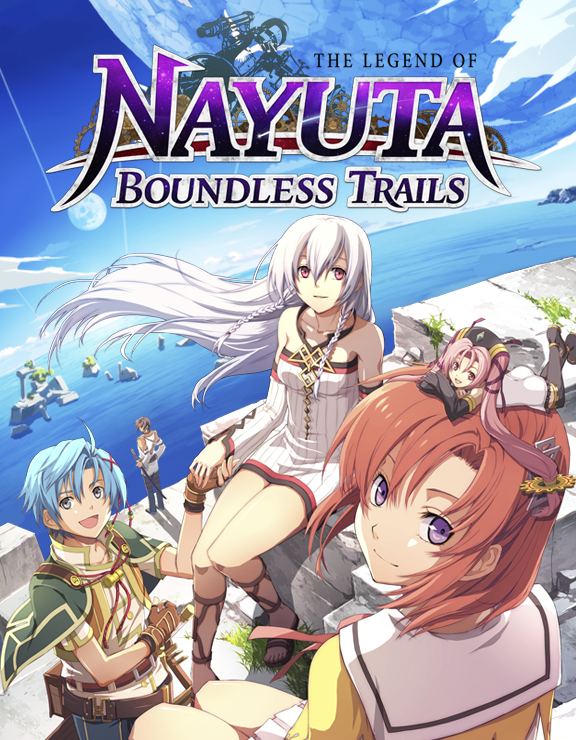
I started the first Mento's Month of the year extolling the virtues of Nihon Falcom and their command of modern cutting-edge RPG mechanics with, uh, the 2010 turn-based RPG The Legend of Heroes: Trails from Zero, which had only semi-recently been localized into English (officially; there'd been a fan-translation from team GeoFront for many years prior). However, the Legend of Heroes games are an aberration in Falcom's output: they predominantly put out action-RPGs, particularly those that emphasize attack and evasion timing along with a generally faster pace, the most prevalent of which is their Ys series but also includes the likes of Zwei, Gurumin, and Xanadu with its variants. The Legend of Nayuta: Boundless Trails exists as another action-RPG similar to those mentioned above but, for whatever reason, takes on a name that hearkens more to the Legend of Heroes franchise. Make no mistake, though: the DNA of this game is far closer to Ys than Trails. That's absolutely fine with me however, as Ys is getting up there as one of the most consistently great RPG franchises; I can't even begin to tell you how excited I am for the Ys X: Nordics localization later this year.
The story of The Legend of Nayuta, which I'll just call Nayuta for short, follows the titular teen amateur astronomer and adventurer Nayuta who returns home to Remnant Isle after a year studying abroad where his sister Eartha and childhood friend Lyra wait to greet him. Both he and his best bud Cygna come back to discover a sudden disturbance: a tower-like structure has fallen from the sky, at the top of which are two suspicious men and what appears to be a fairy. This leads Nayuta on an adventure in another world, Terra, as he starts to piece together the relationship between this strange location and the ruins and artifacts that fall on Remnant Isle regularly enough to give the island its name as well as, eventually, the twisted nature and history of his own planet. Also, a whole lot of hitting monsters and dodging traps. The typical flow of any given chapter in Nayuta is to visit a new continent on Terra, each of which is invariably influenced by a particular season, complete about three regular action stages, one tougher two-parter stage, and a boss battle before the story kicks in and a new chapter and continent are revealed. At any point between stages you can return home to Remnant Isle where you can restock curatives (they're actually lunchboxes your big sister makes for you, which is kinda cute), buy new gear for Nayuta or his fairy companion Noa, train with the local swordmaster (and adoptive father of Cygna, who despite being a talented swordsman gets sidelined pretty quickly) for new skills and passive abilities, or check in with the local museum and deposit any new bugs or fossils you found recently for a cash reward (though sadly the guy who runs it isn't an easily flustered owl). The Remnant Isle half of the game is also where you pick up most of the sidequests and these might have you hunting for rare items in Terra or else run around completing chores.
Gameplay-wise, Nayuta builds on a lot of mechanics introduced in Zwei II and a few that would go on to be used in Tokyo Xanadu, which for me fills in a missing link of sorts between the two. Like those two games, and as mentioned above, the game has a stage-based structure where you're running around mostly linear 3D courses (think something like the Super Mario 3D Land/World duo) with a balance of platforming, environmental puzzles like hitting a switch and dashing back to where it raised a platform before a timer runs down, and combat with a relatively small number of enemy types that are still capable of being devious with their tactics. In fact, a failing of the game—owing to the fact it was originally released on the PSP with its tiny screen—is that it's constantly zoomed in so close to Nayuta that many enemy attacks tend to occur off-screen and hit you before you register that they're happening. Nayuta relies on his sword for the most part but after joining Noi, his fairy companion, he can also use her magic to fight enemies that might be resistant to physical attacks or else be too much trouble to deal with at close range. Noi's arsenal expands as the game proceeds, usually following a tough mini-boss fight where the boss uses that spell against you, and can range from simple heat-seeking fireballs to area denial AoE attacks to those that incur status effects like freeze, poison, or confusion. Noi's spells have a cooldown system of sorts, so you're usually best mixing and matching melee and ranged attacks rather than always keeping a safe distance and just nuking everything.
As you earn stars in the courses—one for completing it the first time, one for getting all the collectibles (there's both dark crystals, which produce a lot of cash when broken, and treasure chests), and one for completing a specific mission that might involve defeating so many monsters, avoiding damage, or getting to the end under a time limit—you can unlock training sessions and not only does this expand the number of sword techniques you can use (there's some good ones, like a downwards stab that hits multiple times) but also opens up abilities like guarding to negate damage or expanding the "chain" system where you're given various buffs for building up a combo meter which goes away if you get hit or enough time passes between attacks on enemies. Because of this slow trickle of mechanics that will frequently change how you approach the game, it manages to stay fresh throughout, and the stage-based structure is one that made a whole lot of sense for a portable-based game suited for shorter sessions but still works in a console game where I can drop in, complete a few stages and maybe a boss fight, head back to town for some R&R, and then pick it back up another day.
There's more this game has in common with Zwei II beyond the stage-based structure and the dual protagonist roles of swordsman and sorceress. One is how the game ingeniously ties XP to healing items, namely food. You earn XP the usual way for the most part through defeating enemies and bosses, but the bulk of it actually comes from the healing items you can prepare by finding the right ingredients. The way this works is that, if you're in a situation where you need to heal a lot, it's probably because you're underlevelled; having food also impart huge XP bonuses quickly eliminates this imbalance. Conversely, if you're not needing to heal that often, then you're probably at the right level and the amount of XP you're earning dips appropriately. You could always just farm ingredients and pig out to keep boosting your XP in order to give yourself an advantage but you'll quickly hit a wall with how much XP the meals you can make at that point in the game can provide; the only way you'll resume receiving XP boosts big enough to matter is to continue making progress in the story, opening up new areas and procuring higher-quality ingredients from same. It's a truly elegant system that is inclusive for both those unwilling to grind and those happy to do so if it means being a few levels higher than everything to make things a little easier on themselves.
Nayuta's not always a great time—hitboxes are often pretty screwy and the challenge tends to jump up as often as you do during the game's many platforming sequences—but for a compact action-RPG with plenty of mechanics to sink your teeth into, combat and otherwise, it's comparable to the Ys games and, owing to its status as this one-off thing, can do some seriously wild stuff with the worldbuilding as you delve deeper into what Terra is and why the place seems to be full of gears and other machinery just lying around. Also, and maybe this is redundant for a Falcom action-RPG, but damn does it feel amazing to run around and fight things at the pace those games move. They can really feel like arcade games sometimes. For now, the game is complete but many of the trophies require a NG+ run that unlocks new content so I'll probably periodically check back in throughout August to sweep up what remains while fast-forwarding the talky parts I've already seen. (4 Stars.)
Darling Indies and Other Gaming Tomfoolery
Our big Tomfoolery headliner this month would be the advent of Game OVA: Season 3: a summerbound watchalong (or I guess readalong, since I'm not into all that streaming business) of classic '80s and '90s anime and the video game adaptations that tried to replicate their thunder to varying degrees of success. It's also been an excuse to learn more about games I didn't even know were anime adaptations, at least not back when I played them close to launch: the SNES shoot 'em up U.N. Squadron from Capcom, converted from an arcade game of theirs, is one half of the focus for this inaugural episode of Game OVA's third season. The other half would be the OVA it's based on: Area 88 from Studio Pierrot, in turn based on the Kaoru Shintani serial manga. The plot of what I thought was a genial anime Top Gun actually involves heavy themes of betrayal, psychological trauma, survivor's guilt, the fragility of life, and the horrors of war: Shin Kazama, who was tricked into signing up for a three year mercenary contract most veteran military pilots would die only a few months into, toils away trying to raise the capital to buy out said contract and return home to a cushy civilian life in Japan with his beautiful fiancée. Targeted by the vengeful former best friend who put him there and frequently imperiled by taking on the most dangerous sorties with the highest payouts, the show deals with a lot of near-misses both of the combat kind and the narrative kind, as it almost seems like the fates are conspiring to keep him trapped in the titular Middle Eastern airbase of Area 88.
The game meanwhile is one of the better shoot 'em ups on the SNES (not that there's a whole lot of competition) offering something a bit different with its open-world map/mission design that lets players tackle levels with a certain amount of freedom, provided they don't crash and burn too often and allow the tougher enemy forces to march right up to their doorstep. Fitting the protagonist's monetary goals, the player can earn cash from shooting down enemy formations and bosses and use it to procure better weaponry, upgrades, and eventually even superior aircraft. Each of the three protagonists—Kazama and his fellow merc buddies Mickey Simon (American) and Greg Gates (Danish)—has their own specialty as well, making for quite a bit of longevity. It's just a shame I suck too much at shoot 'em ups to really get the most out of it, but were I a more patient sort I could certainly see myself heralding the game as one of the best of its genre. Definitely a departure to start with a good licensed game and work backwards, but it turned out to be a match made in heaven: both the game and the OVAs come highly recommended for fans of military dramas and high-octane jet fighter action.
On a whim, I've been looking into more games to do RetroAchievements runs on. There's a pretty obvious candidate to follow the Kobayashi Mario series with after the recent news that the Dolphin emulator now has RA support, but even prior to that I've been getting hankerings for some full-achievement playthroughs that require a relatively light time and skill investment: that is, no completing a game three times in a row or in a way that's super oblique and punishingly difficult. Mystic Quest was one I thought I could bash out in an afternoon, probably, seeing as it's the Easiest Final Fantasy Game™ but its achievement set is actually kinda rough; I guess I'm happy the RA creators are able to help it shake off its reputation for being a sleepwalker but I'm not enthused about a few of its demands, especially the one where you beat the game without acquiring any magic. Could make for a fun challenge to blog about though. One SNES RA set I did manage to complete in full quickly and easily, and one I could recommend others as a good place to start if they suddenly wanted to get into RetroAchievements, is Mario Paint. There's a few toughies mixed in there so it won't feel like getting 1000 points on that Xbox 360 Avatar: The Last Airbender game for doing basically nothing, but it's still something I was able to conquer in less than an hour. I'll never get into speedruns the way Dan, Grubb, and Minotti have recently but going for full RA sets is in the same ballpark. It's real satisfying stuff.
Oh yeah, I'm still playing Pictlogica: Final Fantasy. Current wait time between new areas is now... 12 days straight? I think? So there's a whole lot of downtime between each batch of picross puzzles and the picross-based battles you take on to unlock new characters (I think Prishe from FFXI was my last unlock though FF7's Barret Wallace was the last unlock I cared about). Given that's the current situation with that cursed F2P game, I also started playing BoxBoxBoy on my 3DS too. It's the one where they let you have two stacks of boxes out simultaneously. Pretty great so far, especially in how it continues to impart new techniques like making a big hook over your head that you can use to get up onto higher platforms, but I'll write more on it once I've completed it.
WonderSwanning, Mega Driving, and Sixty-Forging Ahead
Man, another eventful month of playing retro games that I'd normally never try because I can only come up with blogging features based around personal suffering. That said, we have some retro highlights from July that were almost worth playing all those games that definitely weren't highlights.
Starting with my WonderSwan feature, Anyway, Here's WonderSwan (Part Six), we're already past the hump and I'm sure I'm going to start running out of ideas for what to cover before too long. I'd initially planned for a ten-part "season" and I think I'll comfortably have enough games of interest to make it through; I might just drop the whole "random choice" thing by part nine and check out all the remaining games I'm curious about in those final two entries. Part Six was once again a mix of games that were impenetrably Japanese and those (that I'd selected) which were intriguing but not necessarily something I'd want to see through to the end, unlike the WS-exclusive Klonoa and Mega Man games. The best of this batch of five was probably the Wizardry Scenario 1 port from Sting Entertainment, since it was fascinating to play a 23-year-old port based on what was already a 20-year-old game. Wizardry is kind of timeless, in the sense that its high difficulty and odd systems still resonate so many years later (Digital Eclipse wouldn't have remade the game last year if that wasn't the case), but it does demand a lot of patience. Runners-up include the original Japanese version of Ghosts 'n Goblins called Makaimura, which I keep wanting to write as Dakimakura, and the deceptively evil tile-flipping puzzle game Kurupara!.
The Mega Archive continues to push through December's copious amounts of holiday rush shovelware—what's the winter season without a whole lot of shoveling? Well, provided you live somewhere that actually has winters, I suppose—and dispenses with the last-but-one group of Mega CD games from 1993 in the tenth edition of Mega Archive CD. We won't be finishing off that library until the very end of this year as the capper to this "Mega Archive '93" season. Usual grab-bag of FMV disasters, enhanced Mega Drive ports, and a few other conversions trying to make full use out of the CD optical media format. Best game? I'm partial to Might and Magic III: Isles of Terra but I'm not sure the Mega-CD version is the one to play; it was a Japanese-only release, for one. That weird Dune adventure game from Cryo Interactive might be the best of the English-speaking stuff: there's a surprising amount of nuance to that game as it tries to juggle everything that made the novel (and the 1985 movie, from which it pilfers various visuals) engaging. Worst? I mean, I've never cared for Dragon's Lair but if you wanted something you could play at home that was close to the original arcade experience this port was certainly better than those weird platformers that the 8-bit and 16-bit systems saw. Maybe I'll give into my prejudices and give "Worst" to Bill Walsh College Football instead: college football seems to have had a glow-up this month thanks to EA so they can take the heat.
As for 64 in 64, this month was a cartoon violence rollercoaster of the type that could potentially lead to decapitation lawsuits due to their shoddy construction. We're talking the Worms Armageddon N64 port handled by Infogrames, which honestly wasn't too bad and was probably a good fit for the party-game-ready console even if it had to jettison a lot of what made the original PC game click, and The Powerpuff Girls: Chemical X-Traction, a cheap and cheerful 3D brawler not-so-subtly taking after Capcom's Power Stone with a fraction of the content and charm (and simultaneous player count, sadly). Well, unless you were a massive fan of the show, in which case getting to beat up your favorite characters (unless you had a thing for the mayor or the dad) probably added some appeal to an otherwise barebones licensed quickie. Speaking of RetroAchievements from earlier, Chemical X-Traction had so little substance that I was all but forced to get all its achievements in lieu of anything else to do for the remainder of the mandated time. And here I was, worried that an hour wouldn't be anywhere near enough time to get the measure of a game.
Your hint for next month's 64 in 64 duo: you won't have seen them on any GameStop shelf, because we're playing two unreleased games with essentially feature-complete prototypes. Didn't anticipate I'd roll a random one the same month I picked out a promising "Did Not Compete" but, as has now become our catchphrase for that feature, at least it's not sports.
The "Indie Game of the Week" of the Month: Phoenotopia Awakening (Cape Cosmic, 2020)
Because I have an addictive personality I managed to squeeze in yet another pair of explormers this month, and the one that's taking the crown for July is Phoenotopia Awakening (#377): a game I initially took some issue with due to its difficulty and odd controls/UI but was eventually won over by its impressive scale and surfeit of ideas not just for platforming and combat challenges but also some Zelda-style action-adventure flourishes, narrative twists, and environmental puzzles. All that, and a killer soundtrack. Check out the post-script in that the review for more on how I turned around on the game as I played more of it and, despite a few flaws and irritations, became something pretty special towards the end. As it is, I'd put it somewhere up there with Konjak's Iconoclasts for how ambitiously it took on the 2D explormer format perhaps knowing how competitive such a space has become.
That's not to say the runner-up this month, Altari Games's Lost Ruins (#380), is any slouch either. Despite some iffy humor the game takes after the Momodora series in presenting an attractive pixel explormer with some Souls-like deliberate combat and a huge selection of weapons, spells, and consumable items for the more resourceful dungeon-crawler to rely upon, as well as taking advantage of environmental properties like pools of water, traps, or the reliable, time-tested combination of oil and fire. At times it almost felt like a 2D version of a Larian RPG; not quite to the world-manipulating level of Noita, perhaps, but one that can be very rewarding if you remain observant for opportunities to let the local dungeon dressing do most of your murdersome work for you.
To round out this month we saw two very solid horror-themed adventure games in Hidden Layer Games's tragic and dark Inmost (#378), which combined some Delphine-tier meticulous platforming with a sad story about loss and grief and alienation and framed it all as a moribund 2D platformer with some beautiful visual effects and lighting (a lot of that this month), and Amanita Design's Happy Game (#379), which sees the usually wholesome point-and-click experiments of the Czechian studio take a hard dive into horror and gore, albeit still with their usual command of whimsy. Talking somewhere in the uncanny realm of a Burton or a Selick, or maybe even the Brothers Quay. Either way, both games are definitely worth checking out if you're in a macabre mood as I often unseasonably am whenever summer rolls around (I tend to be a little more miserable than usual in this high-humidity heat, let's just say).
The Bonus Indie: SNK 40th Anniversary Collection (Digital Eclipse, 2018)

Welcome to another Bonus Indie segment, into which I dump all the exceptions and edge-cases that I'm not sure I could call sufficiently "Indie" for the Indie Game of the Week. A major long-lived arcade and console developer (and one-time hardware manufacturer) owned by the Saudi royal family is probably as distant as you can get from the mental image of three scruffy guys working in a suburban garage somewhere on what might prove to be a multi-million life-changing hit for them that most would associate with the term "Indie studio" (largely due to that Indie Game: The Movie I suspect, though I guess I'm mostly speaking for myself) but even if SNK is clearly the focus here the developers are Digital Eclipse, whom had their era developing big (if not always noteworthy) games for current-gen consoles but have now settled into this present role of being niche video game preservationists and documentarians of the highest caliber. I'd argue Digital Eclipse are Indie even if SNK are not and that dichotomy is why we're stuck here in the Technicality Zone.
SNK 40th Anniversary Collection includes a bunch of games from SNK's 1980s salad days (though the oldest and newest are from 1979 and 1990 respectively) and includes a mix of NES ports and the arcade originals they were based on—or, in many cases, it's just one or the other. Since my whole thing these days is ranking retro games and inspired by Jeff Gerstmann's continued application of the scientific process in his Fridaily "Ranking the NES" YouTube feature, I've put everything in this compilation into what I feel is the definitive SNK ranking, or at least an inchoate version of SNK prior to all the Kings of Fighters and Metal Slugs and Neo Geos for which they'd eventually become a household name. I'm just sticking with the arcade versions in all cases except for the two that were only on NES. If I've learned anything from watching Jeff's series it's that most NES arcade conversions ain't so hot.
- Crystalis / God Slayer (NES, 1990): The only thing I really knew about Crystalis is that it's one of Vinny's childhood favorites and he'll reference it any chance he gets. Turns out it's a passable Ys clone with Seiken Densetsu's charge up attack. I got a little ways in, then got poisoned while exploring a cave network and died. Brave of a game with poison status effects to make it fatal. Might revisit this on RetroArch for the achievements. I'm also definitely calling it God Slayer from now on.
- Ikari Warriors (Arcade, 1986): This was SNK's biggest brand for a while and a game that saw ports on nearly everything (I'm the most familiar with its fine-ish Atari ST port). A game like Capcom's Commando where you roam around on foot avoiding gunfire and grenades while responding in kind, and occasionally getting to drive an invincible tank around. Fun but cheap in all the ways you'd expect an arcade game to be. You know, I've had Ikari Warriors in my life for three decades and yet it was only a few years ago that I found out its title translates to "Rage Warriors". Is it referring to the heroes or to the players, though...?
- Psycho Soldier (Arcade, 1987): A side-scrolling, multi-floor platformer that is probably best known for having its own superhero theme song (with lyrics) playing throughout, and both that and the games' protagonists would show up in later SNK games including King of Fighters (they even joined in with Terry Bogard's Smash Bros. cameo, whose stage was filled with SNK references). The game itself is fine, though you spend an awful lot of time shooting at breakable walls to get power-ups.
- Ikari Warriors II: Victory Road (Arcade, 1986): The weird-ass black sheep sequel to Ikari Warriors sees the headbanded duo fight monsters in an alien world in a considerable stylistic departure (Konami's Contra managed to merge the two themes of guerrilla warfare and goopy sci-fi a little more fluidly) that, despite all the strangeness happening, is really just more Ikari Warriors. One improvement is that your guns and grenades no longer have finite ammo.
- SAR: Search and Rescue (Arcade, 1989): A gory sci-fi top-down shooter very reminiscent of Alien Syndrome. Possibly the best looking game of this collection, though obviously you might not necessarily be into seeing bisected human corpses everywhere. Seemed fun enough but I either needed a map or the game needed to be less arbitrary about which doors I could leave through. Some great enemy variety at least: blobs, zombies, xenomorphs, corrupted turrets and mecha, and other weird shit.
- Time Soldiers / Battle Field (Arcade, 1987): A time-travelling Ikari Warriors, essentially, though instead of grenades you get this big cool laser beam with better range and more granular control over the angle it shoots at (rather than the usual eight directions). Had a Gain Ground vibe when I started but then the usual scrolling top-down shooter business that is SNK's whole niche became apparent. I did like that I could go back in time and shoot triceratopses with plasma beams. More games need that.
- Guerrilla War / Guevara (Arcade, 1987): The Ikari Warriors spiritual cousin where you control Che Guevara and Fidel Castro in revolutionary fighter mode across a bunch of jungle warfare levels. Plays pretty similarly to Ikari Warriors, honestly, except the character sprites are bigger which means bigger hitboxes and, man, is it easy to die in this especially in the way grenades and missiles only explode when they're close.
- P.O.W. (Arcade, 1988): An early SNK brawler that, like Ikari 3, also occasionally hands you a gun with limited ammo to make the usual flying kicks and backpunches sort of redundant. Seeing as it doesn't insist on a top-down perspective and has reasonably-sized sprites it's a lot more palatable but still kinda tough and samey. I could not for the life of me figure out how to dispose of a gun once it had run out of ammo, except to have it kicked out of my hands by an enemy. I guess my guy really wanted to hang onto it for a sense of security.
- Beast Busters (Arcade, 1989): Zombie light-gun game, pre-empting Sega's House of the Dead by a few years. Sort of relentless on single-player but there's options for up to three. When people call arcade games quarter-munchers I tend to think of stuff like this where there's almost too much to react to in time.
- Prehistoric Isle (Arcade, 1989): Figured this was going to be one of those caveman platformers that were all over the place in the late '80s and early '90s but instead it's some sort of Jules Verne inspired shoot 'em up where all the enemies are dinosaurs and early hominids. The latter are often the bigger threat, as they jump at you and throw axes from the ground where they're awkward to hit. It has a bright and colorful look, and earns points for the uncommon theme.
- Fantasy (Arcade, 1981): One of the older games on here, I wasn't anticipating much but it turns out to be a pretty funny spin on Donkey Kong as your girlfriend keeps getting kidnapped in increasingly improbable (and sometimes problematic) ways. Reminiscent of Atari 2600 games of the era, where each self-contained stage had its own unique challenge to overcome.
- Sasuke vs. Commander (Arcade, 1980): A Galaga clone, though the twist is that you're some guy named Sasuke and you're throwing knives at ninja who descend gracefully at an angle from the trees. That is, unless you shoot them in which case their corpses will fall straight down. It's funny, but also creates another hazard as the body of a falling ninja will still kill you if it lands on you. Cool for a while, but it's easy to get trapped on the limited horizontal plane you have to work with.
- World Wars (Arcade, 1987): Vertical shoot 'em up. Fly around the world destroying targets using an energy gauge that doubles as your health: as it increases, your damage output goes up as well, so it's like a traditional power-up system that works as a lifeline. Many early SNK games adopted the energy bar over the usual one-hit kill system and I generally prefer it, since I'm very prone to mistakes.
- Ikari III: The Rescue (Arcade, 1989): I'd no idea there even was an Ikari 3, let alone that it was a brawler that retained the series's top-down perspective. My understanding was that there was a demand for bigger sprites in games as the visual technology improved from 8-bit to 16-bit, which just makes everything harder to avoid since they're on you the moment they spawn in.
- Ozma Wars (Arcade, 1979): The oldest game here, it even features a title screen credit with SNK's rarely-seen full name (Shin Nihon Kikaku, or New Japanese Planning). Ozma Wars is another Galaga type but goes for a diverse selection of enemy types that keep you on your toes, from those that go flat to make themselves harder to hit to those that fire missiles that you also have to shoot down to those who split into smaller craft. Very demanding but for its era there's a lot going on creatively.
- Vanguard (Arcade, 1981): Side-scrolling shoot 'em up that goes through a few permutations as you move around a twisty level, including high-speed sections and those with limited invincibility power-ups. These work like Starmen in the Mario games in that you can just fly into enemies to destroy them, but in some ways it's harder to get a high score than just shooting them down in waves. You have to decide on the trade off between being indestructible and going for that top leaderboard position.
- Paddle Mania (Arcade, 1988): The premiere S&M simulator is finally back in emulated form. The first arcade game ever to use digitized speech for safe words. OK, this isn't actually a game about that but just some Pong thing that uses actual tennis players to make it a little less abstract. What's odd is that after I beat the first opponent the next match was against a three-person volleyball team and they creamed me. Kind of a strange game but one I figure could be fun with multiple people.
- Street Smart (Arcade, 1989): A prototypical one-on-one fighter game that still employs the depth of field that most belt-scrollers use. Still pretty mashy at this stage but I like how attacks boost you forward so it feels like you're sliding around, and how the crowd cheers every time someone is knocked down. I dunno though, I'm not sure this whole fighter racket is really SNK's forte.
- TNK III (Arcade, 1985): SNK sure loves tanks, huh? This plays much like Iron Tank but feels a bit more modern, with multidirectional movement on its maps. Of course, it came years before Iron Tank, but then this has the benefit of being an arcade game rather than a NES original. Otherwise, I wouldn't be surprised to learn that all the Ikari Warriors tank mechanics came from this.
- Chopper I (Arcade, 1988): Vertical shoot 'em up. I like this game's clean look but it's just as tough as all the others, with some really annoying enemy types like choppers that circle around you, fly to your flank and shoot a hard-to-avoid spread shot, or the flying nets that prevent you from shooting anything and makes you a sitting duck.
- Bermuda Triangle (Arcade, 1986): Vertical shoot 'em up. Neat time-travel gimmick, even if it doesn't make a whole lot of sense why enemies would be harder to deal with the further you go back (eh, it's probably an alien thing), but the game's ridiculous because of how large your ship is and how often you're forced to avoid things flying right at you unpredictably. Kind of a mess. Very similar stylistically to World Wars, which I found a little easier to handle.
- Alpha Mission / ASO (Arcade, 1985): Vertical shoot 'em up doing the Xevious thing of creating a distinction between air and ground targets, "enhanced" by a truly inscrutable power-up system involving lots of letters and ship pieces that I have no chance of figuring out with all my concentration dedicated towards just staying alive. Not sure if "more complicated" is the direction that genre needed to follow.
- Munch Mobile (Arcade, 1983): Another oldie (I mean, they're all old, but some feel their age more than others) where you control a car that can stretch out its hands to eat items lying on the side of the road, such as apples and cherries and small children. Your attention is split between the narrow road, which you have to stay on by steering the car around turns, and the items showing up on the peripheries including the much-needed fuel to keep yourself trucking along. Kind of a novel idea but in practice a little too imprecise with those grabbing mechanics and way too punitive about staying on the street.
- Iron Tank: The Invasion of Normandy (NES, 1988): SNK went for a more grounded historical war game here but it's just Ikari Warriors except you're in the tank the whole time. Clearly follows after TNK III. Aspects of Atari's Combat as well as there's two means of attack, the machinegun and the cannon (the latter I couldn't figure out how to aim), as you take on a bunch of cartoonified soldier dudes that looked as if the Famista baseball players all got drafted. Console games at the time couldn't do pure action the way arcades could so they would often add features like RPG mechanics or some open-world design or a more elaborate story, but this ain't that. It's no NES Strider.
- Athena (Arcade, 1986): Athena's always been kinda bad and it's a shame since it's an early champion for female protagonists in games. A fledgling goddess of war has to learn how to survive on the surface of this fantasy world by randomly hitting things and arbitrarily picking routes hoping for the best. Mashy, overly difficult, and all the split paths really offer is a bunch of FOMO.
The Weeb Weeview
My current system before now was to take three anime shows I'd been watching and do a medium deep dive on each, partly to avoid spoilers and partly because I was only a few episodes into some of them and couldn't really get too specific, but since I ended last month's Weeb Weeview with a bulletpoint list of shows I'd intended to watch I'll follow up on that with a whole bunch of first impressions instead.
By September I'll revisit them all again once their seasons are done and give you more thorough reviews... unless I've dropped them, as might be the case with a few of these, which I suppose is a critique in and of itself.
So here's that same list again and my takes after watching three or so episodes of each:
- That Time I Got Reincarnated as a Slime (Season 3, Cour 2): I mean, this is just business as usual. Rimuru the titular slime has diplomatically won over the western theocracy state that was giving him trouble and though we're still occasionally checking in with a dubious mercantile organization that might be our next antagonists for the most part he's been focusing on expanding the economy of Jura Forest Federation and installing a sort of pay-to-win dungeon, sticking the dragon god bro Veldora on the bottom level as a final boss and letting his natural monster charisma (sorry, "magicules") populate all the layers above with lesser monsters in perpetuity. As long as the big guy still has his snacks and manga he seems cool with it. It's become a little more cozy since the days when Rimuru was genociding entire human armies but I kind of like the "stakes go up, stakes go down" yo-yo nature of the show's focus. Like playing Minecraft and then turning on Creator Mode for a while because you're getting tired of slashing piglins and creepers and just want to chill out and build shit.
- Oshi no Ko (Season 2): The pervading theme of Oshi no Ko is that showbiz is rough for everyone due to the high level of scrutiny by the viewing public and the pressure that puts on everyone to perform at their peak, and those in the spotlight respond to professional failure in different ways: depression, frustration, desperation, misanthropy, apathy, or in a few cases they're able to hold onto their enthusiasm and endeavor to improve. The first few episodes of this season are following a beleaguered live theater adaptation of a Demon Slayer-style manga that Aqua joined as a pretense to keep digging into Ai Hoshino's murder but it's been focused mostly on how any big production can break bad in so many ways, either because the original creator is dissatisfied with the script or one of the principal actors isn't pulling their weight. Aqua's characterization remains a highlight: someone who has fully switched into a serious vengeful detective persona that, from the outside, just looks like a moody loner teenager buckling under the strain of his own acting genius. The show continues to look amazing and the character designs occasionally have this exaggerated look (especially the eyes) that really sells how, despite the drama it causes, being a bigshot actor or singer is still the dream of a lot of these kids.
- Alya Sometimes Hides Her Feelings in Russian: I predicted this would be the cute HS romance thing of the season and that's mostly been the case so far. I wasn't sure how the VA would handle all that phonetic Russian her character occasionally mumbles but not only is it passable (like I'm enough of a Russian expert to know) it's done in a higher pitch to make it sound even cuter, which is a bold choice for a language that vocally severe. From where I got up to in the manga there's going to be a whole student council president election run that'll dominate the show for a while so I'm less enthused about all that, but the characters are coming together well. I like that they changed the Suou character to be even more of an unhinged otaku brocon in her off-time: it's not broad enough to derail an otherwise grounded show but she's been a great wildcard foil in the sense of, say, instead of doing the usual romcom drama angle of "uhoh, a second girl has showed up, love triangle time" it's "the main heroine only thinks it's a love triangle when actually her "rival" is just deliberately screwing with her because she's a menace".
- Pseudo Harem: I did say last time that I'd watch this but I haven't checked it out yet. Easy to get distracted.
- Failure Frame: I Became the Strongest and Annihilated Everything with Low-Level Spells: Was hoping this would be the guilty pleasure grunchy revenge anime of the season but I guess the showrunners didn't really have the budget to make that happen because they're overemploying CGI to a startling degree, not just for the monsters but even for the human protagonist during otherwise static dialogue scenes, and it's starting to remind me of that not-great Berserk anime. Just kind of looks super cheap when you skimp on as much of the hand-drawn stuff as possible. Story-wise though they're doing a fairly good job matching the manga's energy: the protagonist is a victim of child abuse and neglect and kind of sees his "nice" self as a facade to the vicious degenerate (but not really) within, as a means to explain how a compassionate-seeming dude can pull off the gnarly paralyze-poison-sleep status effect combo that becomes his chief means of defeating foes (the twist is that all his status effect skills work 100% of the time on everything that doesn't have a divine shield up, like the evil goddess that teleported him into to the deathtrap she uses as trash disposal). Hopefully the animation budget gets kicked up a few notches if this show sticks around because it's better than Arifureta at keeping its edgelordiness in check. No forced dragon butt stuff yet, for one.
- Isekai Shikkaku / No Longer Allowed in This World: I saw someone point out that this is based on a real person who genuinely did kill himself (I sorta figured, based on how specific his character background is as a 1940s author) which does make the suicide jokes feel a little mean-spirited in retrospect but it's otherwise as funny in anime form as it was in manga form. The dude just absolutely does not care for this fancy-prancey magical isekai world and only leaps into danger because he figures getting eaten by monsters is as effective an unaliving method as anything else. His addiction to sleeping pills has afforded him a permanent poison debuff that, due to the fact his HP is stuck at 1, won't actually do him any harm but definitely harms anything that tries to gnaw on him: a great bit in a show of great bits so far (another being that the "Alternative World Selection Truck" is an entity sent by god to scout for worthy isekai candidates by driving into them really hard).
- I Parry Everything: I figured we'd get more fighting than we've seen so far but I'm liking the show's vibe and its modest-to-a-fault protagonist, who has been reliably informed for years that he's a no-hoper unable to learn any effective combat skills whose subsequent low position in the adventurer guild totem pole means he can only perform menial tasks that won't take him outside the city and put him at risk. The reality is that he's an absolute beast but only when fighting defensively due to his singular (but absurdly high level) parry skill, and through some pure luck has managed to procure a huge metal plate of a weapon that would put Guts's Dragon Slayer blade to shame: the first thing the hero remarks upon is how its wide shape is perfect for cleaning out ditches, giving you a sense of his priorities. Much of the humor so far has been about how he, as someone orphaned at a young age and mostly isolated from everyone, knows next to nothing about anything including who the king of his country is and that a ten-foot tall bipedal bull man with an axe is not just "some angry cow" that escaped from a farmer.
- My Deer Friend Nokotan: Yeah, I'm watching the meme deer show too. Not really sure what to make of it so far but it seems to be going for that Azumanga/Nichijou approach of a mostly disconnected series of absurdist skits, in this case about a former delinquent keeping up the facade of a perfect class rep madonna and the seriously odd titular deer girl that keeps throwing her off her game as she somehow knows about her true nature. I'm probably going to keep mentally comparing it to those two aforementioned shows (and probably Pop Team Epic too, given the meme-ready potential and yuri bait played up for comedy) so it's got quite the high bar to pass.
On the next Weeb Weeview, I'll focus on the other anime I've also started watching either due to recommendations or idle curiosity, including The Elusive Samurai, Makeine: Too Many Losing Heroines!, Wistoria: Wand and Sword, and a couple of amusing shows about girlfailure YouTubers. Another packed season, and one that I'm evidently going to have to trim down before long.
Too Long, Do Relinks
- Indie Game of the Week 377: Phoenotopia Awakening
- Indie Game of the Week 378: Inmost
- Indie Game of the Week 379: Happy Game
- Indie Game of the Week 380: Lost Ruins
- Game OVA Season 3: Episode 1 — Area 88
- Mega Archive CD: Part X: From Alshark to Prize Fighter
- Anyway, Here's WonderSwan (Part Six)
- 64 in 64: Episode 44