
Mento's Month: August '24
by mento
Game of the Month: Like a Dragon: Ishin! (Ryu ga Gotoku Studio, 2023)
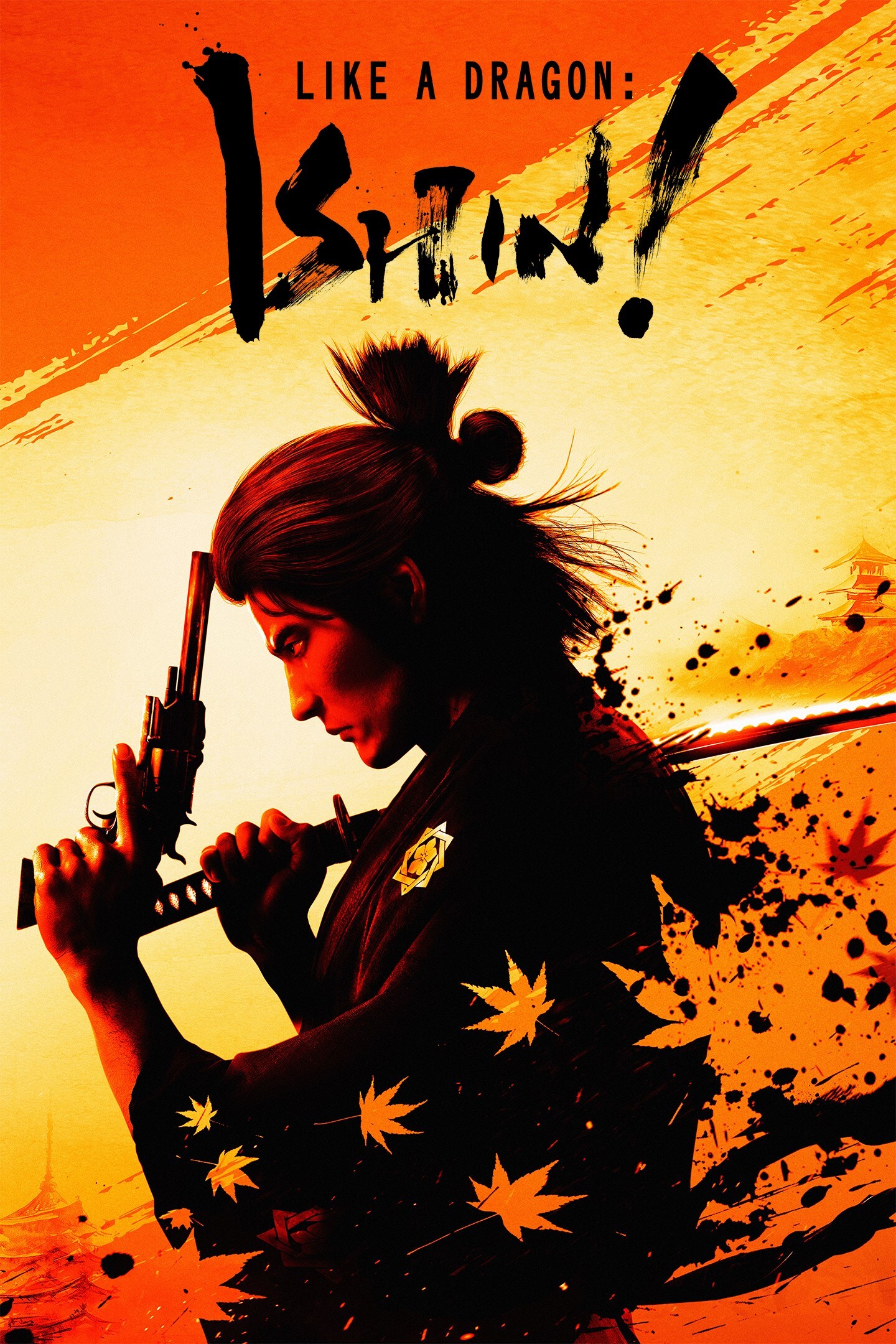
Around this time every year (or every other year) I boot up another game in the Like a Dragon franchise because they really are perfect summer vacation games: it's an excuse to spend too much time wandering around outdoors trying different activities and foods and occasionally putting down thugs that accost you in the middle of the street, just like the real summertime, all the while suspended in what feels like a series of long days that go on forever. Nothing much happens industry-wise during the summer, and even less so now that E3 is finally good and dead, so it's also the ideal time to stick on a really long game and luxuriate in its languid pace while you patiently wait for autumn to finally arrive and with it the busy calendar of game releases and new TV shows that herald the end of the accursed hot months. I'm now one game behind on the core series, what with Infinite Wealth releasing earlier this year, but I'm also behind on a few of its spin-offs too including this "kiwami" revamp of Like a Dragon: Ishin!—a historical ("jidaigeki") story that has various Like a Dragon mainstays essentially cosplaying as famous and sometimes controversial real-life figures of the Japanese Bakumatsu period: a transitional time towards the end of the 19th century which saw the end of the relatively peaceful if strictly isolationist Edo era as Japan moved into the transformative Meiji era and the influx of western culture and academic knowledge that accompanied it. The original Ishin released between the fifth and zeroth (is that a word?) of the core series, and was a launch title for the PS4 in Japan in 2014 so we're going back some ways and man is it weird to be playing the graphically remastered 10th year anniversary edition of a game on the same system it debuted on. I can definitely see a few places where Yakuza 0 might've been inspired by this game though, so the many fans that were introduced to this series through that game in particular might want to check Ishin out too for the "missing link" factor if nothing else. 1980s, 1860s, it's all pretty much ancient history to most gamers.
Our old friend Kazuma Kiryu, now Ryoma Sakamoto, takes justice into his own hands after his mentor Toyo Yoshida (who greatly resembles Kazama Shintaro, Kiryu's yakuza foster father) is assassinated by a mysterious masked man wielding an unfamiliar sword jutsu. Ryoma's investigations eventually lead him to the country's capital Kyo (presently known as Kyoto) and has him join the grim mercenary-style cops that are the Shinsengumi. I'm not that far into the story yet so we're still in synopsis territory for now, as I tend to get bogged down by sidequesting pretty quickly thanks to my poor impulse control and easily distracted brain. The game's since introduced the "virtue" system which is really just Ishin's equivalent of the big TownGo checklist of shit to find and do across the world, with virtue being a currency that you can spend on passive upgrades. Oddly, I get virtue whenever I drink a whole lot, gamble on chicken races, or shoot dudes in the face with my gun (more on that later; I kinda dig that they found an excuse for Kiryu to go to town with a flintlock) but that's just how morality worked back then. I've since funneled every unit of virtue I've earned on a full set of upgrades that increase how much virtue you earn per action, so those were points well spent. (Always go for the XP boosters first, that's the golden rule.)
Otherwise, I've just been roaming around and getting into fights, sometimes solving substories if they fall in my lap and only occasionally checking out the minigames (I played a bit of mahjong but the buy-in is prohibitively expensive right now—maybe it was more of a rich man's pastime back then). Ate a whole lot of weird shit in the seedier parts of town too. As always, pretty much anything you do contributes to one milestone or another so nothing feels like time "wasted", though obviously your own definition of that term might differ quite considerably from the average Yakuza completionist diehard who believes you haven't actually "finished" any given entry until you've taken down that game's Amon encounter (or maybe that's just me). Ishin's looking like a very long road to a Platinum trophy but boy howdy am I going to walk it anyway. That's why these are summer games, you see.
Ishin Kiwami has four combat styles, following the new system introduced in Yakuza 0 in which Kiryu and Majima had multiple styles to switch between to account for the fewer playable characters after the quintet of Yakuza 5. In Ishin, they're all determined by Ryoma's weaponry: Brawler is his unarmed style (while allowing for improvisational weapons, i.e. crap lying around on the street) that's familiar to anyone who's played a Yakuza game before and offers a combination of effective crowd control techniques like parries and counters at the cost of low damage output; Swordsman is your classic samurai kenjutsu and offers the best pure damage and defensive options but is otherwise pretty slow; Gunman has Ryoma use his pistol on distant enemies to take them out of the fight before they get close, though it's very conditional as a result since it's less effective when everyone has you surrounded when the fight starts (like in most street encounters); and Wild Dancer, my personal favorite, is a fast style that includes both the gun and sword and relies a lot on attack cancels and evasion to keep you in top fighting shape. Since all four have their own skill trees, each including some very useful permanent buffs to health and the heat gauge that apply regardless of your equipped style, the game is tacitly encouraging me to switch between them regularly so I have to try to resist the urge to clobber everything in Wild Dancer mode just because it's so much more fun than the others. Since most street encounters are against chumps that seems like the ideal time to train up the other styles.
I should have more to say about this game next month once I get much further into it and discover its remaining features, like its unusual and tactical "trooper system". It may well be Game of the Month for September also, though I'm hoping I don't end up limping into October with several story chapters left to resolve because I let this game's side-nonsense completely devour the whole month. Well, I'm sure Future Me will have some choice words for Present Me if I let that happen.
Other Gaming Tomfoolery

As always, headlining the tomfoolery across the summer months is Game OVA, with August's edition covering the Sunrise mecha fantasy shounen Mashin Eiyuuden Wataru (or Mashin Hero Wataru): a late-'80s show about a kid who gets isekai'd to a fantasy world of dragons and magic mountains who fights against a tyrannical demon lord and his goofy henchmen with the help of his friendly sapient mecha partner, Ryujinmaru. Very much a comedy for a younger audience, the show has a "kitchen sink" approach where they appear to have stuffed it with absolutely anything a Japanese kid could want: robots, ninjas, samurai, swordfights, dragons, rollerskates, and Hollywood parodies. The madcap humor makes it seem like something I'd have found very entertaining back when I was a tot and there's enough of a meme shitpost anti-joke aspect to some of the gags that I'm sure the Gen Alphas would find something to appreciate here too.
The games are, as is usually the case with this feature, a little more mixed in quality: the most famous is the same-titled Mashin Eiyuuden Wataru for PC Engine which was Woolseyized into Keith Courage in Alpha Zones (another Gen Alpha shout out). It's a pretty bad platformer all around, with some odd systems like a health upgrade mechanic based on booster items randomly dropping from tougher mobs that you can just farm to maximum in the first stage if you wanted, or spending a while as Wataru to earn cash to buy stronger swords for Ryujinmaru who invariably is the one facing the bosses and the toughest resistance. The fan-translated Mashin Eiyuuden Wataru Gaiden for Famicom actually proves to be the more interesting of the two, going for a Zelda II style top-down/side-scrolling hybrid "RPG-lite" in which you control Ryujinmaru (or another Mashin) in real-time random encounter battles that trigger as you explore. I eventually grew weary of its repetitive nature but it's probably one of the better action-RPGs on the system, truth be told. There's a smattering of other adaptations, including a couple of monster-raising simulators for Game Boy and a PS1 RPG that looks a little like Suikoden, but I figured the blog was long enough already so those only received brief overviews. Surprisingly, it wasn't long after that blog went up that a brand new Mashin Eiyuuden Wataru anime adaptation from Sunrise was announced, once again incorporating anything kids would find intriguing; that now includes Minecraft gameplay and selfie-sticks. Keep chasing that SEO dream, Wataru.

Besides hanging out with Ryoma "Bakumatsu Mitai" Sakamoto and the usual amount of grist for my blogging mill I also took the opportunity to revisit the core Klonoa franchise after I covered its WonderSwan entry, Kaze no Klonoa: Moonlight Museum, semi-recently. It occurred to me that I barely remembered a thing about Klonoa despite playing the first one way back on PlayStation and I'd already impulse-purchased the remastered compilation at some point and forgotten about it. The Klonoa Phantasy Reverie Series puts both Klonoa: Door to Phantomile and Klonoa 2: Lunatea's Veil into one set but it's otherwise a fairly barebones package that doesn't really do enough to honor the franchise's position in the platformer pantheon. For one, the loading times for both games are fairly abominable: that came with the territory for the PlayStation 1 and 2 (though the Phantomile remaster is apparently based on the Wii port specifically) but it's an odd thing to want to recreate for verisimilitude's take. I get why folks might want scanlines and blurry CRT filters for their older games but are they really clamoring for load times that take so long you can bounce and go make a sandwich in the meanwhile? Beyond that, I remembered that Klonoa for all its inventiveness and that neat wrapping affect that its "mostly 2D" presentation afforded it was definitely of its time and there were some annoyances to be found here and there owing to its age. That the stages were always too long by half and that made it tough to revisit for missing collectibles, or that weird little delay when firing the wind bullet thing in mid-air that caused many misses during the tougher combo jumping sequences of the post-game bonus levels, kinda reminded me just how far the genre had come for any franchise that wasn't Mario and Nintendo's irksome (to other devs) ability to nail impossible design challenges on the first try. Klonoa still scores points for daring to be different, though I'm not about to praise every 3D platformer that tried going its own way back then (looking at you, Glover), and the surreal and dreamlike presentation almost takes on a classic Sega Saturn-era style akin to something like a NiGHTs (ironic, given Namco never put Klonoa on a Sega system). If I were recommending remastered 3D platformer compilations, I'd still probably vouch for Spyro or Sly Cooper over this but Klonoa exists as an interesting evolutionary dead-end for the genre from which I'm sure the more artsy Indie platformer developers will continue to draw inspiration.
Sticking with platformers, it turns out there are a huge number of Super Mario 64 hacks with RetroAchievements sets and I needed a podcast game until Ishin could reach that part of every Yakuza run where you'd be off grinding/farming shit for hours or trying to conquer a mini-game for trophies. One of the more popular ones is Super Mario 64: Star Road: a hack that's presented like a sequel to the first SM64, with a total overhaul of the stages and an overall slightly higher difficulty curve right off the bat. Some insidious Stars to get towards the mid-game and beyond (there's a stage that's just floating musical instruments where the 100-coin and 8 red coin Stars were nightmares to acquire) plus some real nasty post-game bonus challenges to overcome. RetroAchievements has so many of these SM64 hacks that they've had to organize them into "easy", "normal", and "hard" difficulty categories: I thought I was hot shit at the game after getting the full SM64 set those many months ago, yet I'm terrified of going anywhere near the harder hacks if Star Road counts as normal difficulty. Check out this video of someone getting the secret 121st Star in the game if you want an idea of what I've been putting myself through.
Naturally, there are also a fair number of Banjo-Kazooie hacks out there too. A guy named Mark Kurko is responsible for several of them and one of his more famous ones is Jiggies of Time, which merges Banjo-Kazooie with Ocarina of Time in a pretty seamless way. I bailed on its final boss fight (it's a bit glitchy, on top of being long and painful) but I did this month manage to beat his "prologue" to that game, Gruntilda's Mask, which essentially makes one big BK level out of the central Clock Town of Majora's Mask. The best thing about these mods, besides how cleverly Kurko works with the existing world design and BK assets to make proper platforming challenges out of all these locations, is the music: it's all Zelda tracks remixed with Kirkhope's sound bank for BK and it sounds authentic in a surreal alternate dimension way. I'd highly recommend checking out both Jiggies of Time and Gruntilda's Mask, though keep in mind the guy modified the Grunty final boss fight to be even more of a headache than you remember. I probably won't play another one any time soon just because that awful battle invariably has to cap these things for some reason.
Speaking of wringers and of gingerly placing myself inside them, I also spent the first week of this month on a second playthrough of The Legend of Nayuta: Boundless Trails (July's "Game of the Month") on its highest difficulty setting, Insane, which is only unlocked after completing the first just so I could acquire the rest of its PSN trophies. Skipping cutscenes and most of the bonus courses—though not the sidequests, since they all needed to be repeated in addition to the new NG+-exclusive ones—meant that the second run went a lot faster, but Insane difficulty changes the enemy stats so they're not just a whole lot higher than on Hard but also scale to your level. That meant almost everything, regardless of how strong I became, hit like an isekai truck and that's especially true of the NG+ unique bonus levels that were already meant to be tougher than anything else in the vanilla game. Many trophy guides recommend three playthroughs so you're not forced to take on all those NG+-only nightmare courses and its new superbosses on the highest difficulty but, well, I'm just that good. Or rather, that obstinate. One more Platinum trophy later and I can leave the game on a high note with only a mild amount of mental bruising.
Though since we're talking about suffering about how a Pictlogica: Final Fantasy update? The waiting time for new areas to unlock is now 336 hours, i.e. two weeks exactly. I guess that officially means I'm playing Fortnite now. (Is that how it works?) My most recent recruits were Quistis Trepe (FF8), Faris Scherwiz (FF5), Zack Fair (FF7 CC), and Snow Villiers (FF13), so three out of four ain't bad. I genuinely didn't anticipate they would keep increasing the waiting time like this: sitting around for two weeks before you can play new content is ridiculous as almost anyone would lose interest and switch to something else in that span of time. I love me some Final Fantasy picross though so I just make a note on my mental calendar for when they'll let me continue with the game. The chances of completing it this year are definitely starting to look more and more slim however.
As for my other 3DS adventures, I'm very close to the end of BoxBoxBoy! now too: there's been a couple of stumpers, specifically dealing with those crown collectibles and how they'll vanish if you summon too many boxes before getting to them, but one thing I love about how the game introduces a new idea every "world" is that the difficulty always stays on the right side of solvable to account for new variables. After all, you can't drop the player in the deep end with a novel obstacle type that you're still acclimating them to.
WonderSwanning, Mega Driving, and Sixty-Forging Ahead
All right, let's check in with my retro gaming blogging corner for another month. As always, it's been an eclectic mix of exciting new discoveries, familiar old favorites, and a whole lot of forgettable debris that at best exists to inform us historian types of what sort of trends and practices the industry was pursuing at the time. Elucidating but rarely something I'm going to want to stick with all the way through to its end.
Anyway, Here's WonderSwan (Part Seven) was especially rough this time owing to the fact that my "choose half, have half chosen for me" system that worked oh so well for 64 in 64 has a downside in that if I continually cherry-pick all of the good stuff out of that library the randomizer is going to strike gold less and less frequently. Highlights include Square's first WonderSwan exclusive, Hataraku Chocobo, which is a sparse but deceptively cutthroat resource-gathering strategy game, and a maniacally-difficult port of Sega's Golden Axe. The rest include another SD Gundam game (better than the previous), another Inuyasha game (worse than the previous), and a simulation game all about the glamorous world of horseracing. Neigh to that.
We Mega Drove to the Mega Outlet Mall for this month's batch of low- to mid-quality Mega Archive inductees, the biggest of which include the misunderstood Castlevania: Bloodlines and the crowd-pleasing Puyo whitewash that is Dr. Robotnik's Mean Bean Machine (though the most surprisingly good game was Blades of Vengeance, an EA Rastan-esque platformer). Worst? Well, we had some sports games that I always feel a little bad for clowning on, a first-party Home Alone 2 game that's probably better than it has any right to be, and the always divisive James Pond with his third (or technically fourth) outing, Operation Starfish. I'll have to give it to mini-game and activity center Fun 'n' Games just because the "cheap and cheerful" vibes radiate off it like a space heater.
64 in 64: Episode 45 saw two prototypes this time: I added a small cadre of them to bump up the total number of N64 games to appraise to an even 400 (there were only 388 official releases, not counting the 64DD) and this is only the second (and third) time we've covered one, after 40 Winks from Episode 31. Viewpoint 2064 is a N64 reimagining of the isometric arcade "Zaxxonlike" shoot 'em up Viewpoint that more resembles Star Fox 64 in its new 3D format, while O.D.T. is a steampunk Tomb Raider imitator with a bit more focus on combat over platforming that couldn't quite get its N64 port out of the door before Sony essentially killed off the Psygnosis brand. It's always exciting to check out N64 games I've never played before, but even more so if very few others have seen them too. Your hint for Episode 46's duo: One is a very topical intellectual property right now and I've been curious about its single N64 game since forever ago in part because it was never released outside of North America, while the random pick is... well, it's a type of sport but only sorta and I suspect it might be a bit slow for me despite its alacritous name.
The "Indie Game of the Week" of the Month: Toem (Something We Made, 2021)
August 2024 saw the minor miracle that is the five Thursday month, so that means five Indie Games of the Week from which to choose a victor. I've opted for Toem (#381) partly because it's so darn cute but mostly because there aren't a great deal of wholesome photography-based Zeldersatzes out there. Granted, they give Link his own camera in most of the modern Zeldas going back to The Wind Waker but it's never a central aspect of any given game (though I'd love to see one; maybe "The Legend of Zelda: The Return of Canon"?). Toem has your little bird/mouse guy wander around some monochrome settings helping out the locals with their photography-based issues while the player moves own camera around these dainty dioramas to find all sorts of secrets and hidden details. It's not a long or super involved game, but the sort of friendly, low-stakes casual experience that has enough going on creatively to be a worthy recommendation for anyone.
Our runners-up involved a whole lot of violent, horror-themed fare for whatever reason. Summer just brings it out of me, I suppose. My second favorite this month might have to be Cookie Cutter (#383), a relatively cookie-cutter (oh, huh) explormer with a '90s comic book cyberpunk aesthetic (very Jamie Hewlett) that had enough going on with its combat and aesthetics to stand tall in a subgenre that has become so vast it puts the "sea" in "search action". Speaking of compellingly deep combat systems we also have Zeno Clash II (#385), an Indie first-person brawler from 2013 that has yet to feel its age due to its uniquely unsettling worldbuilding and alien visuals. Continuing the theme of arresting visuals we then have Tandem: A Tale of Shadows (#384), a co-operative (but in the single-player alternating sense) puzzle-platformer that sees one character roam a clockwork mansion from a top-down view while the other runs and jumps across the wall in a 2D platformer perspective. The duo work better than you'd think and the game finds a lot of imaginative use of shadows to build its puzzles around, never slowing down on introducing new ideas right until the end. Finally, we have Ashina: The Red Witch (#382), a somewhat unpolished horror adventure game riffing on those RPG Maker types that come out of Japan on a regular basis. That's a game I'd recommend for the vibes and writing, and maybe those looking for less intensity from their adventure game inventory puzzles.
Be sure to click on all those numbers for my deeper dives if you want 'em. But wait! We still have one more left to discuss:
The Bonus Indie: Kao the Kangaroo (Tate Interactive, 2022)
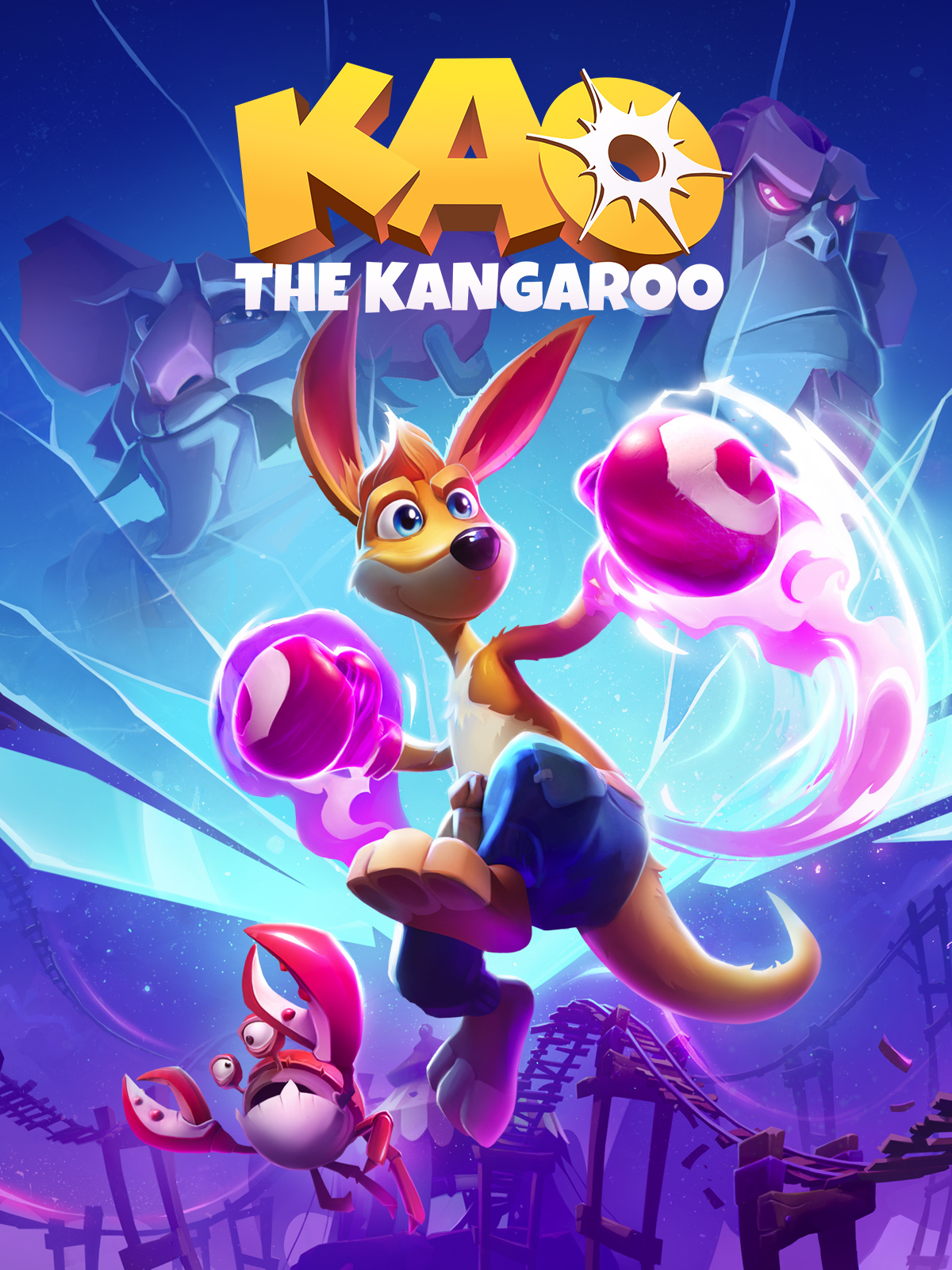
Kao the Kangaroo is one of those also-hopped mascot platformer franchises that I've always been at least marginally aware of, being the 3D platformer mark that I am (see the above gushing about N64 hacks for proof), and after receiving the 2022 reboot of the series in one bundle or another I figured I should give it a shot. That these games have belonged to that retail mid-tier of development since 2001, where the first game was originally put out by major studio Titus Interactive (they of some truly regrettable platformers found elsewhere), rather than the much smaller-scale Indie sphere meant that it was close enough to an exception to be shunted off to this bonus segment of my monthly rundowns rather than a full Indie Game of the Week review.
Kao (pronounced "K.O.", because boxing gloves) is a fairly standard mascot platformer with some so-so combat and above-average platforming, with many of its puzzles centered around Kao's ability to absorb elemental charges into his magic talking gloves and use them to activate or destroy certain hotspots in the vicinity. His platforming repertoire doesn't get much more involved than a double-jump (which you start with) but it feels smooth to move and hop around and since I've had no issues navigating precariously-small floating platforms that's usually all the indication I need that there's no real problems with the way it controls. It's also graphically resplendent even if the assets are often a bit basic looking; like if you released a high-def remaster of a PS3 game.
Where the game falters is in a general lack of polish with the amount of minor visual and gameplay glitches that can be found everywhere you turn, and in the script and voice acting delivery which are both kinda excruciating. The former loves it stupid meme references while the latter has this thick European patois (I thought it was German, but developers Tate Interactive are apparently Polish) that regularly has them mispronounce words or put the wrong emphasis on syllables. Like if there was ever an excuse to fork out a little extra for an authentic Aussie VA cast it'd be for a game all about kangaroos and other marsupials living in a vaguely Antipodean/Polynesian setting.
In all honesty the game is also straightforward to a fault: it's functionally adequate in most respects but doesn't really stand out as its own unique enterprise. It even got surpassed in its own (out)backyard of Australian critters tossing boomerangs around with the (slightly) superior Ty the Tasmanian Tiger franchise. It's pretty, not too challenging, and an uncomplicated collectathon which is what I'm all about at the end of a long and muggy month, but I just know that if I ever get around to finishing this off over the next week I'm probably going to forget all about it a little while after that. Well, maybe some of those lines will stick with me for a while. Like Kao's mom with the above arrows to the knee business or Kao talking about uploading videos to "RooTube" that were all delivered in a mostly humorless and off-accented way. That's the kind of horror that keeps you awake at night.
The Weeb Weeview
Last time on the Weeb Weeview I ran down a list of the anime I had planned to check out before this season started and how those choices had been working out for me. This time it's a bunch of shows that I knew nothing about prior to July but have slowly adopted into my rotation since then based on general word of mouth and other recommendations. It's been a busy season and I've definitely been spoilt for choice so there's no guarantees I'll stick with all of these through September, but I'm still glad I gave them a peek.
- The Ossan Newbie Adventurer: Very similar vibes to the I Parry Everything show I talked about in July, including a Richter Belmont-looking hero that seems to be a few wall poultries short of a Transylvania Fried Chicken restaurant in that he is utterly unconvinced of his extremely high combat potential due to a number of humbling factors, including his advanced age (a mere 32, so thanks for making me feel even more ancient, show) and how much stronger his "tutors" were. His obliviousness is played up for comedy way more than the ignorance of the I Parry Everything guy though, and this show in general is definitely more knowingly goofy in its approach. Its antagonists so far have been some silly entitled nobles who have been getting some immediate comeuppance when tangling with the hero or his trainers: a party of absurdly powerful S-ranked adventurers that includes a guy who invents machine guns and flamethrowers (in a medieval setting) for fun. I'd give the edge to the Parry show if I was forced to say which one was worth anyone's time but this is some compellingly dumb shit. (Meanwhile, the Parry dude just parried Godzilla's atomic breath attack so he's doing well, thanks for asking.)
- Mayonaka Punch: One of two YouTube-themed comedies this season about girlfailures streaming their neuroses to the world. This particular one has the violence-prone nightmare protagonist team up with a much more traditional type of nightmare—a thirsty vampire girl and her colony of immortal bloodsuckers—in revenge for getting kicked out of her clique of former highschool friends who made it big on YouTube as a unit. Plenty of places this show can go (we've seen both yuri bait and something of Isekai Ojisan's "I'll use my supernatural powers to make my channel popular" conceit) and those first couple eps were pretty amusing so I'll stick with it for now. Really not sure if I'll be able to juggle two shows about YouTubers for long though. (I've seen a few more episodes since writing this and it's really been going from strength to strength, including a surprisingly touching episode that focused on the most wallflower-y member of the vampire troupe and her singing aspirations.)
- VTuber Legend: How I Went Viral: This is the other one, though as you might surmise from the title it's about VTubers specifically. Kind of surreal to see a traditionally animated anime girl switch between a more stilted "cut-out" VTuber model where the animation is a little limited for technical reasons. Both characters are depicted as the same person rather than having one be some glamorous ice princess and the other a slovenly girl in sweatpants—it seems the show is keeping VTuber kayfabe, which is courteous of them—and there's certainly some correlation between the drunk, lecherous protag who accidentally shows the world her true self after leaving a stream running and some real-world VTubers I'm aware of. I wasn't sure how they'd handle the game streaming side of things, whether they'd go with fictional titles or what have you, but the protagonist is raging out at Getting Over It by the second episode so I think we're all good there. It's another show that's a lot funnier (and way more unhinged) than you'd think it would be: almost like an Always Sunny episode where Dee decides she'll get in on all this pretend anime chick video business to make a quick buck (they might actually have already done that idea, it's been a while since I last got caught up).
- The Elusive Samurai: Sorta-serious historical drama about 14th century real-life figures Hojo Tokiyuki and Ashikaga Takauji, the former the young prince and only survivor of a slain noble dynasty and the latter the once-general and future shogun who lead the coup. It's "massaging" history somewhat, leaving the door open for some potentially non-canon resolutions, but largely sees the pair in a cat and mouse game where Tokiyuki stays one step ahead through a combination of dodging, parkour, and subtle outside assistance. It's animated beautifully but that opening episode with the massacre is some seriously dark stuff so I'm curious how the rest of the show will go tonally. It does feel like one of this season's stand-outs though, from a technical quality stance at least.
- Dahlia in Bloom: An isekai, mostly, about a young woman getting her groove back after losing her beloved magical artificer father and the apprentice her father set her up with, the former dying from an undisclosed disease (but probably cirrhosis given the emphasis on him being a happy drunk) and the latter bailing on the engagement because he was never that into her and fell for some other woman instead. It's a humiliating and soul-crushing turn of events to suffer one after the other, and the series looks at the aftermath as Dahlia regains confidence in herself and her inventing work, successfully starts her own business, and rediscovers her joie de vivre after meeting a tall, dark, and handsome knight; their respective love traumas keeping them firmly in the friend zone for the time being. One of those shows that's mostly about the character work and only partly about a reincarnated modern Japanese person revolutionizing the technological knowhow of a primitive fantasy world (which, personally, is a trope I've yet to grow tired of). I appreciate that it's also pretty adult in its tone and not in the usual fanservicey way. More in the sense of damaged grown-ups drawing strength from a solid, supportive relationship while navigating the business world of a roughly 19th-century analogous setting.
- Makeine: Too Many Losing Heroines!: A late addition, but this a meta HS romance comedy about a plain dude who keeps drawing in "losing heroines"—a shoujo fiction archetype where the obvious love interest, usually a childhood friend, gets supplanted by a new girl in the affections of the male lead before she can seal the deal with a confession herself. As a shoujo fiction fan, the protagonist is keenly aware of this trope and is mystified when all these romantic also-rans (also-roms?) keep flocking to him to vent about their love troubles. The first few eps have been pretty funny as it quickly dawns on our hero, and the audience, why maybe these ladies were passed over for the sake of greener pastures while still ensuring a careful balance where the losing heroines aren't too annoying to drag the show down but not too perfect that you feel a tremendous amount of sympathy for their plights. In fact, they're mostly just normal people who are unlucky in love, lending credence to the idea that they aren't some fictional archetypal constructs after all (in-universe, anyway). The show's a lot more wholesome than I'm perhaps making it sound; far from the ladysasters of those YouTuber shows I mentioned. The animation's also surprisingly good for the type of low-key slice-of-life show it is too, similar to recent contemporaries like The Dangers in My Heart or Skip to Loafer, which doesn't surprise me given it's A-1 Pictures who just had a real kinetically-animated barnburner a few seasons back with Solo Leveling.
- Wistoria: Wand and Sword: Wistoria is Mashle if it took itself more seriously, or maybe Harry Potter if it took itself far less seriously. In other words, it's another magical highschool for jerkass wizards type of affair starring a bespectacled kid named Will who has absolutely no talent at sorcery but is damn good with a sword and smart enough to at least complete the theory side of his education. His reason for brute-forcing his way through this curriculum is to meet up with his childhood friend Elfaria, a prodigy so brilliant she automatically skipped every grade and became one of this society's ruling "magia vander" who all live in a giant ivory tower which is a metaphor that's probably a little too on the nose. Elfaria's rooting for him to graduate though, as is his classmate Colette (bit of a love triangle emerging too), but everyone else seems to hate his guts for being a magical incompetent, similar to the anti-muggle racism of a certain other franchise that is down on one type of unjustifiable phobia but apparently not another. The animation is the thing to tune in for here: the show's director is also behind the Black Clover adaptation so the combat scenes are always super dynamic and the magic usage (of everyone besides the protag) is usually pretty spectacular. Storywise it's satisfying enough when the hero gets one over on his haughty magic-user rivals but otherwise fairly standard underdog fantasy shounen stuff. Between this, Mashle season 2, Frieren, and that 7th Prince anime from last season there's been some good eating of late for fans of flashy animated spellcraft. I swear, it's making me want to revisit Elden Ring as an Int build...
Too Long, Do Relinks
- Indie Game of the Week 381: Toem
- Indie Game of the Week 382: Ashina: The Red Witch
- Indie Game of the Week 383: Cookie Cutter
- Indie Game of the Week 384: Tandem: A Tale of Shadows
- Indie Game of the Week 385: Zeno Clash II
- Game OVA Season 3: Episode 2 — Mashin Eiyuuden Wataru
- Mega Archive: Part XLII: From Blades of Vengeance to James Pond 3
- Anyway, Here's WonderSwan (Part Seven)
- 64 in 64: Episode 45