
May Millennials 11: Painkiller: Black Edition (Intro)
by mento
It occurred to me last week while playing Enclave , which was a sort of action-RPG that was structured more like a shooter, that I could just play a shooter from the same era and see what a direct comparison is like. Turns out I've been sitting on 2004's Painkiller: Black Edition for quite some time and this seemed the perfect opportunity to pull it out of the Purgatory that is my Steam backlog...
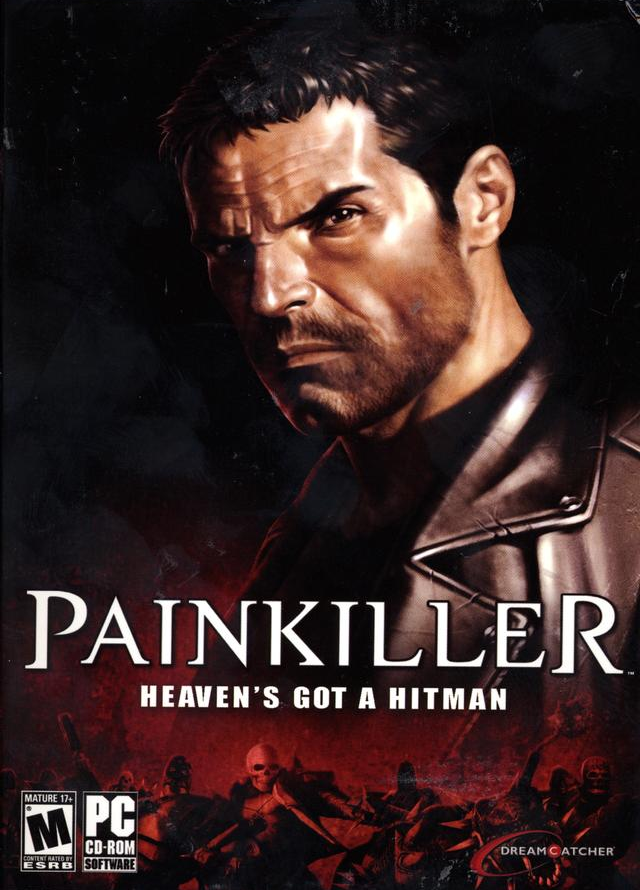
It occurred to me last week while playing Enclave, which was a sort of action-RPG that was structured more like a shooter, that I could just play a shooter from the same era and see what a direct comparison is like. Turns out I've been sitting on 2004's Painkiller: Black Edition for quite some time and this seemed the perfect opportunity to pull it out of the Purgatory that is my Steam backlog and finally give it a mission to accomplish.
Like Enclave, Painkiller was an early effort of a studio that would rise to bigger and if not better then at least more conspicuous projects. For Enclave that was the Chronicles of Riddick and Payday's Starbreeze Studios, and for Painkiller it's the Polish studio People Can Fly who only just recently released one of the year's biggest games, Outriders. People Can Fly have been tinkering with shooters and FPS games their whole existence though: between the Hell vs. Heaven heavy metal of Painkiller and the sci-fi grimness of Outriders, they also released the dicktitsalicious Bulletstorm, the lesser Gears spin-off Gears of War: Judgment, and had a hand in a little game called Fortnite during their brief time as an Epic Games satellite. Shooters are evidently in their blood and that made it clear why Painkiller feels so much like a free-for-all love letter to FPS games as a whole. Just one of those utter delights for genre diehards where a team of fresh and inspired fans-turned-developers threw every idea they had at the wall to see what stuck.
The roots of Painkiller are, of course, in the '90s id Software/Build/Quake engine era of FPS games where the more monsters you were circle-strafing around the better. In that respect, they followed Croteam's own Serious Sam homage franchise in creating something that was like those older games but even more audacious, using modern technology to fit as many opponents in your vicinity as mechanically possible. Painkiller's got a few other ideas beyond simply stuffing a room with demons though, and makes perfect use of its setting to incorporate them. Speaking of which, that setting - to which I not-so-subtly alluded to earlier - is that of Purgatory, a "no man's land" between Heaven and Hell where nebulously moral souls are sent in lieu of somewhere a little more definitive. The protagonist, Daniel, is one such resident, having died in a sudden car collision with his wife (who by all accounts made it through the pearly gates, though I'll believe it when I see it) and left to survive a hostile environment crawling with soul-hungry demons and mostly apathetic angels picking through the scraps for those that slipped the divine net. Thirty years later and Danny's still killing demons like he was born to do so, which inspires one angel in particular to set him on a quest to destroy Lucifer's four generals - part of a deployment of demonic troops the Morning Star hopes will put Purgatory firmly under his control - in order to earn his free pass to the Big G's holy stomping grounds.
 Buckfast Abbey is every bit as intense as the wine they make.
From this barebones plot, the game is free to imagine Purgatory however they wish, and it turns out a metaphysical plane of reality adjacent to several others has a great many environments to choose from. Just in the second chapter alone, I went from an opera house filled with ninjas to a genuinely creepy haunted asylum to an enormous metal bridge covered with ice and snow like something out of a Siberian Medal of Honor map to a Heretic-esque medieval town full of murderous plague zombies, witches, and necromancers. There's often a new enemy type in every level, or at least a palette swap that fights with different tactics, and while the weapon variety hasn't kept up with that sheer variety to the same degree the few guns the game has are very satisfying: there's the standard shotgun (basically this game's pistol), a Quake-style electrified shuriken flinger, a crossbow that launches stakes at a velocity high enough to pin enemies to walls (also showing off the game's then-advanced physics engine), and even the infinite-ammo default weapon is this sweet retrievable spear that can transform into a spinning blade of death for melee. More are due to arrive, I'm sure (I'm only two chapters in so far, slightly less than halfway).
Painkiller doesn't retain any progress between levels - that is, your ammo, health, and armor is reset every time, though you carry over whatever weapons you've found so far - but there is a system to make earlier levels easier on revisits: the Black Tarot cards. Tarot cards are awarded for meeting certain criteria in levels - defeating all enemies, reaching the end within a time limit, finding all the secret areas, etc. - and can be equipped between levels by spending the money you find from breaking open objects or collecting the well-hidden "holy items." Each card can either produce a passive effect that is present for the whole level or an active effect that can be triggered at any time once per level for about thirty seconds in what amounts as a free berserk mode. A similar boon is granted if you collect enough souls from fallen enemies - otherwise providing minimal heals - at which point you become an invincible demon who can track and shoot enemies from many yards away with infra-red vision. This souls system also greatly changes the way you position yourself, moving constantly to avoid crowds while circling back to bodies to collect these souls after they transubstantiate. Higher difficulties have you relying on the Tarot feature more often, the active trigger cards being particularly useful for tough boss fights and mini-boss encounters.
 When this Demon Vision clears, this scene's going to look pretty grisly. Maybe they shouldn't have marched towards me in single file?
Hints that Painkiller was built by FPS fans for FPS fans are scattered throughout the game's many systems and in its level design, but one telltale sign is the way secrets are often so well concealed that you practically need speedrunner sequence breaking tech to reach them. Tech like constantly leaping at a corner of a room until you magically whisk yourself up to a high shelf where treasures are sitting, effectively Skyrim-jamming up a wall of uneven bricks to victory. Some require maneuvering barrels and other objects around the stage as climbing blocks, many of which are explosive and will detonate with only the slightest provocation for massive splash damage. In addition to the auto-save checkpoints (which helpfully refill health on easy and normal difficulties) the player can quicksave at any time, at least on PC, and attempt the ridiculous acrobatics required for these secrets, or simply keep on walking. Generally, you only need to worry about them if you're low on any one resource - health and armor are usually in high demand at any given juncture - or you're looking for cash or trying to meet a Tarot card unlock condition. It's still perplexing that they demand this amount of finagling to reach, to the extent that I could spend thirty minutes trying to climb on top of the outside banister of an ostentatious staircase, jump up to the narrow gold trim around the pillars holding the staircase in place, and from there shimmy up the arches and onto the featureless area above because even though every instinct is telling me that this path is way too exact and elaborate there's almost certainly a secret squirreled away up there regardless. A far cry from the olden days of hitting a random switch and trying to figure out where the distant sound of a suddenly opened door is coming from.
On the whole, Painkiller has been stellar so far. There's no predicting where you'll end up next or what kind of layout you'll encounter, or what type of foes are lying in wait for you, or how difficult it'll be to accomplish its Tarot unlock condition or find its many secrets. You could breeze through stages in about five minutes apiece if you're particularly determined, or you could dither and spend up to half an hour in each checking all the rafters and pits for giveaway glowing effects. The progression has a similar chaotic and unguessable energy as my beloved Jazztronauts from a couple years back (the greatest thing Garry's Mod ever produced in my view) and, hell, using all those weapons against its sheer volume of enemies is a moment to moment visceral delight. I can even see kernels of ideas that aren't fully popped yet but would be put to greater, more purposeful use in Bulletstorm - like juggling a foe's corpse in the air for a while to make bonus gold fall out, or employing the environment (those aforementioned explosive barrels) to rack up kills in a flash. I'm looking forward to spending the rest of this week seeing what else the game has in store.