
Go! Go! GOTY! 2024: Senua's Saga: Hellblade II
by mento
Game: Ninja Theory 's Senua's Saga: Hellblade II Release Month: May Started: 21/01 Completed: 23/01 Fine, I guess I'll take on Senua's Saga: Hellblade II since we've only a few days left of GOTY season (and, crucially, my free Game Pass period) and I sincerely doubt I'll be able to squeeze Eiyuden Chronicle or Octopath Traveler II in that short a frame for as much as I'd like to try. I need to...
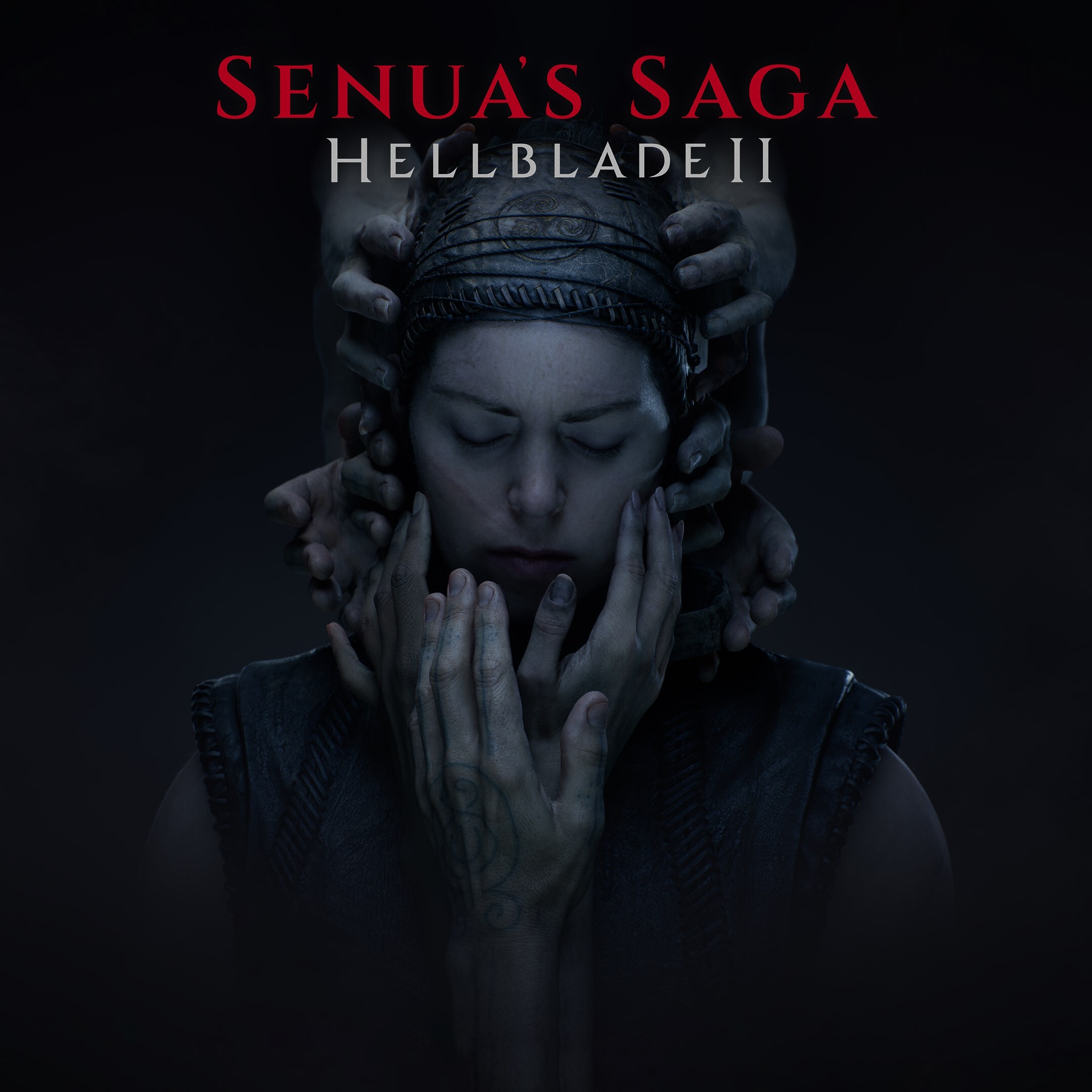
- Game: Ninja Theory's Senua's Saga: Hellblade II
- Release Month: May
- Started: 21/01
- Completed: 23/01
Fine, I guess I'll take on Senua's Saga: Hellblade II since we've only a few days left of GOTY season (and, crucially, my free Game Pass period) and I sincerely doubt I'll be able to squeeze Eiyuden Chronicle or Octopath Traveler II in that short a frame for as much as I'd like to try. I need to hold onto all these Bing points for next GOTY season though so, for now, I'll blitz a bunch of shorter games including Ninja Theory's latest episode in their ongoing Sad Viking Woman Adventures (correction here: Senua's actually Orcadian, which when added to previous candidate Still Wakes the Deep is making for a pleasantly Scottish winter of gaming). I sound reluctant about all this but I actually enjoyed the original game, Senua's Sacrifice, for what it was and, though Saga's a little weaker, it still has much of what I appreciated about the former game's command of worldbuilding and intense cinematic moments along with a truly visually resplendent depiction of a less visited part of the world: in this case, I believe it's somewhere in Iceland going by all the basalt and volcanos (and giants too, but then that's most of Scandinavia). The story boils down to Senua, lacking much else to do after killing the goddess of Hel, deciding to go after the slavers that attacked her town and killed her beloved, allowing herself to be captured so she can strike at them at their home: instead, she finds a compelling reason to stick around and help the island and its disparate villages with a little problem involving the Jötun: monstrous humanoid giants whose frequent calamities make it hard for the inhabitants to grow food or, indeed, not become food themselves.
As a fellow self-loathing weirdo who is uncommonly good at puzzles, I've always identified with Senua even if I don't necessarily share her particular psychoses and that makes it easier to root for whatever she might be going through in any given moment, whether she's fighting for her life against slavers or draugr (not clear if they're undead or not but they certainly don't seem to bathe) or crawling through narrow and dark spaces to get to where she needs to go. What also helps with this relatability is another excellent performance by Melina Juergens, who has to convincingly channel Senua's psychological torment for a second time without necessarily going overboard in the way live theater (or, I imagine, motion capture) performances must often do on behalf of the cheap seats at the back. Instead, it's a subtle (mostly) and reticent (except for all the yelling) performance that lets the voices in her head take on the brunt of revealing Senua's interiority while her expressive face conveys much of the same sentiment in far fewer words.
 Terrifying. All that's missing is a cowboy hat.
Senua is, as always, accompanied by her Greek chorus of a dissociative personality order collectively called the Furies: a discordant and disembodied group of voices that regularly bark instructions to her (and, by extension, the player) one moment while soothing (or exacerbating) her troubled mind the next by chasing away her worst fears and doubts. In practice, having the Furies there is like being stuck in a movie theater after a group of angry office ladies suddenly take all the seats around you for who knows what reason and then just talk incessantly about whatever is happening on the screen, giving you the overly critical girlfriend ASMR session you probably never asked for. I swear I heard one of them complain about a faulty photocopier at one point. It's certainly an experience you don't often have, in- or outside of games, though on the whole I'd probably prefer if it was one astronaut and a couple of sassy robots instead.
The gameplay, such as it is, has you walking around sweeping, picturesque vistas while occasionally tasked with completing puzzles to overcome the current barrier. The first sort of puzzles are the optical illusion "rune doors" seen in the first game: you walk around the environment lining up props in such a way that they resemble the rune on the door, often requiring you to stand in a very specific spot that might be awkward to reach. The second, introduced here, involves inverting parts of the environment so the ceiling becomes the floor and vice versa in order to reach a series of orbs and plinths. They're fairly simple and there's only a handful of each which should reassure you if puzzles aren't your thing but I'd argue they're necessary to break up the whole walking around business since Ninja Theory knows how you people get if you're not being mentally stimulated every five minutes. Then, of course, there's the combat.
 A big question throughout the game (and the last) is how much of what you're seeing is in Senua's head. Hard to make the case that it's all real when the cave walls suddenly turn into fractals.
I'm still not sure if I see eye to eye with the combat. In order for it to feel spontaneous and raw there's a certain chaotic nature to the fighting that might have you struggling to read what the game wants you to do, whether it's to block a heavy incoming attack or try to evade it, and so it's usually a painful instruction process whenever you meet a new opponent type (the game cycles through half a dozen of them). Sometimes enemies appear to target the air next to you and still hit, given the anarchic presentation of these one-on-one fights. There were a few guys that even breathed fire on me and I'd no idea where they were aiming, visually speaking, except I'd always seem to be in the crosshairs regardless. However, the game checkpoints in fights regularly enough so even if you're fighting a series of dudes one after the other (which is most fights) the chances are it's going to keep saving after each one to mitigate the annoyance factor. The difficulty is unfortunately set to "dynamic" by default—a "clever" AI mechanic that rarely feels satisfying, as it obfuscates your own skill development as a player by increasing the enemy strength until it's like you're back to square one, while it simultaneously condescends to you if you're struggling with a strong opponent in particular by hamstringing the guy instead of letting you overcome him naturally—but it can easily be changed to something more consistent. It's really not the focus either way, just a means of giving you something to do that isn't weird perspective puzzles and a whole lot of walking while getting sniped by spiteful harridans for not being better at all the walking.
I dunno, I think these games are definitely intriguing but they can often feel a bit too passive and linear. Like you're watching a movie where you're occasionally tasked to participate rather than a game with a deeper set of mechanics to overcome. Of course, I have no issue with primarily narrative-driven games—I have a semi-regular visual novel feature, after all, so it'd weird to attack something like Senua for being a little hands-off—but I guess the presentation always put these games closer to a God of War in both its tone and intent yet obviously is a long ways off in terms of what you're expected to do to move the story forward. I commend the team for putting this much effort into making these simplified character action games but I sort of wonder if their (or, more vitally, their investors') hearts are into it as much this second time around: Senua's Saga felt much shorter and less impactful than the first game, even if the level of spectacle regularly dwarfed it (giant jokes notwithstanding), and it seemed like it had a whole lot less to say (well, the Furies certainly had plenty to say, but figuratively speaking I mean) beyond the usual screeds about most monsters being metaphorical and deadbeat dads sucking big time.
 Senua never really understood the depths of the draugr's depravity until she was granted Yon Mystical Blacklight by a talking rock.
If Senua's Saga is a mild disappointment at all it's only in its status as a follow-up to Senua's Sacrifice; it's otherwise a visually spectacular and distinctive game in its particular budget tier and a worthy enough title to see this GOTY season to a close. (Or maybe not? I could have a bonus game or two. We are still a week out from February and the immediate cessation of all GOTY talk, after all.) (Rating: 4 out of 5.)
Current GOTY
- Indiana Jones and the Great Circle
- Nine Sols
- Dungeons of Hinterberg
- The Legend of Zelda: Echoes of Wisdom
- Another Crab's Treasure
- Flintlock: The Siege of Dawn
- Pepper Grinder
- Little Kitty, Big City
- Still Wakes the Deep
- Botany Manor
- Senua's Saga: Hellblade II
- Hauntii
- Magical Delicacy
- Turnip Boy Robs a Bank
- Doronko Wanko