
Go! Go! GOTY! 2024: Nine Sols
by mento
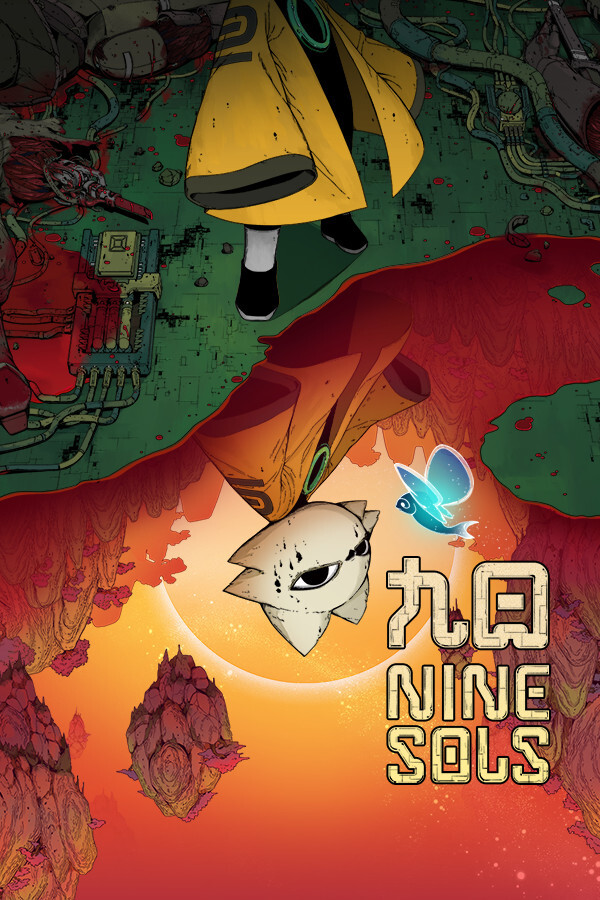
Game : Red Candle 's Nine Sols Release Month : May Started : 16/12 Completed : 23/12 Nine Sols is the newest game from Red Candle and, as a combat-heavy explormer , a bit of a departure for them, seeing as their last two were survival horror—the excellent Detention and perennial wishlist item Devotion —which is a genre usually a little less demanding in terms of battles and platforming. It foll...
- Game: Red Candle's Nine Sols
- Release Month: May
- Started: 16/12
- Completed: 23/12
Nine Sols is the newest game from Red Candle and, as a combat-heavy explormer, a bit of a departure for them, seeing as their last two were survival horror—the excellent Detention and perennial wishlist item Devotion—which is a genre usually a little less demanding in terms of battles and platforming. It follows a cat-like alien named Yi as he revives from mortal injuries sustained in a duel against his mentor, Eigong, and is convalescing in a village of "apemen": that is to say, humans. It's only a few minutes later that you understand the circumstances behind this world: the apeman village is actually a virtual livestock pen onboard a massive space station built by Yi's people, the Solarians, for reasons that become clearer as the game progresses. A scientist and scholar, Yi is also a practitioner of tai-chi martial arts and so the game's combat engine largely involves fighting enemies with perfectly timed guard parries as well as various manifestations of Yi's life force (a.k.a. qi, though it might get confusing quick to talk about "Yi's qi" every sentence). The story unwraps beautifully, treading familiar territory of a storied civilization on the outs and the desperate attempts made by its present day scientists to salvage many millennia of history and beauty before it disappears like so many other sapient spacefaring species before them: Yi is dogged and obstinate in what he feels is an "any means necessary" race for survival for the Solarians, though he softens his views and learns various lessons from his time with the apemen (and a particular child prodigy among them, named Shuanshuan). The game's serene hub-like pavilion offers many great moments of storytelling and character work, especially as it continues to fill up with NPCs and vendors you'll bump into while exploring.
While the game has no shortage of platforming sequences, including the usual upgrades that help with same (though a certain mid-air hop is actually the last you earn), it's the combat that takes center stage here with some real in-depth mechanics that take a while to get your head around. One is the concept of direct and internal damage: the latter, despite sounding more dire, is actually preferable as it will slowly heal itself on its own. You take this internal damage by guarding attacks without the perfect timing—sort of like how in later versions of Street Fighter you take chip damage for guards and no damage for parries—and a versatile "Jade" equipment selection, similar to Hollow Knight's strictly limited use of badges, lets you quickly heal this damage on parries or else inflict it on enemies. The second stage following inflicting internal damage is that you can attach a talisman to enemies to ignite all their internal damage at once and transfer it to permanent direct damage, which can often be enough to end the fight: the downside is that the talisman requires you to get close enough to attach it and then spend a moment to activate it (though an alternative version exists that does less damage but negates this risky activation period). A typical fight, then, might involve parrying enemy attacks as best you can while returning your own quick basic attacks in the downtime, and then at a pivotal moment when the enemy pauses after a big swing you can slap a talisman on them and hopefully finish them off. It's a lot to get used to, and every enemy has their patterns to learn and specific attacks you'll want to figure out whether to dodge past or attempt to parry, but given we're talking yet another 2D explormer inspired by FromSoft's Souls series the deliberate nature should be fairly familiar by now. Pretty much every other game of this type plays like this after all.
 Definitely more 'Little Kitty, Big Whatever the Hell This Cybertree is' than the previous Go! Go! GOTY! game.
 The boss fights, usually the highlight of this genre, can be a bit... iffy. To say the least. Like there's one where you fight a guy with an axe in an enclosed space and it's extremely easy to just get stunlocked to death by its relentless attacks: all it takes is one mistimed parry and you can just watch your sorry carcass pounded into the dirt over and over until you croak. The hitboxes you think you see might as well not exist, because the game is sometimes still calculating what happened a moment later and always seems to reward in favor of the plaintiff. For battles against normal enemies when you're just trucking along exploring, the combination of evasive moves and the parry system can make for some thrilling turnabouts or otherwise contribute to that same flowing nature as the balletic platforming that is always the zenith of this genre, yet the combination of stunlock potential and the unfortunate trend of "second phases" that require you excel at the first phase before even seeing what the second has in store for you makes them more of a crapshoot than the rest of the game. Most Soulsy types demand you "git gud" but this also requires you just be very lucky on top of that half the time, or you'll be stunlocked directly into the toilet. Just be prepared for a lot of frustration, is the tl;dr, as you take hits like a wet paper bag and a fight can be over in mere seconds even if you've been endeavoring to keep your HP topped up the entire attempt. But, on the flip side, when a game's this hard the victories taste all the sweeter, so your mileage may very much vary—I was on cloud nine when I finally took down a certain VR boss after what felt like an hour of attempts.
But then Eigong happened...
Eigong, whose name I frequently mistook for eggnog what with it being the season and all, is the final boss (and one telegraphed way in advance, so no spoilers here) and is several magnitudes harder than any other boss in the game. For an old lady she's insanely quick, sturdy as a dumptruck, mixes up her combos regularly, and demands perfect parry timing (as well as perfect unbounded counter timing, which is far more exacting) or she'll mop the floor with you. She naturally has two phases like most of the other bosses and the second introduces some real harsh screen-wide slashes that take some time getting used to (which makes it all the worse that you have to beat that first phase before you can even get some practice on the second). I don't even want to get into the third phase. Suffice it to say, I was dying moments into the battle for the first dozen attempts and had no real confidence of ever seeing the end of the game I'd spent some 30 hours moving through. But then it happened: I entered a state of pure Zen and managed to get the timing down on almost everything. There were even a few occasions where I completed the first phase of the fight, which is two or three minutes of relentless slashes (including some invisible ones), without a scratch on me—I instinctively wasted a heal after one of these no-damage phase ones during the moment when she recovers and starts the second phase, since I'd become so used to getting a quick heal in there.
 I'd frequently forget while playing that Nine Sols was made by the Detention people. This was not one of those times.
I'd like to say it didn't take too much longer to seal the deal but I'm looking at the clock and, yeah, that's probably two or three hours at least spent on this fight alone. And I loved every second of it. Nothing really... well, I wouldn't say the fight never felt cheap, but mistakes never felt unearned, let's say that much. Just pure Soulslike nirvana. I'd still argue that the game's combat engine is far from perfect—it's so precise and exacting it'd be hard to get all the moving parts to do their job perfectly each time, absent lag or weird hitboxes—but I'd argue Nine Sols is the Souls fan's Soulslike. One that elevates the challenge and perfect parry precision necessity significantly higher over rivals like Hollow Knight or Salt and Sanctuary (which were no picnics either) and will probably be one of those divisive games like From's own Sekiro where one's skill level, or dedication level, or obstinacy level depending on how you usually manage to limp through these games, is put through the wringer on a regular basis. It's not for nothing that the current percentage of players who have earned the achievement for defeating the final boss is at <3% as of writing (or that beating the game on normal difficulty is around 1.7%—seems kinda low for a regular "game beaten" achievement, huh?). That the Taoist-inspired sci-fi surroundings and Red Candle's typically downer narrative (a good fit for this genre) are exceptional also is just a cherry on top.
(I will put out a disclaimer here at the end that an Easy difficulty exists and it even goes the extra mile to let you adjust both incoming and outgoing damage % to your preferences, either making the game slightly or significantly more manageable, so as long as you're not an overly prideful person—one of the game's themes, in fact—who has to stick it out on the default like me you can enjoy the game however you wish. Both it and Another Crab's Treasure have really embraced the recent sentiment that everyone should be allowed to play these enchanting yet punitive games regardless of skill level.)
(Rating: 5 out of 5.) (It was at a firm 4 all the way up to that final boss though.)
Bonus Video? We Got That Multimedia Now?
I redid and recorded the first phase of the Eigong fight to elucidate on what I mean by a lot of the above combat technical talk. I'll just put it here and then explain more about it below:
So, as you can see there's a certain alacrity to this fight that, while it isn't that much quicker than the rest of the game, is still a distinct mark-up in terms of how short the gaps are between each attack. I have a Jade equipped which allows me to do internal damage to Eigong (when her health gauge turns kinda burgundy) if I perfect-parry one of her attacks (that's the guard that makes little green orbs appear) which happens a lot once you have her patterns down. Another Jade transfers any direct hits to me—that is, the ones where I don't guard and you get a little "pah" noise and take direct damage instead of internal—into half internal damage, so it's only because of those two (and a third Jade that lets me use my heals faster) that I was able to survive this fight at all.
I mentioned unbounded counters in the review without really explaining more but you can see it at work here after the big red orb bomb attack (at 0:13): it's a counter that needs to be charged first, so that involves anticipating an attack (the red-tinged ones are otherwise unblockable) and firing it off a few seconds in advance to catch it in the brief window you're given. So, to reiterate: 1) notice that a red attack is coming, 2) hold down the guard button for a second to charge it up, 3) release the button to activate it (which takes half a second), and then 4) you have about a second of it being active during which the red attack hopefully arrives, otherwise the timing is off and you take full damage. Those mid-air spin dodges, called tai chi kicks, can block red-tinged attacks that produce a green aura around the enemy if you're wondering how I'm blocking those.
It's a lot of visual information to take in but you'll have spent some 20-30 hours with the game by the time this fight happens so hopefully these mechanics will have sunk in by then. You really can't skip leg day, so to speak, if you want any chance of seeing the ending though. Just check out how much damage getting caught by her talisman attack alone does (1:01): Ouch, right?