
The dying days of the PlayStation Portable were a time of weird and goofy niche games. You would get hardcore RPG's intermixed with experimental adventure titles, tons of downloadable games thrown in and intermixed with a few memorable diamonds worth exploring amongst the coal - if you can find it at least.
Sadly, a game like Unchained Blades, from developer FuRyu, is more on the coal side of things. This is a dungeon-crawler that would see release on the Nintendo 3DS, but on either system the game feels like a fairly middle of the road effort that has some unique ideas that are just plastered over fairly bland design.
The star of Unchained Blades is Fang, a powerful, arrogant dragon king of the dragon clan. Fang and his top lieutenants decide one day to visit the goddess Clunea, who grants a singular wish to those who pass a long gauntlet of trials to meet with her. Fang of course, as an arrogant rich boy, angers the goddess and is stripped of his powers, and must then work together with members of other fantasy creature tribes to go through the dungeons Clunea has set up in order to get revenge on her.
The plot is off the bat, a fairly basic one, with clear motivations and pretty bog-standard stock characters for your party. Each character is basically one to two traits that will of course be twisted along the journey. Your first party member, a Golem named Hector, is a mix of cowardly and timid, whose whole arc is mostly overcoming these traits and being more true to himself. The main hook is each character hopes to get a wish from Clunea if they conquer the dungeon, Hector here wishes to be a kid again.
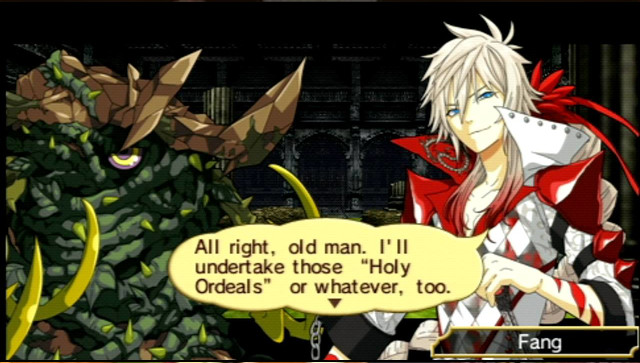
Each of your party members has a similar arc. You have a Medusa who wants to not be afraid of men, a Phoenix princess who wants to become a dragon, a demon swordsman who has a death wish due to immortality. The tropes are all there, and while they provide context and flavor, it's a very familiar one because there are few, if any surprises thrown into the mix. FuRyu does try to throw a curveball or two in the mix, but outside of one late-game revelation, overall the story follows a typical pattern revolving around the importance of teamwork, friendship, selflessness, and so forth.
There is something comforting in old tropes like that; typical storylines can be good depending on their delivery. In this case though, Unchained Blades fails at making the narrative stick. The characters are too extreme in personality to be taken seriously, with a lot of the game's dialogue feeling like stock caricatures for the majority of the game. This is by design of course, but it does make some of the tropes super annoying to deal with, especially when more comedic moments fall flat on their face after twenty-plus hours of play.
There is also no definition to this world either. Other than the lingering plot thread of young people trying to get a wish granted to them, every kingdom or character we see comes from a different clan of fantasy creatures. A lot is implied with the different clans, and the practice of fledgling, where they turn into a humanoid character to their more common monster form. In dialogue we hear about clan dynamics and expectations, but we have no real sense of how these clans operate or work within the world.
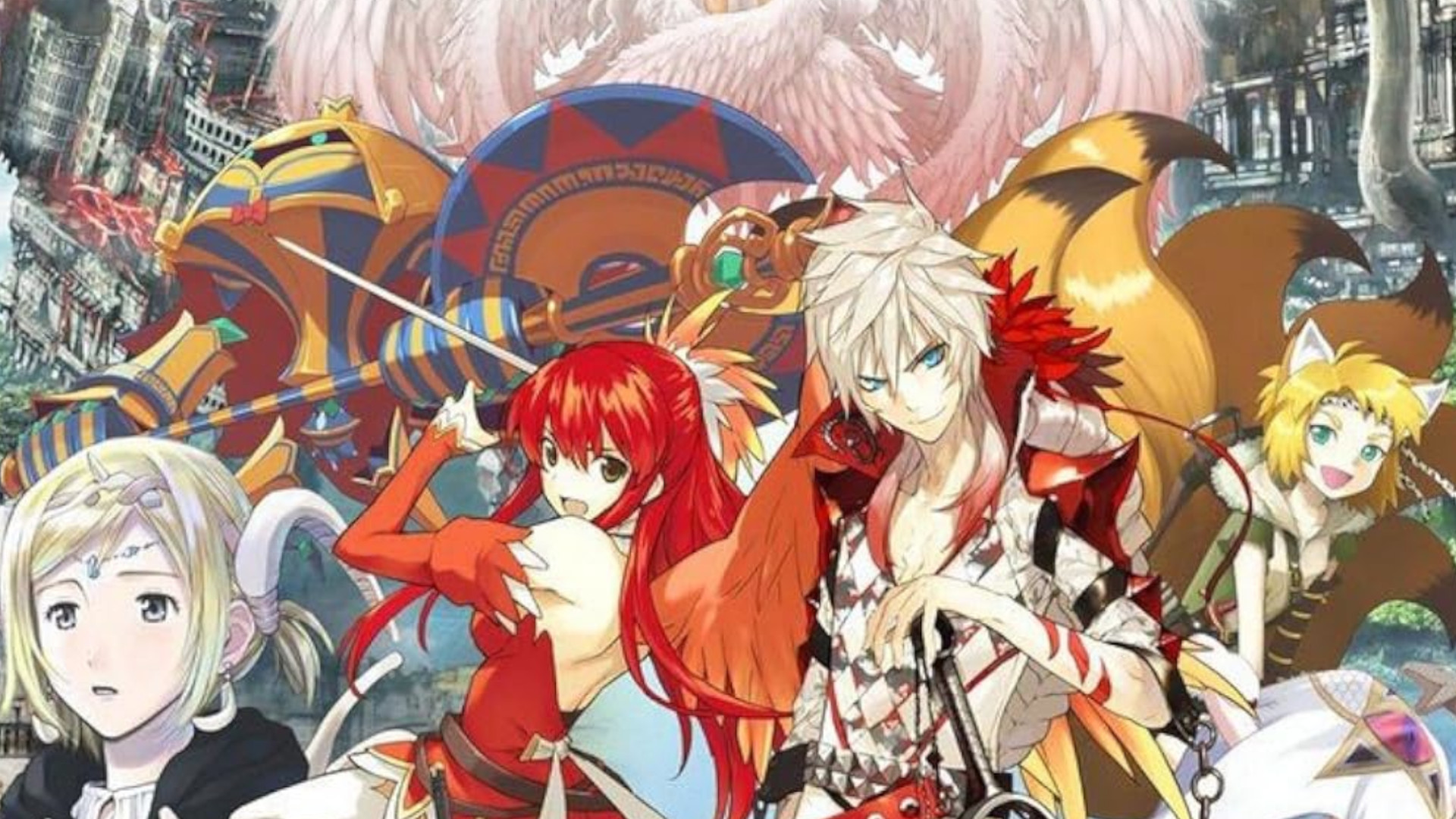
In a way that's a nitpick, considering the type of game that is being made here. Unchained Blades is more about style versus substance, and there is no better way to demonstrate that than the games art design. Visually the artwork and portraits of characters is fantastic, and it should be since each main character was singularly created by a famous manga and anime artist in Japan. Fang, for example, was designed and illustrated by Pako, who did the artwork for Shining Force EXA. Clunea the goddess is drawn by Kazushi Hagiwara, creator of the manga Bastard!. All in all, the thirteen main characters are drawn by thirteen different artists, and while each character has a unique look about them, the contrasting styles make the game an aesthetic mess that looks pretty for sure, but doesn't have full cohesion.
Where it's most notable is your combat with enemy monsters and bosses, named titans. The monsters you face also feel different from the characters; their style is more uniform and adherent to a more Greco-Roman feel, and for the most part look great as presented. In contrast to the main characters, who look fantastic but are hyper-stylized, it is a clash of aesthetics that just doesn't work.
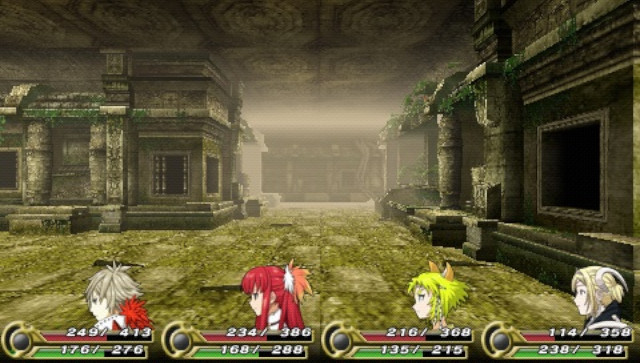
This is the major problem with Unchained Blades, everything is an exercise of contrasts. Gameplay suffers this too; at its core, it's a first-person dungeon-crawler experience that many have pegged in the vein of the Wizardry series, which Unchained Blades is inspired by. Mechanics wise they include monster capture elements similar to the Shin Megami Tensei series. For starters, you can recruit monsters to fight for you by “unchaining” them, where you “unchain” the monsters through a timing minigame for them to join up with you. Each of the four characters can have four monsters a piece to fight with them, so up to 20 combatants are fighting at a time. However, the recruited monsters will usually just jump in front of the leader and take damage for them, or join in specific group attacks if they become extremely loyal.
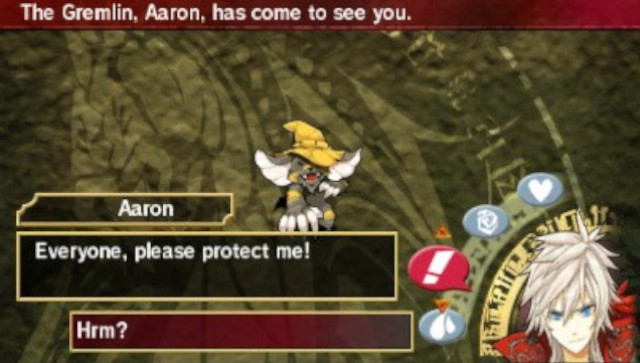
It should be noted that recruiting monsters is also random, and is based on a charisma score that levels up separately from everything else. This charisma score is also governed by how well you perform in battle; so if you kill enemies in a short amount of time and take little damage, you get a higher charisma score. If you get hit a lot or the battle takes too long, your score is much lower. So keeping track of how your charisma levels up is just as important as the standard level up, because it dictates the actions of your recruited monsters, and the chances of you “unchaining” monsters in the field.
The idea behind the monster catching gimmicks is solid, but feels a bit convoluted due to the features tacked on. For example, there are also group battles where the monster sprites comically throw themselves at each other, while you need to do a rhythm minigame to give you bonus attack power to defeat the other group, as well as mash buttons for one on one attacks. This can look hilarious admittedly when it works, but this is also a required mechanic for some in-game bosses, so cultivating your gaggle of minions is important to progression.
Level progression is thankfully simpler, where you gain SP points after each level up, and must then customize your character's abilities by implementing the SP points onto giant wheels interlocked with each other. Reminiscent of the Sphere system in Final Fantasy X, you can gain extra speed, HP or strength, as well as special abilities and proficiency with one or two styles of weapons. It is actually the best part of the role-playing in Unchained Blades, finding good combinations to create a strong, capable character build as you go through the various themed dungeons the game throws at you. Your individual powers though often will be superseded by your party of over-eager monster fodder; again, unique ideas that just do not mesh together.
FuRyu did not spare any expense in getting talent to make the game, that is for sure. Along with the thirteen artists that worked on the principal cast designs, you have Toshio Akashi and Takashi Hino as director and writer, respectively. Akashi is famous for directing the Lunar series, while Hino has worked on Grandia in the past. We also get a special treat in the sound department with Nobuo Uematsu, who contributed the opening theme to the game, while his protégée Tsutomo Narita focused on most of the game's music. With a caliber of talent like this, even the more forgettable music tracks are quite good, capturing a sort of bubbly mood and tone that made things bearable with fairly lowbrow dialogue. This is in contrast to the English voice-overs from stalwarts like Troy Baker, Yuri Loventhal, and Wendee Lee, who all felt like they phoned it in during their performances.
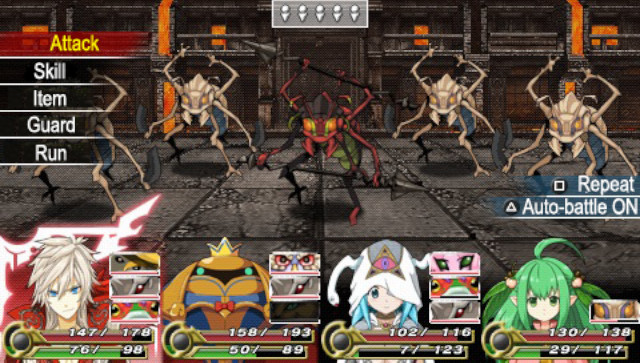
The caliber of talent in major roles is why Unchain Blades is fascinating to me, because you have a lot of good ideas in there that just don't coalesce into something memorable. It feels like a "too many cooks" situation, with a jumbled mish-mash of features and design choices that work in isolation but when put together, make something that really struggles to carve an identity for itself. Everything from visuals to gameplay mechanics, sound design and art direction are mish-mashed together into something that works, but is formless, leaving no strong impression other than the pointed criticism of its negatives.
So when it’s all said and done, Unchained Blades is a poor man’s dungeon crawler, lacking any subtlety or charm in its finished product. It is clear a lot of work was put into the game, but without a clearer vision to guide it though, it comes across as all style with no real substance to back it up. This just makes Unchained Blades a disheveled mess of a title that suffers from nearly all aspects of its own design. There may be something appealing to it for some fans, especially hardcore dungeon crawlers looking for something unique, but it's a tough sell overall that may not be worth the trip.
Author's Note: This review was originally written for Blistered Thumbs back in 2011. It has been edited from its original form and posted here for preservation.