
Same deal as the other "GOTY (Adjusted)" lists. The idea is to build GOTY lists that are constantly in flux, ever adapting themselves to a new year's worth of catch-up gaming. Like the Borg, but for video game lists. With enough time I should be able to play through every 2021 game that piqued my interest and construct a list that ideally represents what that year meant to me in terms of games, but that wasn't going to happen on the year in question: too many full-price new releases, too little time.
2021 saw the games industry deep within the Covid slump, and perhaps the peak of it given we had three months of calm in 2020 and a generous tail end of development for games close enough to completion that they could be polished off via WFM: at that part of the process everyone's focused on the tasks at hand and the endless tweaking that ensues. Looking at my list I'd say it was a relatively weak year for the Indie and AAA segments alike with no big stand-outs, though with just enough quality releases to not be an absolute wash. That said, I'm still missing some of the year's biggest hits so my mind might change once I update this again in early 2024.
(2024 Edit: Man, the table certainly has shifted a lot. Pretty decent year for RPGs in retrospect, with solid new entries in Tales and Ys, Lost Judgment, and my new GOTY Wrath of the Righteous, and for explormers with Metroid Dread, Ender Lilies, F.I.S.T., Grime, and others. Still a few games I badly want to put on this list; maybe it'll feel more "complete" by the start of 2025?).
Please feel free to check out my original 2021 GOTY list here.
| GOTYs | (Adjusted) | |||
|---|---|---|---|---|
| 2009 | 2010 | 2011 | 2012 | 2013 |
| 2014 | 2015 | 2016 | 2017 | 2018 |
| 2019 | 2020 | 2021 | 2022 | 2023 |
(2021 Games Yet to Play: Axiom Verge 2, Garden Story.)
(2021 Games Yet to Buy: Chicory: A Colorful Tale, Deathloop, Inscryption, Last Stop, Life is Strange: True Colors, New Pokémon Snap, Ratchet & Clank: Rift Apart.)
[Last updated Jan 2025]
Showing 1-10 of 49 items

2021 Rating: N/A 2022 Rating: N/A 2023 Rating: 1 2024 Rating: 1 When it comes to western-style RPGs their strengths tend to lie in the near-endless amount of customization and replayability of their robust rulesets and character creation tools. However, such things are often hard to translate from tabletop gaming, from whence they usually originate, to a video game model that has to balance that versatility and depth with player accessibility and the limitations of their engines. Wrath of the Righteous, and by extension its developers Owlcat, conversely don't feel the need to simplify things for modern RPG audiences whatsoever: if something exists in some official Pathfinder rulebook or obscure prestige class expansion pack, it's going in, and to hell (literally, in this game's case) with the players if they can't follow along (and, sadly often, to the game's own Infinity Engine ersatz if it's struggling to hold up). As you might infer from that, Wrath of the Righteous is both very dense and very unforgiving to RPG neophytes who may be used to more handholding in their games, yet rather than exist as something only for the extreme CRPG freaks to get willingly dominated by (like, say, an UnderRail) it allows for playthroughs which are much more in the service of cool moments and absolute munchkin-ry through its Mythic Path class system—conferring nigh-superheroic buffs and abilities in addition to the already-potent skills and magic gained gradually through leveling up—to make it less a painstaking ordeal where every inch of progress is hard-earned and more a roller coaster that might require a bit of "tinkering at the lab" (i.e. levelling and gear micromanagement) before you can ride it again. I found it endlessly engrossing (though I could take or leave the war-sim "Crusade Mode" aspect and its HoMM-lite combat, especially once I realized you could shatter it with archers out the wazoo) and it definitely managed to sate my inner D&D power-gamer grognard like few other games before it.

2021 Rating: 1 2022 Rating: 1 2023 Rating: 2 2024 Rating: 2 Yo, I really like Ys games. To the extent that a relatively weak entry (which in the site's vernacular is still a five out of five game, but only just) is still my #1 GOTY pick for 2021 (or, well, was). However, where Ys IX felt a bit underwhelming—mostly with its abundant tower defense/horde mode sequences, an uneven soundtrack, and that it's a bit on the easy side for a Ys—it still has an incredible amount going for it not least of which include the features introduced to the franchise by this game, such as its heavy urban exploration element and the new traversal upgrades that assist in same. Being able to grapple-hook, glide, and run up the sides of buildings makes getting around environments of differing heights feel effortless and invigorating, like a superhero open world game a la Spider-Man or Infamous. Then you have the Flash Guard/Move split-second reaction buffs from Ys VIII to enhance its already exciting and lightning-fast combat and a similarly out-there story that creates a compelling mystery almost immediately with the introduction of a second (playable) Adol before the first chapter's end and it really is something special, even if it's slightly less special than Ys VIII on the whole.
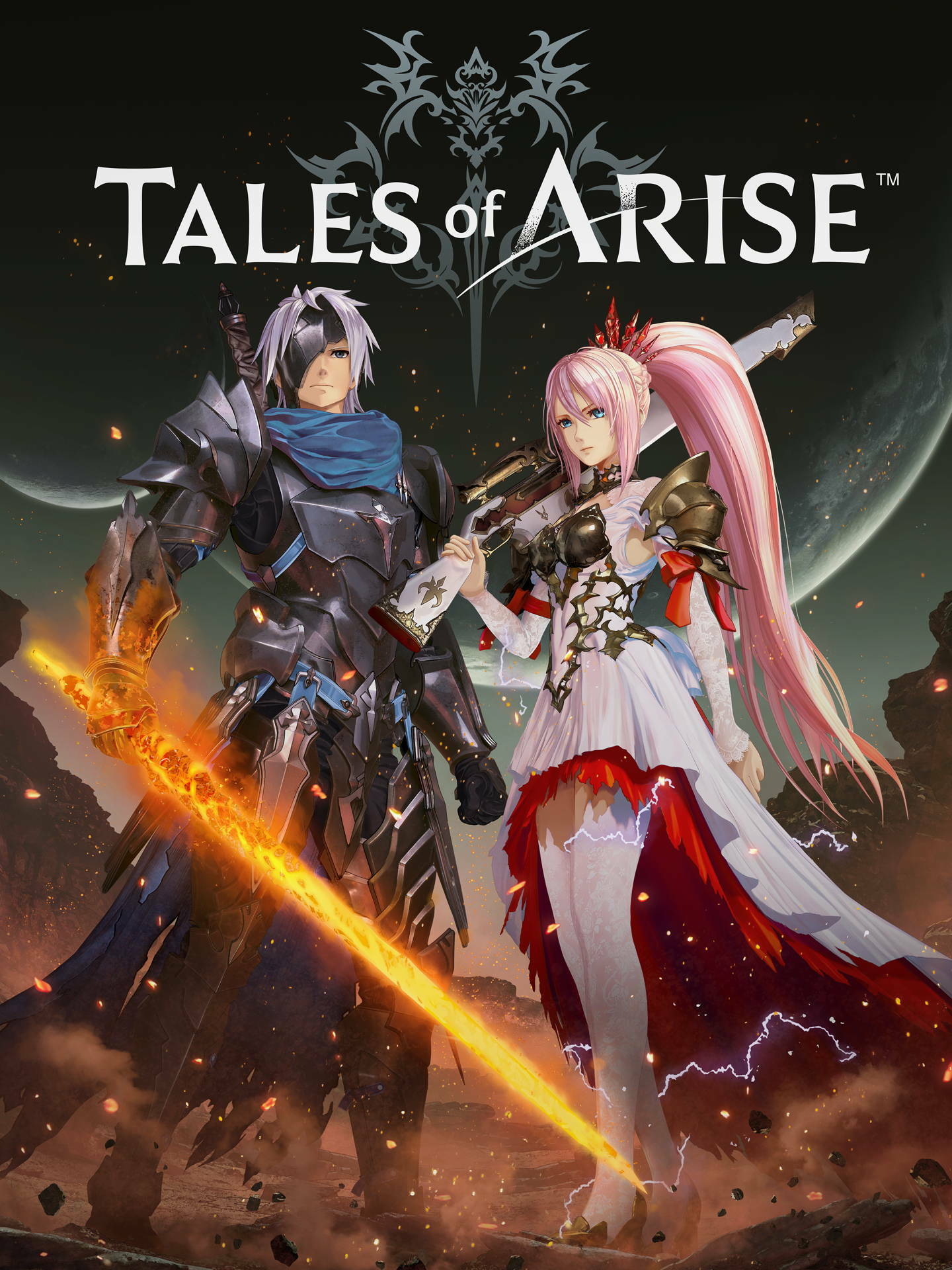
2021 Rating: N/A 2022 Rating: N/A 2023 Rating: 3 2024 Rating: 3 Bamco's Tales is a franchise I keep returning to—this would be my twelfth spin—because I always find it to be uncomplicated fun, in much the same way I do the Ys series above. Arise is one of the franchise's strongest entries yet, in part because it feels like they really pulled together a decent budget for a game series that often feels like it's a generation behind but also due to some very welcome changes to the combat's standard LMB System and some even more welcome returning features relating to character development from Graces F, which I still consider to be the franchise's mechanical peak. The story's fine, if nothing Tales fans haven't seen before, but the characters feel a bit more personalized and real compared to previous games—especially the preceding game, Berseria, where everyone felt like a '90s shounen manga anti-hero—due to some relatable drama in their backstories and high stakes pushing their character development. The more down-to-earth nature also meant far fewer moments of levity, but the bickering Bart and Lisa Simpson rivalry between dim brawler Law and bookish mage Rinwell did its best to account for it. Where it counts is in that newly modified LMB System, and in particular its novel emphasis on evasive maneuvers and highly-specialized character-specific playstyles that made its combat far more appealing in the long haul.

2021 Rating: N/A 2022 Rating: N/A 2023 Rating: 4 2024 Rating: 4 Now that core Like a Dragon has gone fully turn-based, I'm going to be appreciating these side-games with the traditional action-RPG-brawler Like a Dragon model all the more as the years press on. That said, I'm not sure how many more adventures ol' Tak has in him given all the furor around the actor's agency. I hope it's more, because Lost Judgment was a great deal of fun between its new location—which is actually just Like a Dragon's Yokohama again—and a huge amount of content revolving around protagonist Yagami's installment as the advisor for a dozen or so after-school clubs. Going full high school anime is a weird pivot for this franchise (you can't be punching kids too often, after all) but a welcome one due to the number of ideas they pulled from it. Also worth highlighting is the new Snake style martial art, which operates like Tanimura's fighting style from Yakuza 4 in that it's largely a reactive type built on counters and parries: since my favorite move in any Yakuza game is the devastating Tiger Drop parry, it became an efficient method of taking down mobs that I adjusted to quickly.

2021 Rating: N/A 2022 Rating: N/A 2023 Rating: 5 2024 Rating: 5 In some ways Metroid Dread felt like a fangame—more like one of the hundreds of Indie explormers that followed the pioneering works of the original Metroid games—but I still hold a great deal of affection for Mercury Steam and Nintendo for keeping Samus Aran around and up to her old tricks. Dread doesn't really do anything new: the chase sequences with the various EMMI units are more or less the same deadly cat-and-mouse games that the SA-X offered in Metroid Fusion, and all of Samus's old abilities are still here and accounted for in lieu of anything particularly novel, but on the whole it was a largely competent outing that works as a stopgap for the next big evolution of the Metroid formula or, failing that, an apéritif for the upcoming big-budget Metroid Prime 4. Either way, though the explormer field is well attended to by many Indie devs in as love with the format as I am, I'm glad that the queen is still out there putting on her Varia suit one Space Jump boot at a time and giving those pesky Space Pirates what for.

2021 Rating: N/A 2022 Rating: N/A 2023 Rating: 6 2024 Rating: 6 The inventiveness, humor, and bedrock of platforming competency made the original Psychonauts a late-PS2 era surprise in a favorite genre of mine that was starting to wane in the industry, and so I've always had a fondness for it even if the level design could be a little irritating in parts (I'm sure everyone has their own horror stories regarding the meat circus; one of those levels like Ocarina of Time's Water Temple that lives on in the memory for perhaps less than positive reasons). Getting to finally play the sequel, or at least the full non-VR one, close to twenty years later was a special treat but at the same time a reminder that sometimes you can't go home again, especially if that home is someone else's brain. Psychonauts 2 is absolutely a worthy sequel to the original, honing that Nicktoon energy with a psychedelic psychic aesthetic and world, and expanding on the titular organization as Raz becomes more recognized for his talents in spite of his youth. Some irritations still remain of course—it was tiresome to keep swapping powers in and out the active toolbar—but I was glad to see this series make its long awaited return, and hopefully they keep polishing it so it can adjust to the times.

2021 Rating: N/A 2022 Rating: 2 2023 Rating: 7 2024 Rating: 7 I liked but did not love Titan Souls, the super scaled-down (mechanically, at least) take on a Zelda-Souls type of hybrid where both you and your opponent alike just needed one good shot to win. Death's Door, its spiritual sequel by the same developer, retains its dodge-roll and projectile-focused combat (while also giving you a melee weapon) but adds a great deal more exploration, character development, puzzles, and personality by way of its Ghibli-esque world of psychopomp crow people and some enormous entities that avoided death for too long. That extra substance may have cost Death's Door's combat some of the purity of Titan Souls but overall is a positive development, especially the more confident worldbuilding. It also just feels darn good to play, like a super responsive action-adventure game should.

2021 Rating: N/A 2022 Rating: N/A 2023 Rating: 8 2024 Rating: 8 The Mother/EarthBound franchise left its mark on many an Indie developer and so it never surprises me to see another take a whack at Itoi Shigesato's half-silly, half-resonant worlds of deadpan humor, deeper emotional waters, and flashes of humanity at both its best and worst. Eastward forgoes Mother's RPG core (mostly; it's still represented to a peripheral extent) for a more Zelda-like action-adventure approach as the taciturn survivor John and mysterious if mischievous foundling Sam make their way across the post-apocalypse getting embroiled in the lives of others while slowly and inadvertently uncovering a conspiracy that has slept dormant below the world for centuries. For every cute slice-of-life aside something emotionally draining tends to follow so tonally it's quite a journey of peaks and valleys, but the gameplay remains consistently good throughout and it doesn't take long for the story to pull you in.

2021 Rating: 2 2022 Rating: 3 2023 Rating: 9 2024 Rating: 9 The anime hijinks minus most of the levity looks to have been pumped in by Bamco from another of their franchises, Tales, but Scarlet Nexus finds its groove by essentially being a post-apocalypse anime take on Remedy's Control. The array of psychic powers at your command as you take on enemies in real-time brawls makes every encounter one to consider and take seriously, whether you have the related strategies for its enemies down pat or not, and the supernatural conspiracy at its core just gets ever more bizarre as you continue to play. Seeing the action unfold from two perspectives, each with very different stakes in the conflict (to the extent that the two sides become enemies for a good chunk of the game), is another loaner from Tales (Xillia, specifically) that adds to the game's replay value in a largely meaningful way.

2021 Rating: N/A 2022 Rating: 4 2023 Rating: 10 2024 Rating: 10 A cute little puzzle game about putting a woman's life back together, in a manner of speaking, by placing all her possessions in her new home several times over her lifespan from childhood to some point in her adult life once she decides to settle down. From context, you can pick up on the heartbreaks and fresh starts this unseen protagonist goes through as you find spots for everything that survived the newest move in ever bigger and more personalized domiciles. Actually figuring out where everything goes requires a level of intuition that might be tough to parse, but tools exist to make sense of the more ambiguous items and their new locations. I'm also just a sucker for isometric games and really any puzzle game that manages to be this chill and inventive.
