

Platforms
From Giant Bomb Video Game Wiki
Platforms

Amiga
The Amiga was a personal computer from Commodore that was released in a variety of different configurations.

Atari Lynx
Atari's 1989 color, backlit handheld console

Game Boy
Nintendo's first handheld gaming console was immensely popular among gamers, selling millions. Despite its grayscale color scheme, it still got support from developers and publishers.

Game Boy Advance
The third platform in the Game Boy line, the Game Boy Advance was offered in a multitude of colors and had three hardware offerings, the sideways Game Boy Advance, the flip Game Boy Advance SP and the tiny Game Boy Advance Micro.

Game Gear
Sega's first hand held video game system. It was the portable version of the Master System.

Genesis
After the cult success of their 8-bit Master System, Sega decided to give gamers a taste of their arcade capabilities with a 16-bit console. Known worldwide as the Mega Drive but called Genesis in the US, it provided graphics and sound a couple of steps below their popular System 16 arcade cabinets. The Mega Drive/Genesis turned out to be Sega's most successful console.

PC
The PC (Personal Computer) is a highly configurable and upgradable gaming platform that, among home systems, sports the widest variety of control methods, largest library of games, and cutting edge graphics and sound capabilities.

Sega Master System
The 8-bit Master System, while not embraced by a large audience in the US and Japan, was a major success in Europe and South America, and it remains an important and entertaining console that laid the foundation for generations of future console releases from Sega.

Super Nintendo Entertainment System
The Super Nintendo Entertainment System was the second home console released by Nintendo.

Amstrad CPC
The Amstrad CPC (Colour Personal Computer) was a series of 8-bit personal computers developed by Amstrad between 1984 and 1990. During its lifetime, approximately 3 million CPCs were sold.

Apple II
Introduced at the West Coast Computer Faire in 1977, the Apple II was the first mass produced microcomputer on the market, becoming very popular in classrooms throughout the 1980s and 1990s. Somewhere between five and six million Apple II series computers were sold.

Atari 8 bit
A line of 8-bit computers produced by Atari, Inc. from 1979 to 1992.

Atari ST
Atari's 16-bit computer line was one of the most popular computers in the mid-1980s to early 1990s.

Commodore 64
The Commodore 64 personal computer dominated the market from 1983-1985, and stands as one of the best-selling personal computers of all time.

Mac
The Macintosh (Mac) line of personal computers is designed and developed by Apple, Inc. - formerly Apple Computer, Inc. It runs macOS, a Unix operating system. Its current version, macOS 13.4 "Ventura" was released on May 18, 2023.

MSX
MSX is a standardized home computer architecture. It was popular in Japan, South Korea, Brazil, Netherlands, France, Spain, Finland, Arabian Gulf countries and former Soviet Union during the 1980s. Like the PC of today, the MSX computers were manufactured by many different companies.

ZX Spectrum
The ZX Spectrum is one of the most popular European computers of all time. Its software library is enormous and its fame in Europe rivals the Commodore 64 in the US.
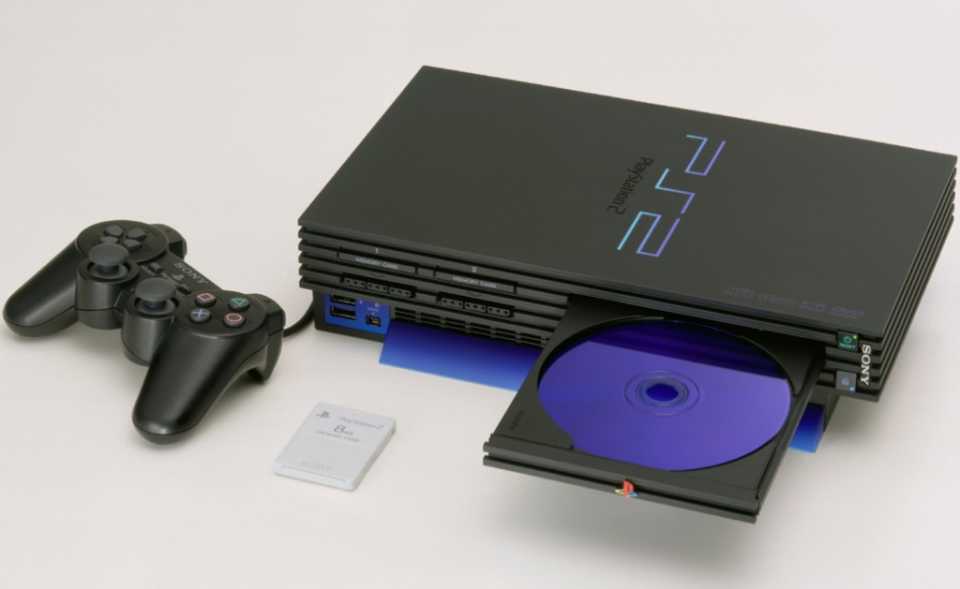
PlayStation 2
Sony's PlayStation 2 is the second home video game console produced by Sony Computer Entertainment Incorporated, and to date is the best-selling home console of all time, with an install base of 150 million units since its launch.

PlayStation Portable
PlayStation Portable (PSP) is Sony's first entry into the handheld gaming market. The PSP also sports multimedia features including music and video playback, a photo viewer, and an online store. Several model revisions have been released: the PSP-2000, 3000, PSPgo and the PSP-E1000.

Xbox 360
The Xbox 360 is the second game console produced by Microsoft Corporation and is the successor to the original Xbox.

Nintendo Entertainment System
The NES, also known as Famicom, launched in 1983 in Japan and 1985 in North America, where the video game industry was headed downhill due to a deluge of poor games and over-saturation. Nintendo's second home console became an enormous success, establishing consoles as a mainstream market in Japan and pulling the North American industry back to its feet.

PlayStation
Sony's first video game console established the PlayStation brand. It dominated the 32/64-bit era and was the best-selling home console up until the PlayStation 2.

GameCube
The Nintendo GameCube is a video game console released by Nintendo on September 15, 2001 in Japan, November 18, 2001 in North America, May 3, 2002 in Europe, and May 17, 2002 in Australia.

Android
Google's mobile OS, available across multiple devices.

Arcade
Stand-alone machines specialized for individual games. Arcades began the game industry and peaked in popularity before home consoles took over the gaming public. Arcade games usually cost 25 cents, or 100 yen, per play. Known for the most cutting-edge technology of their time, arcades have the largest video game library, and greatest variety of control methods, of any platform.

Neo Geo
The Neo Geo was a console released by SNK in 1990, featuring a 16/32-bit 68000 CPU with an additional 8-bit Z80 CPU and custom 24-bit GPU chipset. An arcade-based console considerably powerful for a home system at the time, the Neo Geo was notoriously expensive (costing $650 at launch) and aggressively marketed as an Advanced Entertainment System (AES).

Nintendo Switch
Nintendo's home console that can be turned into a portable device by removing it from its TV-dock. Launched worldwide on March 3, 2017.

Wii Shop
The Wii Shop Channel was Nintendo's way of digitally distributing games on the Wii. It includes WiiWare for newly developed games, as well as the Virtual Console for classic titles from various consoles and arcade systems.

Xbox One
The Xbox One is Microsoft's third video game console. It was released on November 22, 2013 in thirteen countries.

Browser
Browser-based games are typically platform-independent pieces of software that run directly in the same application you use to read this web page.

iPad
The iPad is a series of touch-screen tablet devices developed by Apple. The iPad can browse the web, playback local and streamed content, and run a large variety of third party apps, including games.

iPhone
The iPhone is a multimedia multi-touch smartphone created by Apple Inc.

Linux
The Linux operating system was initially released in 1991 and has gone on to become a very popular free alternative to other, commercial systems.

TRS 80
The TRS-80 was a very popular early microcomputer with standout features such as a full keyboard, included monitor, impressive floating point BASIC programming language, and a $600 pricepoint.

3DO
3DO was a video game console manufactured by Panasonic, Goldstar, and Sanyo. Despite the initial hype surrounding the system, the console's $700 price tag proved to be the ultimate kiss of death for the system.

Amazon Luna
Amazon's cloud-based streaming service takes a "channel" style approach to access, with a basic monthly fee for the Luna core and additional monthly fees for more games from specific publishers.

CD i
The CD-i was the first CD-based game console. Produced by Philips, it was intended to be a computer for your living room.

Coleco Adam
The Coleco Adam is a standalone home computer as well as an expansion module released for the ColecoVision in October 1983. Several games were released that required an Adam-compatible device.

DSiWare
DSiWare is software that was made available digitally on the Nintendo DS after the release of the DSi revision.

DVD
While primarily a format for movies and other video, video games were made that are playable via a standard DVD player.

Game Boy Color
Nintendo's successor to the Game Boy, featuring a color screen and backwards compatibility for all previous Game Boy titles.

Nintendo DS
The Nintendo DS is a handheld featuring two screens, one of which is a resistive touchscreen. Four different models are available: the original DS, the DS Lite, the DSi, the DSi XL.

PlayStation Network PS3
The PlayStation Network is the online service by Sony Computer Entertainment, providing downloads of games, trailers, themes and much more. The service is free, but also offers a paid version for various benefits.

PlayStation Network PSP
This platform is specifically for PSP releases that are made available as digital downloads via the PlayStation Store. The Store includes PSP games (some exclusive to PSN), PSP Minis, PSone Classics, trailers, movies, TV shows, and digital comics.

RDI Halcyon
The RDI Halcyon was a short-lived laserdisc-based game platform. Only two games were properly released for the system. It was the most expensive video game console ever released, retailing at $2,500.

Sega CD
The Sega CD was one of the first CD-ROM based gaming consoles. The extra storage space this medium allowed gave rise to inclusion of full motion video, higher quality audio, and improved graphics in games.

Xbox
Microsoft's first home gaming system and one of the first to include an internal hard drive and built in online play capability. It was considered the first console to have fully supported meaningful online play.

Xbox 360 Games Store
Formerly known as Xbox Live Arcade, the Xbox Live Games Store was an online store for the Xbox 360 and Xbox One which allows users to purchase games digitally. The service was shut down on July 29th, 2024.