
Not E3 2022: Microsoft/Bethesda
by gamer_152
A lot of games get shown at E3 that I don't end up talking about. There's only so many times you can comment, " trailers can be misleading " or "the AAA games industry keeps making the same title", but both those observations apply to this year's Microsoft conference more than most. There was thankfully a little more gameplay in its cocktail of fast-moving sizzle reels, and sure, corporate gian...

A lot of games get shown at E3 that I don't end up talking about. There's only so many times you can comment, "trailers can be misleading" or "the AAA games industry keeps making the same title", but both those observations apply to this year's Microsoft conference more than most. There was thankfully a little more gameplay in its cocktail of fast-moving sizzle reels, and sure, corporate giants always lean on games which please predictably and safely. I don't even have a bone to pick with those products. As long as I'm not oversaturating myself, big, typical action games are a blast. But Xbox and even Game Pass specifically are ripe with games that are subversive in their subject matter, presentation, and modes of interaction. Look at Townscaper, Mind Scanners, Tell Me Why, Jurassic World: Evolution 2, and Dodgeball Academia among many others.

Microsoft's briefing felt like it was opening the door only a crack on the diversity of experiences that their console can deliver. There were an absurd number of shooter games here, most of them lacking any deviation from the format's present course. See: Redfall, High on Life, Overwatch 2, Valorant, Fallout 76, Flintlock: The Siege of Dawn, and Gunfire: Reborn. Plenty of others were some form of magic sword-slashy game like Hollow Knight: Silksong, League of Legends, Teamfight Tactics, The Elder Scrolls Online, The Last Case of Benedict Fox, NARAKA: BLADEPOINT, Ereban, Diablo IV, and Ravenlok. It's not that some of these games don't look engrossing or that there's no separation in their art and play styles, but there are also plenty here that don't appear to be doing anything all that original or ascending to the top of their field. And whatever the impression these games might have left taken alone, when you lay them end to end, they start to blur together.
At least Nintendo mixes up its vibes with plenty of cutesy, all-ages projects, and Sony is more willing to take a punt on a slow burn like Death Stranding, Ghost of Tsushima, or Stray. It doesn't help that the trailer for almost anything in these Microsoft conferences gets edited as if it were a relentless action game, even if it's a survival adventure like ARK II or a provocative narrative vehicle like As Dusk Falls. They're often also backed with this generic, royalty-free "get hyped" pop. When you show enough of those previews in quick succession, your audience begins to lose a sense of contrast.

Speaking of not giving your high-impact moments room to breathe, the demo for Redfall was a constant onslaught of dialogue. The characters often didn't have much to say but wanted to remind you they were there all the same. It's also a bummer to see this studio capable of making games where you can invent infinite solutions to one problem reduced to developing American McGee's Wildlands. There's a consistent weakness that pervades the voice-over in these trailers, and to some extent, the games themselves.
Depending on the genre of experience, they'll use light-hearted patter that affects the flow and levity of comedic back and forths, but without the unlikely observations and impeccable timing that actually make for witty repartee. Others have characters voicing these virtuous declarations in this bold, full-throated tone, but they always sound too forced to have that ring of authenticity. In either case, the characters do not sound like people actually speaking to someone; they come across as if they're an actor trying to fire off the coolest line they can for a video game.

Another solid example of that artifice was High on Life, a slushie shooter backed by the name of Rick & Morty co-creator Justin Roiland. I must say, if you need some characterisation in your shooter, making your gun a person is a humorously literal way to do it, but sparking that Rick & Morty magic again is harder than it sounds. Rick & Morty is a cartoon crafty in its plotting which ultimately shows the cynicism of its mad scientist to come from deep and corrosive self-loathing. But there's also a loud contingent within the fandom that is too socially oblivious to pick up on the show's condemnation of Rick and just treats him as a smart guy doing a bunch of zany abuse. That's mostly the conception of the programme that now exists in mainstream discourse.
The Pickle Rick episode is a perfect example of this. The show makes it painfully obvious that Rick turns himself into a vegetable in a pandering attempt to elicit an "isn't he so wacky?" reaction and to get out of family therapy. When his grandson finds out he's transformed himself; he looks at Rick with pity. And not that you can't make a lot of criticisms about how this episode handles Rick's pathology, but there were a ton of people who watched it and didn't go, "Oh, Rick goes on madcap space adventures to avoid having to work on his dysfunctional family relationship". They went, "Wow, crazy ass-kicking Pickle Guy who doesn't let his stupid kids drag him to lame psychiatry", at such a volume that now people who haven't seen the episode think that's its message. Without writer Dan Harmon on board, there's the potential for this Morty-like to be the meme version of Rick & Morty the show is often misunderstood to be. That's certainly what the trailer was trying to sell it as.

When you're reading about the middle ages in Europe, the grime and disease star front and centre. One of the most defining historical events of the period was a plague. Fantasy usually buffs its armour, scrubs its drawbridges, and leaves descriptions of the filth to the historians. A Plague Tale is the rare series that leaves the rot in, depicting the disease as a wave of flea-bitten vermin cresting over the streets. That's a project well worth continuing.
It was interesting to see Microsoft sell a new Forza Motorsport on the basis of its graphical realism because these games already looked mouth-watering. With their radiant rims and reflective hoods, these cars have been scrumptiously edible for years now. Also, a lot of racing games are visually detailed. What separates Motorsport from the pack is not its technical prowess; it's how it uses unparalleled customisation options for play to cater to both the weekend racer and the simulation zealot. And to encourage the former to edge into the territory of the latter. We got no information on what those customisation options look like in the upcoming Motorsport or any other information on its play.
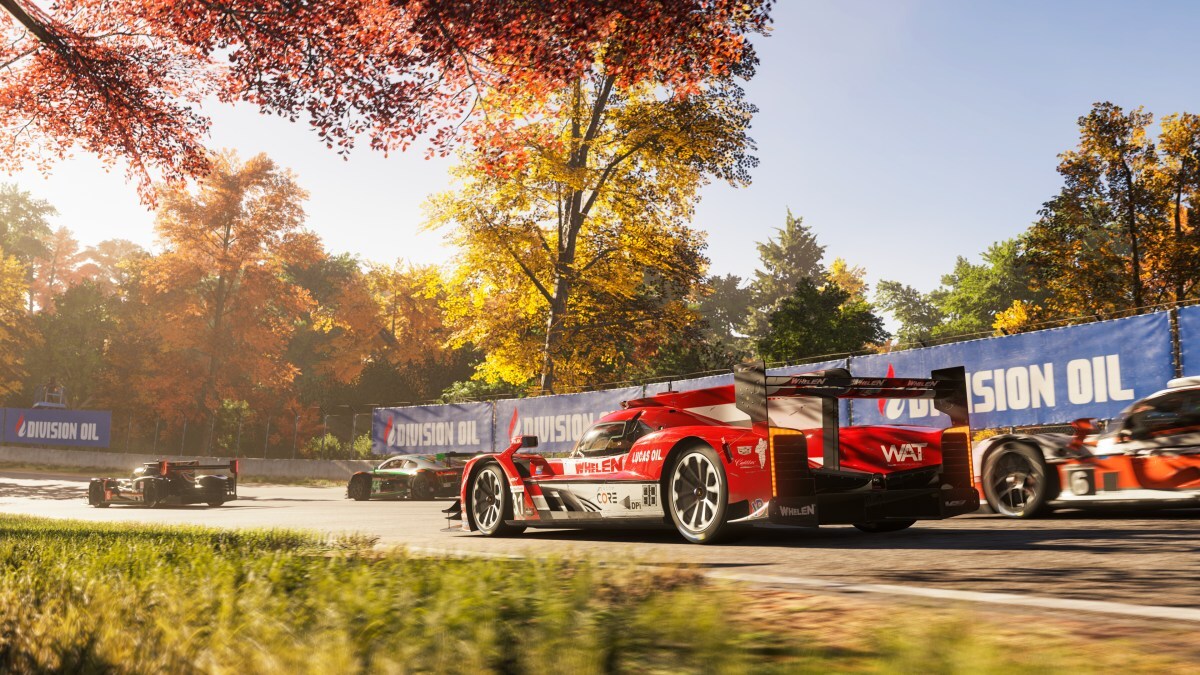
What I'm looking for is a return to form after the seventh entry, which wasn't shoddy by any stretch of the imagination but was caked in tasteless butt rock and greasy lootbox mechanics. Outside of the difficulty modifiers, I see Motorsport in a similar light that this conference cast Flight Simulator or the Forza Horizon 5 expansion. It's not just a toolbox of shaders and reflection models; it's a high velocity, wind-in-your-hair hobby. It's not just about the vehicles you can see; it's about what you can do with them.
Bethesda's marketing strategy for Fallout 76 continues to be ignoring that anything was ever wrong with it, and I'm not sure what The Pitt adds to the experience except more content. Fallout 3's The Pitt DLC saw you dragged into a rusting, diabolic slave camp, with your imprisonment simulated through you having all your equipment taken away and your world stopping at the walls of Pittsburgh. Because the game could carefully control your implements, it could also delicately balance its difficulty and moderate its pacing. 76's The Pitt was advertised with none of the same constraint; it was paraded about as a non-stop massacre of every mutant and robot in sight, which isn't nearly as interesting.

When video games reprint the art of H.R. Giger, it's usually by proxy, having made an homage to Aliens and receiving the art of the Swiss surrealist paperclipped to it. Scorn is pure, uncensored Giger, and it is beautiful and disgusting. As oppressive as the corporate corridors and sanitised labs of the sci-fi horror genre are, they're at least clean, sturdy, and made for something close to human habitation. The Scorn trailer showed a protagonist ripped from their cockpit and dropped into a world where every body part that should have been interior was exterior, where even incidental buildings looked like shrines to the machine gods. Scorn could be to current Doom what Quake was to 90s Doom: a shooter aping its peer's gratifying gunfeel and free-flowing viscera, but with desaturated gloom acting as a counterpoint to Doom's heart-pounding, celebratory action. It could be the industrial metal to Doom's heavy metal, disgusting with gibs where Doom delighted.
Describing As Dusk Falls as being written like a prestige television show might be an attempt at describing its style of prose, but it does bring up a lot of negative connotations. I suspect the people who worked that line into this speech were looking to resurface memories of award-winning TV pressure cookers like The Wire or The Sopranos. However, prestige TV has been as frequently associated with overpaid executives designing media by committee, producing gaudy, overblown drama. As Dusk Falls might turn out to be nothing like that and could be a serviceable and emotive tale. Although, I don't think that its photoreal 3D graphics and hand-drawn motion comic panels fit together. The incongruity in the art takes me out of the moment.
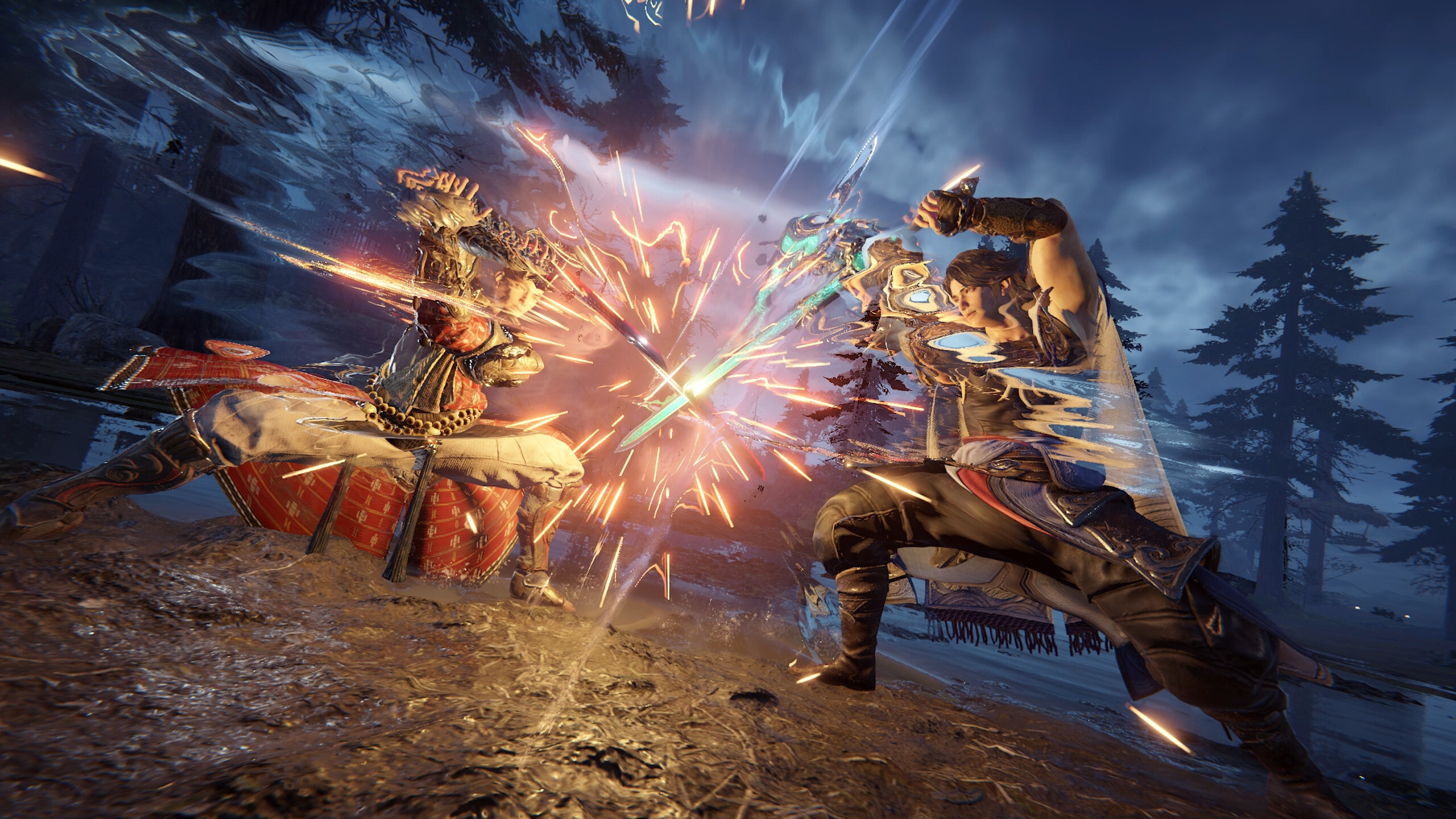
NARAKA: BLADEPOINT is playing games industry on hard mode, squaring off against titans like Fortnite and Apex Legends. There's not a whole lot of booth space left in the battle royale genre. Not just because you've got a few very well-funded developers with big footprints, but also because these are live service games which require enormous player bases. A player doesn't pick up a live service game, beat it, and then move onto the next one. They come back season on season to see the new additions, meaning once they're in, they won't be shopping around for a lot of alternatives in the same format. Simultaneously, the one hundred player requirement of most battle royale matches means the genre can't survive scattered player bases. There simply would not be the user density you'd need to get one going.
However, if an underdog can make it in the field, it's probably going to be a more inventive game like NARAKA. The MMO shooter angle is already well-covered, so melee combat and magic spells are the niches left to fill. The 60-player cap may be there to mitigate the need to build a gargantuan audience, and a smaller player base that isn't engaging itself at range potentially means smaller maps. Of course, the quality of a competitive brawler all comes down to whether it feels like you're playing a graceful boxing match in which there's always another approach available or it feels like one player is dominating by wailing on a button.

Pentiment looked like a yassified medieval tapestry which really scratched my itch for unique presentational styles. It's a similar story for Diablo IV. I don't have the most voracious appetite for dungeon crawlers, but I would love to experience its setting in all its moody, gothic blasphemy. Grounded is one of those weird titles which I don't know anyone playing, but then also apparently has 10 million users.
It's games like Ravenlok that show you can do a pixel-infused dungeon crawler without resorting to the most thoroughly exhausted art styles and tropes. When we talk about works outside of video games that have influenced the medium, we reference H.P. Lovecraft, Aliens, D&D, Lord of the Rings, and just about every war film ever made. But when I see games like Ravenlok, which houses malevolent jesters and giant cats or The Last Case of Benedict Fox with its haunted mansion and tentacle monsters, I think we underplay the contribution that Alice in Wonderland and Tim Burton have made.
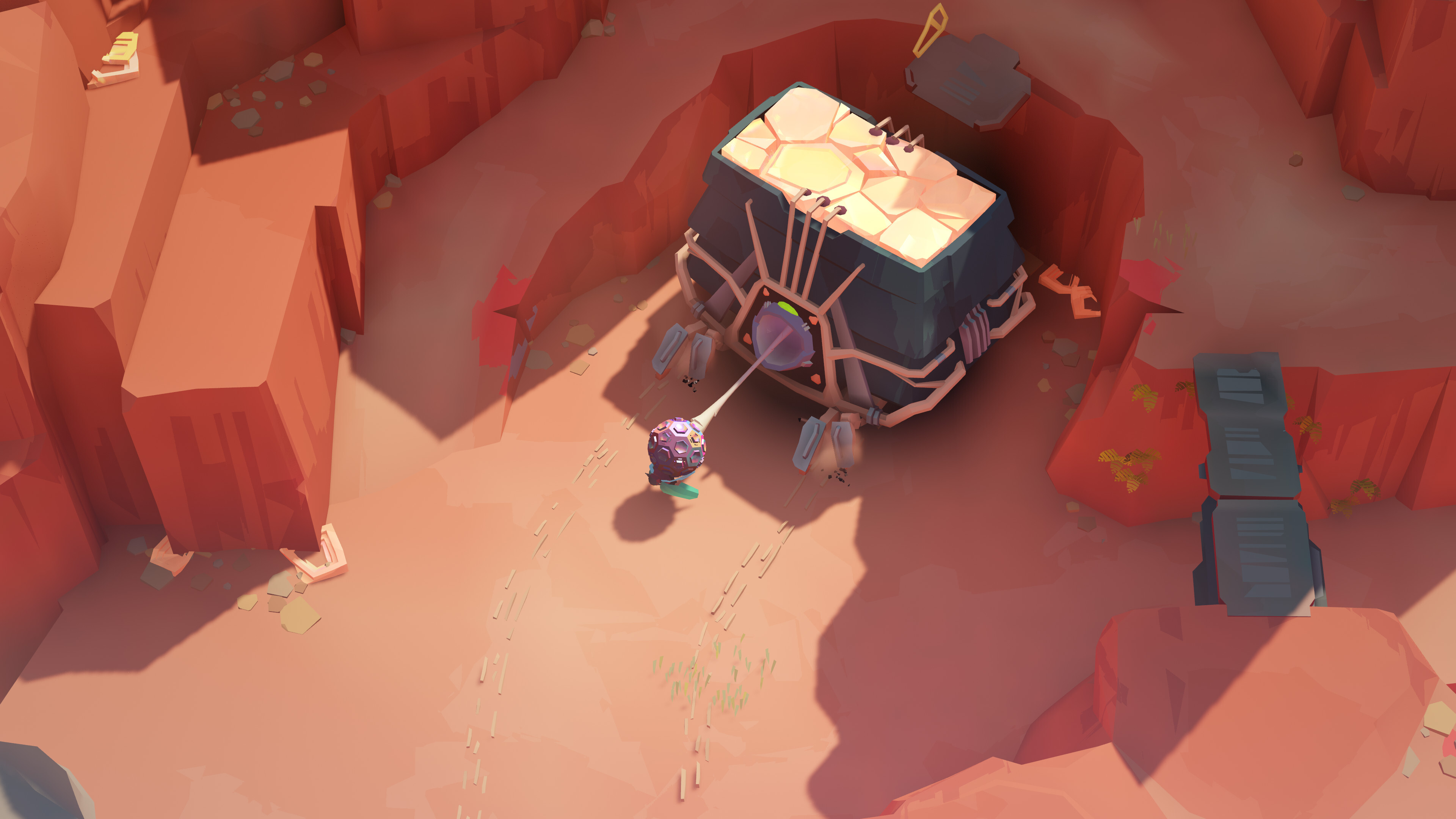
Cocoon's oddly biological synthesisers set the scene for disorienting alien worlds and curious exploration. This is a game thinking a lot about movement, both how it frames settings and how a player can turn it to their advantage. The camera zooms in on objects only for us to find whole other environments inside them, we can use the delay between when we drop a robot and when it starts moving to make it through a gate, while elsewhere, the ground reveals itself as we plod along it.
As awkward as the hosts of some of these briefings can be, when we don't have one, I miss them. The absence of Phil Spencer for most of the evening left us without solid partitions between game reveals and with a lack of a host to pull the sundry previews together. Yet, when he did arrive at the party, he brought one hell of a gift. Sometimes in these conferences, you don't just see what you're seeking, you find out what you want, and it was like that with me for the Persona collection.
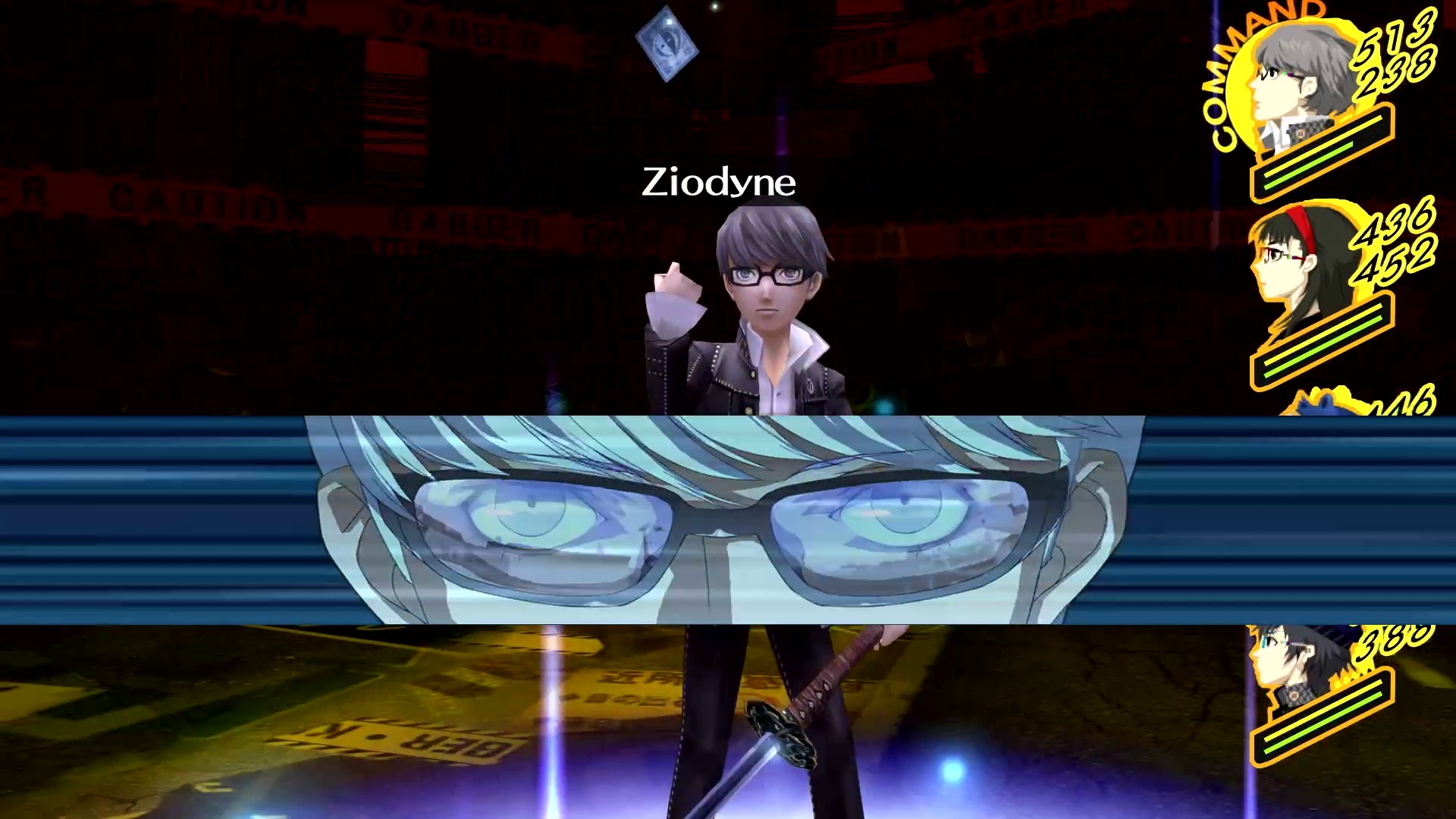
Persona 4 spoke some of the sharpest social commentary I've seen in a game and made room for internal complexity in every character in its roster, even those who sounded like assholes on first meeting. It also had this cozy, relaxed downtime that you might now associate with software like Animal Crossing. I've also heard high praise for Persona 5's treatment of Japanese politics, and those politics would be a whole other world for me to dive into just as much as any dream dimension.
Last but not least, it's Starfield. If there's one presentation I'd tell you to take with a grain of salt, it's this one. When Todd Howard tells me that me and my friends will be able to define ourselves and make our own story in his studio's explosive new sci-fi, it reminds me of him standing on a stage and saying the same thing about Fallout 76 four years ago. Just days before this event, a damning article released on Kotaku contextualising the state of that post-apocalyptic RPG as a failure of Bethesda management. The coordinators of the studio, even Todd Howard himself, reportedly ignored the expert opinions of their own subordinates while pushing some of most experienced talent within their walls into quitting. So, that's who's running Bethesda.

There are also a lot of top-down questions that are unanswered when it comes to Starfield. To what degree are planets procedurally generated, and how much content comes directly from the hand of a developer? What proportion of this game is an explicit campaign like Skyrim's, and what segment of it is a systemic sandbox like Fallout 76? I do hope it's more the former because open-world survival games like 76 are a dime a dozen, but nobody else makes the kind of multi-faction long-form campaigns that Bethesda does. Or at least, did. I'm also pretty burned out on sci-fi where humans find a mysterious alien artefact that causes shocking hallucinations, and there was no well-defined problem for the characters to overcome announced in the presentation. That's an issue from a storytelling perspective.
However, I am being highly critical. Starfield is taking that Fallout idea of a retro-future and pushing it in an entirely different direction with no less definition in its architecture and prop design. It exchanges the oil and steel of Fallout for the white plastic and moondust of mid-century futurist optimism. It's exactly my thing. The facility that the player battled the pirates in reminds me of the Nazi moon base from Wolfenstein: The New Order. Howard suggests this look is more than skin deep, representing a spirit of pioneering spacefarers, a la NASA. The danger for anyone working with such an anodyne world is that in presenting it, they might accidentally agree with it.

Starfield's modular ship design is breaking new ground, especially for this studio. In an increasing number of games, using our tools is becoming more satisfying because those tools are directly the product of our actions. Crafting systems are a classic example. Yet, that rule has generally not applied to vehicles. If we're welding a vessel together with our own two hands, it could. I'm also a sucker for character creators that let us modify personality and talents as much as appearance. Those personal traits emerging in the play were one of my favourite features of Fallout.
As sceptical as I am of the curiosities in Microsoft's window, I will say that the showcase generally improved as it went on, and that with Game Pass, there's reduced pressure on any one of these games to knock it out of the park. I'm sure in some of the Xbox output between now and E3 2023, we'll get some gems, but we can also look on the games at this conference knowing that if one of them is missold to us, we didn't have $60 riding on it, and that gives me a peace of mind. Thanks for reading.