
2017 Shit That Was Cool, Part Three: Best Games of the Year #5-1
In my last entry, I said that the remaining five games on this list would take a little longer. Whoops.
#5: Resident Evil 7 biohazard

Remember back in 2016 when Doom came out, and it was the second coming of Christ? Remember how it gracefully walked the line between staying true to the spirit of the original game and modernizing that gameplay in meaningful ways? At its best, Resident Evil 7 biohazard gives the same treatment to the 1996 Playstation original. It doesn't quite reach the highs of id Software's new classic, but it certainly ain't for lack of trying.
I'm not the biggest survival horror fan in the world, and it might not be one of my favorite games, but I've always respected the original Resident Evil. People tend to talk about the way that first zombie turns around in that FMV cutscene or those super-genius zombie dogs that somehow coordinated an ambush through a group of windows, but the key to Resident Evil at its core is how the tension comes through in the moment to moment gameplay. It's how you're planning your loadout or maybe even making a gameplan for each time you leave the safe room. It's how you're stressing every little movement of an enemy as you're lining up your shot. It's how you're regularly asking yourself, "Am I going to make it through this?" That element is something the genre (and even the Resident Evil series itself) takes for granted far too often, and it's heartening to see Resident Evil 7 really run with it for the first time in well over a decade.
It's been mostly forgotten now, but a peculiar detail of RE7's reveal was Capcom going a little overboard when emphasizing the new first-person mode, calling it the "isolated view" like it was this innovative breakthrough for the genre. Getting all Blast Processing with it is pretty damn laughable, but after playing through the game, I can at least understand why they would think that'd be a good idea. The game's incredible first half, where you're being terrorized by Jack and Marguerite Baker throughout tight farmhouse hallways, simply wouldn't work with the series' prior camera views, as the third-person view of modern Resident Evil or even the original PSX camera just couldn't convey the sense of dread or the haunting atmosphere the Baker estate has. You probably wouldn't appreciate the game's stellar visuals as much, either.
The "isolated view" is also responsible for some of the best combat in the series. I'm probably in the minority among Resident Evil fans, but I've always thought that the third-person aiming, while providing ample tension in setting up shots, was too stilted to be particularly enjoyable. RE7's first person combat feels far more natural, all without stripping the game of its challenge or tension. Resources are appropriately sparse and managed in a manner similar to Resident Evil 4, and the improved aiming mechanics allow the enemy design to go beyond the requisite lumbering monsters that charge straight at you. Combat gets more tense as the game progresses, with the bestiary expanding to include far swifter versions of the standard Molded (straight up referred to as Quick Molded), in addition to flying enemies. RE7 isn't content in just upping the enemy count and calling it a day, though: a late-game highlight is an extended send up of Saw-style horror flicks, where you need to keep a keen eye out for traps on top of ambushing Molded. The game even features a difficulty level that's essentially a remix which reintroduces finite save opportunities and uses reworked enemy and item locations to toy with the player, evoking memories of the Director's Cut of the original game (but without the whole "buying the game over again" part). Resident Evil has finally shed all of the stiffness it was once known for, without losing a bit of the original game's spirit.
I really did not expect to enjoy Resident Evil 7 as much as I have. Throughout the series, there was always at least one thing that kept me from having a great time, whether it was the controls, the awful AI companions, or a general lack of tension. It's been a long time coming, but RE7 sees everything finally come together, providing an experience that puts you at unease for all the right reasons. Resident Evil 2 looks damn promising, but I really hope we get more games like this in the future.
#4: Yakuza 0

Saints Row 2 is on the very short list of my favorite games of all time. There's plenty of different reasons for that, but one of the more memorable traits of Volition's masterpiece is how the game's tone is practically binary. If you focus on the story, you'll be treated to a (relatively) grounded take on Grand Theft Auto's urban conquest that can get surprisingly dark at times. Step outside of those story boundaries, however, and you're literally shooting shit at buildings and throwing people into jet turbines. Even the character customization has an impact on the tone the game has, letting the player either complement or undercut its more serious moments with ludicrous attire in a manner similar to Dead Rising.
I bring this all up because Yakuza 0 stands right besides Saints Row 2 in how well it dons the sock and buskin. Video games and comedy are typically dreadful bedfellows, but Yakuza 0 makes it look easy, overcoming not only the medium's typical struggles with humor but also a cultural barrier to tell some of the funniest stories of 2017. The seedy warrens of Kamurocho and Dotenbori are host to a seemingly endless amount of hilarious scenarios, as you take down bizarre cults, investigate tax fraud, and give an overly-kind woman the confidence to excel in her career as a dominatrix. Games like this normally fall flat on their faces as they strain themselves trying to make the player laugh, but the writing is pitch-perfect, with characters so well-realized that every nonsensical turn of events feels natural, and the outstanding localization job effortlessly nails dialogue and jokes that could've been lost in translation.
But perhaps the largest boon to Yakuza 0's comedic side is its stone-faced narrative. The game's story is almost Kojima-esque, featuring plenty of sordid backstories, ulterior motives, and unforgettable characters, all delivered with impeccable cinematic flair. It doesn't take very long at all to get invested in the world of the game, and a big part of that is owed to the player characters. Yakuza 0's dual protagonists are some of the best straight men in video games. Kazuma Kiryu is one of those stern badasses you've seen plenty of times before (This may blow you away, but what if I told you he also had a heart of gold?), but the game takes advantage of this, often playing around with his unrelenting stoicism and turning it into bullheaded naivete or outright social ineptitude. Goro Majima, on the other hand, is perpetually the coolest motherfucker in room, and the game makes it a point to showcase his impossible degree of chill in the grandest fashion (seriously, it might be the best character introduction ever). They're two exceedingly endearing characters, and perfect straight men for both the intrigue of the story and the inanity of, well, almost everything else. It's really emblematic of the game's tone as a whole: Kiryu and Majima work just as well in the nitty-gritty of the criminal underworld as they do delivering pizzas or hunting down delinquent pants thieves. It's like peanut butter and jelly.
Ultimately, Yakuza 0 is a game with heart. Whether it's the painstaking recreations of Tokyo's red light districts, the emotional cutscenes, the lovably goofy substories, or the shocking amount of depth some of the various side-activities display, you just know the people putting this game together cared a whole lot about it, and that made it very easy for me to mirror that dedication playing through it. Equal parts captivating and amusing, Yakuza 0 is a strange, wonderful game.
And I didn't even get into how good the eclectic soundtrack is or the pure joy of making your enemies literally eat boxes of nails.
#3: Super Mario Odyssey

After the first set of levels in Super Mario World, you're introduced to the idea of secret exits, and it's maybe the single coolest thing to ever happen to the series. Prior games had Warp Zones and the like, but those would always just send you further along the game's linear path. In World, however, it doesn't take long before you end up coming across secret exits that lead to secret levels with secret exits that lead to secret worlds that lead to super-secret worlds, and discovering this all is some of the most I've enjoyed myself with a video game. It not only redefined what it meant to "play through" a Mario game, but it also added a new feeling of excitement to progression, since the introduction of hidden levels meant that you weren't always sure where the game would take you. One of my favorite examples of this is early on: as you uncover more and more of the second world's secrets, you're eventually sidelined by a pipe that takes you to a cliff overlooking the Valley of Bowser, the final world of the game. Coming across this early glimpse at the final world (and the silhouette of the final boss, as crashes of lightning reveal in the background) is an amazing moment, giving you the feeling like you're almost breaking the rules of the game, but it's not a skip granted by a Warp Whistle or even a Game Genie. It's what the game expects you to do.
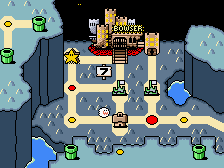
Unfortunately, as the series progressed, it would stray further and further away from the "mystery" of Super Mario World, with the 2D entries becoming a notable victim of paint-by-numbers design. The 3D Mario games aren't as structurally neutered as the New Super Mario Bros. sub-series, but even with 64's decidedly open approach to progression, there's still nothing matching the feeling of coming across a Warp Zone or the Star World for the first time. Super Mario Odyssey doesn't necessarily have any one thing that shakes the foundation of the series to its core, but it's still the most interesting 3D Mario has been from a gameplay and aesthetics standpoint since 1996, and it's certainly the closest the series has come to recapturing that Super Mario World feeling.
Admittedly, the structure of Super Mario Odyssey is pretty formulaic in its own right, with the way you actually go from world to world never really changing (outside of a choice between two different worlds every once in a while), but the freedom and variety the worlds themselves offer is unheard of for a Mario game. Instead of a set of objectives to choose from, you're just thrown into areas, free to do whatever you like without ever being booted back to a hub world once you get something done. They often vary in size, but each world is a buffet of moons (replacing stars), with missions big and small being scattered throughout every nook and cranny. There's a whole slew of traditional platforming challenges, vehicle races, puzzles, boss battles, mini-games, and all sorts of other nutty shit all over the place, and I could probably count the challenges I didn't like on one hand, which is impressive considering the amount of moons the game offers goes well into the triple digits. Combine this with intricate levels that sport just the right amount of depth, and you have some of the most rewarding exploration in the entire series.
The cornerstone of the game's exploration is Cappy, which feels like a long-overdue apology for F.L.U.D.D.. You can use him to pull off some really ill platforming, but more importantly, he lets you possess a staggering amount of enemies, NPCs, and objects you encounter throughout the game, allowing you to take their abilities for yourself. It's a wonderful mechanic, giving the game a chance to showcase a swath of inventive gimmicks and thoroughly explore them, while avoiding the risk of one or two of them dominating the gameplay for hours and hours (again, as if it were an apology for F.L.U.D.D.). It's reminiscent of Kirby's trademark ability thievery, but with more of a focus on platforming over combat. Discovering what you can possess and how you can use their abilities never ceases to entertain, and some of the game's finest moments involve setpieces designed around some of the more outlandish possessions.
"Outlandish" is a word that comes to mind often throughout Super Mario Odyssey, and much of that is owed to the game living up to its title. You get a real fish-out-of-water vibe with many of the locations (there's a reason people lost their minds with the unveiling of the game's New Donk City, a region that would feel tame in any other platforming franchise), and sometimes bosses or even whole worlds feel like they came out of a completely different game. Even the more familiar concepts will have neat twists to them: Bowser's Kingdom blends the expected "final level" castle theme with Japanese architecture and imagery, and there may be people out there who don't realize that the Luncheon Kingdom is essentially the game's lava world. The game takes you to a lot of unexpected places, and it makes progress thrilling. And that's what it really comes down to: playing through Super Mario Odyssey is exciting in a way no other 3D Mario is. Super Mario 64 had the magic of being in a 3D world for the first time, and the Galaxy games had a lot of fun ideas, but after a while, you had a general idea of what those games were going to throw your way. Just when you think you've got Odyssey figured out, on the other hand, a dragon shoots a lightning beam at your weird hat-spaceship, making it crash land in Dark Souls.
There's a moment in the Luncheon Kingdom where, after exploring a far corner of the map, you come across a Super Mario 64-style painting tucked away on the back of an island. You can come across a handful of these warps throughout the game, but the one in the Luncheon Kingdom is different (be warned, there's spoilers ahead). Instead of taking you to a previously-inaccessible region of a world you've been to before, it takes you to a completely new location: Yoshi's House in the Mushroom Kingdom, a world you don't properly reach until you've already beaten the game. The throwback to the very start of Super Mario World is amazing, but what'll stay with me is the feeling like I've taken that pipe to the Valley of Bowser all over again.
#2: Sonic Mania

Sonic Mania kind of does it all. If you want a journey through some of the series' greatest 16-bit hits (that also makes good on a few of its misses), you have it. If you want a "what-if" that shows where the series could've gone on the Saturn had Sonic Team flexed the troubled console's 2D muscles in lieu of shitting themselves uncontrollably and running headfirst into walls for almost half a decade, it does that, too. If you simply love SEGA's diverse legacy of stylish action or just want a good ass platformer, they have you covered. They've done what was once thought impossible and warmed even the most jaded Sonic purists' hearts with a game that honors the heritage of both Sonic and SEGA as a whole while pushing things forward in a fashion that's simply electrifying.
In its finest moments, Sonic Mania is a perfect mixture of style and substance that marries tight, simple controls and mechanics with vibrant aesthetics and creative design. In other words, it's just like any number of classic SEGA games, including Sonic Team's 90s originals. There's been a growing sentiment in the past decade or so that even those games were of the substandard (generously speaking) quality associated with the Blue Bastard's more recent outings, and even though that's bullshit, I understand why people would reach that conclusion. After all, it's easy to look at the series' roots and get the idea in your head that if they've so often fucked up recapturing the magic of what were simple one-button platformers, then maybe they weren't any good to begin with. It almost makes sense, but the truth is more complicated than that. The original Sonic games are super basic on paper, but what makes them work is just how responsive and natural the movement feels compared to a typical "hold the run button and go" platformer. The physics are an invaluable piece of the series (a potential catchphrase for Sonic himself was "gotta exhibit proper inertia, gravity and momentum," but focus groups found that it was too wordy), and the smallest inconsistency can make a huge difference in how an entry feels to play. We haven't had a post-Genesis Sonic game that understood just how important that was until now.
For the first time since 1994, controlling your character feels pitch-perfect and indistinguishable from the original games. What's more, some new additions make gameplay feel better than it ever has. Sonic's drop dash ability is an especially clever advancement, bridging the gap between stop-and-go platforming and the series' signature speed by letting you spindash immediately following a jump. Speedruns flow beautifully (aided by the wider 16:9 field of view and a function that lets you retry at the press of a button), making the Time Attack mode an absolute blast. As for slowing things down, exploration was always something better suited for the vertically-inclined abilities of Tails and Knuckles, but Mania introduces a useful mechanic that helps Sonic out on that end. Instead of just having Tails tag along, serving as nothing more than a poor man's coop mode, Sonic can command him to fly, after which he can grab onto him and use him to get around. It's great for finding the game's many special stage rings or getting to a stage's higher routes. Sonic's core mechanics feel better than ever, and thankfully, the level design lets them thrive.
As if successfully iterating upon a tried and true formula wasn't enough, Sonic Mania may very well have the best set of levels in the entire series, breathing new life into well worn territory and treading some unforgettable new ground. I was worried about returning to stages like Green Hill and Chemical Plant again prior to the game's release, but the re-imagined Genesis levels often end up outclassing their source material. One act of each of these zones usually mashes the original first two acts together, expanding and remixing things along the way to inject them with an amount of multi-tiered level design and exploration not unlike what you'd see in Sonic 3 & Knuckles. The other half of each zone is almost entirely original in layout, and further remixes the visuals and soundtrack. These acts in particular are outstanding more often than not, employing clever new gimmicks that fall in line with the themes of the original. Chemical Plant's second act sees you using giant syringes to alter the chemical properties of goop to progress, culminating in a game-changing boss fight that will have certain fans just losing their fucking minds. Stardust Speedway's first act (a tribute to a variety of "ancient ruins" levels throughout the series' history) turns those end-of-zone flower-container-things from Sonic CD into a stage mechanic, making you grow leaves to jump across all while a downright filthy New Jack Swing remix of the original stage's track plays. Flying Battery re-contextualizes its hazardous electric ceilings as a gravity flipper for those that find the thunder shield power-up, granting access to new paths. Decades-old levels feel fresh again, and some of my favorite acts in the game are based on ones I didn't like originally. This might be heresy to some people, but I was never huge on Lava Reef Zone, and yet Sonic Mania's treatment is one of the game's many highlights. Just listen to the music from the zone's second act: with a single strum of an electric guitar, it flawlessly captures that early/mid-90s zest for garish riffs and synths that so many early CD-audio games shamelessly exhibited (and that Sonic was no stranger to).
But for as remarkable of a job as they've done with revisiting classics, Sonic Mania's brightest moments come from the brand-new content, which impresses in just about every way imaginable. The wholly-original stages are visually stunning and exude the pop art panache you expect from the 2D games of the series, but with a considerable increase in detail over the Genesis, leading to stages resembling a long-lost Saturn game. This "Sonic the Hedgehog 4, but for real" atmosphere comes through most during the special stages, where low-poly 3D models are paired with intoxicating abstract 2D backgrounds. Design-wise, the new stages masterfully integrate the thrill of speed with platforming, and often put a new spin on mechanics seen in older games. Similar to Sonic CD's Wacky Workbench, you'll come across jets of ice which can freeze you solid, but Sonic Mania employs it as a tool just as much as it does an obstacle, sending your frozen body hurtling through blocked passageways. Mirage Saloon Zone features an excellent Knuckles-exclusive detour that's a decades-overdue platforming clinic tailored to his abilities. Not to sell out the remixed levels, but these stages are really some of the best-playing in the series.
The new stages are also host to much of the best music the soundtrack has to offer. Sonic Mania effortlessly captures the swagger of the series' most memorable tracks, with Studiopolis' first act sounding like it came right from Sonic CD's cutting room floor. Wildstyle Pistolero, which accompanies the aforementioned Mirage Saloon stage, puts a hip-hop twist on Wild West fare, with frequent "HEY" samples coming across as a natural modernization of the many samples included in Sonic 3's funkier tunes. It's the best music I've heard in a game all year.
And the boss fights. Oh my God, the boss fights. Between the dope music, the clever subversions of the classic cat-and-mouse dynamic, the intricate sprite work, and the sly references to classic Sonic and SEGA games alike, these are easily the best fights the series has ever seen. They're sometimes closer to full-on setpieces than standard platformer boss fights.
Shortly before Sonic Mania's halfway point, you reach Press Garden Zone, the second set of all-new levels. Normally, a Sonic level's theme can be summed up with one or two words (ancient ruins, nighttime casino, etc.), but PGZ takes about a half-dozen different ideas and throws them all together, resulting in the creative peak of the game and perhaps the best zone in the entire series. The first act is hypnotically busy, as you make your way through the whirring machinery and elastic conveyor belts of a printing press factory built over ancient architecture, but when you eventually make it outdoors to the snow-capped ruins and striking cherry blossoms of the zone's second act, things really take off. Press Garden Act 2 is the best individual stage in the entire series, showcasing some of the finest 2D art design of the generation, loads of branching paths and verticality, and a boss fight that provides a decent challenge (often a rarity in the series) while giving a nod to another SEGA series that put a great big stupid smile on my face. Press Garden is Sonic Mania defined: A lot of what you see in it will ring (ah fuck sorry) familiar, but it's when the team gets a chance to show you something new that it blows you away. It's built with a perfect knowledge of what makes playing a Sonic game fun, as well as a clear and present adulation for its lineage, but it's the surprises that make the game a classic.
I would've been happy with a something that simply did the Super Mario All-Stars thing with a few new wrinkles thrown in for good measure, but Mania surprised the hell out of me. I'm surprised that we finally have a modern game that "gets" Sonic. I'm surprised that I'm hopeful for what comes next. I'm surprised that there's a new best Sonic game.
#1: Cuphead

A lot of what makes Cuphead special is immediately apparent. Just a glimpse at it in action is enough to tell even uninitiated onlookers that the game is one of a kind. It charms the God damn pants off of you, and the painstaking recreation of 1930s animation makes a convincing argument that it's one of the best-looking games ever made (maybe even the best), but for as incredible of an artistic achievement Cuphead is, it's almost a footnote to why it's the best 2017 has to offer.
Love letters abound across all media, and it's especially evident in indie games. Axiom Verge is a love letter to Metroid, Shovel Knight is a love letter to NES action-platformers like Castlevania, and so it goes. Cuphead is no exception: every facet of its aesthetic is a blatant tip of the hat to the works of 30s cartoon animators like Max Fleischer and Ub Iwerks, but underneath its hand-drawn animations and wailing horns is a game acutely focused on a different kind of revival altogether. Above all else, Cuphead is a video game made by people that understand what really matters: Contra: Hard Corps is the coolest video game ever.
Cuphead's gameplay is rooted in a style of run-and-gun action that, for the most part, lived and died on the SEGA Genesis. The genre as a whole persists even if its glory days are long gone, but Treasure's Gunstar Heroes introduced a laser focus on frequent, intense boss battles that, while catching on with a few other Genesis titles that followed (the aforementioned Hard Corps, the Adventures of Batman & Robin), mostly faded away after the release of Alien Soldier, Treasure's send-off to the console. All of these games not only pushed the Genesis hardware to its limits (Alien Soldier's title screen features broken English threatening to set the poor console's processor on fire), but also demanded the best from its players, putting their reflexes to the test in some of the most challenging (yet rewarding) battles you can experience in a game without getting straight-up bullet hell on everybody.

Cuphead carries the torch for the boss rush run-and-gun, making vital improvements to the formula and paying homage to each game I mentioned without ever feeling like an emulation. The intense, demanding action of the game would be right at home alongside Treasure and Konami's best, but Cuphead irons out the control kinks of its spiritual predecessors and plays beautifully as a result. Thanks to modern controllers and some smart implementation, Cuphead and his pal Mugman can fluidly move, evade, lock in place, attack, and switch weapons without any of the caveats the game's forebearers had. All of these moves are standard for a run-and-gun, but in an example of one of its many fighting game homages, Cuphead also introduces parries. These let you evade specific attacks and also add a touch of risk-reward: enough parries will grant you more powerful EX moves and smartbomb-like super attacks. It's a surprisingly natural addition, giving an extra layer of depth to the finesse that comes standard with the genre.
The game's key distinction, however, is its structure. Traditional run-and-gun platforming and murder is usually the glue that connects boss fights to each other in this kind of game, but Cuphead eschews this entirely, providing a world map in its place. You'd be forgiven for thinking that this is no big deal (loads of games have world maps, after all), but it's the most important design choice of the entire game, giving it a different complexion from the run-and-guns that influenced it. For starters, the game puts an even greater emphasis on boss fights, making up about 90% of the game, something that would grow exhausting almost immediately if it played out like a standard run-and-gun. Instead, each of these battles are self-contained, barring a late-game boss rush that pays tribute to Gunstar Heroes' Dice Palace. This means that deaths no longer put an entire playthrough in jeopardy, and you're able to get right back into a fight whenever you fail. It may be decidedly more forgiving than the single sitting, lives-and-continues framework of most run-and-guns, but the result is a less frustrating yet equally challenging experience: instead of having to work your way back to a boss to be able to experiment with different strategies, weapons and charms (perks such as extra health and invincibility frames while dashing), you can simply adjust your inventory on the fly from the map. While the Old Ways have their merit (and at the end of the day, I prefer the marathon that is Hard Corps to Cuphead's sprints), these changes whittle the boss rush sub-genre down to its essence, giving every battle the room to breathe creatively and take greater account of the player's options in combat.
For example, there's the fight with the (eventually) three-headed dragon, Grim Matchstick. It's one of the game's more hectic encounters, set in the sky across an ever-scrolling series of small clouds. It's considered one of the more difficult parts of the game, something I was surprised to discover (and I swear to Christ I'm not just trying to flex my shit here), since I quickly surmised that the Roundabout boomerang projectile would let me focus on maneuvering across the clouds and avoiding attacks without worrying about aiming. Cuphead is designed to be beatable with only the standard weapon, but it is constantly rewarding the player for thinking about how they approach each fight. All weapons have the same respective damage output on each boss, but every battle is designed with certain weapon trajectories in mind, something that wouldn't be as feasible in a linear run-and-gun, where a player's loadout is in flux and a single death can strip you of a gun your gameplan relied on.
It's definitely closer to it than any other game of its kind, but Cuphead isn't just boss fights. Each world has a couple of standard run-and-gun levels to mix things up, and like you might expect, the chaos of these stages in particular is a bit less artful. The action here is fast and loose, as enemies often flow freely from off-screen, which is a bit less reliably manageable than the rest of the game's action, especially considering that you're also platforming during these sequences. They're the most divisive portion of the game, but those that are really not into them can finish the game without ever setting foot in one. Their main purpose is to provide coins used to purchase new weapons and charms, but you can get a decent amount of those on the world map if you just have to avoid those stages. Personally, I think their brevity (they make up about a tenth of the game) combined with the mix of fun gimmicks, setpieces and minibosses make them a nice palate cleanser. At the very least, they're worth going through for World 2's carnival-themed antics alone.
Cuphead is the work of people that love the hell out of video games, something they let you know every chance they get. Beyond the games that inspired its gameplay, there's oodles of shout-outs to tons of classic games, from Final Fantasy to Wonder Boy to Truxton (who references Truxton?). Normally I roll my eyes at stuff like this, but with how smooth they are with the references and how deep some of the cuts are (who references Truxton?), you can tell it comes from the heart. More importantly, though, this is a game that doesn't lose itself in fellating the games its creators love. Contra: Hard Corps is the coolest video game ever, but Studio MDHR doesn't just reiterate that point, they ask, "how do we make it better?"
I honestly never thought I'd see a game like Cuphead in my lifetime. I could've guessed after a certain point in time that technology would allow games that look like this, and I suppose that a tribute to the Genesis boss rush run-and-gun niche was never out of the question, but for a game to scream about its love for those games from the tops of its lungs while taking real steps to modernize them? It's a dream come true.