
by project343
2017. Bad year in terms of news and world-happenings. CRAZY year in terms of games. For the first time ever, I couldn't keep this to top 10. Hell, I wasn't happy with top 20. It's top-25. #dealwithit?
In terms of release and early access relation to this list, I'm basing this purely off my enjoyment with a title in a given year (provided it hasn't been featured on a previous year's list). For this reason, Battlerite is not on my list because it was on last year's list, but Dead Cells is on the list despite having not been released.
Notable omissions:
Also, I apologize that my blurbs are long as fuck. I find they're getting longer every year.
Showing 1-10 of 25 items

Original Sin 2 may be my favourite game. Like, not just this year. Like, ever. Competing against the Knights of the Old Republic and Mass Effect series, my #1 would vary depending on how the wind blows on any given day. Enter: Original Sin 2. I really enjoyed the first Original Sin game. I think I ended up critically underrating it the year it came out, went back to it recently, and fell in love all over again. Original Sin has a couple core issues. For starters, the writing is directionless, tonally EVERYWHERE, and doesn't know how to take itself seriously for half a second. While there is a fair bit of variety to both the abilities and environments in the game, there isn't *enough* variety to last 40+ hours; it can all get a little samey after a while. Finally, pacing. Within half an hour of learning the core game systems, you can be stuck in a city with 10-20 hours of quests and exploration to do. It's an impressive design feat in terms of content density, but boy does it get in the way of feeling like progress is being made. Original Sin 2 addresses these problems and is, almost without question, the best role-playing experience the video games medium has ever produced. God, where to start? ACT I (har): Character creation. I spent 2+ hours here, and the game doesn't even have much in the way of cosmetic choices to make. Pick a race, class, go. Simple, right? Nah, son. You can go in and customize appearance, voice, attributes, combat abilities, civil abilities, skills, talents, tags, and instruments. WHAT? Appearance, simple; voice is a bunch of options for combat reactions and light commentary mostly; attributes govern the outcome of your numbers from health to spell slots; combat abilities are your proficiency-rank in a given class of skills (necromancy for instance) that come with their own passive perks; civil abilities are non-combat oriented proficiencies like thieving or telekinesis; skills are the spells available to you (hotkey buttons); talents are personality-loaded Fallout perks that can range from Pet Pal (letting you talk to all animals) to Leech (standing in pools of blood heals you); tags are conversation-influencing personality identifiers (Dwarf, female, jester, outlaw, etc.); instrument changes all the combat and conversational music to be played in the instrument of your choice. No joke. Character creation: Chapter 2 (har). If you scroll out of the "custom" character section, you arrive in the cast of 6 preset "origin" characters. These have their own little narrative presentation button that gives you their gist. They come with their own tags, voice lines, questlines, and recontextualize the entire narrative to certain around them. They also act as your cast of potential companion characters to round out your party for the journey. Playing as a different origin character can have so many mechanical and narrative implications for your playthrough that it might as well be a different game. Fane, for instance, is undead; you can make him a mage or warrior or whatever. Because he's undead, healing hurts him and poisoning heals him--enemies use this to their advantage and you can fuck up and accidentally heal him to death (death-death?). Moreover, people will generally run in fear from the undead so you need to keep yourself hooded or rip the face off NPCs with his grotesque face-ripper device optionally-found in the first hub. Not including his constant commentary, unique conversation lines or anything else--these two facets of his character make him a totally different play experience than any other origin character. I spend so much time here talking about the character creator because it's exemplary of why Original Sin 2 is so special: it's the MOST role-playing game. Moving into the game itself. Like the first Original Sin, it's tactical turn-based combat where you move characters by measured meter rather than by square. Like Breath of the Wild (discussed below), it's all about the systemic interaction of objects as influenced by rules and elements. Take an arrow. Blood leaks on floor. You're now standing in a pool that conducts electricity. Your mage-buddy's spell now backfires and stuns you accidentally. Where this differs from Zelda is that the verbage (the sheer variety of ways you can interact with the world-space) is so much higher being an RPG with hundreds of skills and talents. Telekinesis is officially a non-combat ability, but you can use it in combat to move a torch to an oil spill. Everything interacts with the same logics; if you can think it, do it. This extends to the quest and conversation mechanics. Almost any quest can be completed without direct combat. Combat abilities can solve quest puzzles; combat abilities can influence conversations; you can charm someone, make them wet with a rain spell, dry them off, create a smoke cloud and blind them. It's like the whole Skyrim head-bucket thing (put a bucket on a shop-keeper's head and they can't see you stealing from them). Tags (personality traits in conversations) can create entirely new solutions to questlines or make other characters refuse to talk to you. You can break up your team for individual play; one member could be in combat with a guard while you converse with a shopkeeper next you. Hell, you can have one party member do the duo-robbing thing by forcing the shopkeeper to talk to you while while your thief steals everything. Speaking of which: best stealing/crime system in a game? They walk by the counter and notice a missing item, run around and inquire, call guards if they catch you in a persuasion/lie check you don't pass. They'll ask each individual party member nearby too, so you can swap the item between characters to dodge their pocket-checks. It's crazy that they treat each individual party member as a different entity potentially-capable of stealing. This whole game is also open to coop play where players control a portion of the party. We're talking multiplayer conversations with NPCs (along with PVP-antagonistic response tags unique to multiplayer). You can be as close-together or as split-up as you like. And there's a Game Master mode where someone can create entire campaigns for you and your buddies to play. While I haven't explored this mode at all, I imagine it's the best D&D experience since Neverwinter Nights. Mod tools are in there too, so you can always add what the core assets/systems don't accommodate. Last thing I want to touch on is the writing and quest design. It is so astronomically better than the first game. All six of the origin characters are loaded with personality, and are super interesting--both as companions and playable protagonists. Almost every sidequest has a ton of emotional payoff (laughter-inducing, rage-inducing, tear-inducing... you name it), have wonderfully original twists and turns, and be a blast to navigate. The number of times I've found non-traditional solutions to quests is shocking. For instance, the first major obstacle you have is to get out of a prison-town; there are no fewer than five totally different solutions to accomplish this goal--each requiring at least a good deal of conversing, exploring or sheer dumb luck to stumble into. Knights of the Old Republic, being my first CRPG, awestruck me with how different characters made at character creation could enable drastically different narrative and exploratory routes through the story (obviously I now know that this is a staple of the CRPG, which KOTOR was far from the first entry in). Along with being Star Wars and having a great story, this is why the experience cemented itself as a favourite game of mine. It's crazy to think about how much further Original Sin 2, some 14 years later, has moved the needle forward in this respect. As I said above, it is unequivocally the best role-playing game ever made. And, more personally speaking, my favourite video game.

In any other year, PUBG could have been my GOTY. But this is 2017... It's a broken mess, I know. We all know. Is it a little charming to get run over by your own vehicle when you fall out after a small jump? Absolutely. Is it a little charming to have your parachute catch on the edge of a building, stall a second or two to catch up to the server, and inevitably decide on throwing you 20 feet away and taking half your health? Absolutely. Is it a little charming to randomly crash to desktop, rejoin way too late and find a corpse? I guess not so much. The reason why people truck through the jank with PUBG is because the core sandbox is so fucking masterful at delivering "stories" that you just don't care. Every match is a story waiting to happen, and--if it goes long enough--a journey that you'll never forget. PUBG goes through all the crescendos of a narrative arc. It has the overly familiar introduction with the skydive. It has the rising action of the deliberate looting session. It has the climax of engagement (after engagement, after engagement--if you're lucky). The falling action comes as your heartbeat stabilizes at the death or dinner screen at the end. And the credits roll when you're at that main menu again, ready for the next round. PUBG can also substitute in for so many genres. It's a buddy-comedy with a team of friends talking nonsense while looting; it's an absolute horror story when you're alone surrounded by a team of foosteps moving in; it's a bombastic revenge tale when a teammate is executed by another squad, and you go in rambo to avenge them; it's a tense stealth thriller when you're sneakily breaching an occupied building with your squad. All of this makes PUBG a great game, but doesn't justify being so high up my list. That honour goes to the social experiences I've had *through* PUBG. Almost all of the best social experiences of my adult life have come from PUBG; I've made new friends, I've had incredible gaming nights, and I've bonded with a ton of really awesome people. It's been such a delight that now, in December, I'm a little heartbroken that we've fallen off PUBG recently. It's at the point that I'm reminiscing with a sad smile on my face, and I think only an amazing game could accomplish that.

In any other year, Horizon Zero Dawn could have been my GOTY. But this is 2017... When Horizon was first shown off, the game showed a lot of promise. Ashley Burch would be taking on her first main character in a serious, AAA-budget acting role; the demoed dialogue was so plentiful, and really sold you on the character. It showed you how much character commentary could add to an experience. The robo-dinosaurs looked rad, and the prospects of a post-post apocalypse sounded intriguing. But this was the Killzone team, and I think most had the same hesitation that I did. Low and behold, Horizon Zero Dawn exceeded every one of my expectations. The biggest shock is how *good* the writing and core story was. The world is so unbelievably textured that you have to wonder how this team came directly off a game with bland space Nazis as the antagonists. Every bit of clothing feels lived in and loaded with cultural cache in a way that even the best modern sci-fi series struggle to do. And the world oozes depth, nuance, and "lore." Honestly, it gives Mass Effect a run for its money. All this artistry comes together with a gaming package that is so technically impressive that I'd call it the best looking game I've ever played, running at impressively-consistent console framerates, and across so many different colourful world biomes that I just don't understand... how did they do this? Then there's the robot dinosaur bits. Minor quibbles out of the way first: the combat verbage is more limited than I'd like, and the RPG elements aren't quite deep enough. Those two things aside, the gameplay fucking rocks. Every battle feels like a fight-for-your-life intense battle against truly savage and monstrous foes. It's frantic. It's panicked. More than that, the overly-complicated dinosaur cast is so varied and nuanced that they carry the game on a gameplay front. Scanning for bits of weaknesses, isolating particular components for crafting or sabotaging, and maximizing elemental variety in your arsenal all comes together in a chaotic strategic dance. I think if there's a direction for them to go mechanically for the inevitable sequel, I'd like to see more tools and fewer "DPS" weapons; I'd like more mobility options in combat; I'd also love more depth to the melee combat--a light and heavy attack aren't enough. In either case, Horizon Zero Dawn feels like a labour of love from a team that was really 100% behind an idea. They clearly, as a team, were bursting at the seams for a chance to push themselves beyond a generic science fiction shooter. And they did so. A thousand times over.

In any other year, Breath of the Wild could have been my GOTY. But this is 2017... The big story with Breath of the Wild is that it reimagines Zelda with modern game design. Clearly, nothing about Zelda was sacred for Nintendo. The result is an absolutely outstanding example of game design that (with the mainstream appeal of the Zelda brand) could be hugely influential in moving this industry toward systemic design philosophies. There's a lot going on in Zelda here, certainly way more than what could be discussed in a couple paragraphs. I'll try my best. There are two things that make Zelda hugely important, and drastically different from previous entries: the game's structure and the game's "rules." Structurally, Breath of the Wild opens with almost no fanfare, and isolates you on a plateau until you've completed some preliminary challenges in a micro-ecology of design encounters. With the plateau done, you're introduced to a goal (kill Ganon, save Zelda), have a basic understanding of the game's verbs, and a couple breadcrumb quests to guide you to suggested areas. What follows is ENTIRELY up to you. There are no walls (save cliffsides that you're not strong enough to climb yet). You have your full set of abilities (for the most part). You can go anywhere in the world, including right up to Ganon's front door. To accompany this overwhelming sense of exploration is a set of mapping tools that let you scope toward an area, add a marker, then pin that marker to your map for self-defined management. If you want to mark a scary enemy, do so. If you want to mark every high cliff for later reconnaissance, do so. It is so satisfying to have open-ended exploration, open-ended progression, and player-controlled cartography structuring the play experience. Now, the consistent "rules" that govern the world of Zelda. Almost like a physics simulator, everything in Zelda is systemic and governed by the same set of core rules and interactions. This is a hard contrast from previous Zelda entries which were very contextual; "if I have ____ item, I can stand here and interact with ____--producing ____ result." It'll always produce the same result. Unlike previous Zelda games though, every object in Breath has physics, material and elemental properties, and they can all interact with one-another. The player can climb almost any surface. A player can take an axe and and swing at a tree to cut wood down. Log will roll down hill, as physics dictates. All wood is flammable. A player can cut down a tree, light the log on fire, and roll it down a hill at a pack of enemies. Unintended discovery: fire causes a cartoonish amount of updraft which can be used to propel yourself with your parachute--turning the encounter into an aerial arrow-battle above a sea of flames. Magnetism, velocity, electricity, wetness, dryness, heat, buoyancy... it's all there. It's like a giant physics playground as a Zelda game. You can throw a rusty shitty blade at an enemy during a lightning storm to instantly kill them with lightning rather than a mediocre swing. Every puzzle is the game asking you to environmentally solve this issue with the grounded rules you've come to understand, and it's fucking glorious. That said, in the Zelda pantheon, there's a certain *something* holding it back from the top of my personal Zelda list. It forgoes too many Zelda hallmarks for me, and breaks my heart in a couple places (not in a good way). Aesthetically, it splits the difference between Skyward and Wind Waker, but lacks an identity of its own. At best, it has the post-post-apocalyptic thing going on, but the game doesn't embrace that identity nearly as much as it should. The core narrative is told primarily through flashbacks spawned by Link visiting the locations in photographs; while interesting, it's given too little screentime to be impactful. While I generally enjoy the puzzles found in the game's 120+ shrines, they feel so disconnected from the main world; moreover, they're all so samey from an aesthetic standpoint that the process of doing them back-to-back-to-back can be extremely repetitive. The "dungeons" are also hugely disappointing for that reason. They lack personality, mechanical diversity, and aesthetic variety... and there's only four of them. So while Nintendo had a brilliant time coming up with an open-ended structure with systemic verbage and rules, they sort of fell flat on their face incorporating these philosophies with the world itself. So many of these challenges are disconnected from Hyrule, unrelated to characters, places or things that you may care about. It's like they came up with a developer sandbox to test ideas, then shipped it for all of us. Still, Breath of the Wild is hugely important, and was an incredible 100+ hours of bokoblin-filled silliness.

The pseudo-historical/partially mythological Edo-period narrative that Nioh has going on is bad. We all know it's bad. That's not the point. This game spent 13 years in development hell. So what does that amount to? Nioh is Team Ninja marrying their predisposition toward precise, lightning speed Ninja Gaiden action combat with measured, consequential, and role-playing-garnished Souls combat. All set in a game loaded to the brim with Diablo looting conventions (gear sets, rarities, shiny things falling out of every baddie), with a Monster Hunter-like mission-based structure. Got it? K, good. It's sort of a complicated meets-meets-meets, but the inspiration is right there in your face. I'll say that Nioh might have my favourite combat in any character action game. It's probably better than Bayonetta 2. I don't know, I'd have to think about it. Like Souls, you've got an energy bar that restricts your blocking/attacking/rolling. Unlike Souls, you've got unlockable weapon combos, three different stances, and an active-reload mechanic that (with precise timing), refills your energy bar almost instantly. There's a lot going on mechanically with this game, and it was more than enough mechanically to keep me entertained well over the 60-hour mark. The role-playing elements are perhaps a bit too heavy-handed for this sort of game though. You're constantly finding loot. Most of it is absolute trash. Every piece of gear is a list of about a million different stat modifiers and unique effects. Honestly, half the game is spent in menus managing skill points, changing set pieces, allocating spell charges, leveling up particular stats... it's a bit much. For a game that excels so well in the heat of battle, I really wish Team Ninja didn't second-guess themselves with this additional layer of RPG numbers muddying the gameplay loop. But the levels themselves are rad. Despite having what feels like hundreds of individual missions, there are only maybe less than two-dozen "levels." These levels are repopulated, reoriented, redecorated for each mission--often feeling so distinctly different from previous missions that it doesn't feel like a "been there, done that" problem. They've got nasty bosses, hidden treasure, shortcuts, corpse runs... most of the Souls level design tropes that people love. What the mission structure doesn't allow is an inter-connected world that loops in on itself. Or more open-ended exploration of the game world. Levels are generally more linear than not, but that isn't a problem. Nioh is it's own thing, and I love it.
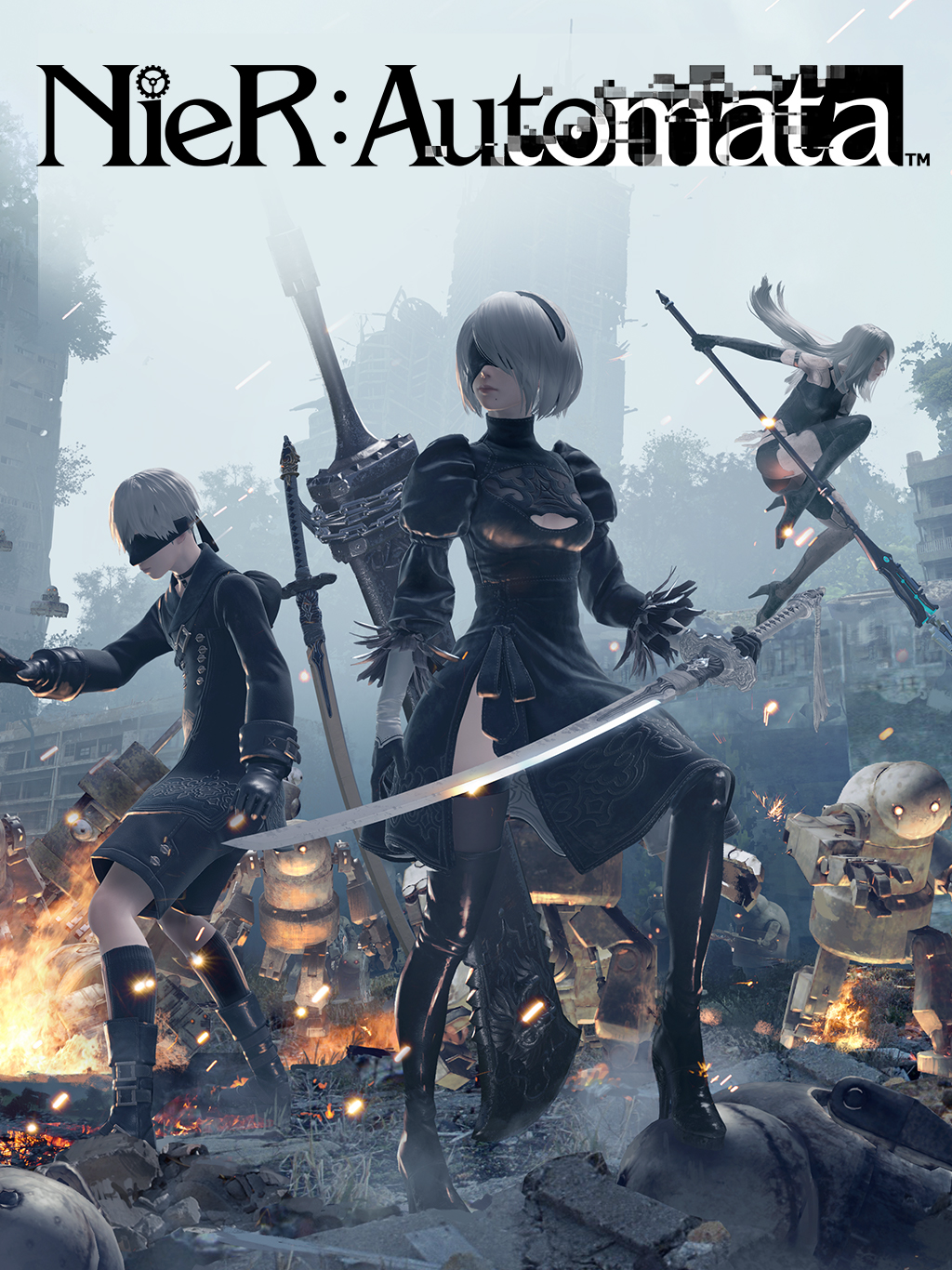
The best PS2 game I've played all year. Honestly though, Nier is weird, knows it's weird, and I love it for it's weirdness. It embraces a lot of the odd mechanics from it's niche predecessor (bullet hell mechanics, alternate endings, intentionally repetitive? sidequests), but Platinum takes these Yoko Taro-isms and throws them into a stellar-playing video game. On the gameplay front, it's just a step down from Bayonetta in terms of combat. I think the lack of Bayonetta's bombast is really the only thing keeping Nier back from being on-par, honestly. More than that, the brilliant memory-allocation system is something I'd love to see other games adopt. The idea of turning off HUD elements to power combat advantages is just rad. On the writing front, it's a little too anime for me in spots, but it manages to break past cliches into some fantastic stuff at times. The 'warm soul robot' Pascal is probably the narrative highlight for me, and ranks among the best characters in any Japanese game I've ever played. 2B, 9S and A2 are also really solid protagonists in their own right, each adding a ton of personality and flare to their respective playthroughs. Automata's soundtrack is the best soundtrack this year, bar none. It's the sort of soundtrack that I think about on a regular basis, and actively listen to when I'm in the mood. The fact that every(?) track also has a chiptunes variant in the second playthrough also blows my mind. Yoko Taro has established himself alongside Kojima, Suda51 and Swery65 as one of the biggest Japanese "auteurs" in gaming.

The raddest Metroidvania since Ori and the Blind Forest. Hollow Knight does two things that really stand out for me in this genre. 1) Aesthetically differentiating itself from Metroidvanias, it has a tone like nothing else. Part sombre and subdued, part morose, part playful and light. Many have compared it to Dark Souls, and I think that's not too far off from the truth. 2) Mechanically differentiating itself from Metroidvanias, Hollow Knight embraces cartography in a totally refreshing way. In some ways, it reminds me of what Breath of the Wild does: it gives the player a world, gives them mapping tools, and lets them run wild. It works out so well in this genre because backtracking, traversing large regions, and exploring unknown depths is core to the 'vania. Standouts aside, Hollow Knight has some air-tight platforming, spectacular level design, some of the most memorable bosses I've faced in a 2D action game, a world oozing mystery and depth. I think this may dethrone Ori as the best modern Metroidvania game.
In working through the myriad deaths of Edith Finch's family, What Remains excels at exploring the smallest pleasures we often forget, and the largest depressions we too often ignore. It's my "games as art" title for this year's list. Edith Finch is a shockingly-layered experience. A quick read through a first playthrough punches your gut with emotional highs and lows, but a studied second playthrough reveals layers of outstanding narrative thought throughout. It's powerful stuff, and everyone who cares about the games medium as a narrative medium should check it out. Just maybe wait for a sale or something. It's a poor value proposition if you care about that sort of thing.

I loaded up Subnautica on a whim during my GOTY catch-up binge in December. What a mistake. What followed was mild curiousity that spiraled into a daily glee, and then spiraled once more into what should only be described as drowning. I couldn't think or breathe anything but Subnautica; I laid in bed planning out my next venture, my next goal to accomplish--losing sleep in the process. It was both a beautiful and terrifying state to be in. It all comes down to the loop of Subnautica. You have a safe space, you venture out to dangerous new locations for blueprints, you harvest resources from said dangerous locations, and you return to your safe space for crafting. The crafting highs are as high as they come. Every haul nets you some serious quality of life improvements, has plenty of far-reaching goals to aspire to, and has a ton of frilly fun stuff for personal investment. It's almost a Sims-like self-appreciation that kicks in when you return home to your beautifully-expanding base. Or when you've finally got enough resources to build a cyclops (the massive mobile submarine base). On the opposite end of the spectrum, the lows of delving are so fucking low that I'm tensing up just thinking about it. There are really only a small subset of creatures that pose any real threat to you when you've got a vehicle, but boy does their sheer existence put you on constant edge. It might be my mild case of thalassophobia, but I'd often just power down my seamoth and just wait out the night because I couldn't mentally handle how little peripheral vision I had.

I love rummaging simulators ("immersive sims"). This is a very good one of those with spooky Lovecraft space monsters. A brilliant opening, a solid ending, and a ton of narrative-based player agency in-between. Prey marries mechanical decision-making with narrative outcome in a way that a lot of games struggle with. Where Dishonored's lethal/non-lethal dichotomy feels like a one-dimensional decision with a one-dimensional outcome, Prey's handling of different questlines and upgrade trees has layered, complicated outcomes that you can't easily define. What's more, the ending (without spoiling) wraps a very beautiful bow on your playthrough in a way that felt like so much more than a summary, slideshow and credit-roll (as is usually the case for decision-making RPGs). The sheer amount of level design and boardroom-meeting work that must have gone into designing a complete space station from top to bottom... it blows my mind. It's like if, back in 2007, Irrational designed the entirety of Rapture for the player to explore. Incomprehensible, right? Well, Arkane did the next best thing with Talos 1. Having all the levels logically interconnected, non-linearly, relative to the rest of the station and proportioned realistically takes a while to comprehend. It didn't hit me until I went out into space and saw the airlocks and windows into the space station. The entirely of the game world was right there. It's one of the most impressive level design feats I've ever seen, and it works at both a macro and micro scale. You can go through every person's work station, find their notes to one-another. Every person listed in the directory of Talos 1 can be found--alive, dead or somewhere in-between. That's insane. And the whole station has this rad future-y art deco look... mmmmmmmm. Fucking love it. Where does it stumble? Well, Prey needed more weapon and enemy variety. It's really odd to only have 5 (and a half?) combat weapons in a 20-30+ hour game (and a couple elemental grenades). Some aren't even particularly inventive or flexible. It's literally a shotgun, pistol, wrench and beam gun. The recycler is functionally a generic grenade, but also cubes materials for you for crafting. The GLOO gun is the one stand-out for its traversal uses, but I wish there was more of this sort of weapon. The enemy variety is just as bad. Most are elemental variations on the same model, with the mimics standing out mechanically. Having props that haunt you when you spend the whole gaming sorting through prop-filled spaces is equal parts terrifying and satisfying.