
by vyzndr
It’s that time of the year again where I realise that I’ve barely played 10 games that were actually released in 2017 and struggle to remember what I’ve actually spent the last 12 months doing with my life.
I’ll point this out right at the top: I don’t own any current consoles and so 99% of my gaming time is spent on PC and still have plenty of other 2017 games I‘ve yet to play so I’m leaving them off entirely rather than speculating on what I would’ve enjoyed.
Showing 1-10 of 11 items
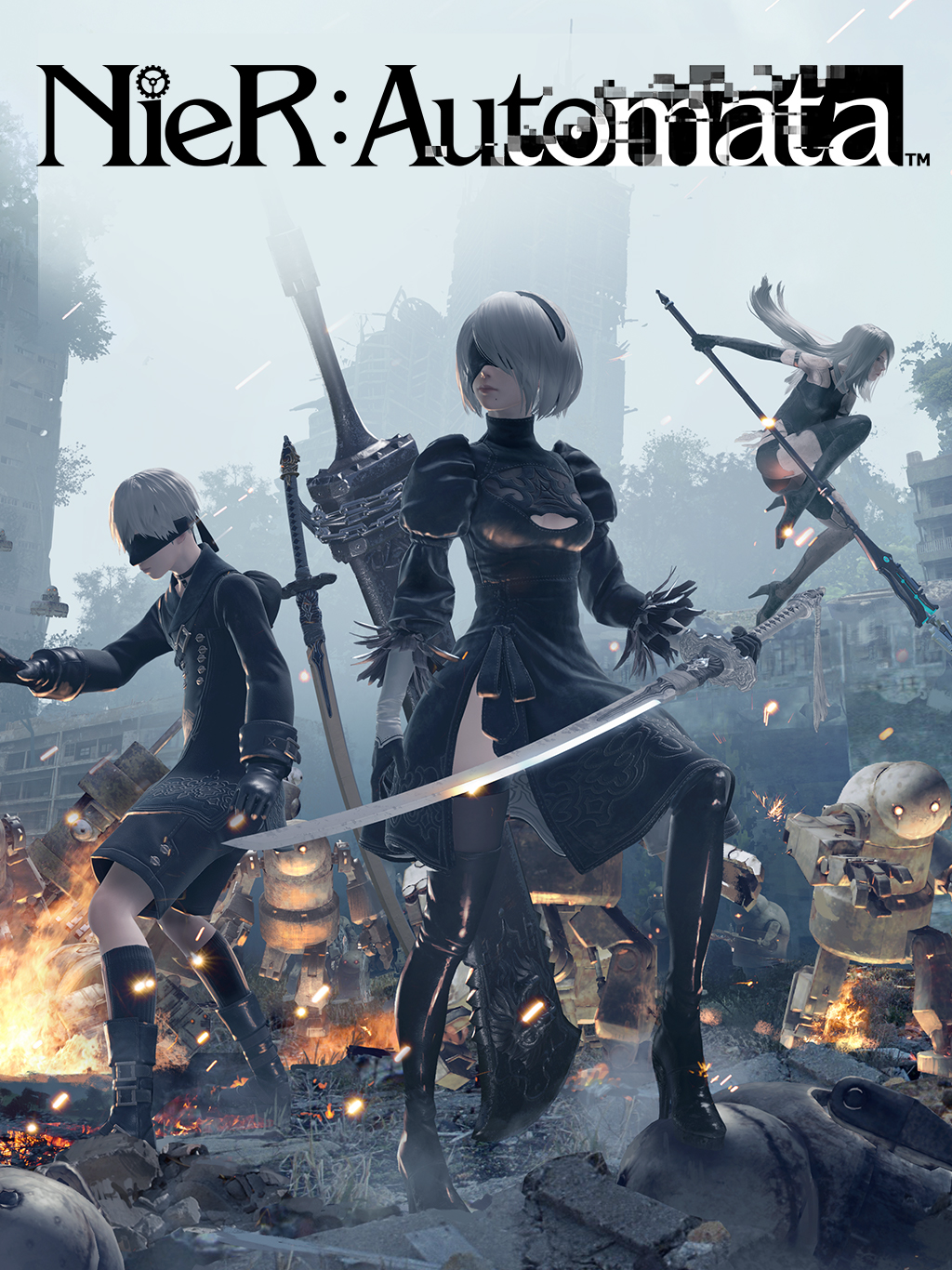
What can I say about NieR: Automata that hasn’t been said a million times already by far better writers? Don’t go into NieR expecting one of Platinum’s usual character action games, full of deep combat mechanics and challenging fights. This is very much Yoko Taro’s project, where philosophy and story come before gameplay. That’s not to say that the action is bad per se, just that it isn’t the main focus. Many people drop off early from NieR, whether it be due to the game being “too anime” or simply from not understanding that each ending (complete with credit roll) is no more than a chapter break presented in an unusual way that doesn’t pay off until you reach Ending [E], the actual ending to the game. This is a huge shame, as a lot of the themes presented during route [A] are fleshed out in great depth later on and some of the best moments are hidden inside side-quests which some players may outright avoid. With so many games featuring androids feeling a bit “Cyberpunk 101” with regards to the question of whether artificial intelligence can be considered sentient life (I’m looking at you, David Cage’s Detroit), NieR: Automata joins Blade Runner: 2049 this year in jumping straight to “yes” and then examines the deeper questions beyond that. There are a few topics that NieR touches on briefly — such as the concept of gender when removed from human physiology, or the sense of self one might lack when their memories can simply be backed up and restored from a server, making “death” meaningless — that I would be excited to see Taro explore in more depth in the future. It may not be the best game of 2017 in terms of pure gameplay but as a narrative piece, it feels like one of the few mainstream video games that holds up to scrutiny and could one day be considered for academic study. At the very least, it’s the only game that gave me genuine goosebumps this year.

Stories Untold is not a game for everyone. It opens with a text adventure and continues from there by having the player simply follow instructions. There’s minor puzzle solving, but no more than reading a manual and doing what you’re told. But it’s positively dripping with atmosphere. Presented as a series of four short horror stories, Stories Untold is a perfect example of brief, effective storytelling through video games. I don’t know if there are any plans to follow up with a sequel, but I would be very excited to play another collection in the same vein.

Everything I’d seen about Night in the Woods made me think I was going to hate it. I went in with expectations of a wacky cast of goofs being “so random” but ended up playing a heartfelt interactive story about a college dropout unable to come to terms with her friends having got their lives together in her absence. Sprinkle in some social commentary about society’s treatment of millennials as well as a little bit of something more directly sinister and you’ve got one of the most memorable games of 2017.

When it was announced that this mini-series of Life is Strange was a prequel as well as not being made by Dontnod, I think all of us were worried that it was going to be a disaster. Thankfully, that wasn’t the case. Deck Nine did a great job of capturing the essence of what made the first series great, although Before the Storm falls slightly short of the original. The SAG-AFTRA strike meant that their selection of voice actors for the game was limited, resulting in some of the performances being a little more melodramatic than the subtlety and realism used in series one. I’m iffy on their use of scab labour, but Ashly Burch’s continued involvement as a consultant made me feel a little better about the circumstances. I don’t believe she would have done so had she felt that Before the Storm was undermining the strike. Some plot points felt slightly rushed and a handful of characters didn’t get much stage time, despite the player being expected to have an investment in them. Life is Strange is a slow, calm series and events and characters need a lot of time to breathe and settle in. However, Before the Storm is only a three-parter. I think with an extra two episodes, as per the original, this wouldn’t have been a problem. As with several of the above reviews, don’t take these criticisms to mean that I didn’t like the game — I loved it! — it’s just that it was so close to what I loved from series one that I feel like I need to be nitpicky. One thing I most certainly appreciated was the restraint shown by Deck Nine by not leading the story right up to the beginning of the original series. It would have been the easy option for a climactic ending but, outside of a post-credits moment, it doesn’t get mentioned at all.

It’s hard to write about Doki Doki Literature Club without outright spoiling what makes it so interesting. I’m not generally a fan of visual novels — Ace Attorney is as close as I’m gonna get — but DDLC plays with the form and creates a story that only really works when told as a dating sim game and I’ll always give bonus points to a game that justifies why its story is being told through a video game as opposed to a book or film. Tropes are used here for good reason and are very effective at luring you in. Some of its visual effects may be a little heavy-handed, but that’s just my personal taste. All I can really say is to try it out — even if you’re not a fan of the genre — and make it to the first “ending” when the turn happens. It should only take about an hour, if even that, to make it there. You’ll soon see why DDLC has the character I’m considering to be my top villain in gaming for 2017.

90% of what I loved about Wolfenstein II had nothing to do with actually playing the game, which is a huge shame. The game’s strength clearly lies with the storytelling, swinging wildly from crazy and cartoonish Nazi-slayin’ to some depressingly true — if slightly ham-fisted — satire of white America. The gameplay itself is fine, nothing spectacular. You’re not mentally punching the air in joy as in Doom (2016), but it’s also not hindering you in any way. Having played Wolfenstein 2 mostly as a stealth game, along with being far more interested in the world, characters and message than combat, I think that the best step forward for the series is for it to shift genres and become an immersive sim.

Cuphead is a frustrating game for me. Not due to the difficulty, but due to the tiny errors which all add up to something that feels like a 0.9.9b release that just needed one more week of QA and polishing to become something truly great. Don’t get me wrong, I think it’s a fantastic game and most definitely worth playing, but once the charm of the art wears off you start to notice problems that — while not game breaking — chipped away ever so slightly at my enjoyment. Ironically for a game whose key selling point is its visuals, the majority of my problems lie with how the art is implemented. A little too often, hitboxes seem to bear only a passing resemblance to the sprite it is attached to, making it unclear as to why you did or did not get hit by an attack. One of the victims of this problem was the parry action, which is the one thing that needs to be reliable. On top of that —(literally)— foreground scenery occasionally covers important areas of the playing field, obscuring bullets headed your way. On a personal point, but I think I would have preferred the game to be a few stages shorter. In fact, cutting the run and gun stages altogether would’ve been an overall improvement for me. This review sounds damning, but that’s only because such problems would simply be accepted as “good enough” in any other game. But Cuphead, with its responsive controls and amazing visual design, is let down by its “good enough” moments.
If I was being glib, I could call this a lesson in the importance of Health & Safety. In reality, it’s probably the best “walking sim” I’ve played to date, although that’s an admittedly small list. The vignettes telling the story of various characters are all interesting and certainly memorable but feel a bit disconnected from each other. There is a throughline of misfortune but that’s about it and it is hard to really care about these people that we only spend a few minutes with each. The ending is maybe a bit predictable which lessens the impact slightly, but it’s certainly handled very well and doesn’t feel cheap. It’s not a genre for everyone, but if you were a fan of Gone Home and others like it, What Remains of Edith Finch comes highly recommended.

Hellblade is a tricky one. It easily has some of the best production values of any game of this year. The visuals are a genuine achievement and the sound design is impressive and fits the tone of the game perfectly. Unfortunately, the gameplay along with some aspects of the storytelling just don’t hold up. I haven’t had much time before writing to fully square my feelings on the game so my comments on it are going to be a bit muddled. The opening hour of the game (before entering the door to Helheim) is a slog and I was very close to cutting my losses and moving on to something else. I’m glad I stuck with it, but the problems with the introduction never went away, they were just overshadowed by other aspects where the game shines. The puzzles feel “video-gamey” (in a bad way) and combat is simplistic and uninvolved, making the supposed permadeath a non-threat. The focus of the game isn’t necessarily on either of these things, but you do a lot of them throughout the course of Hellblade. The movement speed feels natural for the character but with the size of some of the areas, I was internally begging the game to just get on with it sometimes. Hellblade is most notable for its representation of psychosis — specifically Senua hearing voices in her head and seeing shapes and patterns in the world. From what I am led to believe, the way some parts of this is portrayed in the game is fairly accurate and adds an extra layer of confusion to the bizarre land she is fighting her way through. It is an unusual and unique thing to experience and does seem to have a minor connection to the story, but I couldn’t shake the feeling that it was just treated as a flavouring on top of a more rote story about loss. What’s more, her psychosis is presented as a superpower which feels a bit… not cool? I understand that the video game needs to happen and it’s a way to incorporate how Senua sees things differently and turn it into a gameplay mechanic, but having the character’s hallucinations be reduced to a way of magicking up bridges that aren’t there feels quite dismissive — especially after the game implies at the start that it will be taking her condition seriously. The voices she hears are usually commenting on her anxieties in a way that feels — from my outside perspective at least — authentic. They are also occasionally used to warn you of off-screen attacks during combat which, although unrealistic, didn’t feel out of place or pull me out of Senua’s headspace. Incidentally, I strongly recommend playing with headphones as the whispering voices were, to me, vital to the experience. We see occasional flashbacks of Senua’s relationship with her father and her lover, but we never get an idea of who her character is. It would have been more interesting to me to learn how her mental illness affects her during the more mundane moments of her life when she’s not on a quest to invade Hell. Hellblade could have been a character action game set in a fantastically realised Norse mythology world with a simple story of loss and revenge, or it could have been a grounded and respectful examination of schizophrenia. Instead, it feels like these two ideas were forcefully mashed together with very mixed results.

It’s difficult to recommend MXM given that NCsoft couldn’t market it well; never found a sizeable player base; changed the economy in such a way to lose the players it did have and have now announced that it’s closing down on January 31, 2018 — but I enjoyed it while it lasted. Master X Master, like Shards of War before it, was a short-lived MOBA that uses direct character control (WASD movement, like a twin-stick shooter) rather than click-to-move like DOTA 2 or League of Legends. Keeping the top-down camera view of these games instead of Smite and Paragon’s behind-the-character camera kept it feeling “traditional” while still having a control scheme that I felt was more suited to fast-paced action. A few of its other mechanics — namely the tag and attunement systems —were more gimmicky than anything groundbreaking and didn’t necessarily help the game, but I was there purely for the WASD controls. Who knows, maybe one day a developer will be able to make one of these that actually finds an audience?