
Not currently in any order. Adding more as I think of them.
Showing 1-10 of 20 items

If any soundtrack sticks out to me as an immediate choice for soundtrack of the decade, it's Undertale. Toby Fox's score is, at first, a cute, nostalgic reminder of Old Games aesthetics and a friendlier time in internet discourse. However, just like Undertale itself, the score lays the ground work for complex, emotionally impactful motifs that slowly drill into the listener's mind over the course of the game so that when they return later they have a tremendous emotional impact. If nothing else, Undertale's soundtrack is an excellent example of music perfectly complimenting the aesthetics and thematic values of the work its married to. If there was one soundtrack on this list I would suggest is overplayed its probably this one, but it's beloved for a reason.

Singer-Songwriter Jim Guthrie composed the music for this game, and his roots as a likable bedroom-pop composer run deep through Superbrothers. He was a perfect fit for this ridiculous yet oddly beautiful game. Despite the fact that the soundtrack loosely attempts to create and subvert Zelda/adventure game tropes, each singular composition ends up being much more than the sum of its parts. Like his early albums, Guthrie's score feels simultaneously tiny and extravagant, full of little details that culminate in something equally idiosyncratic and moving.

Lifeformed's Dustforce soundtrack veers into 'is this music actually in sync with the game or is it just a killer album' territory, which is to say, Lifeformed's soundtrack is a great listen. Composed primarily of minimalist lo-fi pop, it's a blippy, eminently listenable score. What elevates it is an undercurrent of melancholy. While Dustforce (the game) is about four, uh, coworkers (friends?) cleaning up the world's detritus together, Dustforce (the soundtrack) often feels lonely. Few game soundtracks make such good walking music, though. Definitely worth a listen, even to people who haven't played the game.
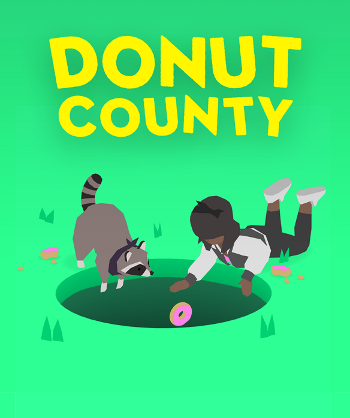
Put simply, Donut County is one of the most listenable game soundtracks of all time. Its mathematically perfect balance between humor and 'chill beats to study to' style are unbeatable. You're in a instrumental trip-hop chill-zone one second and banging your head to the Quack Anthem the next. Like the game, the soundtrack's eclecticism and occasional forays into gloom are reflective of the time in which it was made. Absurdism is a perfectly reasonable response to the world as it is. Besides being a game about gentrification, Donut County and its stellar soundtrack capture the mood of a generation.

Deadly Premonition is one of my all-time favorite cult classics in any medium, and that's due in no small part to its soundtrack. It's heavily reverential of Angelo Badalamenti's Twin Peaks score, sure, but it's also way more willing to go for the fences with its absurd central themes and completely inexplicable shifts in tone. However, folks who dismiss Deadly Premonition as a kind of video game version of The Room are in the wrong. There's a coherent central vision to the entire project, and the game calls for an outlandish, sometimes anachronistic score. If nothing else, in an era of pop musician composed scores and same-y AAA orchestras, Deadly Premonition was one of the most memorable soundtracks of the decade.

The score for this Scott Pilgrim movie tie-in is 100% dependent on whether or not you think Anamanaguchi is a good band. I happen to think so, and this soundtrack (the first full soundtrack the chiptune band ever produced) has some of their best work.

Red Dead Redemption was a turning point for Rockstar. There are plenty of valid criticisms to lob at RDR's narrative (oh, Irish), but presentationally there are few other games from the early 2010s that hold up as well as this game does. Bill Elm and Woody Jackson's soundtrack is a dizzying mix of '70s guitar fuzz and splashy, kinetic percussion. It's got one of the greatest central themes of the decade - it's so iconic I actually let out a small gasped when it returned in RDR 2 eight years later. The ambient songs, which dive deep into Spaghetti Western tropes, are an equally satisfying listen. The soundtrack itself (arguably even moreso than the game) is tonally a perfect balance of Rockstar's somewhat chaotic shifts in focus between freeform video game chaos and measured, character-driven drama.

No list of notable video game soundtracks of the 2010s would be complete without Super Meat Boy. Although the original soundtrack has since been replaced by something else, Danny Baranowsky's original music was the first time I can remember people suggesting that a game's score was a good reason to give a game a shot. Like many soundtracks that would come after it, the Super Meat Boy soundtrack is heavily referential of older, more classic video game songwriting, but with a somewhat harsh contemporary edge. If a classic video game soundtrack could sound like garage rock but still be classic video game music, then it would be the Super Meat Boy soundtrack. Or, it is the Super Meat Boy soundtrack. You get it.

If Super Meat Boy is the garage rock of classic video game music, then Jasper Byrne's Lone Survivor score is the indie rock of classic video game music. Besides the fact that the Lone Survivor soundtrack does occasionally dip into actual, full-on indie rock, it's also got a real DIY approach to recreating the effects of its Silent Hill and Twin Peaks inspirations. It's a soundtrack with variety, too, and it breaths a lot of life into the game. Byrne would go on to compose music for the Hotline Miami games and has even begun a career as an electronic musician. Somehow, though, Lone Survivor still feels like his most personal work.

You can't talk about video game music in the 2010s without acknowledging Hotline Miami. While probably better remembered for their soundtracks than their original music, the Hotline Miami scores are phenomenal nonetheless. If one's criteria for ranking music is 'styyyyle' than there is no better choice than the Hotline Miami soundtrack. The influence of the film Drive on Hotline Miami in general is obvious (and stated directly in the game's credits), but Hotline Miami is more horror film than a realistic subversion of the patriarchal '80s action hero. As such, its score is harsher, louder, and more off putting than the film that spawned it. Drive is a minimalist film; Hotline Miami is a maximalist video game. It's an overwhelming listen. It's also *really* good gym music, incidentally.