
I would put my top 5 games here up against my top games of any year, but those games excepted, I have reservations about pretty much every game on this list. I don't mean to sound pessimistic, but 2022 was probably one of the worst years for games of the last twenty years. The only year off the top of my head that produced less was probably 2014? You can feel that in the discourse, too. Most of the big GOTY discussions this year were muted.
I don't think it can all be explained away by COVID fatigue and slow-motion social collapse. AAA games have never been as huge and unweidly as they are now, and production cycles have gotten genuinely obscene in scale. They just didn't have much presence whatsoever this year. On the other hand, indies are starting to stick to trends which have become long in the tooth, so while there were plenty of hit indies, many of them are regurgitations of familiar ideas. Even Vampire Survivors, one of the year's biggest indies, is just a new version of an already existing concept.
A one-word summary for 2022 would be: derivative. In all senses of the word, 2022 was defined by games which were derivative of other, more trail-blazing titles from years past. Sometimes that means we get really interesting meditations on old classics like this year's Signalis - other times, it means we're languishing in the old, the familiar, and the generic.
Showing 1-10 of 31 items

Norco is the best-written video games of the year. Point-blank. It possesses some of the best character writing, conceptual design and visual art I think I’ve ever seen in a video game. Norco often gets compared to Kentucky Route Zero, another game about localized poverty and near-future dystopia. Kentucky Route Zero took up a lot of space in critical discourse surrounding narrative games over the last decade, I think partially thanks to the fact that it told a story which mirrored the social circumstances of the moment in the genre of magical realism, which is still pretty novel in gaming. I love Kentucky Route Zero, but it tells its story at a remove from its characters; so much of it occurs in the abstract. Try to find Kentucky in Kentucky Route Zero; it’s surprisingly difficult to do. This is what makes Norco so magical: it’s not only specific, but it’s *hyper*-specific. I see people I’ve known in many of its characters; there’s this guy named Keith you encounter in a dive bar in this game, who’s like three inches of tech-literacy removed from discovering Infowars, that feels like so many dudes I knew from my shitty little hometown. You also encounter a club full of “white kids” who’ve paid to attend an event called “bounce night,” an inexplicable event which nevertheless proves profitable for the club owner. There’s the guy who’s out of a job at the 7-11 because he got replaced by a robot, who’s stuck in an awful situation and has come out of it badly. There’s the Garretts, an alt-right cult of dudes who got radicalized on the internet and spend their time mowing NPCs down in Grand Theft Auto. Kay, the main character, is estranged from her only parent for reasons that go undefined, but that nevertheless feel completely real – sometimes these things just happen, and they happen too late to be undone. There’s also this character in Norco named Leblanc. Leblanc is a private investigator who ends up joining your party towards the last act, and he’s *incredible.* Every single line delivered by Leblanc is the best line of dialogue ever delivered by anyone, anywhere. He’s smarter than he lets on, is consistently correct in spite of how whacky he initially appears to be, and is unapologetically a human being. He also poops in a room which has a hole in the wall, facing his neighbor’s house. He’s like if Columbo lived in extreme poverty. I love him. I love him *so much.* I gather that Norco has been interpreted as a pessimistic work because it refuses to give its protagonists solutions to the broad social problems which affect them. I see this take about Norco a lot, actually, and I really don’t understand it. Much of Norco’s content is just abstracted, near-future dystopian visions of our contemporary dystopian problems. If that feels bad, it’s supposed to. Things feel bad right now! We live in an era in which tragedy is an easier outcome to anticipate than hope. None of our current problems have easy solutions, and every story which explores this problem does not owe its audience the satisfaction of an ‘all will be well’ ending. More than anything, Norco is a profoundly honest game, and any game which is honest about contemporary American poverty is going to feel pessimistic if you believe media owes you escapism. Norco lets you connect with a community that’s ravaged by a system defined by profoundly anti-social motives and policies. But it still lets you find those connections, even when they’re fleeting. This is not a game about giving up: it’s a game about engaging with the world as clearly and vividly as you can muster. It's a game about going back home and being honest with yourself about what’s happened.

My expectations for Pentiment were that it would be whacky. I don’t mean to sound cynical, but Obsidian is a big developer, and big developers just don’t get to make straight up dramas, let alone epic-scale, pastoral, historical dramas. Before I began playing, I’d guessed Pentiment would go the Monty Python direction with its depictions of history; that the very notion of exploring a life lived during the medieval era could easily be reduced to jokes about how humanity hadn’t figured out disease yet, or how peasants were dumb guys, or whatever. That is emphatically not what Pentiment is. There’s still plenty of comedy in this game, but none of it undercuts the history or the characters. It’s a game that trusts its audience’s intelligence. It doesn’t take the easy way out on its premise in any sense. It’s one of the few games I’ve ever played which feels like a complete thought, which is all the more impressive considering how variable the content the player will encounter is. It takes the general shape of the game Night in the Woods, another game which manages to feel like a complete statement, but it twists the knife by adding the severe consequence of choice from a game like, say, Far Cry 2. The fact that Pentiment is able to achieve both meaningful divergent choice and coherent central themes is a major testament to the skill of the developers. Pentiment is a bit like if you mashed the tropes of the Obsidian RPG into George Eliot’s Middlemarch. I don’t know if that makes much sense, but it’s also the highest compliment I could give to a game in this genre. It’s a moving and sometimes profound story about how people cannot be separated from the context of their respective societies and eras, that nevertheless suggests you can always do something, even a small thing, to push the world in the right direction.

The Quarry isn’t the best game of the year, but I’d say it’s the most fun game of the year. Supermassive Games have outdone themselves. The Quarry feels like the culmination of nearly a decade (!) of narrative choice-based horror excellence from the studio. The Quarry not only meets slasher genre film greats on its own level, but it even *exceeds* the classic slasher films, taking the genre away from its originary exploitation cinema mode without dulling the genres rough edges. It’s amazing, really. It turns out you *can* make a great slasher story that isn’t also sort of awful to watch. I don’t necessarily think The Quarry ever quite coheres into a meaningful social statement or a truly unique perspective on its genre the way Signalis does, but it does accomplish something I think it will go unappreciated for: it’s got some of the best character writing in genre fiction from *any* medium this year. Every character in this ensemble cast, no matter how likable or unlikable, is a home run, both in terms of the script and the performances. There’s no one in the cast you’re going to get sick of spending time with in this one, regardless of how one-dimensional they are. It’s funny, but the fact that the characters are all so fun to watch could easily undermine the entire premise of the game. Part of the reason why the slasher movie works is because it designs certain characters to be as unpleasant as possible. When you’re watching a slasher, you’re watching it for the violence, so certain ‘worthy targets’ are deemed necessary for the horror to work. The Quarry signals a lot of slasher archetypes in its cast, but ultimately renders even its most annoying twentysomething pseudo-teens as sympathetic and compelling in their own right. That wouldn’t work in the context of a film, but it works wonderfully here, because each and every character can either die or survive depending on your choices. It’s the best of both worlds; you don’t have to endure characters you don’t like, but you don’t lose the tension from the horror because literally no character has plot armor. Despite The Quarry’s familiar trappings, there’s really nothing else quite like it out there.

Signalis feels like the apex of an aesthetic movement that’s been gaining steam in the indie space for years now. Major publishers may have left behind the Silent Hill-era horror game, but indie devs sure haven’t - itch.io is *dense* with PS1-era horror games. Signalis isn’t the all-time best example of the retro PS1 horror revival – for my money, Paratopic still takes it – but it’s almost certainly the most complete and lavishly designed iteration of the concept. It is the A24-esque PS1 horror title, the “Under the Skin” of its genre, if you will. 2022 was a year defined by derivatives, and Signalis is an example of the ‘good’ kind of derivative. Besides borrowing the aesthetics of a broad trend in the indie space and the general narrative trappings of a Silent Hill, it also takes entire game systems almost verbatim from Resident Evil and Silent Hill; the game even opens with Silent Hill’s bizarre, “some sequences in this game may be considered violent or cruel” content warning. But Signalis uses these pieces to do something very specific. Signalis is a game about the systemic oppression of the human spirit. It’s a game about how people are commodified, turned into tools, and are recycled, quite literally, for the purposes of material extraction. In this way, Signalis twists its source texts into completely new shapes. In Silent Hill, monsters are the physical manifestation of ultra-specific trauma the primary characters endure, but in Signalis, monsters are a byproduct of grotesque and cosmically horrifying labor practices. In a truly radical way, Signalis is a game about a radical action – about coming to grips with the shape society has molded you into, with all the political and cultural implications of that, and rebuilding yourself, piece by piece, until you can arrive at an end commensurate with your individual will. No small feat for an isometric indie horror.

Whereas many multiplayer, open world survival games succeed thanks to a multiplicity of customization options and a massive expanse of space to explore, Grounded exceeds by doing the exact opposite: it’s an open world survival game about hyper-specificity. Players pick and choose from one of four plucky teenagers who have been shrunk to ant-size, with three goals in mind: to survive, to discover what happened to them, and to finally grow big again. This is a game about surviving as a bug with opposable thumbs, and let me tell you what: that's a really difficult thing to do. The setting is magical: it’s just some guy’s messy backyard. The mundanity of that is what makes it so compelling. The natural ecosystem you establish a relationship with abides by familiar rules – it's just your new role in that ecosystem which is so unfamiliar. You quickly learn which bugs to consume, which bugs to befriend and which bugs to avoid at all costs. Of all the things I experienced in video games this year, Grounded gave me two unforgettable memories: encountering a Wolf Spider for the first time, and *defeating* a Wolf Spider for the first time. Look at the effect that memory has on me: I just capitalized Wolf Spider. I have been imbued with some profound and deep-seated fear and respect for the Wolf Spider. Because those motherfuckers SCARY, y’all. There’s some stuff that undermines the experience, as in all open world survival games. Initially, new bugs make up the game’s roadblocks: how do I survive the anthill, how do I survive stinkbug gas, how to navigate orb weavers, etc. Once Grounded’s difficult ramps up towards the game’s climax, though, it’s at its absolute worst: for a game that’s nominally about explorating, it sure does feature hyper-difficult combat at the end! Its combat is not Grounded’s best feature, and you’re going to be doing a butt-ton of combat if you want to see this game’s ending. Still, this was a terrific experience. If nothing else, Obsidian made one of the most fun and oddly beautiful open worlds maybe *ever.* If any of what I’ve written turns you off, you can actually customize the bugs to always be neutral to the player, which would be a distinct and probably very cool way to experience the best parts of the game.

The Frog Detective series is legitimately one of the most impressive indie projects out there. The series is so consistently funny and charming that, in spite of each game’s modest scope, the series managed to earn its own little media event with this last entry. The fact that so many huge Twitch streamers played through this was pretty cool. To be clear, none of this is to say I don’t think Frog Detective 3 deserves the spotlight because it’s a tiny narrative game or anything like that – you can probably tell thanks to the placement on this list that I think it’s one of the best games of the year. Making a narrative game whose appeal lies almost entirely in its dialogue – especially one that’s supposed to make you laugh – seems *extremely* hard to do. Series creator/lead designer/writer/probably lots of other stuff Grace Bruxner is a singular talent in the industry. Her games are some of the only games I’d recommend to just about anyone.

Would it surprise you if I told you Kirby and the Forgotten Kingdom’s narrative trajectory is more similar to NieR:Automata than it is to anything Nintendo has ever produced? The Forgotten Kingdom is not “Kirby: Breath of the Wild” or “Kirby: Galaxy,” it’s “Kirby: The Existential Anguish of Escalatory Consumption.” Everyone’s favorite pink nightmare creature finds himself on an alien planet – an alien planet which looks conspicuously like Earth – only to find it abandoned and buried in litter. Resort towns, factories, city streets, all abandoned, all overgrown, all in tribute to humanity’s legacy: trash production. This is surprisingly dark social commentary in a game starring a Nintendo mascot. The Forgotten Kingdom is kinda like the Pixar movie Wall-E, that way, if Wall-E wasn’t also virulently fatphobic and driven by reactionary luditism. If anything, The Forgotten Kingdom is the more complex text between the two – it takes Kirby, whose entire identity is predicated on the consumption of things, and places him in a context in which escalatory consumption obliterated a species. Also similar to Wall-E, the environmentalist messaging puts the game on shaky grounds; I am deeply unconvinced that a company like Disney or Nintendo can make an environmentalist, anti-consumerist narrative off of the back of a product which, itself, will contribute an endless amount of plastic trash as its many collectible plushees, toys, and cross-marketed products are released in stores nearby to us all. I digress – I don’t want to be too cynical about a game I otherwise really liked. The Forgotten Kingdom’s willingness to actually do something with its character and its design is so, so much more interesting to me than Nintendo’s recent trend towards looking backwards at its own legacy in titles like Super Mario Odyssey. The Forgotten Kingdom feels more contemporary, more in-the-moment if you will, and it manages to also be fun as hell while doing so.
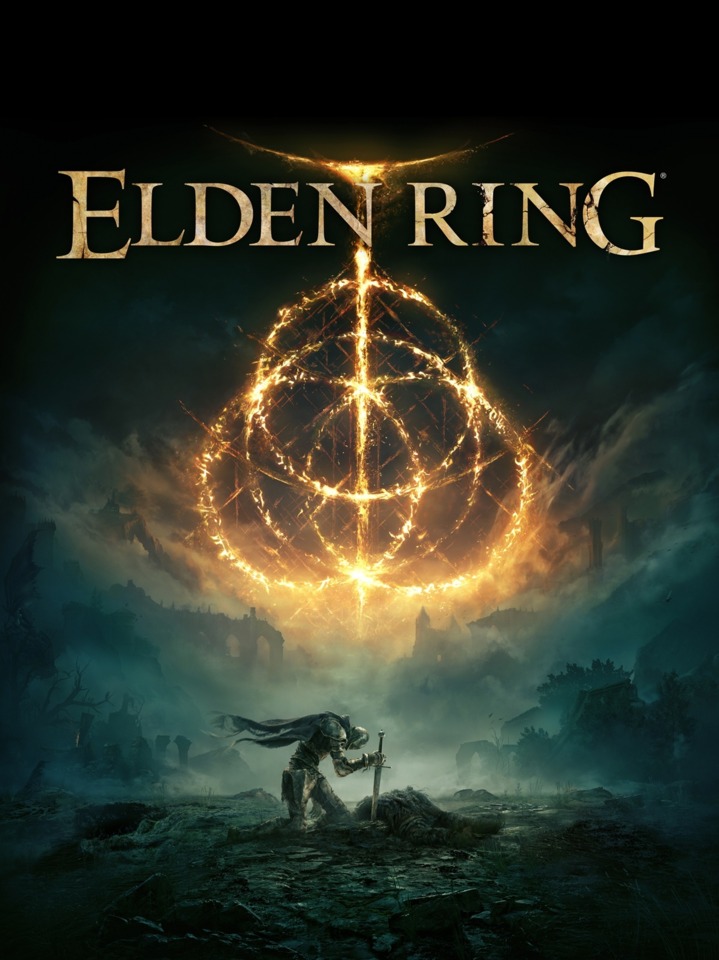
I wrote about why I struggled to really love this game in a piece which can be found here: https://bit.ly/3XayPEa This is the game I have the most reservations about on my list. Elden Ring is a fun, blockbuster epic with some terrific combat that ultimately doesn‘t add anything specific or new to a formula From Software mastered a decade ago. It’s more Souls, with lesser payoffs, over a very (very!) extended period of time. The scale of Elden Ring is incredible, but most of what I loved about past Souls games, while still alive and well here, has been diluted. You 'get' something in placing the Souls game in the context of an open world, but I think you lose a lot by designing a game this way, too. You lose specificity. When From Software fully has their hands on the steering wheel, you get Anor Londo. Anor Londo is a game-space in which literally every surface feels like it anticipates your presence. It’s a video game space with no ‘dead air,’ so to speak, where every moment of play is either presenting you with important information or an interesting challenge of some kind. You also get the universality of players slamming into a brick wall once they hit Orenstein and Smaug. Ask literally anyone who has played Dark Souls up through Anor Londo, and you can sit there and have a long conversation about Orenstein and Smaug, because the difficulty ramp up forces you to establish a relationship with those characters and that space. Maybe that’s a blunt force game design tactic, but it produces something that I think is meaningful, at least to me, about Souls games. When From Software eases their grip on that same general foundational game design, you get something more nebulous. You get a zillion iterations of encounters punctuated by big, authored moments; you get a dozen tree sentinel boss fights but only very rarely do you get, say, a Radahn. And I don’t think there’s really that much debate to be had about which of these experiences mean more, from both a narrative perspective but also from an individual experience perspective – everyone will end up with a strong feeling attached to the Radahn fight, because it’s excellent. Will anyone remember their fourth encounter with a Tree Sentinel? Their third fight with whatever the hell Christalians are? I’m obviously in the minority on this game, and I don’t want to harp on it too much considering I had a fun time with it, but ultimately this was maybe my biggest disappointment with a game this year. The discourse around Elden Ring, much like Breath of the Wild, had me convinced that Elden Ring had somehow evolved beyond the constraints of its genre, not that it had reconfigured its mechanics to better fit the conditions of the popular AAA game. I thought the series was going to start going for big swings narratively, too – hell, Washington Post’s Gene Park recently claimed on Twitter that it had the depth and complexity of James Joyce’s Ulysses, for Christmas’ sake. And it just doesn’t do any of these things. It doesn’t try to do any of these things, really. It's the same From Software game I already feel like I know.

If 2022 is the year of the GameBoy Advance renaissance, then I would nominate Floppy Knights as the herald of its arrival. Unlike Teenage Mutant Ninja Turtles: Shredder’s Revenge, would put a new coat of paint over the GBA games that *were,* Floppy Knights makes the GBA game that *should have been.* It’s a clever mix of popular contemporary genres, its blend of card play and tactics combat is at that Slay the Spire-level of synthesis between accessibility, depth and challenge. It is a perfectly executed version of itself.

At a glance, Beacon Pines feels derivative of indie classic Night in the Woods – it's got animal folks, explicit anti-corporate politics, lots of scenes in which you hang out with your buddies – but it’s very much its own, distinct game. Beacon Pines might match Night in the Woods in some of its broader themes and sometimes even in its tone, it’s got its own big ideas to explore, too, thanks to a storybook framing device which turns the whole thing into a meta-narrative about how stories are told. If you’ve ever seen the original 1970’s Superman movie, it’s kind of like that, weirdly enough. By the end, the player’s relationship to the story’s narrator ends up feeling more important than the events of the plot. In Beacon Pines, the player’s primary method of narrative choice comes in the form of verbs – not, like, verbs as game mechanics available to the player but actual, literal verbs which the player collects throughout the story and deploys, mad-libs style, during crucial moments. A scene in which the protagonist is being pursued by someone might allow the player to pick between “hide,” “fight” or “flee” for example, at which point the story will branch in a different direction. It sounds more straightforward than it is, as certain words necessary to achieve the ‘best’ ending are only discoverable when the player earns a ‘bad’ ending; the only way to see the best possible outcome of events in this story is to experience every possible catastrophe that would’ve occurred along the way. As a result, Beacon Pines feels more like a game about editing – or, maybe better yet, playtesting – than it feels like a game about writing. The idea that there is a ‘perfect’ ending for its characters comes as a foregone conclusion. I don’t feel like Beacon Pines comes to a strong or distinct enough conclusion about how to end a story, but I really like the general tone of the writing, and the high concept mechanic is fun.
