
Disclaimers about time spent are there to indicate that items lower on the list aren't necessarily bad - I just only got to explore them for a little bit.
The top 7 games on this list would be game of the year in almost any other year I've played video games.
Showing 1-10 of 53 items

Night in the Woods is about a twenty year old named Mae who lives with her parents in an economically depressed rust-belt town. Locals discuss the upcoming Smelters game outside a dive bar. You can't walk two blocks without passing a handful of shuttered local businesses and a war memorial or two. Mae doesn't have a job, isn't sure where she's headed, and spends her free time playing bass in her friends' band, an activity that manifests itself as a mini game with a rock band-style note chart. Early on she gets too drunk at a party and embarrasses herself in front of her ex. I can't tell if I'm talking about a memory or a video game at this point. Night in the Woods has personally targeted me, which is unfair. It's very good.

One of the most perfect examples of video game escapism ever made, Yakuza 0 is a veritable parade of dramatic twists, betrayals, vicious fist fighting, unbelievably tone-perfect comedy, and pure style. So few games are *as much game* as Yakuza 0. What would suffice in other series' as mini-games or distractions are fully evolved campaigns in this game. You can engage in slot car racing, real estate management, bowling, speed-dating, nightclub management, and more. All of these side quests go so far beyond the expected, and all of them feature strong characters and plot twists all on their own. The plot itself is the real highlight. It's full of evil monologuing, insanely complicated character motivations and lengthy ruminations on the nature of life. It collapses in on itself more than a few times, but even a 90% success rate means Yakuza 0 is honest-to-God captivating for like 50 hours of story.

Observer is one of the most rewarding narratives in video games this year. First, speaking about it purely on a genre level, it does something wonderful I've not seen before. Have you ever been watching a sci-fi film and wandered what the grimier, more intricate aspects of the world look like? When I rewatched the Star Wars movies in high school, I couldn't help but start asking questions - is there really no political or cultural pushback to giving unlimited agency to a group of people belonging to a religion some people don't even appear to know exists? Does cross-species procreation occur in the Star Wars Universe? Are there ever anti-empire political protests? Is there broadcast news, even? There's all kinds of fan fiction and expanded universe text about these exact topics, I would imagine, but the movies are totally disinterested in exploring the nature of their world design. They build it, and let your imagination do whatever it wants later. Observer, on the other hand, introduces you slowly to the concept of Observers, and then just builds and builds and builds on the concept. Observers can plug into a person's mind if they have, uh... 'brain tech enhancements' (or whatever) to experience their memories. They do so in order to solve or prevent crimes. This raises a few questions, right? Does it work if the person is dead or dying, and if so, what does that look like? Observer has an answer. What about if someone is plugged into a virtual reality machine and falls unconscious? There's an answer here, too. What if I brain hack two different people who share memories together? Would they be different? Well, yeah, duh. What if the person doesn't have any magical brain technology - and why would or wouldn't they? Poke around Observer's pigeon-poop spotted apartment complex and you'll find a woman in this exact circumstance. Observer is never content to simply establish and then execute on its science fiction. It is constantly twisting, manipulating or deconstructing itself. Part of the fun of being a fan of science fiction is to poke at the genre's constraints, but unlike most of its contemporaries, Observer is actually ahead of its audience. Observer is also more than yet another well-structured sci-fi horror yarn. There are a lot of anti-corporate sci fi stories in the world (and, truth be told, on this list), but Observer is most interested in exploring the lives of average people who enable the system by existing comfortably within it. Lazarski, our protagonist, became an Observer for the sake of his family and livelihood. He hates what he does, and he hates what he's become, but he also feels like going against the grain is impossible. A megacorporation called Chiron literally owns Poland, where the story is set. The alternative to working for or with Chiron is destitution. It is what it is. Lazarski's son, we quickly learn, feels differently. He has a paperback copy of Orwell's 1984 in his shitty apartment, and his email is full of revolutionary protest talk. He's better equipped intellectually to deal with Chiron's tech than his father - who is now partially composed of said tech - and he's attempted to do anything he can to subvert the company's power. This dynamic should be familiar to just about any millennial that has a parental relationship with a boomer. Lazarski's generation accepted a world owned by Chiron; he is their unhappy but willing tool for control. His son inherits that world, has less agency within it, and tries to improve it anyway - at a potentially severe cost. It hits close to home in some ways. Observer builds a world in which people literally and figuratively sell as much of themselves to companies to live a miserable, impoverished life. That or they give everything, forego their free will, and accept a life of corporate branding that oils the gears of the machine that put them in their dystopia in the first place. Observer does all this by telling a story set in a single apartment complex. I haven't even gotten around to the game as a surreal psychological horror-thriller, which is its defining quality. Observer is goooood.
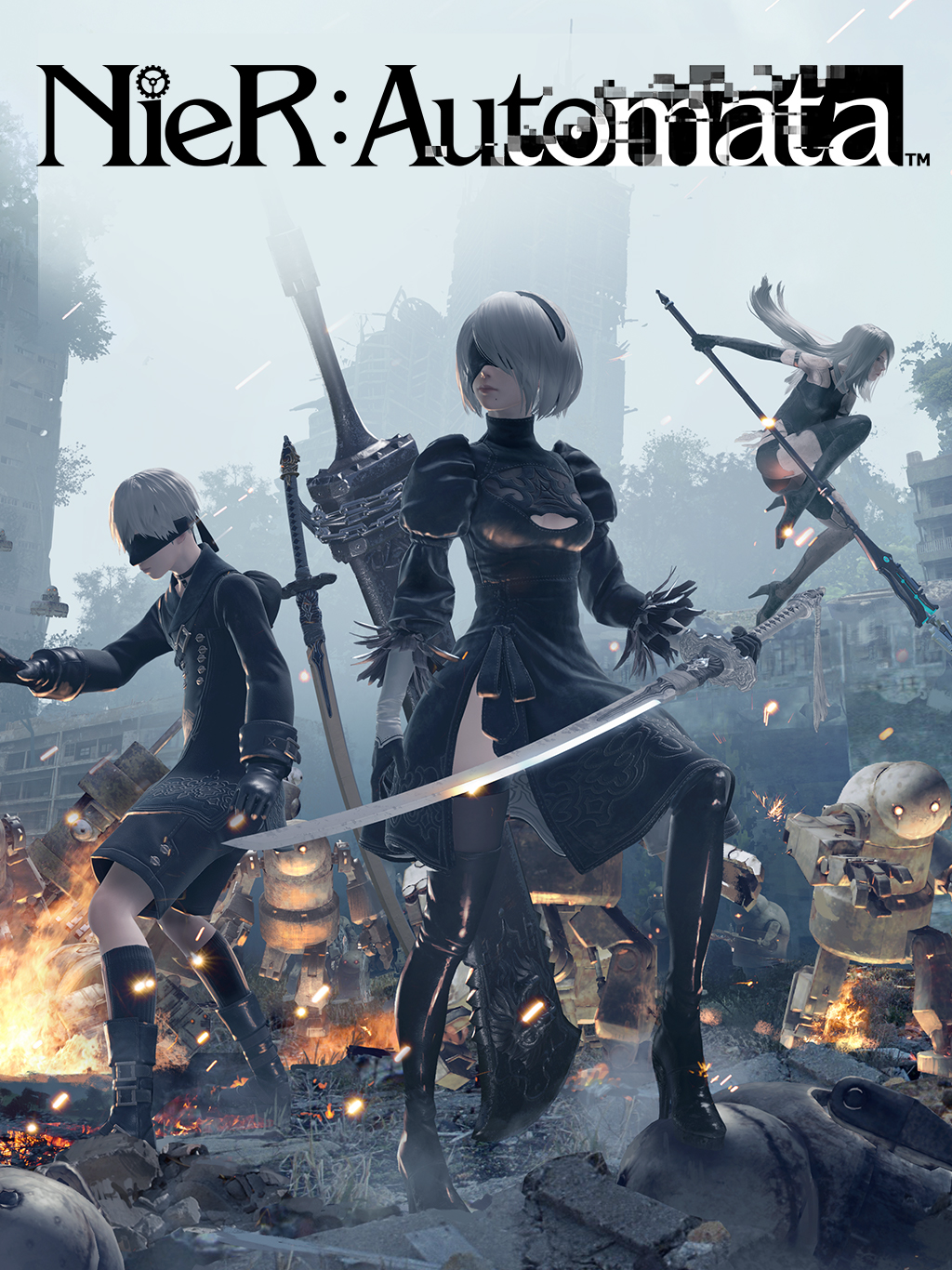
***SPOILERS FOR NieR:Automata BELOW*** NieR:Automata hit the gaming press like a spiritual epiphany back in 2017, and I had extremely high expectations for it when I first tried it in 2020. Unlike almost any other game I've ever played, I left Automata both speechless AND emotionless. After years of anticipation, after all the dizzying plot twists, after the truly wild climactic bullet-hell credits sequence, I found myself shrugging my shoulders. Huh - I guess that was it! Yet, I couldn't bring myself to litigate my feelings on Automata's thematic whirlwind or its often-slippery/sloppy melee combat. It felt like the kind of game I needed to mull over for a while before I could internalize my own feelings on it, let alone putting those feelings into words. I spent exactly one year doing so - and I mean *exactly* one year. I began playing the game in early March of 2020, completed it by the end of the month, and then began it again in March 2021, finishing it this time in April of 2021. Lo and behold, I think I 'get' Automata now and I think it fuckin' rocks. My inability to process Automata is the result of three factors: 1. The game doesn't treat its plot revelations as distinctly important events in the way other games do, and trivial events are given as much or more focus than the thematically relevant aspects of the text, which gives Automata's pacing a monotonous texture on a first playthrough. We spend a great deal of time experiencing and re-experiencing the big Kaiju battle, for example, but many of the game's most damning late-game revelations are buried in a menu on the pause screen. The characters don't always directly react to these revelations, either. This would be fine in pretty much any game, but Automata is an open world action-rpg with dozens and dozens of time-waster sidequests which will take many hours in comparison to the big plot beats' comparatively miniscule screen time. 2. Automata doesn't mind wasting the players' time. The game's map is dense with side content that's often time-consuming busywork framed by a couple of minutes of great writing. Worse, even after a second playthrough, starting the game the second time as 9S is a huge bummer. I'd say about a third (or less) of the new content in the second playthrough is essential to fully comprehending Automata's story, but many of the repeat sequences play the same way a second time as the first, but with a couple of interstitials thrown in to give greater context to the boss characters. You'll spend at least a dozen hours on that second playthrough - it really sucks the wind out of the game's pacing to complete 12 hours of near-identical gameplay to the first act for the payoff a minute-and-a-half interstitial video. The interstitials are good! But the new content should occur either more quickly or more frequently. 3. Automata's character designs, while phenomenal in the abstract, are off-putting in practice. 2B's costume is designed in such a way that you're constantly getting upskirts as you play, and her panties are fully (hilariously) visible in dramatic and even tragic sequences. I love the anachronistic goth look, don't get me wrong, but the creepy fixation on objectifying 2B is hilariously brazen at best and straight up gross at worst. Both outcomes lessen the quality of the text. I'm still hundup with factors two and three, but with a comprehensive understanding of Automata's text, I find it a whole lot easier to put these things aside in favor of the game's better qualities. NieR is a series in which only the worst possible outcomes of an action can occur. The only silver linings in Automata's story are just that - optimistic people finding the only good they can in the worst possible scenarios. Automata is very much *about* these silver linings. The decay, betrayal, nihilism, bigotry, violence and various existential crises are battering rams chipping away at everyone's resolve, yet, crucially, we find the survivors' of NieR's punishment left standing at the end of the day. Still, you really can't understate what an enormous psychological head-fuck Automata is. The extreme existential despair in the game is wearying, catastrophic to the point of evoking 'can't look away from the car crash' response to certain characters' monologues. We learn at the end of Automata that the entire cast and their militant robotic opponents are not only genociding each other for no reason, but that the severe length of their war and the depletion of resources means that both sides are functionally identical. No one even understands why anything that's happening is happening anymore, but because both sides are artificial beings designed only to fight, living for nothing and dying for nothing begin to feel indistinct from one another. Even though I quite like Automata's central story, it's the individual sequences and characters that make the game special. Automata is very much a game you enjoy most after the fact, once you've attained a language to decode the complex plotting and thematic relevance of each sequence (hence the multiple 'routes'/'endings'). Each of Automata's locales represents a distinct school of thought on what meaning humanity finds in an existence with no explicit goal or purpose via the emulation of machines. These concepts are escalated to a ridiculous conclusion because the machines lack the proper context to understand what led humanity to these conclusions in the first place. We find an amusement park full of weapons of war which now shoot balloons rather than bullets in the name of entertainment. But what IS entertainment? To machines, it is the declaration of 'I'm having fun!' in opposition to 'I am at war.' The 'entertainment' machines become accidental conscientious objectors to war during a side quest in which a parade becomes a sort of unwitting protest to war. But the machines can't conceptualize a world beyond their design, so a life of 'entertainment' can only be achieved as an aesthetic. They still march and shoot guns - the bullets are just balloons this time. These pastiches of human behavior vary from brilliant to straightforward parody, but they always force the player to frame their own definition of purpose against the game's portrayal of artifice. Just like Automata's androids have to reckon with the fact that the machine's chaotic interpretation of individuality intersects with their own, so does the player. This is the reason why the machine's interpretation of religion is the last machine 'society' we see. The machines apply logic to an inherently illogical concept, and arrive at bizarre but logically consistent outcomes. To be 'as God intended' is to be 'like God,' and to be in heaven is to exist alongside God. Therefore, to die is to become a god, and any other pursuit is therefore of little import. To the machines, murder is a sort of kindness towards others. Automata is not only a game about questioning life's 'purpose,' as it were, but moreso a game about how it feels to *doubt* purpose. It's about falling on the wrong end of an existential crises. But Automata isn't a nihilistic game by any measure - it's a game *about* nihilism itself, and how one can arrive at nihilism as a poor but legitimate philosophical outcome to life's punishments. Like any great text, NieR:Automata doesn't just ask big questions but also answers them. If life's ambiguity and society's cruelty robs existence of its intrinsic purpose, but we're also driven to find that purpose regardless - wouldn't it be better to hope against hope to find that purpose? After Automata's credits roll, the three protagonists are re-created exactly as they were before they were destroyed - when they awake, it's likely they'll find themselves in a scrap heap all over again. But the possibility that they'll find a resolution to their endless conflic and build something worthwhile *still exists.* If a meaningful life (or, for the characters in Automata, simply a conflict-free life) is technically possible, it would be better to try, try and try again than to resign one's self to the machinations of society, no matter how slim hope becomes.

Like every other Arkane title, Prey is brimming with good ideas, transcends its lesser qualities to produce spectacular moments of player expression, mood, and discovery, but is also powered by the rusty machinery of other, more ambitious games that were stunning - a decade ago. To dismiss Prey as a Bioshock rip-off is too reductive, and it also fails to address what makes it a frustrating game generally: it yanks most of Irrational Games' design straight out of Rapture, but it does so haphazardly and without purpose. Yet, Prey also *exceeds* Bioshock's ambitions at times, establishing a metanarrative of ethics and identity that extend from player, to player proxy, to player proxy's *proxy*, and further down still. It is a daring, unsettling sci-fi horror yarn encased in an, uh, shock schlock shell, and regardless of my various hangups with it generally has stuck around in my head much, much longer than most other games.

Here's a weird sentence: Doki Doki Literature Club is one of the most constructive fictional texts about mental illness I've ever experienced. This game has a total grip on me. It's been years since I've found myself so obsessed with a game, or really with any story in any medium. I am shellshocked by its existence. I don't want to give away anything about what lies beneath this...fuckin nightmare thing, because if you've ended up here in my weird sub-corner of this weird corner of the internet and don't know about it, I would hate to be the person to give it away. So I'll just say this: If you choose to romance Yuri by ignoring Monika's advice, there's a moment where Yuri hurries all the characters out of the room so you can be alone with her. Right when she's at the door, Monika turns to look you in the eye and smiles. I'll do my best to quote what she says from memory: "Yuri is such a nice girl. I hope you enjoy your time together." That line produced a pit in my stomach. I have never felt such a visceral sense of dread in a game before. I didn't progress the game right away, I just sat there. I knew what buttoning through that text would mean and I was not ready.

No game in recent memory is as prescient as The New Colossus. In a year where America was greeted each morning by flagrant assaults on common decency, freedom of democracy, freedom of the press and a stunning resurgence of American fascism, The New Colossus was one of the only pieces of entertainment to turn to that was just as keyed in as those of us keeping up with the news. It was paying attention and it was angry. The New Colossus also got me thinking quite a bit about the nature of the action hero. Quentin Tarentino did something to the genre film that has had a cascading effect on all other instances of mass media entertainment. I feel like every action film post-Pulp Fiction/Kill Bill was simultaneously over-indulgent in terms of gore and a deconstruction of action movie heroes. Games adopted this narrative tick for a while, too. While I like a lot of Tarentino's methods, most of his narratives ultimately collapse into meta analyses of filmmaking and film iconography. Death Proof, for example, probably really got you thinking about why we celebrate the kinds of '70s filmic anti-heroes that we do, but the conversation stops there, and his films rarely try at a pointed social statement. Is the action genre really limited to black-and-white hero villain narratives and commentary about itself? The New Colossus is, instead, something different. BJ Blazkowicz is an uncomplicated protagonist: he is a big, burly American dude who lives to shoot nazis in the face. That's his initial A to Z. The world BJ inhabits, on the other hand, is *tremendously* complicated. Contrary to his own assessment of his fascist antagonists, the nazis aren't monsters - they're men and women who made a choice, and they don't always look like a big scary dude with a shaved head and a swastika tattoo. Besides being utterly mind blowing as a story-driven action game, The New Colossus is arguably the sharpest and most direct instance of political commentary in video game history. There is a scene involving an...extraordinary? I guess is the word? depiction of a famous historical figure that sickened me so much I literally dropped my controller. And that character was only the second most vicious depiction of an important political figure in that scene. Seriously. This is a game in which your very pregnant wife more or less tells you "hey BJ, there's Nazis on Venus so let's go to space and stop that, don't worry I kidnapped a famous actor who was taking a trip up there to play you in a major motion picture so let's get in a UFO and get to murdering" and that is the *least* insane thing about the upcoming level.
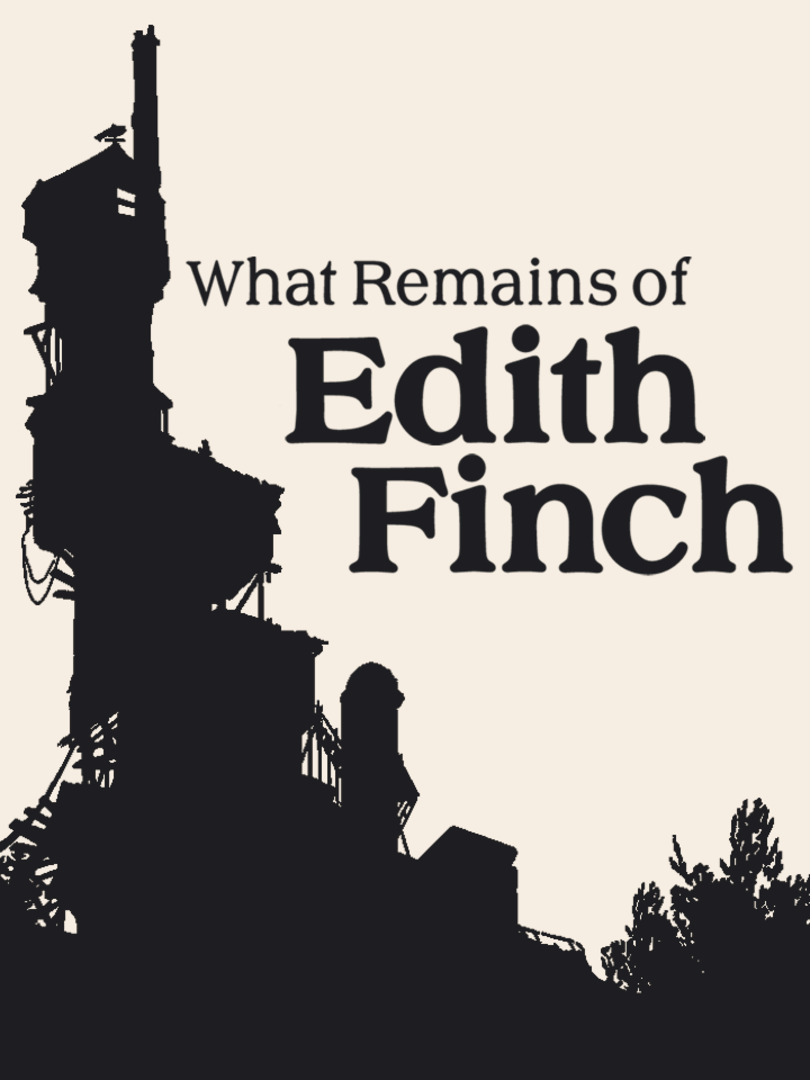
What Remains of Edith Finch is a gorgeous exploration of fate, and how we allow those closest to us to define who we are, for better and worse. It's about cleaning the dust off of your heritage and taking a long and critical look at where you come from. Edith Finch is like a collection of short stories from an impossible memoir. There were so many moment in it where I couldn't believe what I was seeing, or what the game was having me do. I wanted to take a long walk after each family member revealed their final moments, but instead I sat still and played through everything in a single sitting.

The Evil Within 2 is a shockingly accessible sequel to an infamously obtuse horror opus. It keeps the core concepts of The Evil Within but smooths out its jagged edges - mechanics I enjoyed in that game only came together for me after hours of what felt like a battle against the game itself, but here in the sequel, every action and consequence feels intuitive. Same goes for plot: although The Evil Within 2 is stuffed with mysteries and seemingly inexplicable imagery, all of it is competently decoded in the story's latter half. Funnily enough, that's my one knock against it. If there's one thing I really loved about The Evil Within, it's that the barrage of evocative but indiscernible horror throughout had just the right stuttered pace and hazy logic to recreate the feel of being awake in a nightmare. The Evil Within 2, while creative and intelligent, feels like it pulls its punches. For a game set in a collective dream, it feels far too knowable. That's just the story, though - the gameplay in The Evil Within 2 is a huge leap ahead of its progenitor. If you've got the patience for it, I'd recommend sticking with the 'Nightmare' difficulty mode. Every single resource and mechanic comes into play, and the tiniest enemy encounters can have an extreme impact on the tools/bullets you have available for later. I don't know that The Evil Within 2 is always scary, but ratcheted up like that it's *thrilling.*

There are quite a few indies these days which gameplay consists of using a fictional text messaging app and little else, but if nothing else, Bury me, my love is surely the best of them. The game follows a Syrian refugee as she emigrates from the company to arrive somewhere, anywhere, that will allow her to live her life away from war. The player is cast in the role of her husband, who provides remote support via a non-branded What's App-like. The only conversational medium more sterile than texting is email, but the writing of this title is really sharp. It would be difficult to create tension this way, I think, via a choose your own adventure-style multiple choice branching narrative that occurs over a fake cell phone app, but The Pixel Hunt turn the shoddy, impersonal nature of texts into an effective narrative tool. There are moments in Bury me, my love in which the stakes feel incredibly high, and the dinky 'whoosh' of the text arrival/send sound, the pregnant ellipses indicating a potential response, the pseudo-friendly corporate aesthetic of the app all drive home the desperation and lack of safety net these characters ultimately have. Bury me, my love viscerally imparts the feeling of desperation of a refugee, of what it means to flee from the place you call 'home.' As someone who lives in the US, media coverage of the Syrian refugee crisis only gives you a window into the abstract, mass action that is 'many people need to get out of here to survive.' To see it from the eyes of a person under threat because of it, even a fictional person, is moving and terrifying.