
2010 is arguably the year in which indie games and AAA titles finally met eye to eye. Thanks to a new console marketplace infrastructure and the proliferation of smartphones, the gaming market got *confusing.* This was one of the final years in which AAAs could conceivably take obvious risks, and the low cost of indie development paired with an uptick in fascination with small games for specific player-bases essentially murdered any game that fit inbetween.
For me, 2010 was a tumultuous year in which my day to day had changed drastically, more drastically than it ever had. I was at the height of my social anxiety and was in circumstances completely unfamiliar to me.
I had certainly devoured games when I could, but much of the reason there are so many titles in this list I have no natural interest in stem from the fact that I was constantly grasping at the familiar. While that mostly translates to 'I played a lot of long games I normally wouldn't have found time for' it also sometimes meant 'I'm going to play the entirety of Surviving High School for no reason at all.'
Showing 1-10 of 63 items

Mass Effect 2 fulfills nearly every sci-fi video game fantasy I've ever had. The clever mix of Star Wars adventure, Star Trek politicking and retro-future technobabble has been refined to the point of perfection. I love the original Mass Effect, but exploring that game's vast, heartwarmingly nerdy universe required the player look past some things - a hilariously old fashioned elevator that masks loading screens, for example, or a hub world only navigable via the protagonist's sloth-like, geriatric jog. Mass Effect 2 just gets you straight there. Every time you think you've experienced a peak, Mass Effect 2 shoots you over to something else unbelievable. You've barely finished defending your crew mate in space court before your faking a bomb threat to a janitor to spoil a political assassination. But then, maybe you didn't do that. Maybe you didn't defend that crew mate in that court case, because maybe you felt she was being dishonest - and that currying favor with her species' military elite was more important than maintaining a personal relationship. Maybe you didn't succeed in stopping that assassination, and are now tied indirectly to its aftermath. Mass Effect 3 would go on to reduce the series' bigger narrative choices to binary states, but the little moments in 2, the ones that only earn themselves a brief comment in the sequel, feel like they matter here. Everything in Mass Effect 2 (and by extension of the carry-over save system, the entire franchise) culminates in an hour and a half-long suicide mission, in which major characters all are at risk. Despite the fact that the tactical choices asked of the player are extremely straightforward, the fact that I was unable to handle an escalating conflict between two important members of my crew meant that I lost an *extremely* important character. I saw that character catch a bullet - they jolted, blinked and collapsed on the ground beside me. I saw past them to a moment I knew would be coming in the next game, in which I knew beyond a shadow of a doubt their presence would be essential to mitigate a galactic-scale conflict which would now render an entire species unto ruin.

Amnesia: The Dark Descent is one of the best - maybe THE best adaptation of a major author's works in video games. I'm no scholar on him, but I've read a pretty decent chunk of H. P. Lovecraft's work, and of all the many adaptations of his general aesthetic, no video game, movie or television show - even the ones which are *literal* adaptations of specific works - come anywhere near replicating the feel and motivating fear that drives his work in the way that the Dark Descent does. And it does so without the rampant racism and self-absorption inherent to all other adaptations of his work, which is a plus. The Dark Descent is also the scariest game I've ever played. There are some people who are - as you do on the internet - lashing back at the perception that Amnesia is the Ultimate Horror Game or whatever, but...I don't know, man. I have played a lot of horror games that remove agency from the player, but none that have displayed such a fundamental understanding of why that shadow in the corner of your eye is so unsettling, why the potential of danger is almost more important than depicting something actually dangerous. This is such an intense game to play that it almost feels cruel, and yet the quality of storytelling and environmental design in it is so high that pushing past that fear is absolutely worth it. The Dark Descent earns its reputation in a way that the relatively slim (pun intended) narrative offerings of Slender, the other internet horror phenom of the era, did not.
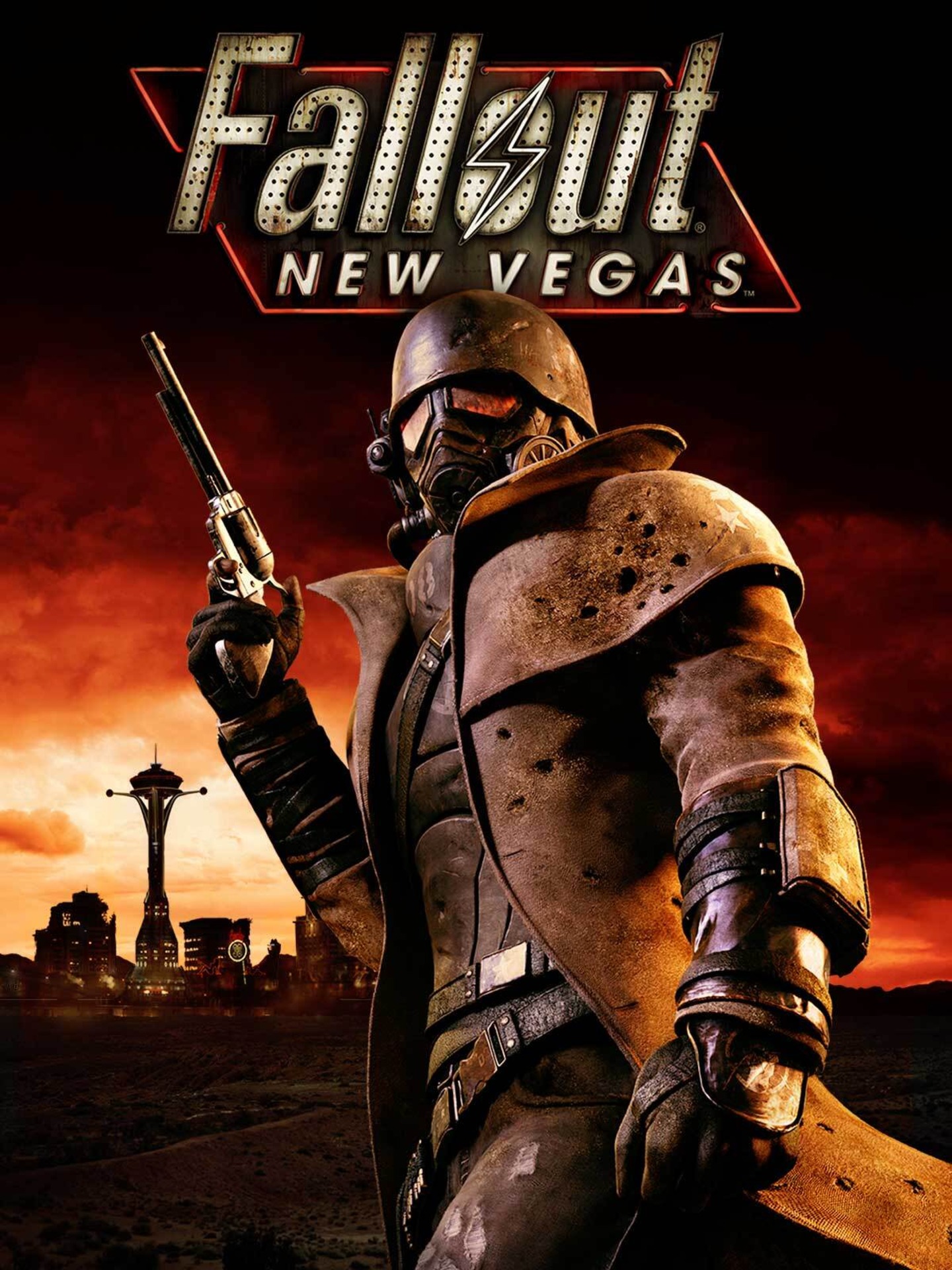
Shoving Obsidian's original stab at making Fallout 3 into Bethesda's engine makes the game feel a bit like a reanimated corpse. Nothing ever feels quite right in the Mojave, which is so overcrowded with gamblers, tech giants and military personnel it makes the concept of a 'wasteland' feel like either a joke or a prescient comment on Las Vegas' actual sociology. That said, Obsidian tightened up the non-VATS gunplay thanks to a new down-the-sights view as well as a greater variety of weapon types, and although Obsidian devs don't seem to have anywhere near as much fun as Bethesda with fun environmental storytelling, John R. Gonzalez and his team are frankly better screenwriters than anyone at Bethesda by quite a bit. Their cast of characters is just better. I just wish they weren't in this game. The core gameplay loop of exploration, combat and leveling borrowed from Fallout 3 is still fun, but the ability for the player to truly roleplay via a variety of dialogue choices isn't quite the same - for a game as dense with expository dialogue as New Vegas is, there are so many times in which you're given only one dialogue response in conversation with an NPC, and most of the dialogue available to the player is dry and flavorless. A few of the bigger mechanics from the last game are back too, but for no apparent reason - the binary morality system from 3 returns in New Vegas, for example, but it's buried in a menu and doesn't appear to have any kind of effect on the world. Additionally, while Bethesda is perfectly happy to let you go literally anywhere (within reason) on the map, even if it means getting permanently stuck in a hole halfway up a sheer cliff, Obsidian's New Vegas is a labyrinth of completely linear roads. That next quest objective might *look* like it's just ahead, but in reality all of the impassable paths and un-climbable mountains might mean you're nowhere near it. Worst of all, New Vegas' load times are atrocious and frequent. Even if you don't mind the limited player expression and lack of exploration, just turning in quests can take an abominably long time, especially if the quest giver is in a building (which requires a load) that itself is inside a compound (which requires a separate load). But all the same, the story and characters in New Vegas don't fade out like in other series titles, including the lauded Fallout 1 and 2. New Vegas' roleplaying is thin at best in regards to the player character, but the political machinations of New Vegas' power players are a memorable bit of damning American satire. For all of my hang ups with the dry, trudge-y nature of the Mojave and the games butt-ugly visuals, the various factions of New Vegas and what they stand for are really fun and creative distillations of American power. I played this game when it came out in the fall of 2010, and I'm STILL thinking about them over a decade later. I love that New Vegas disallows for a true happy ending, unlike Bethesda's pluckier, more Star Wars-y take on the franchise. I might not like that Obsidian's wasteland is so teeming with civilian activity in comparison to the dire straits of Bethesda's Washington DC, but the power players in this story are grim, and so aligning with them naturally leads to a grim outcome. The Bethesda titles (particularly Fallout 4) are about framing your choices (regardless of their real ethical value) in the best possible light. New Vegas is more interested in the worst possible outcome. It's a better tone to strike for a series about the end of things, at least.

Deadly Premonition has a certain reputation on this website, and I'll happily admit I only discovered it thanks to the Endurance Run. I became low-key obsessed with it, in fact. When I picked it up for myself, I was surprised how different it felt to play than to watch. Swery 65's Lynchian opus is hilarious and broken, yes, but it's also intricate. Deadly Premonition gives you plenty of time inbetween its awful corridor shooting to just kind of live in its heavily filtered approximation of middle-American life. Despite the game's laboriously slow pace and heavily segmented play areas, there's some real creative charm to the characterization of the townsfolk. Many characters the game allows you to observe or spend time with are worth getting to know. I love the idea of being able to know, comprehensively, what each and every citizen of note in Greenvale is doing at 4 AM on a Wednesday. More than anything, Deadly Premonition works because Francis York Morgan works. He is Dale Cooper by way of a Japanese surrealist kaleidoscope. Deadly Premonition's utter and complete faith that the player will fall for his suave charm, coupled with the fact Francis York Morgan is, in fact, a huge doofus, creates a pleasantly discordant mania that makes for some compelling B-game storytelling.

I have this foggy (pun intended) memory of Alan Wake being the AAA title to save us from the 'video games are all about shooting people' stigma, and it certainly isn't that. Instead, Remedy leaned into their skill set by making a horror shooter with some surprisingly deep combat mechanics. I'm not sure I exactly *wanted* Alan Wake to be that, but I can confirm that I never wanted it to be something else in the moment, either. People like to clump Alan Wake in with all the other Twin Peaks inspired titles like Lone Survivor and Deadly Premonition, but it's actually so much closer in tone and scope to a Stephen King novel smashed into a Twilight Zone episode. It's a wonderful combo that imbibes its black and white B-movie horror with some sharp fangs. There are some incredible set piece moments in Alan Wake, too, including one memorable extended sequence in which you assist an aged classic rock band out of a mental health facility before using their stage to fight hoards of shadow demons to '80s guitar solos. High intensity sequences like that are then complimented by even better moments in which you're just exploring the small, woodland town of Bright Falls. The environments are detailed, full of character, and sport dozens of dumb collectibles and well-written NPCs to speak with. Speaking of collectibles, while Alan Wake has gotten a lot of flak for its reliance on padding game play by finding trivial items like furnaces or beer can pyramids, it also has one of the best collectibles in any video game. The protagonist's manuscript, which he can't remember having written and which seems to prophesize the future, is scattered throughout the world. Hunting through dead ends to forsee the future is kind of cool!

It's a shame that Digital: A Love Story can't resist the temptation to become a dramatic sci-fi thriller at the end, but I don't care. The tone at the heart of this game - it's got that particular sense of lonely interconnection the internet has granted us, that sense of a billion conversations occurring all at once in total silence, is captured perfectly. The internet is different now than the early iteration Christine Love recreates here, more deeply bisected by advertising and politics. There's obviously nostalgia at the heart of Digital: A Love Story, but that's not exactly all that drives it. Most of us have had a purely online friendship or relationship of some kind at one point or another. There's a sort of bittersweet impermanence to these relationships that Digital explores expertly.

Red Dead is not a perfect Western, but it does something important that a lot of the genre classics it's riffing off of don't: it gives the player cultural context for each disparate element of its gunslinger fantasy. To live out the life of John Marston as a surface level open world action game, the player would have to willfully ignore the effects of a brutally colonized America that pushes Native Americans into the fringes of an oppressive culture, or the dangerous charm of populist absolution. Even the most casual player, there only to raid towns and hunt wild animals will eventually be left to wonder whether or not the buffalo they've been firing at have continued to respawn. Racism runs its random, stupid course through Rockstar's fictional frontier but Red Dead, like many of its more classically minded filmic contemporaries, does not explore the reality of non-white American life. It does, at least, provide glimpses of systemic American carnage.
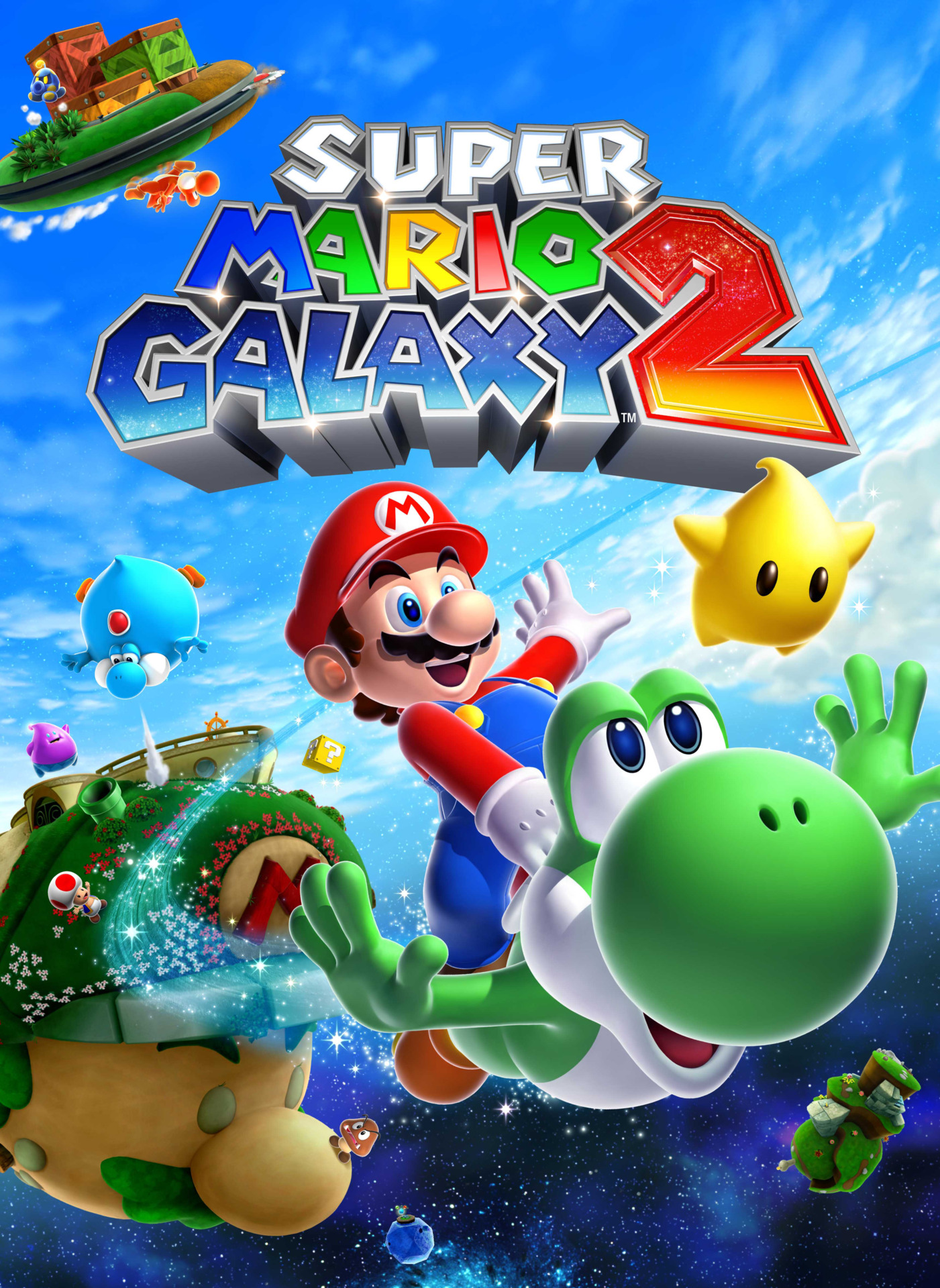
All the joy and wonder and whimsy of Super Mario Galaxy without any of the predictable Super Mario 64 hub structure to slow it down. Super Mario Galaxy 2 has a hundred brilliant ideas and it is in a hurry to show you *all of them* as quickly as it can.

Rock Band 3 is the most complete Rock Band (re: plastic rock party game) experience ever made. As a long time fan, there are a few lingering nitpicks I never managed to look past; namely, Rock Band 3 is clearly less concerned with satisfying fans looking for a challenge in favor of bringing in newer players. The soundtrack is somewhat heavily catered towards songs easily learn-able on its guitar teaching tool, and nearly all songs featuring the just-released keyboard peripheral were a bit of a slog on guitar. There's also just not a ton in the way of extra modes for the single player. All that said, I think Rock Band 3's soundtrack is really strong, if a little less surprising than its bolder, more reckless prequel and less classic feeling than the original. Still, there's a real sense that Harmonix really nailed their deep blue, stock photo model aesthetic and it is unquestionably the most complete entry in the entire series.

To play Limbo is to stand on the crooked vertex of a Disney adventure film and see its implied danger cast as a shadowed caricature of mortality at your feet. In the film, there is a boy who always *just* escapes the screeching car, or the hungry wolves, or the careening boulder - but, what if he stumbled?
