
by rjayb89
Out of the mainline series (I, VII, X-2, etc.) originally available on a home console (that means you’re out, Final Fantasy IV: The After Years, Crisis Core: Final Fantasy VII, and Final Fantasy XII: Revenant Wings) in as close to the original version as possible.
| Final Fantasy XIV: Endwalker | PC | December 10, 2021 |
| Final Fantasy XIV: Shadowbringers | PC | November 23, 2021 |
| Final Fantasy XIV: Stormblood | PC | October 28, 2021 |
| Final Fantasy V - (second completion) | PC | March 8, 2021 |
| Final Fantasy XII (The Zodiac Age) - (second completion) | PC | February 21, 2021 |
| Final Fantasy II (Origins) | PS | October 5, 2020 |
| Final Fantasy IV (PSP Remake) | PSP | September 24, 2020 |
| Final Fantasy (Origins) | PS | February 3, 2020 |
| Final Fantasy XIV: Heavensward | PC | December 30, 2019 |
| Final Fantasy III (Remake) | PC | December 7, 2019 |
| Final Fantasy VI | PS | November 30, 2019 |
| Final Fantasy VII - (second completion) | PS | September 27, 2019 |
| Final Fantasy XV | PC | March 30, 2018 |
| Final Fantasy XIV - (first impressions) | PC | May 8, 2017 |
| Final Fantasy IX | PS | April 22, 2015 |
| Final Fantasy V | PS | April 7, 2015 |
| Final Fantasy XIII-2 - (second completion) | PC | March 4, 2015 |
| Final Fantasy XIII - (second completion) | PC | October 23, 2014 |
| Final Fantasy X-2 - (second completion) | VITA | September 24, 2014 |
| Final Fantasy X - (second completion) | VITA | May 17, 2014 |
| Lightning Returns: Final Fantasy XIII | PS3 | February 22, 2014 |
| Final Fantasy XII | PS2 | November 25, 2013 |
| Final Fantasy VIII - (second completion) | PS | Mid-2013 |
| Final Fantasy XIII-2 | PS3 | September 30, 2012 |
| Final Fantasy XIII | PS3 | August 11, 2010 |
| Final Fantasy X | PS2 | “A bit after too long ago” |
| Final Fantasy X-2 | PS2 | “Too long ago” |
| Final Fantasy VII | PS | “A very long time ago” |
| Final Fantasy VIII | PS | N/A |
Showing 1-10 of 17 items

The ease with which I can break this game by simply avoiding battles as much as possible while stocking up on magic (Note: I understand why people don't like this) when I get the chance to essentially make myself more powerful amazes me. Despite that, this is the only Final Fantasy game which required multiple playthroughs from me to finally finish because, well, becoming overpowered by leveling is a JRPG mechanic I've come to expect to resort to in this type of game, but in the case of FFVIII, would ultimately become my downfall as monsters leveled with me and would tear me to shreds if I didn't use the junction system properly, which was very confusing to me the first time through. This game still, to date, is probably the most unforgiving and most broken Final Fantasy I've ever played, and I love it for that. Last completed: Mid-2013

With the release of the HD Remaster version came my excitement to play this game once again, especially with the addition of features that never officially transferred over to North America until now. While I haven’t spent too much time with those particulars, what I remembered of the game is still there like the puzzle rooms (referred to as Cloisters of Trials) that apparently have been imprinted into my mind for years and triggered a sort of nostalgic trauma that led me to question my current gaming finesse and logical leaps as I resorted to FAQs to get through them as quickly as possible despite their mundane simplicity after the fact. They weren’t difficult however, but some were annoying and definitely not what I was looking forward to when I played through this. Other than that, the battle system remains solid and continues to be one of my favorites of the series thus far. Surfacing turn order rather than relying on bars filling up, then inputting commands as quickly as possible is something I appreciate in my clearly old-timey ways. Regarding a certain character’s development, my suspicions that younger me thinking that Auron was cool was surprisingly not unfounded. A world-renowned figure whose past exploits are legendary yet assists another despite his knowledge of how ultimately futile a summoner's pilgrimage is and how corrupt the religious teachings are when all of it was for a short reprieve and the loss of two close friends on his part, whom he devotes the rest of his life fulfilling their wishes. His existence being “cool” not only misses the point, but is one of immense tragedy and hopelessness despite his stoic demeanor. Last completed: May 17, 2014 Previous entry: I ain't gonna lie, Final Fantasy X-2 was sought after before I even got this game, and I don't regret my teenage hormones one bit. While my judgement of these games may be clouded by the sheer time that has passed since last played, Final Fantasy X's intuitive battle system more than left an impression on me by becoming my most favorite of the Final Fantasy games I've played. Sure, it will probably come down to casting haste and watching your party members' turns shift up multiple times as the primary strategic mainstay, but in the end it wouldn't even matter as Tidus' dad would still wreck my shit. And that Auron guy was pretty cool, man. Last completed: A bit after too long ago

Note: Same entry is featured on Best of 2021 After playing through a majority of the game’s main story over mere weeks, seeing the latest expansion through in a matter of days was an exhausting yet thrilling experience. Actually getting into the game was a problem when login queues went up to nearly 6000 people waiting to get in during prime times, so sometimes it’d take hours to finally reach my turn, barring any random error popups. Once inside, however, everything was just peachy. Much of my expectations going in weren’t high considering the introduction of an antagonist’s destruction at any cost antics during the patch content leading up to the expansion but that soon resolved itself relatively quickly with even more questions and, eventually, satisfying answers. It was surprising that what I thought would make up the prime meat of the story was basically tossed aside, and not in a way that completely undoes the importance and ramifications of these preliminary, and sometimes (stealthily) stressful, events, but to serve a greater purpose in once again expanding what you thought you already knew into fulfilling revelatory moments by way of even more origin stories. While I may sound a bit flippant on that last part, Endwalker really makes strides in resolving and embracing the machinations put forth by a living world that’s only been getting better and better since it’s re-release in 2013. The many in-game recognitions of your player character’s altruistic head nods is all very smirk-worthy and somehow they made all of that relevant. Ultimately revealing your innate motivation for adventuring is a meta-move I can get behind even if it’s a bit silly. With one of the more questionable antagonists throughout much of the game’s lifespan, even with the much-deserved little screen time given this go-around, they made a massive impact and somehow made a forced rivalry into one for the ages thanks to a certain dialog choice. It’s bullshit, but I love it. Published: January 18, 2022 Previous entry (Final Fantasy XIV Online: A Realm Reborn): By removing the timer on the original free trial and allowing levelling and content up to a certain point, I decided to jump into my first Final Fantasy MMO. While I’ve been dismissive of ever playing either one of them in the past, I was excited to find something to casually commit to and fill up the time during the weeks leading up to Persona 5’s release. I’ve only heard good things since its re-release yet somehow I didn’t expect the quality of life improvements to make the game feel as welcoming and easy to get into as it is. First off, the last big MMOs I played was World of Warcraft circa 2007/2008 and Guild Wars 2 in 2015, so expecting the same thing by comparing this with those two shouldn’t be the case but, (un)fortunately, they’re my only reference points in one of my least favorite genres to play or even think about playing. From what I’ve gleaned, even with one character it seems you can be any class you want depending on whatever weapon you have equipped, which might not sound so mind-blowing to a regular player but to me I kinda couldn’t believe it. However, that novelty didn’t last for very long as I no longer have the desire to play the game. For the most part, the game did a good job funneling me into new areas without ever making me feel like I’m being bombarded with meaningless quests to do. However thin, there were a handful of narratives the game wanted to tell me and keep up with peppered with the usual kill and fetch quests for good measure. It helps that the world is based on Final Fantasy lore and so compared to something like Guild Wars 2, I was more invested in it thanks to the aesthetics, spell names, chocobos, etc., whereas in Guild Wars 2 I skipped every bit of story because who gives a fuck. All in all, it’s no surprise the game is actually considered to be doing well. It’s very easy to get into, it’s the least restrictive I’ve seen when it comes to class building. Perhaps it’s more important for those more serious into the game for dungeon raiding and the like with greater potential for specific racial traits, if that’s even what really sets the greatest from the rest. In any case, I don’t personally regard this favorably since, well, after looking back on my time with it, it was pretty boring. Published: May 8, 2017

Note: Larger entry featured on Best of 2014 While its most appealing aspect coming in is its time-restraining world-ending prophecy, the mere nature of it repelled me at the same time for making me think about how poorly I handle my own time. However, it's entirely manageable and was surprisingly the least of my worries as the combat proved to be challenging (even on easy) but very satisfying when it comes down to timing your guards and attacks in addition to the combat staple of the XIII trilogy of games, staggering your enemies as quickly as you can. While I strongly suspected that being inadequate with the battle system would be my folly, I didn't realize how much I would enjoy it as much as I did. And with the stoic delivery of opening taunts from Lightning made for some cheap laughs that I'll always remember. It was nice hearing from you again, Badass Liara. Last completed: February 22, 2014
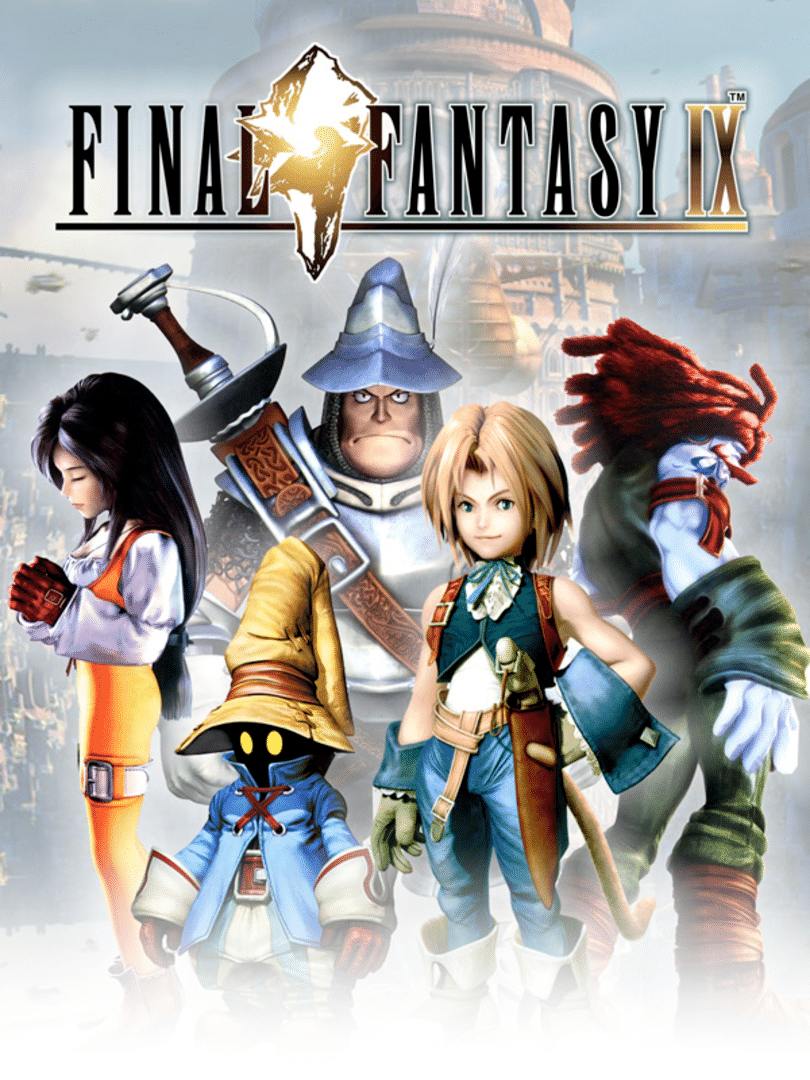
Aside from the mandatory card game tournament you must partake in and the cheap yet polite final boss, I found my time with the game surprisingly pleasant and engrossing despite my many years of avoiding it and believing that it wouldn’t be for me. Perhaps it was due to my friend’s behest that this was the best Final Fantasy compared to what I thought was (FFVIII) or the artstyle, which, by the end, neither of which surpassed either expectation but excelled in other aspects. What shouldn’t come as a surprise is how black mages are portrayed in the series. Fully robed with a wizard hat atop their gifted domes comes their typically inexplicable talent in what is called black magic. Vivi’s mysterious past and development throughout the game trumps all expectations that come with a legacy such as his, offensive magic that is revered and respected but the actions conducted by others like him struck fear in the citizens of those in the world of Gaia created a sense of reality in a fantastical world. Discrimination and the acceptance of one’s origins defined Vivi’s existence in an unfair world, much like our own. Other than that, I found the combination of equipment and the way to learn abilities through them easy to understand and emphasized that, for a majority of the game, as long as I was accruing Ability Points to learn abilities without specific equipment equipped it didn’t matter what I was wearing in battle and so the worry of being underleveled or under-equipped never struck me as the reason for any difficulty or frustration. It did, however, feel cumbersome as it made me spend more time than usual in menus comparing abilities learned or not. Shops, in this regard, would’ve been helpful had they more information of what abilities they offered but, alas, they did not. Last completed: April 22, 2015

With the rising excitement for the upcoming remake, I couldn’t pass up on playing this beloved classic again before it releases or, well, a part of it at least. Given my tepid writeup based on my long-standing grudge against Sephiroth, this time things couldn’t be more different as I completely obliterated him much to my belated surprise. Due to my carefully planned overpreparation, the fearsome damage I expected never even had the chance to come to light, much less suffer any of the forewarned status effects at his disposal when my final team makeup was relentless in giving the business, and fast. Determining my party’s strength through the flexibility and simplicity of the materia system made grinding a focused effort that was fun to gauge and follow through. This freedom also made every character viable, bar one, and easy to mold depending on classic archetypes like tank, support, and damage so the only thing that set each party member apart were their limit breaks. While figuring out the best limit break is easy, that didn’t sway my choosing of Vincent and Tifa for a majority of my playthrough. A “vampire” capable of assured critical damage and a little lady who settles things with her fists were my easy go-to. While the overarching plot starts off small and predictably snowballs into saving the entire planet from imminent destruction, the events in the first half felt promising along with the revelatory scenes peppered in the second left the biggest impression on me. Introductions to most characters weren’t shone in the greatest of light but under oppression, captivity, self-interest, depression and so on before being swallowed up by the main character’s identity crisis. Upon realizing this, it’s not surprising why Cloud is among the more popular franchise protagonists. In any case, I’m excited to see what’s to come in the remake. Last completed: September 27, 2019 Previous entry: Despite being regarded as the "best game ever" from people likely from my generation, I don't really remember much of it and obviously don't revere it as much as they do. I remember Sephiroth pulling some BS at the end and casting that meteor thing like 6 times on me since I was max level. Thanks, asshole. Last completed: A very long time ago

In the years since my first playthrough, my sole regret during my journey to complete the rest of the series was with how I treated this particular entry. It was the first 2D world I visited and presumed grinding was encouraged or even essential to this era of Final Fantasy games. While that remains true, I had taken away what I’ve come to embrace as the satisfying serenity and resulting payoff that’s synonymous with the genre. Instead of relying on someone else’s overpowered save, the time and effort I put into learning specific skills made me better appreciate how open-ended, and broken, the job system can be. Useful skills bolstered the viability of every job and made experimenting easy to conduct without being hampered like invoking a refractory period before they were fully capable like in FFIII or hard-set like in FFIV and FFVI. Prime among them were the ever useful dual-cast and dual-wield skills of which can effectively double damage output in one turn. Gaining levels wasn’t the only measurement needed to be overcome for success, however that didn’t change the fact that some bosses could be relentless with their barrages of attacks, sometimes leading to instant defeat if not properly prepared for. I forgot to mention in my previous entry that one boss soured my experience by being essentially an overly specific equipment check so for this time around I may have braced overmuch. What saved my bacon last time were accessories that basically made my party invincible during the fight while throwing all the unearned gil at it to go away. By familiarizing myself with the unchecked restraints of the job system, taking advantage wasn’t limited by questioning the possibilities but by how much I wanted to annihilate the opposition. Last completed: March 8, 2021 Previous entry: What is likely not going to be the last time I complain about this as I go through some of the older 2D Final Fantasy games: the combination of a high encounter rate and the fact that entering most battles are incurred randomly and unavoidable made for a very annoying experience despite my use of a save that allowed me to have every job available to me from the start and overpowered equipment in my inventory. However, that did not impact how intuitive and customizable the job system is. Allowing abilities learned through jobs to be able to function with other jobs made strategies seem limitless and, of course, inefficient in the long run. Finding that sweet spot for me meant utilizing a handful of beneficial spells and massive amounts of gold to take down nearly every enemy. It’s likely that I’m now a baby when it comes to difficulty in games, but a lot of enemies even within random battles could be pushovers and so in combination with the high encounter rate I mentioned earlier, it meant I would have to go into the menu to get my shit back together a lot. What is unfortunate about playing the PlayStation version of this game meant there would be loading screens between transitions in and out of battle and the main menu. They aren’t very long, maybe about 1-3 seconds tops, but they mount up. Just by looking at this game, you’d think it would be instantaneous, but nope, it was a disc-based game on the PlayStation and not a cartridge on the SNES. Another thing I will likely refer to should I finish my playthrough of Final Fantasy VI, which won’t be anytime soon. Anyway, what stood out to me, despite it not being a new concept, especially compared to newer entries in the franchise (Lightning Returns: Final Fantasy XIII currently), was how small the playable cast was. It made for a more personal story, at times silly considering the name of the main antagonist and a death scene that seems more parody than reality, and made it more than the save the world trope I expected this to primarily be, which it still was, of course. The characters alone are unremarkable, but even in 2D, their camaraderie was believable yet too convenient thanks to their parentage. Last completed: April 7, 2015

Note: Same entry is featured on Best New Old Games of 2019 After numerous false starts, deciding which version to play came down to convenience at the small expense of my sanity. Thanks to the PlayStation version, my greatest complaint revolves around its exclusive loading times, which may not sound like much but staring at a black screen for three seconds minimum while loading in and out of battles and menus felt like an eternity’s worth of time was lost. It’s hard not to think that that was enough to color my experience for the worse but the actual game does a great job at outweighing the bad with the good. While there may be a huge ensemble of characters to choose from and follow, settling on whom was best in combat seemed to favor those who could reliably output damage to multiple targets at zero cost. Otherwise, some party members’ distinct skills relied on luck to be effective thus rendering themselves useless in my eyes, however they were still appreciated even if some are merely different takes on blue mages. To put it simply, utilizing common fighting game inputs to do special attacks is just too cool of an opportunity to pass up in a Final Fantasy. Structurally, FFVI’s world can be split into two discrete narratives switching focus between former tools of the empire after a catastrophic event. The first half begins in generic JRPG fashion with an amnesiac character seeking a purpose before throwing out most conventions I expect from the series. There were some moments that felt more parody than not but at the same time a celebration, or possibly a farewell, to 2D Final Fantasy, which I especially felt during the ending sequence. However, one of my favorite takeaways has to be the emphasis on the origin and dangers of espers. How espers, or summons alternatively, are treated in this world reminds me of another time when an established series custom was foisted into the spotlight and expanded to unveil the inherent horrors of incredible power when harnessed for evil. Black mages in FFIX were written to this effect and remains as one of my favorite themes explored by the series to date. FFVI divulged experimentation and energy sources through entities called espers revealing the inumane cost for massive power. Last completed: November 30, 2019

My hopes to relive my past glory of one hundred-percenting Final Fantasy X-2 were doomed from the very beginning when I decided to use a guide to dictate my every action. Misinformation, poor instructions, and puns galore all made for a very frustrating return to what was once a beloved entry, but now one colored by my misjudged confidence in the guide’s author. Not even halfway through, I had wished I carried through with a hassle-free playthrough from the start, unshackled and free of any obligation to help everyone despite Yuna’s savant ego. Nonetheless, the guide did help me realize how much padding X-2 relied on. The shallow camaraderie between the members of the flying airship Celsius made for many awkward moments, intentional or not, between the multiple return trips to the locales of Spira. While the idea of a post-Final Fantasy X world was enticing, living the religious fallout after Sin’s destruction one small step at a time was anything but. Having the entire world open to exploration from the start allowed an aspect of easily accessible nonlinearity not many Final Fantasy games offer, but soon it made me realize how little consequence the rest of the world had not in the form of main quests, alternatively known as “Hotspots.” Areas not marked with a “Hotspots” tag were areas considered unimportant to the already paper-thin premise - is that "him"? Handing out balloons, calibrating lightning rods, and spying on friends bathing in hot springs are among the most exciting things you can do without treading on the main story, giving Dead or Alive: Paradise a run for its money on the side. The aforementioned guide was a relative godsend in this aspect as it listed items possibly worth excavating from each area until much later when every area wanted so much with the little payoff being some garment grid that was probably really good in retrospect, but damned if I cared if I had to memorize gil patterns or whatnot. This game's saving grace was its hectic fast-paced battle system, which is totally unlike the rest of a slog the game can be. Admittedly, ninety percent of the random encounters were beaten by holding down the X button on my end, but when shit hits the fan, it hits hard. Basic tactic is putting up defenses and letting things play out, switching dresspheres when necessary to lessen the impact of the next big attack about to be deployed and withstanding until victory. In that, the capability of delaying an enemy’s attack, not just by casting a spell, but by simply attacking has always been a sticking point on my enjoyment of the combat, even when the roles are reversed and I’m the one losing the chance to deal some damage. While that may not last long, the rigid fluidity of the combat has always amazed me. Last completed: September 24, 2014 Previous entry: Perhaps the second game in the series I ever played, after Final Fantasy VIII, and not only that it also follows in its footsteps in being quite ridiculous, not by its story like FFVIII's, but by its presentation (now that I remember, its story was pretty stupid, too). It could just be pure nostalgia on my part and its weird girl band-parody novelty it had going, but the battle system's departure from a distinctively turn-based one to a fast-paced action-based one just clicked with me from the very beginning to the very end when I 100%'d this game. Last completed: Too long ago

What got me excited to get back into this game was the ability to make Serah say the dumbest shit and while doing so make the others around her suffer from her apparent inanity, but was reluctant to experience the rest of what the game offers. However, upon finishing the game proper, I had forgotten how remarkable XIII-2’s antagonist was. While it isn’t a new concept in any regard, instead of having an antagonist who is evil for the sake of being evil, but one of vague noble intentions that would lead the entire world into chaos just to save one person. Or, more specifically, one soul he would protect and care for until her timely deaths in every era, repeatedly in his arms. An act he vows to rid of by creating a world where life and death are no more. The outcome of which doesn’t exactly pan out in the sequel, but nonetheless doesn’t come to pass as he had foreseen and for a moment things seem alright. Like I mentioned the last time I played through this, I was surprised by the ending despite numerous warnings of what could happen might happen yet discounted them due to the repeated conditioning my playing of Final Fantasy games have taught me: there’s always a happy ending. Last completed: March 4, 2015 Previous entry: To be honest, this game has no justifiable right in being so surprisingly good. But it was. With low expectations and disappointment coming in fresh from its prequel, retconning that game's ending only helped. The nonlinear nature of time-traveling, thus solving one of Final Fantasy XIII's problems (and in many ways that), and the inclusion of bizarre and utterly unimportant dialog choices made me feel like Square Enix recognized how popular they were in Western RPGs and implemented it half-assedly, similar to how Quantum Theory (I'm sure everyone knows about this game) implemented an active reload bar without actually, well, having an active reload mechanic, and all while straying from what I expected from them somehow gave me hope for them in return, especially with that rather surprising ending. Last completed: September 30, 2012