
by aggrocraig
Everyone else has already mentioned how much of a tire-fire 2016 has been. No need for me to repeat it. However, games were goddamn great this year, and this list actually came together pretty easily. I feel good about the whole list, and though I hate to leave some stuff off, there's not much I can do. HONORABLE MENTIONS: Oxenfree, HITMAN, Ratchet and Clank, King of Fighters XIV, Azure Striker Gunvolt 2
Showing 1-10 of 10 items

If you're reading this list from 10 to 1, which I recommend, it might be surprising that the games I've had such glowing things to say about lower on the page aren't my game of the year. Unfortunately for them, that honor for 2016 has to go to Superhot, which is a game that I like more the more I play it, watch others play it, and think about it. At its core, Superhot is a first-person puzzle game. You're dropped into a series of rooms full of enemies and you need to kill them all, but time only moves when you move. Because of this, you have time to plan out your actions and execute them perfectly, creating a long series of awesome action-movie scenes where you murder a ton of orange polygonal men with the greatest of ease. As a added bonus, each level ends with a replay of your actions at normal speed with the narrator endlessly repeating SUPER HOT SUPER HOT SUPER HOT, showing you the fruits of your many attempts in the form of one perfect, badass run. Especially with the later levels that took a bunch of tries to finish, seeing the final product was always satisfying. While the gameplay and puzzle design are top-notch, the thing that brings Superhot to the next level and makes it my favorite game of the year is its story. The levels are interspersed with trips into a fake computer OS where you start off talking to a friend about this cool game called superhot.exe that he/she found, but as you play things get more subversive and strange before throwing you headlong into an insane story about control and consciousness. The story and the gameplay feed into each other from level to level, and the interludes between stages get very impactful as the story kicks into gear. I don't want to speak too many specifics about where this game goes. If the concept interests you at all, you really should just download it and play. It's only roughly a three hour experience, but it's memorable. There's a special pantheon of puzzle games that I hold in especially high regard, like Braid and Portal. These games have the perfect combination of a strong base puzzle mechanic, explored to every logical conclusion through the game's progression, wrapped in a clever presentation and paired with a brilliant and subversive story that sticks with the player after the game's brief run is over. This year, that lofty group gained a new member in the form of Superhot. I wouldn't change a thing about this game, I loved every moment I played it. It seriously is the most innovative shooter I've played in years. If you haven't played it yet, check it out.

I could probably skip writing a long entry for Overwatch and just say this: Blizzard did what Blizzard does best once again. They took a well-worn genre, sanded every single rough edge off, and made it the best version of itself. Unfortunately for you, dear reader, I'm also going to talk your ear off about this damn thing because it's great. Overwatch rose out of the ashes of Project Titan, a long-in-development MMO from Blizzard that I never really cared about. Thankfully, given that I don't really play MMOs, that game's DNA ended up somewhere I'd actually cross paths with it. When Titan got cancelled, it seems like Blizzard took a look at TF2 and decided that they could do that whole thing better. They were right. It's legitimately stunning how much value comes out of the effort Blizzard puts into their games. The feel of the action is fresh and clean, no matter what character you pick, a fact made more impressive by the variety of different playstyles that the game offers. From a hulking hammer-wielder like Reinhardt to a jetpacking rocket monster like Pharah to a medic sniper like Ana, it's hard to look through the Overwatch roster and not find a character or two that suits your fancy. Helping with this decision is the strength of the character designs across the roster. These guys, gals, and robots are lovable as hell, as evidenced by the giant pile of headcanons and fanart that has stacked up around the game in the months since its release. Everybody I know who plays the game has their favorites, and I'm always trying to learn more characters so I can keep my experiences fresh. The same acumen and effort that went into the roster's design also went into making the maps, and it shows. Each map feels distinct and unique, and features multiple paths and options for teams to exploit, largely avoiding nasty chokepoints that can break up the flow of a match. Generally, if your team is banging its collective head against a location where the enemy team is holed up, there's another path you can use to get the drop on them. The map selection might be a bit lower in number than other games in the genre, but Blizzard has already added two since release and is showing no signs of stopping. I appreciate the game's general positive attitude towards the player, which shows through in how it highlights your performance. The game doesn't really care about KDR, rather giving attention to "eliminations," which roll up both kills and assists into one number. Because of this, dumb shit like "kill stealing" that can interrupt teamwork doesn't exist, and it makes everyone in the team rewarded for contributing rather than looking out for number one. At the end of a match, the game finds some players' performances to highlight, and again it's not just who killed the most dudes. Healing, blocking damage for teammates, even teleporting allies to the front lines can all be featured, and it feels great to have your accomplishments noticed by the game. On that same note, the Play of the Game feature is great for player morale. The feeling I got when I had my first Play of the Game is one I've never had in an online shooter before, largely because I tend to suck at them. Overwatch has managed to make a multiplayer FPS accessible and enjoyable to players beyond the normal audience for the genre, thanks to a combination of all of these factors. The visual style and character designs draw folks in because they're appealing on their face, and the gameplay having dimensions far beyond shooting a dude with an assault rifle allows a wider variety of different skillsets to be rewarded. I'm a pretty lousy shot, but if I hook a guy right next to me, it's hard to miss them (xoxo Roadhog.) There are plenty of very reasonable complaints that can be leveled against the random-draw blind loot boxes the game has, but overall I've enjoyed the loop of playing until I level up and opening the box I get as a reward, hoping to get new stuff. The addition of the Arcade puts more boxes in the mix every week, increasing your chances of getting new items, while also adding more modes to the game, like random heroes and 3v3 elimination. Now I have different queues to play depending on what I'm in the mood for, and the playerbase is big enough that the waits aren't too long. I legitimately thought I was going to make it to the grave without having a new "favorite online FPS" that wasn't Unreal Tournament 2004, but I'm happy to say that Overwatch has taken that crown in style. I've already sunk ~200 hours into this game, and I don't intend to stop anytime soon.

I loved Bravely Default. It was definitely a "warts and all" kind of thing, especially with the perplexing and total bullshit way that game wrapped up, but its take on the classic Final Fantasy job system was very appealing to me and I loved the character builds I was able to come up with. Bravely Second stacks an entire new set of jobs on top of the ones from the first game, while retaining all of the previous options as well. Sure, it takes some time to unlock them all, but you have so many possibilities available to you when designing your characters that it's ridiculous. I love the new jobs they added, both aesthetically and functionally. It's remarkable that a framework as well-tread as the general Final Fantasy battle system can be twisted and messed with as much as the various jobs in this game do, but they manage. The Wizard is a cool twist on the old magic system, the Patissier makes buffs and debuffs funnier by making them all pastry-based, and some of the late-game jobs open up ridiculous combat options that let you do some pretty wild shit. I would have been satisfied with the game if they had just added on to the gameplay and left the rest the same, but where Bravely Second won me over the most was with its writing and storytelling. JRPGs are typically pretty stoic and self-serious affairs, and Bravely Default definitely fit that mold to a T. However, Bravely Second recognizes something I wish more games, especially in this genre, did: it's okay to have fun once in a while, to laugh at your own genre tropes and have fun with them. Bravely Second has a lot of cast overlap with its predecessor, but the tone of the conversations that happen between them is so different that it would be easy to forget that many of the people are the same. These characters are a bunch of goofballs, and seeing them having ridiculous conversations with each other made me care about them more than any of the gravitas of the first game ever did. There's still plenty of trope-y stuff at play, but the clever writing goes a very long way to making the experience feel like more than just another JRPG. I won't get into spoiler territory, but some of the tricks the game pulls in its latter half are incredibly clever. It feels like the developers are acutely aware of what frustrated players about the first game and not only took steps to improve it, but also used that frustration to screw with the player's expectations in a genuinely fantastic way. No specifics, but this game contains my favorite moment of the year by far. If you've played it, you probably know what I'm talking about. Even in a year where I enjoyed where Final Fantasy is going in its newest incarnation, I can't help but get the warm fuzzies when the company nails the hell out of what made me love their games in the first place.

I might not have expected DOOM to be quite the disaster it seemed most people did, but I definitely didn't see this coming. I'm a sucker for first-person shooter single-player campaigns, which are in shorter and shorter supply these days as companies focus on multiplayer for a host of good reasons. Regardless, I'm always happy when a game's campaign gets proper attention, and id went above and beyond with the DOOM campaign in every way imaginable. The experience jumps off perfectly with that intro sequence that sets up the tone just right and doesn't let up until the end. The feel of the good old-fashioned demon murdering is spot-on, with all the different weapons feeling fun to use even as I developed my favorites (super shotgun, I'm looking at you.) Even better was the apparent design focus on flow that showed through in the combat: when you're low on health, you're encouraged to get in there and glory kill enemies to get health drops, while the chainsaw ensures you get more ammo if you're in need. The game never leaves you in a situation where you have to hide and take potshots, the best choice is always to run around and fuck up some demons. It's perfect for DOOM and it never got old. Wrapped around that perfect core action is some fun exploration of the campaign levels to find secrets and upgrades, and some mild weapon customization that I found just engaging enough, especially the way the game encouraged you to use each weapon to its max potential to unlock its final upgrade. It's almost like how weapon leveling in Ratchet and Clank got me to use more weapons. I love it when games do that. The game has fun boss fights too, something that feels damn-near absent in modern FPS campaigns. I loved Wolfenstein: The New Order as an example of excellence in FPS single-player, but DOOM came along and blew everything it did out of the water. I might have thought the game's ending was a bit lame, but I can't help but be excited at its naked sequel setup. Give me more DOOM.

I was 8 when Pokemon Red/Blue released, so I was pretty much the perfect age for the series to get its hooks in me deep. Sure enough, I've played every generation and watch the series evolve (or not) over its different incarnations, and Pokemon Sun/Moon feels like the designers have finally decided to take some big steps that they should have taken years ago. As a result, Pokemon Sun/Moon are, in my opinion, the best generation of Pokemon games to date. You were already wrong if you spit that same old "first gen best gen" line, but you're even more wrong now. The Alola region in which the game takes place is colorful, fun to explore, and full of good vibes. The ensemble cast of characters that accompany your mute, always-smiling tween on his or her Pokemon journey are more entertaining than ever, from Professor Kukri and his pro-wrestling alter-ego to a whole host of trial captains that are fun in their own weird ways. Add in the best "criminal team" in series history, Team Skull, and you've got all the pieces you need for a great Pokemon game. The writing in this game is outstanding, and it's the first time in series history that I've been struck by how funny these games can be. It's refreshing. The new Pokemon fit the island theme of the region well, and the Alolan forms of old Pokemon were a great way to make some old favorites feel new again. Special shout out to my rainbow Muk, he was a monster. Really, though, where Pokemon Sun/Moon earns its keep with me for real is with its mechanical updates. Gone are the HM moves that have been plaguing the series since its inception, taking up valuable move slots on your team (or sometimes even a whole Pokemon) just to allow you to move around the world and reach story-required locations. That bullshit is replaced with Ride Pokemon, which are unlocked as the story progresses and can be called in at any time to traverse obstacles and access new areas. It's a hugely welcome change that's on the level of making TMs multi-use a generation or two ago on the "there was no good reason for it to be this way" meter. Other changes are less huge but still meaningful, like the way the game allows you to swap a new catch directly into your party if it's already full, and its way of reminding you how effective or ineffective a move will be on an enemy Pokemon once you've fought it once. They're not world-shaking changes, but they make the game flow a bit better. Some things could be a little better, I think the Z-Moves are neat in concept but they don't really affect the game a huge amount other than sucking up your Pokemon's held item slots, making them a bit underwhelming. Also, there's not a ton to do after you beat the game if you're not interested in the Battle Tree, leaving me waiting for the PokeBank support so I can bank my team and start the game over. Still, these are relatively minor knocks against an otherwise great game. By the time this game came out in late 2016, I really needed some good vibes and happy times, and Sun/Moon delivered in a big way.

The winner of my coveted "Roguelike-like-like of the Year" award in a landslide, Enter the Gungeon has joined Spelunky, Binding of Isaac, and Nuclear Throne in the pantheon of my favorite games in the genre. It feels like Gungeon rests around the middle of a spectrum between Isaac and Nuclear Throne when it comes to shooter-roguelikes. It's not quite as frenetic as Nuclear Throne, but it's got a faster flow than Isaac. Appropriately, given the name of the developer, the real star of the game feels like the dodge roll mechanic. It's a move that opens up the options available to the player by giving access to limited invincibility, but also gives the developers access to more obstacles and enemy designs that require it to be used skillfully. Using the roll to jump over pits and find safe spots in ridiculous boss attack patterns never stopped being satisfying, especially as things got really tough. And oh boy, did it. I feel like the game's difficulty curve is well-designed, with the early floors having relatively simple enemies and bosses but the later ones bringing a very stiff challenge until the game entirely stops screwing around by the end and really testing the player's grasp on the mechanics. It's rewarding in the same way those other roguelikes I mentioned are, which is a tough thing to nail sometimes. Gungeon's presentation does a lot to elevate the game as well. The visuals are my favorite application of pixel art of the year, and the enemy and boss designs stick very admirably to the "yo, these enemies are made of bullets" theme, stretching it to pretty much every extreme imaginable. The first time I got attacked by a giant shotgun shell wielding a shotgun, I knew the devs are on to something. The soundtrack (by doseone, whose work I loved on the Samurai Gunn soundtrack) is outstanding, with each floor having a theme song that suits its vibe perfectly. The main title theme is pretty kickin' too. Something that I could file under both presentation and gameplay is the variety of weapons, which is one of Gungeon's greatest strengths. Basically every significant gun from popular fiction that I can think of is represented (in a cute knock-off fashion) in the game, and they al act basically like you'd expect if you know the source material. There's also a wide arsenal of original weapons, of course, and those are great too. One of my favorite parts of Binding of Isaac is the variety of powerups and how wildly they can change the basic shooting action of the game, and the weaponry in Gungeon feels much the same. Everything from simple pistols, rifles, and shotguns to guitars that shoot music notes, guns that shoot poisonous garbage, and a barrel that shoots fish (really) has a chance to pop out of a chest you open, and what you find has a meaningful effect on how you have to play going forward. I've still got plenty of guns that I haven't found and I'm excited to play more and find them. I've almost unlocked Bullet Hell, I only have two more characters' pasts left to kill. I can't wait to see it.

Point blank, I think this is the best game that Jackbox Games has made to date. I love all of the studio's work, but JPP2 felt a bit uneven when it came to the games within. Even the first Party Pack, which had very high highs, had things like Lie Swatter and Word Spud weighing it down. Jackbox Party Pack 3 is the first of the series that I feel is without a real weakness. I'll admit that Fakin' It requires the right setup of people in the same room to work, but even a game like Guesspionage which is a little less funny than the Jackbox norm still gave a stats nerd like me some interesting moments. Of course, more impactful are the very high highs that JPP3 reaches. Quiplash 2 expands on the concept meaningfully, finally making the last round actually make sense and introducing some variety there. TeeKO is probably my favorite of the drawing-based games they've made, abandoning the Fibbage-esque structure of the Drawful games for something devoted purely to hilarious bullshit. The image-slogan combinations that I've seen tumble out of this game are priceless, and the fact that they allow you to actually purchase the shirts designed in the game is an incredible touch. Trivia Murder Party is Jackbox at its cleverest, taking the original You Don't Know Jack trivia game in both concept and question structure and draping a ridiculous serial killer aesthetic over the whole thing. The Killing Floor minigames that come up when players get questions wrong are varied and draw from some of the fun parts of Jackbox's other games, and it gets increasingly tense as players manage to survive some of the minigames only to find themselves back in the same situation the next time they screw up. It's outstanding. Add in a clever final round race to the finish and you've got something legitimately special. I've been wondering for a while when the team at Jackbox will run out of ideas or the concept in general will run out of steam, but this game definitely ain't it. JPP3 is gonna be a mainstay for a while, at least until the team puts out something else.
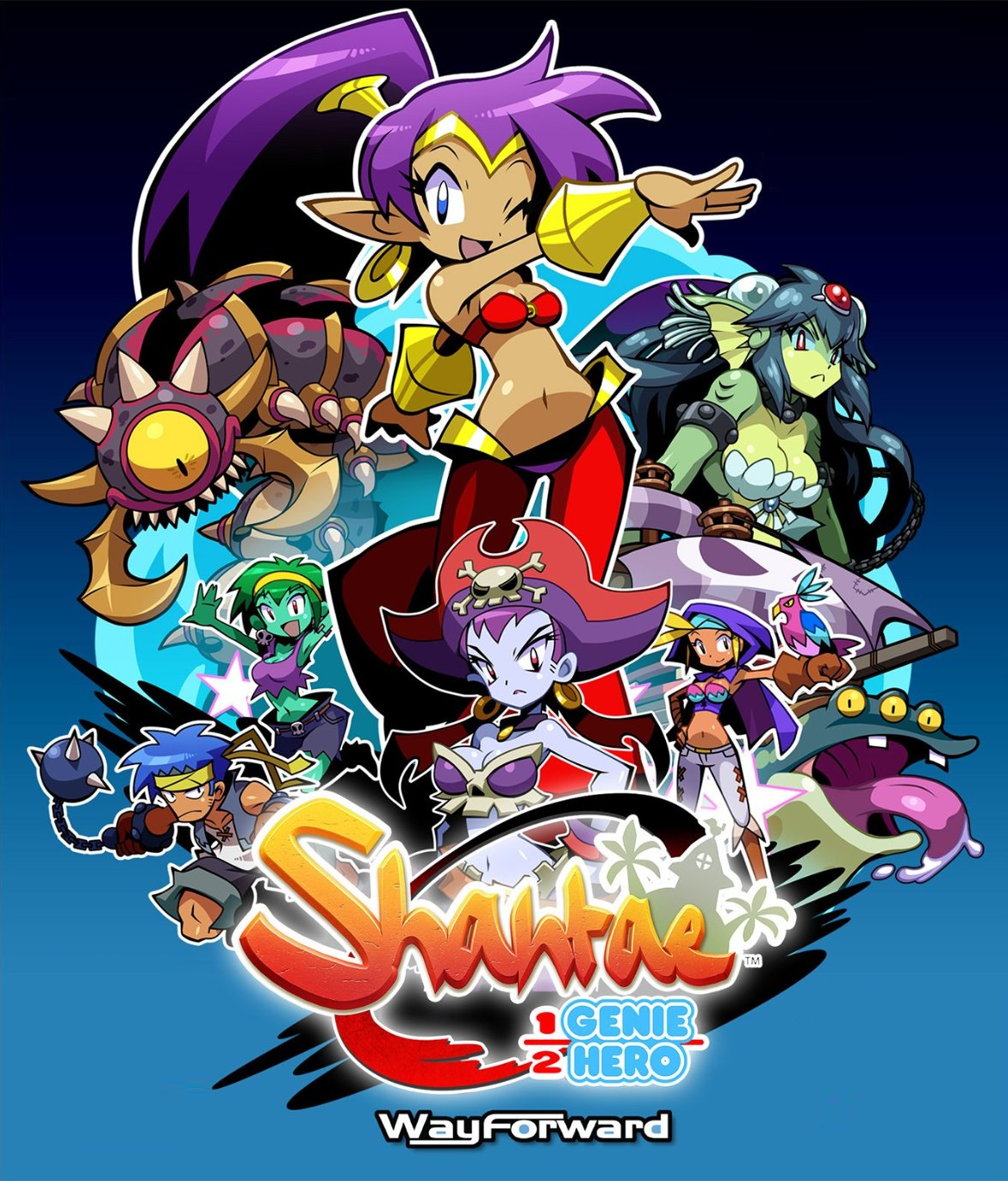
Definitely an eleventh-hour addition to this list, Shantae's December release put it in danger of being the latest in a long string of games that I missed out on. In fact, despite having given every Shantae game a try, I had never actually finished one before. Luckily, Half Genie Hero won me over with its style and kept me going until I had beaten the game and collected most of the secret stuff. While the platforming and transformations aren't particularly new for the Shantae games, WayForward really went for it with the game's visual presentation. This is one of the most detailed and well-rendered 2D games I've ever played, with excellent sprite animation and lively backgrounds. Jake Kaufman aka Virt delivers a soundtrack that's up to the very high standards his previous work has set, with music that's a great fit for each stage while also being nice to listen to on their own. The story is very straightforward, as platformer stories tend to be, but I got some laughs out of the writing here and there. The characters are super goofy, mostly returning villains from past Shantae games, but there's just a touch of self-awareness that I found amusing without being overbearing. Some of the game's progression approached the platformer equivalent of a pixel hunt, wandering around a stage looking for a path I hadn't yet explored to find some new quest item or ability, but at least the game did an okay job of having the NPCs in the hub town point you towards which stage you need to go back and poke around in. Even if I got frustrated once in a while, it never took too long to find the neat secrets hidden throughout the levels. I grew up playing a ton of different 2D platformers, and the entire time I spent with Half Genie Hero, I felt like it was the kind of game that SNES developers 25 years ago dreamed that they would one day, with more technology, get to make. It's got the spirit of the games I grew up with, but a modern presentation that brings it to another level. (For the sake of full disclosure, I backed this Kickstarter. I'm glad they fulfilled it.)

Pony Island was one of my more refreshing personal surprises of the year. The game's title conjures some very specific expectations of a game that is meant to appeal to a certain segment of the game-playing audience that I neither identify with nor particularly understand. Fortunately, this isn't a game for young children that man-children blissfully misappropriate for their own terrifying ends. Rather, it's a clever logic puzzle game wrapped in an even cleverer framing device: you're trapped playing an arcade game made by Satan himself and you have to subvert his designs and hack your way out of the game, even while he and his minions are trying to prevent you from doing so. The game reveals its premise and true nature to the player at a good pace, adding new mechanics to the puzzles over the course of its quick runtime to keep things fresh. The game's puzzles appealed to me as someone who appreciates computer programming but isn't smart enough for something like h a c k m u d, giving me a chance to feel like I was hacking my way through the game while not actually doing anything real. The game is completely committed to its bit, which is something I value in media in general, and it tries to explore its concept from all different dimensions. Sometimes this hinders the game a little, as I found some of its sections to drag on just a little bit, but the harm was minimal. I don't want to say too much about this one. If you like logic puzzles and that insane premise sounds fun, just go check it out. More games should make "fucking around with the UI" a mechanic.

I didn't really know what to think when Final Fantasy XV was announced as a weird metamorphosis of what was once Final Fantasy Versus XIII, but I had a lot of fun with what the game turned out to be. The story has some pretty major confusing holes in it (I still haven't watched Kingsglaive or the anime,) but I found the characters endearing enough that I cared about the parts that I could follow. It's rare that game developers spend time developing relationships between characters that aren't romances, but I liked the goofy friendship between the carful of anime boys in FFXV. Plenty of the incidental dialogue repeats, and there are some really overwrought emotional moments to be had, but I was convinced that these guys cared about each other beyond just a young king and his various retainers. The combat system was occasionally hampered by a disastrous camera, but I liked having to switch weapons and elements to suit the weaknesses of the enemies I was fighting, the way the game handled healing/reviving characters, and the warp-strike mechanic made combat active and interesting in a Tales kind of way. That combat system was all right during normal battles, but was allowed to really shine during some of the game's more exciting moments, like the battle with Aranea Highwind and the Trial of Leviathan. Like most open world games, not every quest is enthralling, but I found enough to do between monster hunting and sidequest chains to get my characters nice and leveled by the end. Speaking of the end, I enjoyed the way the game finished, with a level of spectacle appropriate to the rest of the game, and a decently satisfying end for the various characters involved. Some of the game's experiments with different gameplay systems straight-up didn't work, and Chapter 13 is pretty much as bad as you've probably heard, but hey. You can go fishing and that's cool. I already mentioned the spectacle, but damn, I can't say enough about how gorgeous some of this game is. The city of Altissia is one of the prettiest video game locations I can remember, and the visual splendor of the summon sequences in the game is remarkable. I'm not here to deny this game's flaws, or even apologize for them. Despite them all, I had a lot of fun.
