
The best games of 2017!
Showing 1-10 of 10 items

With a more open design philosophy that enhances the feeling of exploration Zelda excels at, Breath of the Wild is the best open-world game ever made.

Resident Evil 7 has the tightly designed spaces of the original Resident Evil, but with an originality in style, an intensity in action, and a confidence in vision that makes it feel brand new.

Games that are notorious for their difficulty can often end up being more frustrating than fun, but discovering that Cuphead wasn;t one of them has been one of the year's most pleasant surprises. It could easily coast on having some of the best visuals in video game history, but luckily for us, it's an excellent action game as well. At first glance Cuphead seems like a traditional side-scrolling action game, but it quickly reveals itself to have more in common with the NES classic "Punch-Out!!" Each fight relies less on your mastery of the game's mechanics, and more on your ability to respond to the beautifully rendered bad guys' visual cues. The experience seems punishing at first, but once you've sussed out a boss' rhythms, you understand that your failures happened for a reason. Of course, the real reason many will be drawn to Cuphead is the artwork – and they won’t be disappointed. The game captures the little nuances of 1930s-era animation, and leans into that style’s most psychedelic qualities. The bosses are some of the most striking character designs to be put into a video game, and the backdrops are often extremely detailed – and in some cases, dip into other animation styles such as stop-motion. But what's so remarkable about Cuphead isn't its top notch animation, but how the game is designed around it. The game’s trial-and-error structure allows Studio MDHR to pad out roughly an hour’s worth of visuals across seven to fifteen hours without artificially extending the gameplay. The bosses’ rigid behaviour and the camera’s tight restraint on the player’s movement allow the fights to be presented in a manner such that the vibrant hand-drawn animation always matches with the action on screen. Ultimately, that may be the most exciting thing about Cuphead: If some simple design choices can let a game look like this, what’s next? Live action? A musical? It’s rare that a single game can make the medium’s future seem so open.

A lot has happened to the Persona series during the interim between the last game and this new addition. Somewhere amongst all the spin-offs, remakes, and ports of the winning Persona 4, it evolved. The name Persona has gone from “niche JRPG” to breaking a million sales, having finally received the acclaim and attention it deserves. So it’s somewhat disappointing that this, the first HD release of the stylish saga, takes almost as many steps back as it does steps forward. The plotting certainly isn’t the problem, it’s largely terrific. One gets the impression that coming off Persona 4, the team was more confident than ever. Persona 5 is bolder and more overtly political than any installment in the series. It starts off as an exploration of men who abuse their power to commit sexual abuse (an extremely timely theme, despite being in development for six years), and slowly expands to critique the corporate culture and legal system of Japan. By the end it’s transformed into a broader indictment of humanity’s inability to chose appropriate leaders, and society’s apathy towards bettering itself. It’s a shame, then, that the translation makes a significant downgrade from Persona 4. Some will argue that it’s actually been enhanced, as it’s by all accounts a more literal translation of the original Japanese. Unfortunately, the end result is that the way these characters communicate with each other feels less human than ever. And in this series, where character development is a mechanic as much as it is a part of the story, even minor struggles to relate to the cast are a major setback. However, it would be a disservice to go on too long without saying that the visuals – from the series’ trademark minimalist menus, to the character portraits, to the newly impressionistic take on the 3D world – are better than ever. In terms of style, it may even top the likes of this year’s Cuphead, taking the series’ dichotomy of surrealism and modern mundanity and combining both with imagery from classic thief fiction to create something truly singular. It’s not the Game of the Year, but the look of it alone gives one a guttural urge to call it that anyway. The soundtrack is spectacular too, blending the excitement and unique sound of previous Persona music with acid jazz. It may even top this year’s NieR: Automata soundtrack, lacking its ability to fuse music and story beats together, but providing a more consistent array of memorable tracks. It’s the dungeon crawling gameplay that provides the greatest quandary, though. The previous, randomly generated dungeons have been eschewed in favour of handmade fortresses called Palaces. It’s a double-edged sword; these new spaces are more engaging than past entries’ randomly generated rooms, which existed solely to throw enemy encounters at the player. They’re full of puzzles and structures to hide behind, but with the exception of two or three especially well-designed Palaces, they mostly just slow the pacing and wish you could get back to grinding. Additionally, it feels like the elongated development time resulted in one or two more Palaces than were originally planned, culminating in a product that feels artificially stretched out by ten to twenty hours. Persona 5 still provides everything the Persona series is beloved for. It seamlessly blends its mundane elements with absurd fantasy, and the artwork is better than ever. But one can’t help but wonder what would have happened if this series garnered the success it deserved an installment or two earlier.
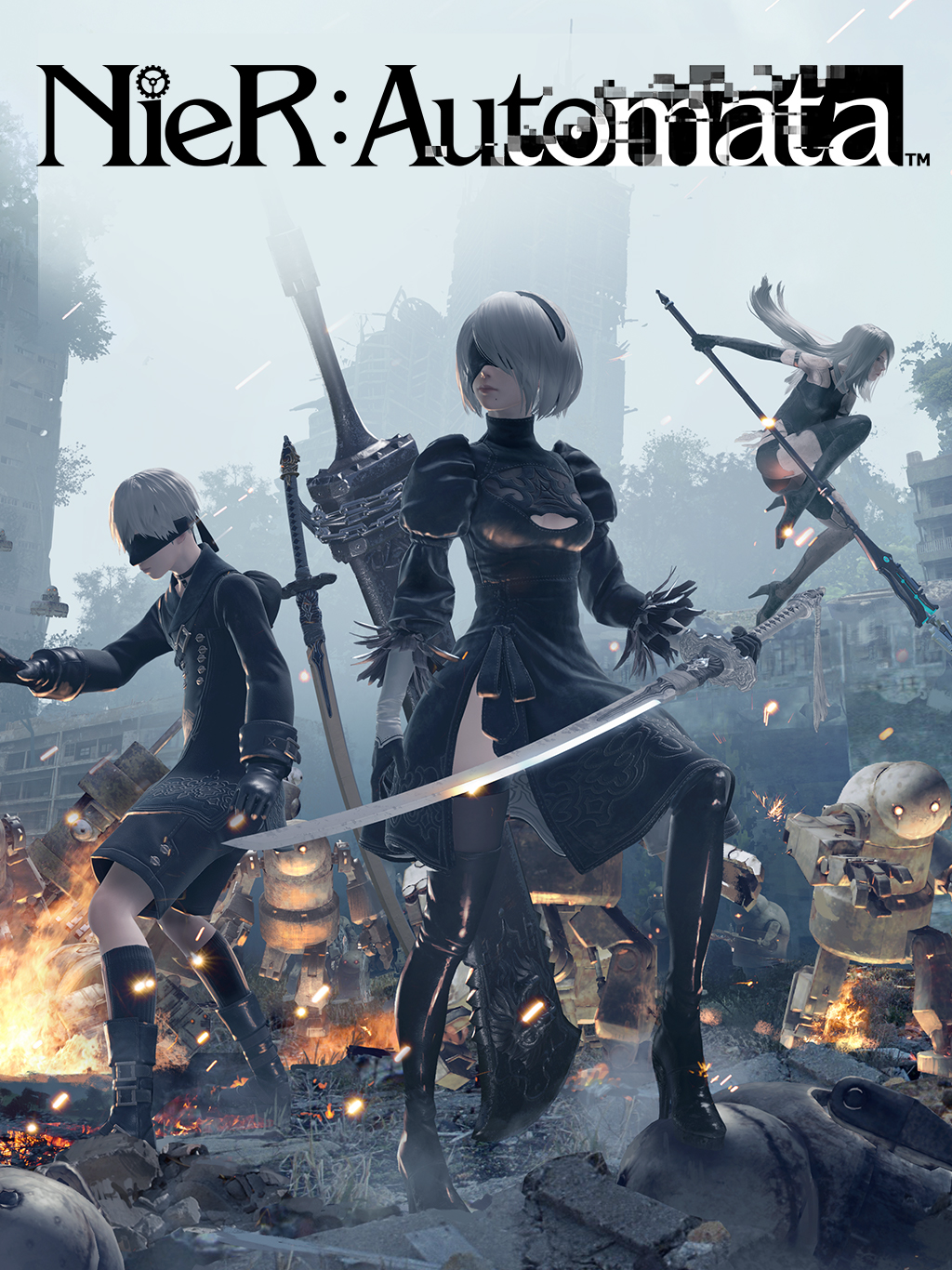
It doesn't strike the player as anything too special within its first few hours, but the more NieR reveals its world, the more it fortifies its place as a classic. Sadly, the game is let down by tens of hours of repetitive gameplay, but the highs of Nier are among the best moments ever seen in a game.

There’s a difference between a good story and good storytelling, and there are few recent examples of how this applies to games better than Wolfenstein II: The New Colossus. That may sound harsh, but it’s mostly a compliment – The New Colossus has most of the elements of an extremely strong narrative. The premise of an America that’s embraced white supremacist ideology after just a decade of Nazi occupation would be meaningful whenever it was released, but it takes on additional poignancy having released in 2017. The characters are full of life and easy to like, the tone seamlessly weaves between harrowing and goofy, and its most pivotal moments are so wonderfully absurd that they’ve become instantly iconic. The action is no slouch either. The New Colossus may not be the most remarkable shooter, but it’s at least an enjoyable one. The weapons have heft to them, and movement feels fast but manageable. The one quibble with The New Colossus is that it’s almost entirely bifurcated into a “story” half and a “game” half, with one doing little to enhance the other. From interviews with developer MachineGames, it comes off like this divide exists behind the scenes as well – the parts of the team that handle these elements work in isolation from each other. That’s not to say that games with a large emphasis on story can’t also feature traditional gameplay, or that this story would benefit from dialogue trees or from being a “walking simulator.” But often, the only benefit to pairing this story with these action sequences is the raw catharsis of killing Nazis. There are exceptions, though. One notable deviation is the very first mission, which places the player in a wheelchair and deliberately decorates the path to their objective with now-useless tools like ladders. It’s a rare moment where MachineGames really makes full use of the medium to explore its major themes. But why spend so much time on the game’s more abstract flaws when the individual parts still work so well? It’s remarkable that in a time where publishers are so risk-averse, this game of all things was allotted such a large production budget. It’s a singleplayer-only, ten-hour-long, linear shooter that dives right into topics like colonialism, racism, fascism, and bigotry without tossing out easy, crowd-pleasing answers. And an elderly Hitler repeatedly shoots one of America’s most overrated historical figures in the face.


